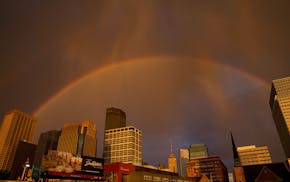
YOUR GUIDE TO THE TWIN CITIES

Paul Douglas. Douglas is a nationally respected meteorologist, with over 30 years of television and radio experience. A serial entrepreneur, Douglas continues to seek out new ways to expand on new media and almost limitless on-line opportunities. As Founder and CEO of Broadcast Weather, Douglas and a team of meteorologists are producing and disseminating daily weather feeds for web sites, cable channels, and TV broadcasters. | Send Paul a question.
By Paul Douglas
"Choose a job you love, and you will never have to work a day in your life" said Confucius.
4 years ago I thought my TV career was over. If you had told me I'd be launching a national weather channel from Minnesota I'd have laughed and asked you to back away from the crazy-sauce. I can predict the weather (on a good day) but business? Good luck forecasting the next opportunity...or threat.
No business has ever turned out like I thought it would. I'm always humbled.
The happiest people are often those who don't distinguish between work & play. Keep your personal radar up for unusual opportunities. Hedge your bets, and embrace failure. If you don't fail it means you're not really trying. Speaking of failure a holiday is coming. What can go wrong?
A storm ripping north along a stalled front squeezes out 2-4" rain today. A Flood Watch is posted; watch for wet basements, street flooding and painful commutes. Saturday looks like the coolest, wettest day of the weekend. But, sunscreen stages a comeback on Sunday; I'm still going out on a limb predicting 90 F. Storms Sunday night and early Monday give way to some sun for Memorial Day. We've seen worse. Updates on the blog.
____________________________________________________________________________________________
Thanks to Timmoth Burr out of Duluth for this picture. Heavy rain on Wednesday allowed the creek behind his out to swell up. Timmothy said he's never seen that creek this swollen!

Todd's Star Tribune Outlook for the Twin Cities and all of Minnesota:
THURSDAY: Showers and T-storms linger, 1-2" rain? Showers taper PM hours. High: 72
THURSDAY NIGHT: Lingering showers, tapering overnight. Low: 52
FRIDAY: Drier day with some sun. Winds: NW 10. High: 73
SATURDAY: Showers, T-storms likely. Probably the wettest day of the holiday weekend. Winds: E 10-15. Low: 56. High: 72
SUNDAY: Best lake day? Hot sticky sun, cooler north. Winds: S 20+ Low: 60. High: nearing 90
MEMORIAL DAY: Cooler, few T-storms likely. Winds: SW 15. Low: 63. High: 78
TUESDAY: Intervals of sun, drying out. Low: 54. High: 71
WEDNESDAY: More sun, refreshing. Low: 52. High: 73
Blog for Thursday, May 24th, 2012
Thanks to @nikmartinezzz for this picture out of Miami, FL. An incredible 9.7" of rain fell Tuesday, which shattered the old record of 3.44" set in 1901.
Miami Rain
Stationary storms kept rain heavy in pockets. Look at the image below from the National Weather Service out of Miami, FL
See more from the Miami, FL NWS Facebook page

Heavy Rain Potential Continues
Unfortunately for folks in southern Florida, the heavy rain potential continues across south Florida through the next couple of days.
This is the rainfall forecast over the next 3 days. It suggests an additional 1" to 3" or more.
Heavy Rainfall Forecast in the Upper Mississippi Valley
A slow moving front across the Upper Mississippi Valley will focus heavy rain and isolated severe thunderstorms across the region. The 3 day rainfall (Wednesday-Saturday) forecast shows over 3" or rain with the potential of flash flooding.
NAM Forecast
This is a look at the NAM, one of the various models out there. This one is suggesting a 2" to 4"+ swath of rain through parts of Minnesota! It is going to be a soggy one!

Flash Flood Watch
The National Weather Service has issued a Flash Flood Watch through PM Thursday for rainfall amounts that could be in excess of 3"
COBB Output
This is a look at the text data from the NAM forecast from AM Wednesday, which showed the potential of over 1" or rain falling through Friday. Some the of the heaviest rain expected PM Wednesday through Thursday. Temps staying in the 'cool' category as we're locked under clouds and soggy weather.
GFS Suggests More Rain
The GFS model suggests that we'll get over 2" of rain in the Twin Cities!
Thunder Thursday Risk
The same, slow moving front, will kick out another chance of severe weather across parts of Wisconsin Thursday. Hail and high winds will likely be the primary threats with any of the strong storms that develop, but heavy rain is looking more significant.
Wedding Tornado
There's an old saying about rain on your wedding day means good luck, but what about tornadoes? This video is CRAZY!
"This is my nephew and his beautiful brides wedding ceremony. A perfect country wedding complete with wheat, cowboy hats, boots,and tornados. The tornadoes were about 4 miles away and were not moving"
What's Up Bud?
The National Hurricane Center continues there advisories on Tropical Storm BUD in the Eastern Pacific.
BUD Forecast
Memorial Day Outlook
I know a lot of folks probably have plans to fire up the BBQ. This is an early look at weather conditions for Monday, May 28th... Memorial Day!
Memorial Day High Temps
____________________________________________________________________________________
Question:
"Paul, At least 4 times since mid april rain is showing up on my smartphone radar. It is heading for Crookston . However just before it get here it breaks up and goes around us on both sides. Sometimes it even gets back together after Crookston , heading for Thief River Falls. How come this happens so often? We are very dry here. "
Thanks. Jim Borkowski
Does it look something like this?
Thanks to http://xkcd.com/831/ for this!

I don't know of anything (topographical) that would divert storms away from Crookston, though, I remember when storms seemed to always divert around us when I was in college... I called it the St. Cloud force field. Maybe it was because I just wanted it to storm so badly, I dunno. Sometimes weather patterns can persist; droughts, severe storms, floods, etc. This is such a localized event, though, that it's hard to tell. Maybe just bad luck that the heavier rain is missing you altogether. It appears that you'll be missing out on this heavier stuff through Thursday as well, most of it will stay to your east. I'll put in a good word... hopefully a decent rain event heads your way in the near future.
Thanks for checking in and have a great rest of your week!
Don't forget to check me out on Twitter @TNelsonWNTV
...FLASH FLOOD WATCH FOR MUCH OF CENTRAL AND PARTS OF SOUTHERN MINNESOTA THIS EVENING THROUGH 100 PM THURSDAY...

Strong/Severe Storms. NWS Doppler at 6:43 pm shows strong T-storms approaching the metro area - capable of frequent lightning, marble to quarter-size hail and wind gusts to 50 mph. Time to batten down the hatches!

Flash Flood Watch. Well that was sudden; we went from drought to a potential flood scenario in, what, less than a month? The ground is saturated in many areas - if we do pick up some 2-4" rains there will be urban and small stream flooding, maybe a few wet basements. The watch is in effect through Thursday afternoon. Details from the local NWS office:
.THE NATIONAL WEATHER SERVICE IN CHANHASSEN HAS ISSUED A FLASH FLOOD WATCH FOR MUCH OF CENTRAL AND PARTS OF SOUTHERN MINNESOTA... EFFECTIVE FROM 700 PM THIS EVENING UNTIL 100 PM THURSDAY AFTERNOON. SOME CITIES INCLUDED IN THE WATCH ARE THE TWIN CITIES...SAINT CLOUD...MANKATO...WILLMAR AND REDWOOD FALLS. A COLD FRONT THAT WAS DRAPED OVER THE UPPER MIDWEST INTO THE SOUTHERN PLAINS...WILL SLOWLY MOVE EAST INTO THE WESTERN GREAT LAKES AND CENTRAL PLAINS BY THURSDAY AFTERNOON. SHOWERS AND THUNDERSTORMS WILL REDEVELOP ALONG AND EAST OF THE FRONT... ESPECIALLY LATER TODAY AND TONIGHT. RAINFALL TOTALS TONIGHT THROUGH THURSDAY AFTERNOON ARE LIKELY TO VARY FROM TWO TO THREE INCHES IN THE WATCH AREA WITH A FEW LOCATIONS EXCEEDING OVER THREE INCHES.

One Volatile Front. The 6:30 pm 1 km. visible satellite loop from WeatherTap shows strong/severe storms firing along a frontal boundary draped over central and western Minnesota. A wave of low pressure ripping northward along that stalled front will prolong (heavy) showers and T-storms into much of Thursday; some 2-4" rainfall amounts are possible.
85 F. high in the Twin Cities Tuesday.
71 F. average high for May 22.
69 F. high temperature a year ago, on May 22, 2011.
Severe storms possible later today; expect watches and a few warnings close to home.
2.8" rain predicted for the metro area by Thursday evening (12z NAM model). Yes, the drought is pretty much over.

Saturday: wettest, coolest day of the Memorial Day holiday weekend; showers and T-storms, highs in the low 70s.
90 F. high temperature still possible Sunday afternoon, if the sun comes out (likely). Sunday still looks like the sunniest, warmest, driest day of the holiday weekend; probably the best day for the lake.
70 F. dew point possible on Sunday. Neighbors will be whining about the humidity by Sunday afternoon. Count on it.
85-90 F. degree highs possible Memorial Day with a few T-storms, best chance late afternoon. Not a total wash-out.

Slight Severe Storm Risk. SPC is predicting an enhanced risk of hail, damaging winds, even a few isolated tornadoes later today from teh Twin Cities and Mankato to Omaha and northern Kansas into the Denver area, another severe risk over the eastern Carolinas and Tidewater region of Virginia. The best chance of unruly T-storms: between 3 pm and 9 pm this evening.

Spring Soaker. I have a hunch tomorrow may wind up being the wettest day of spring for much of Minnesota. The 12z NAM model (NOAA) shows a fairly intense wave of low pressure tracking right up a stalled frontal boundary over Minnesota, prolonging moderate to heavy rain into much of tomorrow. We will dry out and cool off by Friday - Saturday looks a bit better than it did yesterday, but showers and T-showers are still likely.

Out On A 90-Degree Limb. There is a big difference of opinion between U.S. models and the European (ECMWF) model about how warm it's going to get Sunday and Memorial Day. I'm leaning toward this solution (above), which has been consistent for the last 2-3 days, hinting at 90+ Sunday, highs in the 80s to near 90 possible again Memorial Day. Saturday still appears to be the coolest, wettest day of the holiday weekend as a warm front surges north, sparking heavy showers and T-storms. If you believe the ECMWF we should break out into the "warm sector" of this system by Sunday and Monday. I still suspect Sunday will be the hottest/driest day, a few T-storms return by Monday.

U.S Model Trends. After low 80s today temperatures cool off significantly by Thursday (possibly holding in the 60s to near 70), a few degrees warmer on Friday. Saturday should be the coolest day of the holiday, highs in the low 70s with numerous showers and T-storms. Even the U.S. models are hinting at a warmer Sunday with highs in the mid 80s. I suspect it may get warmer than that - if the sun stays out around midday/afternoon 90 is a very real possibility. Graphic: University of Iowa.

Old Fashioned Soaker. A slow-moving cool front, fueled with moisture from the Gulf of Mexico, may wring out 1.5 to 2.5" of rain from later today through Thursday evening, another chance of showers and T-storms by Memorial Day.

No Need To Water Anytime Soon. The 00z NAM model prints out a band of 2"+ rains from the Twin Cities to near Duluth, much of central and southern Minnesota picking up 1-2" of rain. Each model run gets wetter - tomorrow the wettest day in sight.

16% of all boating deaths in 2011 were alcohol-related. "The effects of alcohol can be even more hazardous on the water than on land. Boating Under the Influence, or BUI, affects judgment, vision, balance and coordination. These impairments can increase the risk of being involved in a boating accident - for both passengers and boat operators. Alcohol is a contributing factor in about a third of all recreational boating fatalities." - from NOAA. More on National Safe Boating Week here.

"Given all the advances that have been made, the high death toll in Joplin has prompted many in the meteorological and emergency management communities to rethink how they issue tornado warnings. One of the major lessons stemming from Joplin is that more attention needs to be paid to ensuring that tornado warnings encourage people to take protective action." - from a Capital Weather Gang story about lessons learned from last year's EF-5 Joplin tornado.

"We need to understand how and why some thunderstorms produce tornadoes and some don't," said Paul Schlatter, a severe weather and radar expert with NOAA’s National Weather Service. "I wish that we could say that 30 minutes out or more, this storm is going to produce a tornado." - from a story at knoxnews.com below.

"On Oct. 2, 1858, a Category 1 hurricane with winds of 74-95 mph hit San Diego. This storm had been forgotten until Michael Chenoweth, a hurricane historian, and Chris Landsea, who is now science and operations officer at the National Hurricane Center, published their study of the storm in the November 2004 issue of the Bulletin of the American Meteorological Society (BAMS)." - from a Washington Post article below. Photo above: NASA.

“If the observed warming trend in the sea-surface temperatures continues, this result suggests that future La Niña events are more likely to produce extreme precipitation and flooding than is present in the historical record,” said Dr. Jason Evans, of the University of New South Wales Climate Change Research Centre." - from a Climate Central story about climate change and extreme weather.
10% of the world's species have disappeared in just the last century. Details in a Huffington Post article below.

Miami Deluge. Thanks to "nikmartinezzz" (and Instagram) for sharing this remarkable photo from Miami late Tuesday. the Miami area picked up a record 5.54" of rain yesterday afternoon (4.4" of that in ONE HOUR!) The definition of a tropical deluge.
* more details on the record rains and subsequent flooding from nbcmiami.com.

Tropical Storm Beryl Brewing? NHC is calling it "Invest 94", an area of disturbed weather south of Cuba, at least partially responsible for soaking, flooding rains across south Florida. Two of the solutions bring this storm into the Gulf of Mexico - further strengthening possible in the days ahead; residents of Florida and the Gulf Coast should stay alert.

Thoughts About The May 22, 2011 Minneapolis Tornado. I asked my friend, Todd Krause, at the local Twin Cities National Weather Service, for a few thoughts about last year's historic tornado. Here is what he wrote:
"There are three things that stand out:
a). Some storms take their time to intensify and produce a tornado, while others ramp up rapidly and produce a tornado very quickly. This was one of those rapidly developing situations. It was a low-topped supercell that had little indication just ten minutes prior that it was going to produce a tornado. It became a possibility only a few minutes before touchdown. The decision to warn was made at 2:08 pm or 2:09 pm, and we got the warning out at 2:10 pm and heard about the touchdowns at 2:15 pm. It would be nice if tornadoes always gave 30 minutes notice, and some storms do, but other develop extremely quickly, in which case it's hard to get a warning out more than a few minutes beforehand.
b). The great value of SKYWARN. A HAM radio operator was at one of the large stores just south of I-394 and Park Place, looking to his east, saw a funnel with debris underneath, and reported it via HAM radio. This was our first report at about 2:13 pm. Having a confirmed tornado gave important credence to our tornado warning. Once we heard the report, we notified law enforcement right away and then broadcast meteorologists immediately thereafter. We had many great reports relayed to us as the tornado continued on its path.
c). As bad as it was, and even though this tornado was a killer (and we especially remember the family of the man who perished), it could have been so much worse. When I look at the pictures from the security footage of a couple of video cameras, the cloud base was low, the tornado wide, and I'm amazed the winds were not stronger than EF-1."
Todd Krause

"Supercell." Here is a Doppler radar (reflectivity) loop from May 22, 2011, courtesy of the Twin Cities National Weather Service. No classic "hook shape" that jumps out at you - what's remarkable is how quickly the cell intensified over Golden Valley, leaving little time to issue a timely warning.

"Ask Paul". Weather-related questions, comments (and threats).

Good morning!
"I saw Paul's post this morning looking back at the North Minneapolis tornado. While flying with a friend last winter, we realized that we were flying NNE along the tornado track, and caught an interesting shot through the city. The picture is taken approximately over 394 and Hwy 100, looking northeast. We're 1000 feet off the ground. The wavy lines through the image are artifact from the propeller.
I thought you guys might find it interesting. For me, it demonstrated the impact of the tornado that you can't really get a feel for from satellite photos."
Sincerely,
Barry Park
Apple Valley
Thanks Barry - appreciate you sharing this photo with me and my readers. The tornado "scar" on the ground below is clearly visible, no question. What was highly unusual was to have a 1/2 mile wide tornado ranked only an EF-1. For a weaker tornado, the Minneapolis tornado produced a disproportionate amount of damage and heartache, due to the fact that it traveled over densely populated suburbs on its way to North Minneapolis.
_______________________________________________________________________
Paul,
"At my aged lake cabin near Brainerd the choices are few when the tornado warning sounds: no real basement, so crawl into the dirt hole, or huddle in the car behind the cabin? Help!"
Carla Waldemar
Carla - please climb out of the dirt hole. No need to take such drastic action. The odds of an EF-4 or EF-5 tornado capable of sweeping your cabin off its foundation in the Brainerd area are very small. I have a similar situation at my cabin on Pelican Lake - no basement, slab foundation. I'll tell you what I've told my wife: avoid outer walls and windows, seek shelter in a closet or bathroom. If you have a bathtub on the ground floor that's probably the safest place to ride out a tornadic storm. Surround yourself with pillows, blankets, even a mattress from the bed to add further insulation and protection. Remember, the greatest risk is flying debris. Keep your head low, near the floor, and resist the urge to look out the window!
_______________________________________________________________________________
Paul,
"What are the 2 best storm alerts apps for iPhone in your opinion?"
Thanks..
Tim Quarberg
Minnetonka

.jpg)
My vote for 2 best storm alerting apps are iMapWeather Radio and My-Cast Weather Radar. They cost a few bucks, but they provide tremendous peace of mind. You can input favorite locations ("home", "office", "cabin", etc) and the My-Cast app can even track your current GPS location - but I would call up the app early in the day to make sure it has your present position in the database to be absolutely sure). Full disclosure: My-Cast Weather Radar was created by Digital Cyclone, the company I sold to Garmin back in 2007. I have no affiliation with DCI (based in Chanhassen) and no, I don't get a commission. But I strongly believe that smartphone apps should be part of your family's severe storm safety net, which includes TV, radio, Internet, e-mail alerts, smartphone apps, NOAA Weather Radio (!) and the sirens. I put sirens last for a reason. If you depend on the sirens you'll be setting yourself up for trouble.
___________________________________________________________________________
Paul,
"I was told there was some large hail in St. Paul. Trying to figure out which general area, can you help?
Thank you."
Dan Anderson
Integrated Security Consultant

Dan - two good resources come to mind. NOAA has a (free) web site that allows you to call up storm reports from the past, for hail, straight-line winds, tornadoes, flooding, etc. Click here, enter the date in question, and you'll get a graphical representation (you can zoom into the Twin Cities using the Google Map and then click on each event to get more information).
SPC has a site that allows you to plug in a date and see all severe reports across the USA. I called up data for last Saturday (here) and saw evidence of 1.75" diamter hail in St. Paul at 6:34 pm Saturday. Anything larger than 1" diametre qualifies as severe. Hope that helps.
______________________________________________________________________________
Paul,
"Hi. I get migraines that seem to be weather related. Friday, May 18, was the worst I have had in quite a while. Can you explain what happened with the barometric pressure that day? Also, can you suggest a good website or device for predicting barometric pressure changes? Thanks so much."
Janine Deters

Janine - I sympathize; I get severe headaches too, and I'm convinced that rapid changes in barometric pressure, especially around a frontal passage, can trigger these. It makes sense, since most of our body is water. Just like the moon has a tug on the world's seas, creating tides, it makes a certain amount of sense that rapid changes in pressure might affect some of us. Dr. Jerry Swanson has an informative post at The Mayo Clinic, linking changes in pressure and sunlight with migraines and other maladies. Germany has pioneered the study of biometeorology; how seemingly small changes in temperature, pressure, even wind, can impact organisms (and people). Here's a good overview on the field from Wikipedia; I would encourage you to do more research (Google is a great place to start), possibly see a specialist who can help you with medication and other possible remedies. A lack of sunlight can impact hormone levels (women are more vulnerable than men); it makes sense, at least to me, that some of us are more sensitive to changes in the ocean of air overhead. Good luck.
_____________________________________________________________________________
Paul.
"Mark Seeley noted that annual precipitation in parts of south central and southeast Minnesota has increased up to 15 percent in recent years; normal annual rainfall for the Twin Cities is 4.25" greater than it was in the 1980s. Statwide, Minnesota's average rainfall topped 34 inches in 2011 for the first time in 121 years of record-keeping. The Upper Midwest saw a 31% increase in "intense" rainfalls - the statistical 1 percent events - from 1858 to 2007, over previous decades, according to the National Climactic Data Center.
Yet we continue to read how we are in a drought.
Is this because of the distribution of the precipitation over the year? Or some other technical reason?"
Thanks.
Jonathan Rogoff
Stillwater

Jonathan - your point is a good one. 2010 was the wettest year in Minnesota history (most tornadoes in the nation too - 145, a new state record, there's probably a link). But you were correct when you brought up distribution. Most of 2011's precipitation was "front-loaded" into the first half of the year. After August we went off a cliff in the rainfall department, and precipitation was consistently below avereage from September 2011 through March, 2012. Another factor, our warm, snowless winter (22" in the Twin Cities). We rely on snowmelt to recharge soil moisture, streams, rivers and lakes, and there was precious little snow to melt. Yet another factor: record warmth: a warmer atmosphere leads to increased levels of evaporation of soil moisture. All these factors converged to create severe to extreme drought conditions in early spring, but with recent heavy rains the drought has eased over most of the state. Last Tuesday's Drought Monitor (above) shows dry conditions lingering over much of Minnesota, with only a small area of moderate drought near Albert Lea. I suspect that this week's Drought Monitor will show a continued easing of the drought. It would be ironic if we went from drought to flood in the span of 2 months. Stranger things have happened. Thanks for a great question.

Joplin Tornado Anniversary: Remembering The Destruction Wrought On Missouri. Huffington Post has the details: "One year ago, an EF-5 tornado tore through Joplin, Missouri, killing 161 people and causing nearly $3 billion in damage. The tornado, which was the deadliest in six decades, was also the costliest "since at least 1950," according to the Associated Press. In the year since the tornado, residents and volunteers have worked tirelessly to clear debris and rebuild a community shaken by the violent storm. Over 600 permits for new homes and nearly 3,000 for "residential repairs and rebuilding projects" had been issued by late April, according to AP. Students at the local high school have attended class in a converted big-box retailer, as a new school is not scheduled to open until 2014." Aerial photo of Joplin after the tornado courtesy of NOAA.

The Joplin Tornado: One Year Later. Where Does It Rank? Here's a great summary of the Joplin tornado, and some perspective, from the Capital Weather Gang's Andrew Freedman: "The ferocious tornado that tore the city of Joplin, Mo., apart exactly one year ago today stunned the nation with its tragic death toll and staggering damage. The twister’s winds were estimated to be more than 200 mph, making the tornado an EF-5 on the Enhanced Fujita Scale, which measures a tornado’s intensity. It devastated the city of 50,000, killing 161 and injuring more than 1,000. The Joplin tornado was the first single tornado in the U.S. to result in more than 100 fatalities since a tornado struck Flint, Mich., in 1953."
Photo credit above: National Weather Service.

On The Edge Of Tornado Alley. Here's a worthwhile story from the coloradoan.com: "The wind wasn’t just blowing, it was twisting. Joann Ochsner and her husband James rushed to their basement in disbelief that anything resembling a severe tornado could plow a path of destruction through Windsor. “We all went to the basement,” Ochsner said. “We had no idea what was going on upstairs. We didn’t hear a thing.” When she and her family emerged from the basement, the kitchen window had been blown in, the dishes that had been set on the kitchen table lay scattered in shards all over the floor and five 100-foot-tall pine trees her mother had planted decades earlier were blown entirely away."
Photo credit above: "A police officer walks through a devastated neighborhood in southeast Windor after a tornado struck that community May 22, 2008". LCL:STF.

Let's Talk About: New Satellites To Improve Tornado Warnings. Here's an interesting nugget from the Pittsburgh Post-Gazette: "....The next generation of Geostationary Operational Environmental Satellites is scheduled to begin launching late in 2015. The "GOES-R series" weather satellites will have state-of-the-art instruments for improved scouting and tracking of these killer storms, even at night. With lightning detection from orbit and clearer pictures of cloud height, moisture and movement, the GOES-R satellites will improve meteorologists' ability to assess conditions that spawn tornadoes, and they are expected to give upward of 20 minutes lead time in tornado warnings."
Graphic above courtesy of NOAA, which has more information on the GOES-R satellite system here.

Storm Chasers: Study Aims To Go Inside Tornadoes. Here's a terrific article from Yahoo News: "Come tornado season, meteorologist Joshua Wurman spends his life on the road, zooming down highways in search of thunderstorms. This summer, he and his colleagues will turn nomad to launch a first-of-its-kind program aimed at exploring tornado winds — not from the outside but from deep within the tornado vortex. "Our goal is a much more integrated picture of the tornado," Wurman, president of the Center for Severe Weather Research based in Boulder, Colo., told OurAmazingPlanet. And that's a picture that could reveal how tornadoes deal their damage and save lives, he added."
Photo credit: Herbert Stein, 2009.

Creating Action-Inspiring Tornado Warnings. More than ever local NWS offices choose their wording with great care, especially when a tornado is on the ground, reflecting the sense of urgency and life-threatening conditions. Emilie Lorditch, from Inside Science News Service, wrote about the topic for knoxnews.com, and her story struck a chord with me. English matters - picking the right words and phrases to get people off their couches and into their basements or safe rooms. Here's an excerpt: "One year ago this week, 158 people died when a tornado with winds greater than 200 mph struck Joplin, Mo. Even though the National Oceanic and Atmospheric Administration issued tornado warnings and activated siren alerts ahead of time, it was clear that some people ignored, disregarded or waited too long to react to them. As meteorologists continue to learn more about tornado formation and improve their forecasting, they are also working to improve how warnings are communicated to and received by the public. When meteorologists recognize atmospheric conditions that can spawn a tornado, a severe thunderstorm and tornado watch are issued. But that information can be frustratingly vague for the audience." Photo above courtesy of Ryan McGinnis.

Desert Dust Intensifies Summer Rainfall In U.S. Southwest. I thought this was a fascinating read, courtesy of phys.org: "As the climate warms, more regions of the world will be affected by drought. Increased desert regions and dry land produce more dust that gets lofted into the atmosphere. These dust particles absorb sunlight and act as a heat pump, attracting moisture from nearby oceans and increasing seasonal rainfall. PNNL researchers are the first to investigate this effect in a dry region of the United States where water resources are limited. Understanding how dust contributes to atmospheric heating is important for predicting drought and rainfall patterns in this region and others in the world with rising populations."
Photo credit above: "This rainstorm in Eastern New Mexico, as part of the North American Monsoon, gets moisture from the Gulf of Mexico and Gulf of California during the late summer. Scientists have found that desert dust increases the monsoon effect in this region." Credit: Wikimedia Commons

Southern Heat, Western Wildfires May Dominate Southwest Summer. Here's a clip from a story at Bloomberg Businessweek: "The southern U.S. will probably be warmer than normal from June to August while the West may have major outbreaks of wildfires, government forecasters said. Temperatures are expected to be above normal for the next three months from interior portions of California to the East Coast and from southern New Jersey to Florida, according to the U.S. Climate Prediction Center in Camp Springs, Maryland. There are too many conflicting signals for an accurate forecast for the Northeast, including New York City, said Jon Gottschalck, a forecaster at the climate center. For that region, the chances that the summer will be hotter, cooler or just normal are all equal, Gottschalck said."
Today's forecast highs (above) courtesy of NOAA and Ham Weather.

Deadly Fire: Blackwater Blaze In Wyoming Remembered 75 Years Later. Here's an excerpt from a story at trib.com: "WAPITI RANGER STATION — Over the past 40 years, Dave Sisk has jumped from planes as a smokejumper and managed fires big and small throughout the Northern Rockies. Standing in a mountain meadow above Blackwater Creek in the Shoshone National Forest, it’s easy for Sisk to imagine what happened here on a hot August day 75 years ago, when a seemingly routine fire turned deadly. He managed a wildfire here in 2003, and thoughts of the 1937 Blackwater blowup were never far away. “Any time you’re in fire, especially if you’re in charge of a fire, that potential is always in the back of your mind,” Sisk said. “These guys in 1937 knew how to fight fire. What they didn’t know was that a cold front was off to the west heading in this direction.”
Photo credit above: MARTIN KIDSTON/The Billings Gazette. "Fire crews with the Shoshone National Forest make improvements to the Blackwater National Recreation Trail ahead of this summer’s 75th anniversary of the deadly 1937 Blackwater fire."
Alberto Provides An Early Reminder. Here's some timely advice for residents of "Hurricane Alley" from Jacksonville's jdnews.com: "...Although there’s nothing anyone can do to stop a hurricane from forming or influence its path, there’s plenty that those who live in its possible path can do to mitigate its potential for disruption. We should all stock up on the things we need to be prepared for the arrival of a hurricane on our shores — from gallons of water to a battery-operated radio to nonperishable foods. We should have an evacuation plan and watch for orders telling us it’s time to get out, and then do as we’re told. We should prepare our homes, businesses and other properties for a hurricane’s arrival by removing items that can turn into projectiles when heavy winds hit. And we should remember to think ahead where our pets and those who are less capable of helping themselves, such as the elderly, are concerned."
Satellite image above courtesy of NASA's Earth Observatory.

California Hurricane Odds Extremely Low, But Not Zero. Yes, southern California has been hit by (rare) hurricanes in year's past. Jack Williams takes a look at a hurricane scenario for California in this Washington Post article; here's an excerpt: "The May 15-November 30 eastern Pacific hurricane season is well underway with the National Hurricane Center forecasting that Tropical Depression TWO-E should become Tropical Storm Bud later today. The Center says it could hit southwestern Mexico near the resort city of Manzillo as a Category 2 hurricane on Friday. Aletta, this year’s first eastern Pacific tropical storm formed on May 14 and died on May 19 without ever threatening land. Prevailing easterly winds usually push most eastern Pacific tropical storms and hurricanes away from North America, which is why these storms usually attract little public attention." Hurricane image above courtesy of NASA.

"I'll Have A Bud, Please". Is it me or is a tropical storm by the name of "Bud" somewhat reassuring? Not to residents of Mexico - some of the models strengthen Bud into a hurricane, possibly recurving northeast and hitting coastal Mexico within 72 hours. More from NHC: "Tropical Storm Bud continues to churn over the eastern North Pacific Ocean at midday Tuesday, centered almost 550 miles south of Manzanillo, Mexico. Maximum sustained winds are 40 mph, but further strengthening is expected, and Bud may become a hurricane by Wednesday Night. Its west-northwest movement will become northwest later today and north by Thursday."

GOP Convention Nightmare: Hurricane In Tampa. Don't laugh - there's a pretty good chance that we'll be tracking a tropical storm or hurricane somewhere in the Gulf, Atlantic or Caribbean by early August - approaching prime time for tropical systems. WTSP-TV and firstcoastnews.com have the story (and video); here's an excerpt: "TAMPA, Fla. -- Images of palm trees and the waterfront convention center might be what helped attract the Republican National Convention to Tampa. The event is scheduled for the final week of August, a time that happens to also be very near the height of hurricane season. The idea, along with an estimated 50,000 visitors -- most without transportation -- has emergency planners contemplating the worst. "We're looking at what could happen here in Hillsborough County and the actions that we would need to take," said Preston Cook, Hillsborough County's new Emergency Management director."

Zippered-Vent Sleeping Bag Adds A Dose Of Flexibility To The Camping Equation. If you're a die-hard camper, here's one innovation you may want to consider, courtesy of gizmag.com: "While a good quality sleeping bag is a solid investment for keeping the crisp night air at bay, said bag can quickly become an oven when the ambient temperature heads northwards. Add to this the cramped nature of snoozing in a sack and you get a recipe for discomfort that some of us find hard to bear. The Zippered Vents Sleeping Bag aims to overcome these issues with a design that brings a little versatility to the equation."


Warming Up. After a perfect Monday, Tuesday saw a few more clouds and rising temperatures and humidity levels as winds blow (hard) from the south. Far northern Minnesota saw showers, with enough sun central and southern counties for highs well up into the 80s. Statewide highs ranged from a brisk 53 at Grand Marais and 66 Duluth to 85 in St. Cloud and the Twin Cities, to 87 at Redwood Falls.

Paul's Star Tribune Outlook for the Twin Cities and all of Minnesota:
TODAY: Flash Flood Watch. Mostly cloudy, windy and humid. Heavy/severe T-storms likely. Winds: S 15-30. High: 83
WEDNESDAY NIGHT: Flash Flood Watch. Storms, locally heavy rain. Low: 63
THURSDAY: Flash Flood Watch. Showers and T-storms linger, 1-3" rain? Showers taper PM hours. High: 74
FRIDAY: Drier day with some sun. Winds: NW 10. Low: 58. High: 73
SATURDAY: Showers, T-storms likely. Probably the wettest day of the holiday weekend. Winds: E 10-15. High: 72
SUNDAY: Best lake day? Hot sticky sun. Winds: S 20+ Low: 60. High: near 90
SUNDAY NIGHT: T-storms likely, locally heavy rain. Low: 64
MEMORIAL DAY: Humid with morning showers giving way to some midday/PM sun: Winds: W 10. High: 80
TUESDAY: Intervals of sun, drying out. Low: 56. High: 73
_2.jpg)
Safe Boating
The other day I saw a guy boating and texting. Not smart when you're cruising through a narrow channel. Here's a harrowing statistic: according to NOAA 16 percent of all boating deaths in 2011 were alcohol-related.
"It is illegal to operate any boat or watercraft while under the influence of alcohol or drugs in every state. Penalties can include fines, suspension or revocation of your drivers license and even jail time" according to NOAA. OK. That's good enough for me.
This is National Safe Boating Week. Details on the blog, where I've included comments on last May's Minneapolis tornado from Todd Krause at the local NWS office.
The average tornado lead-time nationwide is 12 minutes. That's an average. Last year's EF-1 tornado developed suddenly. "It would be nice if tornadoes always gave 30 minutes notice, and some storms do, but others develop extremely quickly, in which case it's hard to get a warning out more than a few minutes beforehand" Krause told me in an e-mail. The NWS got a 5 minute jump, helping to avoid a major disaster.
A few storms today may turn severe, 1-2" rain tonight & Thursday.
Heavy T-storms are likely Saturday, again Memorial Day. Sunday still looks like the warmest, driest day.
Climate Stories...

More Evidence That Global Warming Drives Extreme Weather. Here's a snippet of a story from Climate Central: "There’s been a lot of discussion recently about how TV weather forecasters handle the issue of global warming — to the point that a watchdog group — ForecastTheFacts.org — has started singling out what it sees as the worst offenders in the forecasting community. Some of those high-profile weathermen in big market cities have a responsibility to tell viewers more about the emerging science that shows how a warming planet will affect day-to-day weather, including the potential for more frequent and severe storms, extended periods of drought and other extremes."

1,000 Years Of Climate Data Confirms Australia's Warming. The story from phys.org; here's an excerpt: "The study led by researchers at the University of Melbourne, used a range of natural indicators including tree rings, corals and ice cores to study Australasian temperatures over the past millennium. They then compared these with climate model simulations. Dr. Stephen Phipps, a researcher with UNSW’s Climate Change Research Centre and the Centre of Excellence for Climate System Science led the climate model simulation research. He said the results showed there were no other warm periods in the past 1,000 years that match the warming experienced in Australasia since 1950. “Our study revealed that recent warming in a 1,000-year context is highly unusual and cannot be explained by natural factors alone, suggesting a strong influence of human-caused climate change in the Australasian region,” Dr. Phipps said."

Rapid Climate Change Turns Minnesota's North Woods Into Moose Graveyard. The story from eenews.net; here's an excerpt: "ALONG THE GUNFLINT TRAIL, Minn. -- If moose disappear from the boreal forest of northern Minnesota, as some biologists predict, they will not exit with a thunderous crash. Climate extinctions come quietly, even when they involve 1,000-pound herbivores. Experts who have studied the Northwestern moose -- Alces alces andersoni -- believe they are witnessing one of the most precipitous nonhunting declines of a major species in the modern era, yet few outside Minnesota fully appreciate the loss." Photo credit: University of Minnesota.
Climate Change This Week: Vanishing Hawaii Beaches, Mexican Wind Boom And More. Here's a clip from a story at The Huffington Post: "Aloha to aloha land: Hawaii's beaches are going bye-bye, says the US Geological Service, reports Cornelia Dean at the New York Times. About 10% have vanished over the past century, and rising sea levels from climate change are likely to hasten the process, making it truly a loha land (Sorry, folks, I couldn't resist...) What happens when you build up deadwood by suppressing fires in Canada's boreal forest and couple it with climate change, which has made the forests drier and created longer, warmer, drier seasons? Disastrous wildfires like the one that burned up much of the town Slave Lake in 2011. Expect more, scientists are now saying, reports Graham Thomson at Postmedia News."

Digging Into Climate Change, U.S. Scientists Find More Than Science. Here's an excerpt from an interesting story at Scientific American: "BERLIN, Md.—Fifth grader Aman Shahzad looked closely at the level attached to the plumb line. "Lower, lower," she called out. "OK! The bubble is in the middle." Her classmate, holding the wooden surveyor's pole, read the measurement: 14 centimeters. The two students were from Pemberton Elementary School in nearby Salisbury, Md., the first to participate in a new, three-month interdisciplinary unit called "Investigating Climate Science" that spans science, math, economics and government. On this spring day on Maryland's eastern shore, they were on a field trip to Assateague Island, measuring the slope of the beach as the first step in a lesson on sea-level rise."
Photo credit above: flickr/Jon Sullivan

Everest Weekend Death Toll Reaches 4. Climate change is making a climb of Mt. Everest even more perilous, as reported by Yahoo News: "Some climbers and environmentalists have expressed concern that climbing conditions on Everest are worsening each year, possibly due to climate change. An unusually light snowfall this year has added to the danger, renowned Everest climber Conrad Anker said. "Because there is little fresh snow, icy surfaces on the slopes make climbing more difficult and dangerous," Anker said, adding that "the snow acts as glue, stopping rocks from falling on the climbers."
Photo credit above: "In this Oct. 27, 2011 file photo, the last light of the day sets on Mt. Everest as it rises behind Mount Nuptse as seen from Tengboche, in the Himalaya's Khumbu region, Nepal. Mountaineering Department official Gyandendra Shrestha said Monday, May 21, 2012, that a German, a Nepal-born Canadian and a Korean died Saturday while descending from the 8,850-meter (29,035) summit." AP Photo/Kevin Frayer, File.

The Earth Is The Lord's: Our Responsibility For God's Creation. From Huffington Post: "Here we go again. Another election cycle in which climate science is being debated by high ranking elected officials, party activists and interest groups with the power to sway what our candidates say they believe and how they act in office. It seems inconceivable that at a moment when there is virtual scientific consensus that climate change is happening, and is significantly affected by human behavior, that there are those who persist in denying the single greatest threat to life as we know it. Of the eight major Republican Party Presidential candidates this past year, five (Perry, Paul, Bachmann, Cain, Santorum) expressed outright climate change denial. Jon Huntsman was the only candidate who unequivocally affirmed the scientific consensus on climate change. And after previously holding positions that climate change was real and pressing, both Newt Gingrich and candidate-elect Mitt Romney have retreated to expressing varying degrees of skepticism on the subject."
74 F. high temperature in the Twin Cities Monday.
71 F. average high for May 21.
73 F. high temperature on May 21, 2011.
+5.8 F. May temperatures through the first 20 days of May are running nearly 6 degrees warmer than average.
1.32" rain predicted for the Twin Cities by Thursday afternoon.
90 F. possible Sunday afternoon, probably the hottest, most humid day of the holiday weekend - best day up at the lake?

Severe Risk Later Today. SPC has much of the Dakotas and Minnesota's Red River Valley in a slight risk of severe storms; the biggest concerns: large hail and damaging straight-line winds.

Wednesday Severe Threat. The greatest chance of severe weather tomorrow stretches from central Nebraska into southwest Minnesota. I suspect a few storms may approach severe levels in the Twin Cities metro by evening.

Extended Outlook. The wettest day of the week (according to the European ECMWF model): Thursday, with over 1.4" of rain predicted. Scattered T-storms are likely over the holiday weekend (big surprise); Sunday still looks like the hottest day - if the sun comes out Sunday afternoon temperatures may shoot up into the 90s. Saturday appears to be the coolest day, highs near 70.

"One of the new descriptions, written in cooperation with social scientists, informs those in the storm path: “You could be killed if not underground or in a tornado shelter.” Another warns: “Complete destruction of entire neighborhoods is likely.”....“We were ringing the bell a little louder,” Hudson said. “That’s one of the lessons learned from Joplin".- from a Joplin Globe story highlighted below that describes the new, more dire and urgent terminology used by local NWS offices during "tornado emergencies" - when large, violent, killer tornadoes are on the ground, moving toward urban areas. Photo above: NOAA.

27 glaciers left at Glacier National Park. In 1910 there were 150 glaciers. Photo courtesy of USGS.

May 22, 2011 Minneapolis Tornado. Here's a good overview of last year's violent tornado outbreak in the close-in suburbs and North Minneapolis, from the Twin Cities office of The National Weather Service: "The severe weather season is definitely starting off in a big way this year, not only in Minnesota, but all across the country. On Sunday, May 22, there were 56 reports of tornadoes extending from northeastern Oklahoma, up the Mississippi Valley to northern Wisconsin. The strongest hit was Joplin, Missouri where at least 125 people have lost their lives and thousands are displaced from their homes. In Minnesota, there were reports in Fillmore, Hennepin, Anoka, and Washington Counties of tornadoes and property damage. Here is a radar image, taken at 2:19cst on May 22 that shows the pronounced hook echo southwest of Columbia Heights moving to the northwest at 35 miles per hour. Early estimates by the National Weather Service of the strength of the tornado in Minneapolis is a high end EF1 to EF2 tornado with winds between 100 and 125 miles per hour. The majority of the damage came from mature trees being uprooted and falling on houses and vehicles. Tragically, one man lost his life when a tree fell on his vehicle in North Minneapolis....The storms in the Twin Cities took on a familiar path for residents. On May 10, 2011 an EF1 tornado moved through St. Michael, Minnesota tearing the roof off a house and a severe thunderstorm-- close to developing a tornado-- moved northeast through the downtown area causing golf ball sized hail falling on players and fans at the Twins vs. Tigers game. This severe weather event was also caused by a low pressure system that developed on the lee side of the Rocky Mountains and took a similar track across Minnesota, thus leading to the similar storm paths."

Remembering The Tornadoes Of May 22, 2011. Here's an informative look back at last year's outbreak, the tornadoes that proved major metro areas are not immune to violent winds. Details from the local National Weather Service: "A 3-D look at the Minneapolis tornado from the Chanhassen radar. The "column of red" is a descending core of air moving away from the radar that can sometimes be seen when stronger tornadic storms are close to a radar (greens represent air moving toward and reds away from the radar). The first image where a column appears is when the storm was near I-394 and MN-100 (fourth image in loop), which is where the tornado touched down. This feature began to fall apart as it moved into Anoka county. This coincides with the tornado weakening as it moved through Fridley."

Tropical Depression Alberto. Weakened by wind shear, Alberto fizzled into a tropical depression late Monday, now pushing east, out to sea - not a threat to the Carolina coast. Visible satellite loop capable of CIMSS, and the University of Wisconsin.

Alberto's Track. In the end wind shear aloft was too strong for Alberto, which was downgraded to a tropical depression Monday evening. In spite of drifting over warmer, Gulf Stream waters (low 80s) strong winds aloft shredded the storm, preventing it from strengthening. Above is a map from tropicalatlantic.com, showing the projected track of the soggy remains of Alberto in the coming days.

Pond-size Puddles By Thursday? A slow-moving cool front may squeeze out an inch or two of rain on much of Minnesota Wednesday night and Thursday. Graphic: University of Iowa.

Rainfall Predictions. Once again the heaviest rains (over 1") are forecast to fall from St. Cloud to Crosby and Duluth. Some 2"+ amounts are forecast for the Duluth area, closer to .5" to 1" for the Twin Cities, based on the latest NAM model.

Outlook: Drippy Dew Points. The dew point (an absolute measure of how much water is in the air) is forecast to reach the mid 60s by tomorrow, possibly flirting with 70 by Sunday, up in the oh-zone. Neighbors and friends will be whining about the humidity by Sunday afternoon, no question.

May 19 Kingman And Harper County Tornadoes. Here's an update from the Wichita office of The National Weather Service; one of the tornadoes was a large, violent EF-3 twister.

Weather Service Implements Storm Warning Changes After 2011 Tornadoes. Here's a good article from The Joplin Globe: "JOPLIN, Mo. — The May 22 tornado changed more than just Joplin. It also changed the way people get information about severe weather and the way the National Weather Service informs people about the severity of storms. But one thing has not changed. Eric Wise, the meteorologist who gave Joplin 20 minutes to prepare for the seventh deadliest tornado in U.S. history, is still on the job at the weather service forecast office in Springfield. The Springfield native can recall May 22 as if it were yesterday. “I was watching three different radars — Tulsa, Springfield and Pleasant Hill — as the main storm moved out of Southeast Kansas,” he said. “At 5 p.m., it looked like it would be no more than a shower." Image above: NOAA.

Details On The Joplin Tornado. More facts from NOAA on the extreme EF-5 tornado that hit Joplin, Missouri one year ago today: "On May 22, 2011, one of the deadliest tornadoes in United States history struck Joplin, Missouri, directly killing 158 people and injuring over 1,000. The tornado, rated EF-5 on the Enhanced Fujita Scale, with maximum winds over 200 mph, affected a significant part of a city with a population of more than 50,000 and a population density near 1,500 people per square mile. As a result, the Joplin tornado was the first single tornado in the United States to result in over 100 fatalities since the Flint, Michigan, tornado of June 8, 1953. The tornado was rated EF-5 on the Enhanced-Fujita Scale, with its maximum winds estimated at more than 200 mph. The path of the entire tornado was 22.1 miles long and was up to 1 mile in width. The EF-4/EF-5 damage path was roughly 6 miles long from near Schifferdecker Avenue along the western portions of Joplin to near Interstate 44 east of Joplin, and generally ½ to ¾ of a mile wide along the path."

More Joplin Details. More information on the historic Joplin EF-5 from the NWS Central Region: "A large portion of Joplin, Missouri was devastated by an EF-5 (greater than 200 mph) tornado, resulting in 158 fatalities and over 1,000 injured in the Joplin, MO area. The Joplin tornado is the deadliest since modern record-keeping began in 1950 and is ranked 7th among the deadliest tornadoes in the U.S. history. The tornado surpassed the June 8, 1953 tornado that claimed 116 lives in Flint, Michigan, as the deadlist single tornado to strike the U.S. since modern tornado record-keeping began in 1950. The deadiest tornado on record in the U.S. was on March 18, 1925. The "Tri-State Tornado" (MO, IL, IN) had a 291-mile path, was rated F5, based on an historic assessment, and caused 695 fatalities. More information on 2011 Tornado statistics can be found at the following web site: http://www.noaanews.noaa.gov/2011_tornado_information.html

A Year After Joplin Tornado, Records Show Twister Was The Costliest Since 1950. Details from AP and The Star Tribune: "JEFFERSON CITY, Mo. - The cost of 30 manhole covers that got sucked away: $5,800. A new concession stand at the destroyed high school: $228,600. Shelter and care for more than 1,300 homeless pets: $372,000. The tornado that tore through Joplin a year ago already ranks as the deadliest twister in six decades. Now it carries another distinction — the costliest since at least 1950. Insurance policies are expected to cover most of the $2.8 billion in damage. But taxpayers could supply about $500 million in the form of federal and state disaster aid, low-interest loans and local bonds backed by higher taxes, according to records obtained by The Associated Press and interviews with federal, state and local officials."
Photo credit above: "FILE - This May 24, 2011 aerial file photograph shows a neighborhood destroyed by a powerful tornado in Joplin, Mo. The Federal Emergency Management Agency said Monday, May 30, 2011 that it will consider bringing in trailers, as it did for New Orleans after Hurricane Katrina, if enough homes are not available."

Safe Boating Week. This is Safe Boating Week in Minnesota - details from the Twin Cities National Weather Service: "There are no specific warnings or advisories for lightning, but all thunderstorms produce lightning. A lightning strike to a vessel can be catastrophic, especially if it results in a fire or loss of electronics. If your boat has a cabin, then stay inside and avoid touching metal or electrical devices. If your boat doesn't have a cabin, stay as low as you can in the boat. Boaters should use extra caution when thunderstorm conditions exist and have a plan of escape. Mariners are especially vulnerable as at times they may be unable to reach port quickly. It is therefore strongly recommended you do not venture out if thunderstorms are a possibility."
![]() |
The United States Coast Guard's boating statistics show on average that 80% of all reported fatalities occur on boats where the operator has not received safety training. Learn about boating accident statistics. |
![]() |
There are a variety of life jackets and they are designed for different uses. Many drownings could have been prevented if life jackets were used. Learn more about life jackets and how to properly use them by visiting the Life Jacket Resource website. When out on the water - WEAR A LIFE JACKET! |

National Hurricane Preparedness Week. Next week is National Hurricane Preparedness Week, and NOAA has resources on Facebook to answer commonly asked questions: "As we get ready for National Hurricane Preparedness Week -- May 27 to June 2, 2012-- and as part of NOAA's efforts to improve communication about storm surge, the NOAA launched a new storm surge web site. Take a look…"

A Colorful Ocean. Here's an explanation from NOAA's Environmental Visualization Laboratory: "The average chlorophyll concentration during April 2012 is shown here using data acquired from the MODIS sensor on board the NASA Aqua satellite. Phytoplankton blooms can be seen all along the coastline of North and South America, and are monitored by NOAA for use in determining productive fishing grounds, managing coastal ecosystems, and identifying potential human health impacts from harmful algal blooms."

Only In Kansas. Here's a great photo (not for broadcast) from Mike Smith Enterprises Blog: "A just-married couple sharing a first kiss, bountiful ripe wheat, and a landspout tornado*. The photo, in Harper County, is by Cate Eighmey Phototgraphy and the couple is Caleb James Pence and Candra Kim Pence via Facebook. *The tornado is the bowed, narrow tube midday between Caleb's hat and the tree on the horizon."

Dan Rather: Corporate Media "Is In Bed With" Washington (Video). Monday's are tough enough without conspiracy theories, but this might be worth a look - I wouldn't dismiss this out of hand; details from Huffington Post: "Dan Rather slammed corporate media on Friday night, alleging that news coverage is guided by political interests and profits. The former CBS News anchor has recently returned to the spotlight, speaking out about his former employer and defending the controversial Bush National Guard story that ended his storied career at the network. On Friday, Rather appeared on Bill Maher's show to discuss his new book "Rather Outspoken." He spoke out about the controversy again, and stood by his story (his comments start at the 1:50 mark in the video above). He said that he was fired because CBS News caved into the Bush administration's demands."

Blind Chinese Dissident Already Sick of Kardashians. This headline could only come from one source, one of my favorite comedy sites, The Borowitz Report: "In his first interview since arriving in America, blind Chinese activist Cneh Guangcheng told reporters today that he is grateful to be in the United States but is already "sick of these Kardashians." "Who are they, and what do they do?" Chen asked. "I have asked these questions of many people, and no one will answer me. It seems to be some kind of state secret." After being monitored for years by Chinese authorities, Chen said he finds the omnipresence of the Kardashians "troubling". "It almost feels as though I have traded one kind of tyranny for another," he said.


Probable Cause To Impound a BMW? Check out the license plate, and the back-seat passenger. That's a dude driving that 3-series BMW convertible. I have nothing against poodles, but this is just...wrong. Thanks to Tricia Frostad in Chanhassen for passing this along. Another sign of the pending Apocalypse.

Perfect Monday. Oxymoron - I know, but what a day. Brilliant sun, gentle breezes, low humidity levels, as good as it gets in May. Highs ranged from 67 at Grand Marais to 74 in the Twin Cities, and 75 at St. Cloud and Redwood Falls.

Paul's Star Tribune Outlook for the Twin Cities and all of Minnesota:
TODAY: Warm sun, windy. Feels like summer again. Storms north. Winds: S 15-30. High: 82
TUESDAY NIGHT: Partly cloudy and muggy. Low: 62
WEDNESDAY: Increasing clouds. Strong PM T-storms possible. High: 83
THURSDAY: Lingering showers & heavy T-storms. Drying out late in the day. Low: 65. High: 80
FRIDAY: Cooler. Shower, then clearing. NW 7-12. Low: 56. High: 71
SATURDAY: Muggy, heavy T-storms likely. E 10. Low: 55. High: 72
SUNDAY: Hot sun, steamy. Best day at the lake? Dew point: near 70 Winds: S 10-20. Low: 64. High: 91
MEMORIAL DAY: Less sun, few T-storms likely. Winds: W 7-12. Low: 64. High: 81

Aftermath. In March, 2000 downtown Fort Worth took a direct hit from a violent tornado, killing 5, injuring hundreds. Photo courtesy of "Restless Skies."
"Downtown Tornadoes"
A year ago today was a violent wake-up call for people who still believe tornadoes can't hit cities. The same day Joplin, Missouri was leveled by a mile-wide EF-5 tornado packing 200 mph winds - a swarm of 11 tornadoes hit Minnesota, western Wisconsin and northeast Iowa. The EF-1 tornado that touched down in Golden Valley and ripped up North Minneapolis was on the ground for 14 miles; half a mile wide, ripping mature, 100-year old trees out by the roots, damaging hundreds of homes.
It could have been worse. A 2000 Ft Worth tornado hit after rush hour, shredding skyscraper walls/windows, leaving 5 dead. Oklahoma City has been hit 112 times since 1890! If you live or work downtown you're not immune. The safest spot is usually a concrete stairwell or interior rest room. Take warnings seriously, and buy a NOAA Weather Radio.
The next 4-6 weeks are prime time for severe storms and tornadoes.
We heat up into midweek; the next frontal zone pushing more strong/severe storms into town Wednesday & Thursday
We cool off late week; another wave of heavy T-storms Saturday before breaking out into 90-degree sun on Sunday.
Memorial Day? Three guesses. Sticky with heavy T-storms.
Climate Stories...

Why Do Economists Describe Climate Change As A "Market Failure"? No, the (true) price of carbon is not factored into everything we purchase or use, as this article at The Guardian explains: "When free markets do not maximise society's welfare, they are said to 'fail' and policy intervention may be needed to correct them. Many economists have describedclimate change as an example of a market failure – though in fact a number of distinct market failures have been identified. The core one is the so-called 'greenhouse-gas externality'. Greenhouse gas emissions are a side-effect of economically valuable activities. Most of the impacts of emissions do not fall on those conducting the activities – instead they fall on future generations or people living in developing countries, for example – so those responsible for the emissions do not pay the cost."
Photo credit above: "Markets have made a calmer start to the week." Photograph: Tony Gentile/REUTERS

The Week Ahead: EPA To Hold Hearings On Carbon Dioxide Limits For Power Plants. Here's an excerpt of a story at Bloomberg BNA: "The Environmental Protection Agency will hold two public hearings May 24 in Washington, D.C., and Chicago on Clean Air Act new source performance standards that would limit carbon dioxide emissions from new power plants. As detailed in a World Climate Change Report article, the proposed NSPS, issued April 12, would limit emissions from new fossil fuel-fired power plants with a generating capacity greater than 25 megawatts to 1,000 pounds of carbon dioxide per megawatt-hour. The rule is expected to further the power industry trend toward cheaper and cleaner natural gas power plants."
The "Great Big Book Of Horrible Things": WWII And Climate Change. This is an interesting (and vaguely troubling) article, from ABC News; here's an excerpt: "Sometimes, a little humor is indispensable. Matthew White uses it elegantly in the title of his fascinating new, big and easy-to-read reference book. “The Great Big Book of Horrible Things: The Definitive Chronicle of History’s 100 Worst Atrocities” is a bright door stopper and mind opener. That jaunty title, which often brings a smile to those to whom I mention it, even hints at one reason we may have evolved humor in the first place: A little sugar can make the worst sort of important news at least palatable, so we can swallow it, get it down to where we can try to digest it. And with a growing number of the world’s climate scientists now speaking publicly about the grave global “catastrophe” and the imminent “threat to global civilization” now building in the form of manmade global warming, White’s book offers a simple, painful lesson. It reminds us that humanity has often and recently failed to prevent collective calamity, even when many people can see it coming and try to warn everyone." Photo: Wikipedia.

Book It, We're Toast. The Fate Of The Species. Don't read this if you're already in a bad new. Alarmism? I sure hope so; here's an excerpt from Climate Central: "If you grew up in the 1950’s and early 60’s, you probably remember the faint air of existential angst that lingered constantly in the background. With the creation of atomic weapons, and the booming stockpiles of missile-mounted bombs in the arsenals of the U.S. and the U.S.S.R., it seemed perfectly plausible that an all-out nuclear war could wipe out a significant fraction of the world’s population — the first time in history that humanity was capable of such destruction. But as Fred Guterl says in a sobering, important and highly readable new book, those were really the good old days. The nuclear threat has receded, he acknowledges in The Fate of the Species: Why the human race may cause its own extinction and how we can stop it (Bloomsbury: $25), but warns that “the success of Homo sapiens has created new and terrifying risks that didn’t exist a few decades ago.”

Arctic Melt Releasing Ancient Methane. Here's a snippet of a story from The BBC: "Scientists have identified thousands of sites in the Arctic where methane that has been stored for many millennia is bubbling into the atmosphere. The methane has been trapped by ice, but is able to escape as the ice melts. Writing in the journal Nature Geoscience, the researchers say this ancient gas could have a significant impact on climate change. Methane is the second most important greenhouse gas after CO2 and levels are rising after a few years of stability."
Photo credit above: UAF/Nature Geoscience.
* the actual research paper from Nature.com is here.

Pollution In Thunderhead Increases Global Warming. Here's a story from TG Daily: "Pollution is leading thunderstorm clouds to capture heat, increasing global warming in a way that climate models have failed to take into account. It strengthens them, causing their anvil-shaped tops to spread out high in the atmosphere and capture heat, especially at night, says Jiwen Fan of the Department of Energy's Pacific Northwest National Laboratory. "Global climate models don't see this effect because thunderstorm clouds simulated in those models do not include enough detail," says Fan. "The large amount of heat trapped by the pollution-enhanced clouds could potentially impact regional circulation and modify weather systems."

Can Global Warming Be Contained? A Multi-Media Answer. Here's a fascinating article from livinggreenmag.com: "Click on the link to see a thoroughly comprehensive infographic, a text version of the content, and a video highlighting key data on the infographic. Plus, you can answer their poll question. The infographic is fun, but read the text for details. It starts with a succinct description of global warming, and provides many interesting and alarming facts, such as:

Climate Change Hits Globe's Water Cycle. UPI.com has the details: "LIVERMORE, Calif., May 21 (UPI) -- The Earth's dry lands are getting drier and wet ones wetter as climate change shifts and accelerates the globe's water cycle, U.S. researchers say. Changing patterns of salinity in the global ocean during the past 50 years show a clear fingerprint of climate change on the shift in worldwide rainfall and evaporation, they said. Scientists with the Lawrence Livermore National Laboratory in California along with colleagues at Australia's Commonwealth Scientific and Industrial Research Organization say the Earth's water cycle has strengthened by 4 percent 1950-2000."

The Titanic, Climate Change And Avoidable Tragedies. That's a mouthful, but this Huffington Post article is a worthy read; here's an excerpt: "One of the most legendary maritime disasters was the 1912 sinking of the RMS Titanic. In a pivotal scene in James Cameron's 1997 film, master shipbuilder Thomas Andrews looks around the magnificent foyer of the grand staircase, swarming with frantic passengers. Rose Bukater asks how serious the situation is. Says Andrews: "In an hour or so, all this will be at the bottom of the Atlantic." The tragedy that was Titanic presents us with some sobering parallels to the great environmental challenges facing our civilization in the 21st century. Titanic suffered a cascading disaster in which sea water from one ruptured compartment spilled over the bulkhead into the next, inexorably causing the ship to founder. Analogously, as our ever-increasing human demands for energy, water, housing, transportation and agricultural land run up against the immovable iceberg that is human carrying capacity, we are witnessing the cascading failure of our fragile terrestrial support systems. Both calamities are the result of a collision between human over-confidence and the implacable forces of nature." Photo: Wikipedia.

Let's End Polluter Welfare. Here's a post from Vermont Senator Bernie Sanders at Huffington Post: "At a time when we have more than $15 trillion national debt, American taxpayers are set to give away over $110 billion dollars to the oil, gas, and coal industries over the next decade. Clearly, we cannot afford it. When the five largest oil companies made over $1 trillion in profits in the last decade, with some paying no federal income taxes for part of that time, they certainly do not need it. It is time we end this corporate welfare in the form of massive subsidies and tax breaks to hugely profitable fossil fuel corporations. It is time for Congress to support the interests of the taxpayer instead of powerful special interests like the oil and coal industries. That is I joined with Congressman Keith Ellison to introduce legislation in the Senate and the House called the End Polluter Welfare Act. Our proposal is backed by grassroots and public-interest organizations including 350.org, Friends of the Earth, Taxpayers for Common Sense, and many others."

Fracking In New York: For Farmers Gas Drilling Could Mean Salvation - Or Ruin. Here's a clip of a story at Huffington Post: "ALBANY, N.Y. -- When Dan Fitzsimmons looks across the Susquehanna River and sees the flares of Pennsylvania gas wells, he thinks bitterly of the riches beneath his own land locked up by the heated debate that has kept hydraulic fracturing, or fracking, out of New York. "I go over the border and see people planting orchards, buying tractors, putting money back in their land," said Fitzsimmons, a Binghamton landowner who heads the 70,000-member Joint Landowners Coalition of New York. "We'd like to do that too, but instead we struggle to pay the taxes and to hang onto our farms."
Photo credit above: "In this Feb. 2, 2012 file photo, organic dairy farmer Siobhan Griffin stands in a field with her cows a field at Raindance Farm in Westville, N.Y. While other states are reaping the wealth of the Marcellus Shale, New York has had a moratorium on drilling for four years while it overhauls regulations amid intense lobbying for a ban. Griffin, who raises grass-fed cows and sells organic cheese, doesn’t see gas as the answer. (AP Photo/Mike Groll, File)."

Fighting Climate Change With Low-Tech Tools. Another must-read article from Bloomberg; here's an excerpt: "In the late 1990s, regulators in some U.S. states began to make electric utilities sell their nuclear reactors to private operators. They weren’t trying to help head off climate change, yet they managed to do just that. Deregulation was supposed to bring down power prices. The sale of nuclear plants to nonutility owners, such as Exelon Corp. (EXC), was part of the process and was intended to serve that goal. But it also helped offset more greenhouse gas emissions in the 2000s than all of the wind and solar generation in the country combined. Increased nuclear output is an example of what I call “low- tech cleantech,” or the intelligent management of our energy infrastructure to make it more efficient. A small improvement in nuclear operations can have a much bigger impact than double- digit growth in renewable power sources for a simple reason: Nuclear reactors today generate far more of the U.S.’s electricity than wind turbines and solar panels."

Heartland Institute Facing Uncertain Future As Staff Depart And Cash Dries Up. Here's an excerpt of a story from The Guardian: "The first Heartland Institute conference on climate change in 2008 had all the trappings of a major scientific conclave – minus large numbers of real scientists. Hundreds of climate change contrarians, with a few academics among them, descended into the banquet rooms of a lavish Times Square hotel for what was purported to be a reasoned debate about climate change. But as the latest Heartland climate conference opens in a Chicago hotel on Monday, the thinktank's claims to reasoned debate lie in shreds and its financial future remains uncertain."

On Blogging, Comments...And Online Civil Discourse. Here's a portion of a post from St. Thomas professor and climate scientist John Abraham at The Yale Forum on Climate Change and the Environment: "A recent posting on The Yale Forum on Climate Change & the Media website linked to a very long piece regarding climate change by Christopher Monckton. "As a practicing scientist, I recognize and value the role that The Yale Forum plays in furthering civil discussion on this topic. As a society, we have too few venues of this type where ideas can be discussed, solutions proposed, and our preconceptions challenged. It is not difficult to appreciate the dilemma faced by editors of sites like The Yale Forum when submissions such as that cited are offered, particularly when, as here, the respondent is addressing an earlier posting in which he or she was specifically named."

To See Climate Change, Watch The Sea. Here's an excerpt of a story at thestar.com: "THE Earth turns white when a change in large-scale ocean circulation triggers a sudden worldwide shift toward freezing temperatures. You may remember this apocalyptic scenario as the climax of the 2004 US movie The Day After Tomorrow. But how many of us are aware that the ocean can dramatically effect our climate in reality? In addition to well-known currents near the surface of the sea, such as the Kuroshio current around the coast of south east Asia, Japan and China, there is a massive global current that flows unseen in the deep, thousands of metres below the surface, called oceanic general circulation." Photo credit: Jefferson Beck, NASA.

Climate Scientists Say They Have Solved Riddle Of Rising Sea. Here's a clip from a story at Yahoo News: "Massive extraction of groundwater can resolve a puzzle over a rise in sea levels in past decades, scientists in Japan said on Sunday. Global sea levels rose by an average of 1.8 millimetres (0.07 inches) per year from 1961-2003, according to data from tide gauges. But the big question is how much of this can be pinned to global warming. In its landmark 2007 report, the UN's Nobel-winning Intergovernmental Panel on Climate Change (IPCC) ascribed 1.1mm (0.04 inches) per year to thermal expansion of the oceans -- water expands when it is heated -- and to meltwater from glaciers, icecaps and the Greenland and Antarctica icecaps."

Climate Change As An Afterthought. Here's a portion of an Op-Ed from The Bangkok Post: "...However, there are certain steps that could make an immediate difference and that would involve little political risk. As the summit statement in Pittsburgh noted: ''Enhancing our energy efficiency can play an important, positive role in promoting energy security and fighting climate change''. The statement also said ''inefficient fossil fuel subsidies encourage wasteful consumption, distort markets, impede investment in clean energy sources and undermine efforts to deal with climate change''. This is a very important point, and it can be taken a bit further. Until the true costs of fossil fuels are taken into account, clean energy sources will continue to be at a great disadvantage in attracting investment. These costs include not only climate change but also the deterioration of air quality and the potential for more catastrophic accidents at sea, such as the one in the Gulf of Mexico in 2010."

Clearing Trend. The same front that sparked hail, high winds, and some 1-3"+ rainfall amounts is now pushing east, sparking severe weather near GreenBay and Chicago - a Dakota high clearing skies across much of Minnesota.


A Wild Saturday Evening. The reports above are a small subset of the damage reports that came in; numerous reports of 1" diameter hail (quarter-size, considered severe, large enough to cause minor damage). As many as 10,000 residents of the Twin Cities lost power - winds gusted over 60 mph with reports of tree limbs and powerlines downed. No tornado reports, just straight-line winds from severe thunderstorm downdrafts reaching the ground. Click here to see the full list of damage reports, courtesy of NOAA.

A Month's Worth Of Rain. The cool front sputtered and stalled as it passed over the Twin Cities metro late yesterday, a wave of low pressure rippling up the front causing this tug-of-war to play out for an extended period of time, increasing rainfall amounts as several waves of strong/severe storms swept across the metro. National Weather Service Doppler estimates show a band of 1-2" rain from Prior Lake into Minneapolis and St. Paul (where 1.75" diameter hail fell). The heaviest amounts fell from Buffalo to Elk River, Anoka County on up to Cambridge and Center City, where Doppler estimates suggest some 2-4" amounts, nearly a month's worth of rain overnight.

Saturday Storm Reports. Click here for an interactive map from Ham Weather, data from NOAA.

"Wally Covington runs the Ecological Restoration Institute at Northern Arizona University. Covington calls fires that grow to be more than 100,000 acres "mega fires." And he says it may not be this year, but we are bound to see more of them. He says the Wallow Fire was an example of what happens when global climate change meets forests choked with trees. "These factors then conspire to set up a very explosive situation, so it’s really a crisis," Covington said." - from an Arizona Public Media story; details below. Photo: NOAA.

Today's Annular Solar Eclipse. Here is a good overview of today's solar eclipse (not visible in Minnesota) from NASA: "The first solar eclipse of 2012 occurs at the Moon's descending node in central Taurus. An annular eclipse will be visible from a 240 to 300 kilometre-wide track that traverses eastern Asia, the northern Pacific Ocean and the western United States. A partial eclipse is seen within the much broader path of the Moon's penumbral shadow, that includes much of Asia, the Pacific and the western 2/3 of North America (Figure 1). The annular path begins in southern China at 22:06 UT. Because the Moon passed through apogee one day earlier (May 19 at 16:14 UT), its large distance from Earth produces a wide path of annularity. Traveling eastward, the shadow quickly sweeps along the southern coast of Japan as the central line duration of annularity grows from 4.4 to 5.0 minutes."


Timing The Eclipse. Times above are Universal Time, data courtesy of NASA.

More Eclipse Facts. From timeanddate.com: “The dark strip in the center indicates the best locations for viewing the eclipse. Here, the Moon moves centrally in front of the Sun. The eclipse is also visible in the areas that are shaded red, but less of the Sun’s disk is obscured. The fainter the red shading the less of the Sun’s disk is covered during the eclipse.”

We Have A Shot: Maximum Solar Eclipse at MSP is 7:19 pm. Skies may be partly cloudy this evening - a gentle reminder not to even think of looking at the sun directly (and risk going blind). Credit here.
* Google has some good tips and tools for viewing the solar eclipse here.

Perils of Long-Range Prognostication. Yes, there are risks going out on a limb. Previous ECMWF runs were hinting at 90s next weekend; the latest European model prediction (above) shows 70s; Sunday the nicer, sunnier, drier day. We could still approach 90 by Memorial Day (with a few stray T-storms) but the chance of an extended heat spell next weekend have diminished. Wishful thinking, in 20/20 hindsight. A summerlike Memorial Day Weekend....in Minnesota? Are you off your meds or what?

Tropical Storm Alberto Forms The 10 am pm Sunday (WeatherTap) visible satellite loop shows Tropical Storm Alberto (complete with a modest "eye") swirling off the coast of Charleston, South Carolina. It has weakened slightly, sustained winds down to 45 mph.

Alberto's Projected Path. The first tropical storm of 2012 is forecast to do a few loops off the South Carolina coast, before turning northeast, brushing Wilmington, the aptly named North Carolina town of Cape Fear and Cape Hateras by 8 pm Tuesday, then veering out to sea. Source: NHC.
* According to @senorpepr only 76 storms since 1851 have formed earlier than Alberto and is the earliest storm to form since Andrea in 2007.


Quiet Spell Broken. While a marginal and unnamed disturbance formed over Indonesia’s Banda Sea during the previous week, Aletta’s formation broke a 41-day streak in which there were no named tropical cyclones anywhere on Earth. The U.K. Met Office said that was the longest stretch without such a storm for the planet in at least 70 years. The last time there were as many as 38 consecutive storm-less days was in 1944, when global weather monitoring was still in its infancy.

A Wild Temperature Ride In Duluth. Check out this story from The Duluth News Tribune; here's an excerpt: "....According to the National Weather Service, the high temperature at the Duluth International Airport was 87 degrees, setting a record for the date. The previous record was 85, set in 1970, 1978 and 1998. While areas over the hill were baking under the sun, Park Point was staying cool with temperatures in the 50s. At 5 p.m. it was 87 at the airport and 54 on Park Point, a difference of 33 degrees over a distance of about 10 miles."

Free severe storm/emergency text messages coming for your smart phone. Details from NOAA and CTIA below.

Shifting Gears (Noisily). The transition from spring to a more summerlike pattern sparked another rash of severe storms; 1,039 separate reports of severe weather (tornadoes, straight-line winds, hail and flooding) since May 12. Data from NOAA, an interactive map from Ham Weather (one of my companies) is here.

A Week's Worth of Records. Over 1,100 daily records were set in the last week; extreme heat out west, record 24 hour rainfall amounts (green dots) for much of the east. Click here to see an interactive map from Ham Weather and NOAA.
| Total Records: | 1134 |
| Rainfall: | 357 |
| Snowfall: | 2 |
| High Temp: | 335 |
| Low Temp: | 51 |
| Low Max Temp: | 64 |
| High Min Temp: | 325 |

Major Severe Storm Events (And Tornado Tracks): 1980-2006. I thought this was interesting. Major tornadoes (EF-2 or stronger) are plotted in red, wind gusts over 70 mph (blue dots) and large hail, 2" in diameter or bigger in green, courtesy of NOAA's SPC.

_3.jpg)
Are You "Tornado-Wise"? I wrote down these questions for TPT "Almanac" Friday evening, trying to stump Cathy Wurzer and Erik Eskola. A few of the questions have multiple correct answers. See how well you do (answers below question #8) 2010 Albert Lea tornadoes courtesy of WeatherNation TV meteorologist Aaron Shaffer.
1). The “urban heat island” protects the Twin Cities metro from the most violent tornadoes?
A). True.
B). False
2). Riding out a tornado in your basement? The safest place statistically is:
A). Southwest corner
B). Under the stairs.
C). Huddled next to a window.
3). No basement? Which would be the best room to seek protection from a tornado?
A). Kitchen.
B). Attic.
C). Bathroom.
D). Interior closet.
4). Which of the following will wake you up at 3 am if a tornado is moving into your county?
A). Sirens.
B). TV
C). NOAA Weather Radio.
D). Mother In Law.
5). There is a local “Tornado Alley” in the Twin Cities that runs from Lake Minnetonka across the north metro, true or false?
6). Which of the following are “tornado tip-offs”?
A). Large hail.
B). Wall cloud.
C). Green/yellow sky.
D). Flooding rains.
7). Out of 100 thunderstorms, how many will, on average, go on to spawn a tornado?
A). 50.
B). 10
C). 1
8). There is solid evidence that climate change is producing larger, violent tornadoes? True or false?

"Tornado-Wise" Answer Key:
1). Answer: (B). False. Large tornadoes are not deterred by slightly warmer, drier conditions over the metro area.
2). Answer: (B). Debris sometimes falls into the southwest corner. The safest spot is under the stairs, under a heavy table or workbench, if available.
3). Answer: (C) (D). The smaller the room, the better. The more walls between you and the tornado, the better.
4). Answer: (C). NOAA Weather Radio is the only device that will set off an alarm, 24/7, when your county is threatened.
5). Answer: False. In the last 40-50 years more tornadoes have been observed across north/west suburbs, but a longer look back at tornado data shows no preference as to where tornadoes touch down.
6). Answer: (A)(B)(C). A green/yellow sky may be the result of large hail suspended overhead. The larger the hail the stronger the T-storm updraft, the greater the potential to spin up a tornado.
7). Answer: (C). On average 10% of T-storms are severe, less than 1% will ever spin up a twister.
8). Answer: False. We’re seeing more small tornadoes, but there is no solid link between a warmer, wetter atmosphere and large EF-3+ tornadoes.

"Tornado-Wise" Quiz on TPT Almanac. Friday evening I checked in for my monthly appearance on Channel 2's "Almanac" program. Rather than sit there and pontificate about tornadoes, I had an idea: turn tornado facts & figures into a contest, of sorts, between anchors Cathy Wurzer and Erik Eskola. They both did very well (it was a tie at the end), and they genuinely impressed me with their knowledge of tornado safety. Click here to see the segment.

6 or more right? Congratulations, you are tornado-wise.
3-5 correct? Tornado-savvy, on the right track.
Fewer than 2 right? Are you visiting from Manhattan...or Fiji? Welcome to Minnesota - not exactly Tornado Alley, but definitely "Tornado Cul-desac". In 2010 Minnesota experienced 145 tornadoes, most in the USA that year.

Ground Zero Of A Tornado Strike. Click here to see some amazing footage from St. John's Hospital, taken at the height of the EF-5 tornado that leveled much of Joplin on May 22, 2011: "Security camera footage of the emergency waiting room inside of St. John's Mercy Hospital on May 22, 2011. Footage courtesy of Mercy Hospital Joplin."

Top 10 Deadliest Texas Tornadoes. Data courtesy of the Amarillo, Texas office of The National Weather Service.

20 Years Later, Lessons From Hurricane Andrew. Here's an excerpt of a terrific audio story from Marketplace: "...Now to Florida where emergency officials and weather forecasters have been meeting this week for the Governor's annual Hurricane Conference. This year's meeting comes exactly 20 years after Hurricane Andrew caused $26 billion in damage in South Florida. Marketplace's Nancy Marshall-Genzer reports.
Nancy Marshall-Genzer: Hurricane Andrew morphed into a monster overnight, buzz-sawing through south Florida. Frantic meteorologists waited impatiently for slow-as-molasses printers to spit out smudged hurricane maps.
But things have changed."
* Satellite image above courtesy of NASA.

Wireless Emergency Alerts On Your Wireless Device. Shortly, you'll be able to sign up for (free) alerts on your cell phone, courtesy of NOAA. More details: "The wireless industry, the FCC, and FEMA will roll out the WEA's (Weather Emergency Alerts) system nationwide this year. The NWS will start utilizing this by pushing extreme weather warnings over the system in June 2012. Tornado warnings, flash flood warnings and several other high-end warnings will go directly to wireless users in an affected county automatically if their device is compatible."
* More information from CTIA:
"Mobile users will not be charged for receiving these text-like alerts and are automatically enrolled to receive them.
There are three different kinds of alerts:
While these alerts will appear on a person’s mobile device similar to a text message, Wireless Emergency Alerts are not text messages. Instead, Wireless Emergency Alerts use a different kind of technology to ensure they are delivered immediately and are not subjected to potential congestion (or delays) on wireless networks."
AT&T
Wireless Emergency Alerts Information
Cellcom:
WEA Main Page
Sprint Nextel Corporation:
Wireless Emergency Alerts Information
T-Mobile USA:
Wireless Emergency Alerts Information
U.S. Cellular:
Wireless Emergency Alerts | U.S. Cellular
Verizon Wireless:
Wireless Emergency Alerts Information

Western Wildfires: Colorado Declares Emergency In Hewlett Blaze. Fire season is starting early this year, an unusual number of large blazes for May. At this rate it's going to be a long, hot, fiery summer for much of the western half of the USA. The L.A. Times has a harrowing story; here's an excerpt: "The Hewlett fire in Colorado has grown to 7,673 acres, prompting officials Friday to declare an emergency. In an executive order, Colorado Gov. John Hickenlooper declared the emergency because of the fire in Larimer County. The move makes $3 million in state emergency funds available for firefighting. “The Hewlett Fire’s proximity to numerous homes and property poses an imminent danger to life and property and, therefore, constitutes a disaster for the purposes of the act,” according to the executive order."
Photo credit: "The Hewlett fire burns to the edge of Seaman Reservoir in Poudre Canyon near Ft. Collins, Colo., on Thursday. Hundreds of firefighters worked to combat the growing blaze. (R.J. Sangosti / The Denver Post / May 18, 2012)."

"Gladiator Blaze" Update. This is one of the larger, more stubborn wildfires being reported in Arizona. Details from inciweb.org: "The Gladiator Fire was reported on Sunday, May 13, at 11:00 am near community of Crown King. The human caused fire which originated from a structure fire on private property has now moved onto the Prescott National Forest. Joe Reinarz's Southwest Area Type 1 Incident Management Team assumed management of the Gladiator Fire on the evening of Monday, May 14, 2012."


Memorial Weekend Preview. If you believe the European ECMWF model, much of the Upper Midwest (including Minnesota) may be experiencing 90s next weekend - a taste of mid-summer. I wouldn't bet the farm on that extended outlook just yet, but maybe we'll make up for this weekend's puddles (and Sunday jackets). Maps above for the Memorial Weekend Temperatures and Precpitation courtesy of Planalytics.

Very Extended Outlook. It looks like a very long, hot summer for the southern half of the USA, a strong bias toward (much) warmer than normal temperatures from June through August for much of the Southwest. Map courtesy of NOAA's CPC (Climate Prediction Center) and Ham Weather.


Ford C-MAX Hybrid Undercuts The Toyota Prius. Here's an interesting development for anyone in the market for a hybrid, courtesy of gizmag.com: "Ford has announced the pricing for its 2013 C-MAX hybrid, a crossover that has the look of a small minivan without the sliding doors. The American automaker says the base price of US$25,995 will undercut the Toyota Prius v wagon by $500...."C-Max Hybrid offers better fuel economy, performance, technology and functionality than Prius v – and C-MAX Hybrid customers will pay less at the dealership and at the pump," said Ken Czubay, Ford's VP of U.S. Marketing, Sales and Service in a statement."

Renewable Power For Apple. Here's a snippet of a story from The San Francisco Chronicle: "Apple, criticized by Greenpeace International over its energy consumption, said its 500,000-square-foot data center in Maiden, N.C., will be powered entirely by renewable sources by the end of the year. The move, announced Thursday on Apple's website, follows a week of protests at the company's headquarters in Cupertino. Greenpeace demonstrators criticized the world's largest technology company for using too much coal to power the data center. Apple reiterated its plan to generate 60 percent of the Maiden plant's power itself, through a large deployment of fuel cells and a 100-acre solar farm located next to the data center."

"Wavegarden" Takes Surfing Inland. I may break my neck, but I need one of these. Gizmag.com has the story; here's an excerpt: "Imagine you're hundreds of miles from the sea - you climb over a grassy hill and come upon a lake with perfect surf just waiting for you and your board. Spanish engineering firm Instant Sport is setting about making this scenario a reality with its custom-built Wavegarden. While artificial waves are far from new, engineer Josema Odriozola and sports economist Karin Frisch claim that their brainchild can bring an ocean-like break to land-locked surfers, body boarders and kayakers alike using less energy than any other existing wave generator to date."

Twitter Is Tracking You Online To Suggest Who To Follow. It gets back to my theory: if the product or service is "free" YOU are the product. That said, I still love Twitter - one of the best tools I've found for breaking news and drilling down into stories that interest you. Details from Huffington Post: "In the interest of helping you figure out who to follow, Twitter is following you. Twitter announced Thursday that it will use information it collects about users' browsing habits across all sites with Twitter "share" buttons to recommend accounts to follow. By tracking individuals during their visits to websites in what the social media site calls the "Twitter ecosystem" (which includes any page with an embedded Twitter widget), Twitter can monitor what stories or topics each user visits most, and use that data to suggest accounts that match their interests." Graphic above: smashingmagazine.com.
The Secret Mad Men Behind Facebook's Ads. Here's an excerpt from an interesting article at Forbes.com: "Who bought those $3.2 billion worth of ads on Facebook in 2011? One of Facebook’s advertising agencies identified hundreds of companies."
The Man from Mad Men
"Simon Mansell of TGB Advertising gave an up-close view of who spends what on Facebook. TGB is one of the social media company’s advertising agencies. TGB has over 100 “big” Facebook customers, each of whom spend over a $1 million a year on Facebook ads. TGB handles the advertising campaign, which includes developing the campaign and buying space on Facebook’s website."

Finnish Micro-House Is Small Enough To Build Without A Permit. Because I've always wanted to live in a treehouse. Gizmag.com has more information: "Designer Robin Falck has created his very own micro home that is small enough to be built without a permit in Finland. According to Finnish regulations, you can bypass the permit process if the structure is smaller than 96 or 128 square feet (depending on where you build). With the help of a couple of local architects, Falck was able to make his original designs a reality and the result is this simple and stylish rural retreat."

A Timely Weather-Cartoon. Thanks to IrishWeather for passing this one along, via Twitter.

The "Canine Hawaiian Shirt". I was thumbing through my latest Hammacher Schlemmer catalog yesterday and came across this item. Is it just me, or is this another sign of the pending Apocalypse? Do people really buy this crap? Amazing. But if you're interested, read on: "Made in the Hawaiian islands, this is the genuine aloha shirt that reflects a canine's carefree, waggish spirit. Long synonymous with summer time leisure, the modern Hawaiian shirt was created in the early 1930s by a Waikiki cloth merchant from leftover kimono fabric. This shirt's lightweight 100% cotton fabric displays classic Polynesian motifs favored by locals, in contrast to the loud prints found on common aloha wear."
I'd like 12 of these please, in various sizes. Just to annoy my dog.

The Classic Manual Typewriter. In the very same catalog, for the tidy sum of only $119.95 you can order a typewriter, which will absolutely make you the most popular (luddite) in the office. It would be fun to order one of these - establish a "no computer" edict. "Everyone is going back to typewriters, slide rules and bell bottoms, effective immediately!" My favorite part of this...it's an EXCLUSIVE. Right. It gets even better: "This is the classic manual typewriter that recalls the thoughtful, well-written correspondence of yesteryear. Devoid of technological crutches such as spell-check and deletion, each of its 44 keys require a firm, purposeful touch for a steady click-clacking cadence that encourages the patient, considered sentiment of a wordsmith who thinks before writing. Not refurbished, it is a newly manufactured machine."
* Sorry - I think I got a little too much sun yesterday...


A Not-As-Hot-Front. It didn't get quite as hot as I thought - those midday clouds kept us a couple degrees cooler than we would have been otherwise. Even so, the sun was out enough for a high of 88 in the Twin Cities, 91 at Eau Claire, 86 at St. Cloud, and 76 Alexandria (on the cool side of the front).

Towering Thunderheads. This is what the line of storms that came roaring through the metro late Saturday looked like from Cologne, over the far southwest suburbs. Thanks to WeatherNation TV meteorological Bryan Karrick for passing this along.
MONDAY: Bright sun, too nice to work (much). High: 76
TUESDAY: Partly sunny, T-storms north. Low: 55. High: 79
WEDNESDAY: Some sun, nighttime T-storms possible. Low: 59. High: 83
THURSDAY: More clouds, isolated T-shower. Low: 62. High: 78
FRIDAY: Heating up. T-storms up north. Low: 61. High: 88
SATURDAY: Unsettled with a few showers and T-storms possible. Winds: SE 10-15. Low: 61. High: 73
SUNDAY: More sun, a bit nicer (and warmer). Winds: S 10-20. Low: 63. High: 81
MEMORIAL DAY: Hot sun, risk of a late-day T-storm. Low: 64. High: near 90

Hacker Nation
Did you hear about the Facebook IPO? Thought so. Detractors refer to it as "Faceplant", but a billion users can't be wrong. Or is it the next AOL? Who knows.
Developers love to "hack", throwing new code against the wall to see what sticks. Their motto: if you're not failing - it means you're not really trying. Failure is a right of passage in Silicon Valley. Venture capitalists know less than 1 in 10 of their investments will pay off, more than making up for the duds.
Did Mr. Zuckerberg do it for the money? Doubtful. He had a big dream for transforming the world. "If you set out to truly serve others the profits will come."
When I speak to corporations about my entrepreneurial ups and downs I remind them to stay flexible - and keep a hacking mindset. If you don't cannibalize your own products a competitor will do it for you.
The first tropical storm of 2012, Alberto, thrashes the Carolina coast today, while we enjoy a 60-degree cool front. Showers linger much of the day as temperatures fall through the 60s into the 50s - some clearing is possible in time for this evening's partial (annular) solar eclipse, but no guarantees. Come to think of it there are never any guarantees (except sunrise and sunset). A flawless Monday leads to midweek warming, the best chance of T-storms Wednesday night & Friday.
The ECMWF model is hinting at T-storms next Saturday, a sunnier (better) Sunday with highs near 80, and an outside shot at 90 on Memorial Day with a few stray T-storms blossoming late in the day. It's still early - there's much that can go wrong with the holiday weekend outlook. Stay tuned...
Climate Stories...

Climate: Study Says Climate Change Makes Thunderstorms Bigger and Stronger - And They're Trapping More Atmospheric Heat. Here's an excerpt from a story at The Summit County Citizens Voice: "Taking a close-up look at thunderclouds enabled researchers to identify a new factor in the global warming equation — high altitude air pollution that spreads out the top of anvil-headed thunder clouds and traps more heat, especially at night. How much the warming effect of these clouds offsets the cooling that other clouds provide is not yet clear. To find out, researchers need to incorporate this new-found warming into global climate models. “Global climate models don’t see this effect because thunderstorm clouds simulated in those models do not include enough detail,” said Jiwn Fan, a climate researcher with the Department of Energy’s Pacific Northwest National Laboratory."
Photo credit above: ISS, International Space Station.

Experts: Climate Change Makes Big Wildfires Inevitable. Fire season is getting off to an early start, a possible omen of what's to come (historically fire season peaks in late summer and early fall). Here's a snippet of an important story from Arizona Public Media: "Several large wildfires continue to burn in Arizona, Nevada and New Mexico. Severe drought led to an aggressive start to this year’s fire season. It’s Chuck Maxwell’s job to predict how intense this year’s fire season might be. He’s a meteorologist working for the Southwest Coordination Center in Albuquerque that tracks all kinds of fire information for federal government and state agencies. He looks at several factors including the abundance of dry grass, the amount of snowpack and how severe the drought is. "Drought really makes the changes in weather much more of a hair trigger kind of situation," Maxwell said. In other words, an early snowmelt, a very dry landscape, and one lightning strike can set off a massive fire."

Impact Of Climate Change On Forest Diseases Assessed in New U.S. Forest Service Report. An update from the USDA: "A report being released by the U.S. Forest Service examines the impact of climate change on eight forest diseases and how these pathogens will ultimately affect Western forests. The report analyzed a range of future conditions from warmer and dryer to warmer and wetter. The first scenario, which is considered more likely for most regions in the West, includes dryer and hotter summers. These conditions will increase the risk of wildfires and warmer winters allowing insect outbreaks, like the bark beetle, which has destroyed millions of pine trees in Colorado, to continue."
Photo credit above: "An oak succumbs to Sudden Oak Death/US Forest Service photo."

NFU: Climate Change Adaptation Key To Ag Success. A certain amount of warming is already in the pipeline, at least another 1-2 F, even if we could magically stop all greenhouse gas emissions tomorrow. Adaptation is going to be a huge industry in the 21st century; an opportunity to make crops more weather-resistant, able to withstand greater swings in moisture and temperatures. Here's an excerpt of an interesting article from cattlenetwork.com: "National Farmers Union (NFU) submitted comments to the U.S. Environmental Protection Agency (EPA) this week regarding the agency’s Draft National Water 2012 Strategy: Response to Climate Change. The agricultural organization emphasized the need for agriculture to adapt to changing environmental conditions, particularly as it relates to water. “Climate change adaption is critical for the continued productivity of the agriculture sector, specifically as it relates to water quality and quantity,” said NFU President Roger Johnson. “Given the proper incentives, family farmers and ranchers will be valuable partners in addressing the challenges that result from a changing climate. Family farmers and ranchers have historically been our best soil and water conservationists when given the economic incentives and flexibility to do so.”

Plenty Less Fish In The Sea: Dramatic Pictures Show How Ocean Life Is Dying. Have you read about "dead zones" in the world's oceans? A combination of increasing acidity and run-off pollution creating zones where nothing but jellyfish roam - scary stuff. Here's a snippet of an article at The Mirror: "Imagine a sea full of slime, where only jellyfish flourish – and fish have been slaughtered in their millions by stinging tentacles. Imagine oceans full of “dead zones” where nothing lives, the water poisoned by fertilisers and human sewage. Imagine seas so acidic the water damages seashells – and oceans so over-fished that many of the species we take for granted no longer exist. This apocalyptic vision is only 40 to 50 years away, according to The Ocean of Life, a new book by marine biologist Professor Callum Roberts. And in some of our seas it is already a reality."
Photo credit above: Newsweek.

Don't Dismiss Geo-Engineering: We May Need It Some Day. Here's an excerpt of a very interesting article from The Guardian: "Opponents of geoengineering will no doubt seize upon this week's cancellation of the fieldwork element of the Spice project as a significant victory in their campaign to outlaw research in this area. There are important lessons to draw from the problems encountered by the project, which planned to investigate the feasibility of spraying particles into the stratosphere to mitigate global warming. But a hastily imposed moratorium on geoengineering research is not one of them. As the Royal Society argued in its influential 2009 report, more research is needed if we are to assess the feasibility, risks and uncertainties of different geoengineering options. This research needs to be carried out in a safe, transparent and socially responsible way. But without more knowledge of what might be involved, the dilemmas of geoengineering will remain impossible to debate and resolve."
Photo credit above: "The Spice project planned to spray particles into the stratosphere, creating clouds to mitigate global warming. Photograph: Graham Turner for the Guardian."

Battle Of The Climate Change Billboards Rages On. An update from MNN, Mother Nature Network: "Only in America. Two weeks after the Heartland Institute erected billboards equating belief in global warming with extremists like the Unabomber, two climate activism groups have returned fire. Al Gore's Climate Reality Project will soon erect a set of billboards in Chicago that ask "Who to believe on climate — Heartland?... or EVERY National Scientific Academy in the world?" Another group called Forecast the Facts was also planning a set of billboards that would have attacked specific corporate donors to the Heartland Institute. A mockup shown by the New York Times displays the Pfizer logo and the headline "We still support Climate Deniers. Do you?" Pfizer donated $130,000 to the anti-climate think tank in 2010."

Climate Research Has A Ring Of Truth. The story from Australia's The Age; here's a small clip: "VISITING the giant kauri trees of Northland, on New Zealand's north-west coast, is like stepping back in time. Ancient conifer pines that over centuries have escaped damage from fire and forestry, the surviving kauris are up to 50 metres tall and five metres across - as wide as a 12-seater mini-bus is long. Scientists estimate some have survived for two millennia and consider them the southern hemisphere's answer to California's redwoods, the world's biggest trees. Like the redwoods, age has transformed the kauris into a time capsule. Their tree rings - inner markings that reveal growth patterns through centuries - carry precise insights into changes in the world's climate conditions stretching back long before the advent of modern scientific measurement."

The Effects Of Global Warming Being Felt In The U.S. I was a little surprised (pleasantly so) to see this post at oilprice.com: "Turning a blind eye to the realities of global warming is a dangerous game. Scientists predict that sea levels will rise anywhere from 7 inches to 78 inches in the next 100 years (depending, in part, on how much we do to curb global warming pollution), which means that in a few generations, nearly five million people who currently live within 4 feet of high tide could be in the same boat as the residents of Norfolk. New research shows that global warming will double the chance of a hundred-year flood occurring in many locations within the next 18 years. In some areas, the chance is tripled."
Tahoe Nugget: Climate Change And Snowpack Depletion. Here's a clip from a story at foxreno.com: "Warnings about regional climate change were kicked up a notch earlier this month with the recently released report by Robert Shibatani, a Sacramento-based hydrologist who is also CEO of The Shibatani Group Inc. This new analysis offers dire predictions for the Sierra snowpack based on projected warming temperatures in California. The report, “Accelerated Climate Change: How a Shifting Flow Regime is Redefining Water Governance in California” focuses on the challenge of managing the Golden State’s water resources as snowmelt and river flow patterns are altered in forced global warming conditions."

Vermont Fracking Ban: Green Mountain State Is First In U.S. To Restrict Gas Drilling Technique. Details from The Huffington Post: "MONTPELIER, Vt. (AP) — Vermont Gov. Peter Shumlin on Wednesday signed into law the nation's first ban on a hotly debated natural gas drilling technique that involves blasting chemical-laced water deep into the ground. The Democrat, surrounded at a Statehouse ceremony by environmentalists and Twinfield Union School students who pushed for the ban, said the law may help Vermont set an example for other states. The ban may be largely symbolic, though, because there is believed to be little to no natural gas or oil beneath the surface in Vermont."
Graphic credit above: 8020vision.com.

U.N. Talks Take First Steps On 2015 Climate Deal. Here's an excerpt from an article at phys.org: "Meeting in Bonn, the 195 parties to the UN Framework Convention on Climate Change (UNFCCC) began wrangling over how to work towards the target enshrined at their landmark conference in Durban, South Africa, last December. Maite Nkoana-Mashabane of South Africa, who presided over the maiden session, urged countries as they embarked on the long road to set aside "old and unhelpful negotiating practices," a reference to the bickering that typically dogs climate talks. "Time is limited and we need to take very seriously the desperate calls of some of our brethren, especially the small island states," she said, referring to low-lying nations threatened by rising seas."

T-storms Weaken. NWS Doppler at 8:32 pm shows moderate showers and a few embedded T-storms from Marshall to Hutchinson and Willmar - still some evidence of .5" diameter hail, but the overall trend is for the storms to subside, now that peak instability is past.
* reports of 3/4" diameter hail at Sartell, with a wind gust to 78 mph. earlier this evening at Milaca
93 F. in the Twin Cities at 5 pm Friday - breaking the old record high of 91, set on May 18, 1911.

"Anvil Tops". The 8:30 pm satellite loop shows a band of showers and T-storms over southern and central Minnesota. They flared up in response to record heat (even though moisture was limited). Storms should continue to weaken over the next few hours.
83 F. high in the Twin Cities yesterday.
70 F. average high for May 17
68 F. high temperature on May 17, 2011.
99 F. high yesterday in Madison, Minnesota, 96 F. at Granite Falls.
41 mph: highest gust yesterday at KMSP.
June 3: date of the first 90-degree plus day last year (91 F).
.36" rain predicted by midday Sunday in the Twin Cities (NAM).
64.6 F. dew point predicted Saturday evening in the metro area. Translation: a serious case of the stickies.

May 18, 2012 Sunrise: 5:40 AM CDT Sunset: 8:39 PM CDT
14 hours, 57 minutes of daylight today in the Twin Cities.

Near 90 Today - Sunday: Wettest Day. The weekend won't be a total loss, but have a viable Plan B for late Saturday and Sunday, which (based on the fairly reliable ECMWF data) appears to be the wetter day of the weekend, temperatures 10-20 degrees cooler than Saturday.

Weekend Weather Details. Rest assured - those temperatures are in Celsius. The best chance of significant rain: late Saturday into mid afternoon Sunday, as a slow-moving cool front pushes across Minnesota. Your best odds of salvaging some dry weather this weekend? Saturday morning, and late in the day Sunday, after the dinner hour. Data courtesy of ECMWF.

Hot Front, Then Thundery (And Cooler By Sunday). The latest NAM model guidance shows hot south winds for the Upper Midwest into Saturday, a slow moving cool front sparking heavy T-storms late Saturday and Saturday night. Showers may spill ove rinto much of Sunday as winds shift around the north, temperatures falling rapidly through the 70s.

Weekend Rainfall Outlook. The latest NAM model predicts the heaviest rains (.5 to 1") over western and northern Minnesota.

Timing The Rain. The models print out the most significant rain (showery rain and embedded thunderstorms, some possibly heavy) from late Saturday into Sunday morning. Graph: University of Iowa Meteorology Department.

"The U.S. just experienced the hottest 12 months since the National Weather Service began keeping records in 1895; extreme weather events are on the rise around the globe; and the Midwestern grain belt is overdue for a major drought." - from an article at The Fiscal Times below.

"Six- and seven-day forecasts would be about as accurate as a five-day forecast was a decade ago: about 430 miles on either side of a forecast line, the hurricane center said." - from a Palm Beach Post article about longer-range forecasts on the way from The National Hurricane Center, NHC.

"States in the upper Midwest fared worse than those in the south part of the region, the study found, with the number of severe rainstorms rising by 203 percent in Wisconsin, 180 percent in Michigan, 160 percent in Indiana and 104 percent in Minnesota." - from a new climate study; details in a story from Planet Ark below.

Extreme Rain Doubled In Midwest: Climate Study. No, the rain is not falling as gently as it did for your grandparents. Here's an excerpt from a breaking climate-news study at Planet Ark: "The number of extreme rainstorms - deluges that dump 3 inches or more in a day - doubled in the U.S. Midwest over the last half-century, causing billions of dollars in flood damage in a trend climate advocates link to a rise in greenhouse gas emissions. Across the Midwest the biggest storms increased by 103 percent from 1961 through 2011, a study released by the Rocky Mountain Climate Organization and the Natural Resources Defense Council reported on Wednesday. States in the upper Midwest fared worse than those in the south part of the region, the study found, with the number of severe rainstorms rising by 203 percent in Wisconsin, 180 percent in Michigan, 160 percent in Indiana and 104 percent in Minnesota."

90 Possible Today and Saturday. Models are in pretty good alignment. Assuming the sun is out much of today and at least the first half of tomorrow, we stand a good chance of reaching the 90-degree barrier both days, followed by a noticeable cool-down on Sunday. HIghs next week will be more moderate, generally in the 70s to near 80 by the end of the week.

Australia Has Hottest 60 Years In A Millenium. The story from the U.K. Guardian; here's an excerpt: "The last 60 years have been the hottest in Australasia for a millennium and cannot be explained by natural causes, according to a new report by scientists that supports the case for a reduction in manmade carbon emissions. In the first major study of its kind in the region, scientists at the University of Melbourne used natural data from 27 climate indicators, including tree rings, corals and ice cores to map temperature trends over the past 1,000 years."

How much does a large thunderstorm cloud weigh? It must contain a lot of water. Here's a great question, and a thorough answer, from Dr. Mark Seeley's weekly WeatherTalk blog:
Answer: "Thomas Schlatter, a NOAA scientist and contributor to Weatherwise magazine addressed this question in a past issue. Of course the answer is highly dependent on cloud volume. But consider a cumulus cloud with a volume of one cubic mile (1 mile wide, 1 mile long, and 1 mile deep) and a water content of 1 gram/cubic meter. This would calculate to a weight of about 9 million pounds (nearly 1.1 million gallons). That's quite a load to remain suspended in the atmosphere, but of course it does, primarily because of the droplet size and the updraft winds that hold these water droplets aloft until they reach a critical mass."

Major New Project Targets Mystery Of Thunderstorms. Here's a clip of an informative article from meteorologist Andrew Freedman at Climate Central: "A multifaceted air and ground-based scientific field campaign is underway in the Central and Southern U.S., with about 275 scientists, pilots, and technicians out to solve meteorological mysteries about how thunderstorms affect the chemistry of the upper atmosphere. The 45-day field campaign, known as the Deep Convective Clouds and Chemistry Project, or DC3, could help climate scientists fine tune their computer models and improve simulations of global warming. The project, which involves experts from the National Oceanic and Atmospheric Administration (NOAA) and NASA, along with researchers from Germany and numerous universities, employs a wide array of assets, including ground-based research radars, sophisticated lightning mapping arrays, as well as three heavily-modified research aircraft that will help measure changes in atmospheric chemistry before, during, and after thunderstorms move through a particular region."
Graphic credit above: "Diagram of the field campaign's research platforms gathering data on a thunderstorm. Click on image for a larger version." Credit: NCAR.

Experts To Test Earlier Hurricane Forecasts. Details from The Palm Beach Post; here's an excerpt: "Buoyed by the increasing accuracy of its three- and five-day forecasts, the National Hurricane Center will test six- and seven-day forecasts this storm season. Those forecasts, however, won't be made public anytime soon. And Gov. Rick Scott says he hopes forecasts of any length won't matter for Florida this year. "I hope we continue the plan of not having any hurricanes," Scott told Wednesday's opening session of the Florida Governor's Hurricane Conference. No hurricanes have made landfall in the state in six storm seasons. The six- and seven-day forecasts would pick up on work the hurricane center started last year. It stopped because of budget cuts - and because some forecasts were leaked to the public before they were ready."

Hurricane Center Recalls Monster "Andrew". Here's a snippet from a story at The Miami Herald: "In this age of smart phones, Twitter and a 24/7 news media, every tropical wave rolling off faraway Africa is almost as closely monitored as a Kardashian sister shopping on South Beach. Things were a lot different 20 hurricane seasons ago, when a weak little system named Andrew meandered toward the Bahamas, not getting a whole lot of attention until it morphed overnight into a Category 5 killer, one of the strongest storms on record. South Florida had just two days of high alert to hunker down for what would become one of the costliest natural disasters in United States history, a catastrophe that exposed gaping holes in emergency planning."
Photo credit above: "Max Mayfield gives some first hand accounts of his experiance during Hurricane Andrew to an audience of weather experts and emergency managers as they look back at how Hurricane Andrew changed what they do. The 20th anniversary of the big one is a main topic at the annual governor's hurricane conference in Lauderdale. C.W. Griffin / Miami Herald Staff."

Storms Of 2011 Among Most Costly Storms Ever, Insurers Report. KansasCity.com has the story; here's an excerpt: "Last spring’s storms — including deadly tornadoes in Joplin, Mo., and Tuscaloosa, Ala. — ranked among the most damaging events to property in U.S. history, an insurance industry report said Wednesday. Collectively, 2011’s tornadoes, hail and winds inflicted $21.3 billion in insured property damage in a few months, the report from the New York-based Insurance Industry Institute said. The total ranks fourth, behind the $24 billion associated with the Sept. 11 terrorist attacks in 2001, the $25 billion in losses from Hurricane Andrew in 1992 and the $47.6 billion in damage from Hurricane Katrina in 2005."
Photo credit above: "The medical helicopter at St. John's Hospital was tossed into the in the parking lot after a tornado on May 22, 2011, swept through the center of Joplin, Mo., causing widespread damage."

Minnesota Off-Road Cyclist Weather Blog. Kudos to WeatherNation TV meteorologist Kristin Clark for launching a new blog, marring two of her passions: mountain biking and meteorology. Here's a snippet: "The science behind riding a bicycle is not very well understood. At first this might seem odd or even trivial but consider this: scientists understand airplanes better than bicycles! A bike is an extremely complex object. It would take 30 pages of equations to describe just how mass, geometry, inertia, etc. interact together on a bike. You would think after 200 years we would have this figured out. Well, one such scientist (and bike enthusiast) is determined to get to the bottom of it."

What Is The Business Model For "New Media"? An interesting read from techzone360.com; here's an excerpt: "Media, whether old or new, social or linear, has become a complicated matter. Google insists that it is a technology company, even if its business model is based on advertising, this typically is the case for most media. Facebook is a social network, yet gets in excess of 80 percent of its revenue from advertising. Facebook also serves as a way people discover interesting content, and a way people create content. Amazon is a retailer, but much of its retailing success hinges on the content its users supply, and a growing part of what Amazon sells are content products. Facebook may look and function like a social network for the majority of its users, but on the business side it looks almost exactly like a traditional media company."

The $19K "Quadrofoil": Ecologically Sound Sportscar For The Water. I expect one of these to show up any day now on area lakes; gizmag.com has the details: "Due to the remarkable efficiency of hydrofoils, it achieves its 25 mph top speed with just one 3.7 kW electric motor, and thanks to its lightweight (150 kg - 330 lb) carbon fiber and Kevlar body and in-built 4.5 kWh lithium batteries, it has a range of 100km (62 miles). It can also be recharged from a domestic powerpoint in an hour, or via the flexible solar panels which come with each Quadrofoil and are designed to be folded inside the watercraft as an emergency power source, or to top up the battery when "off the grid."

Sony Puts A Phone Display On Your Wrist. Paging Dick Tracy - your watch/computer has arrived. More from the New York Times's Gadgetwise: "You know how people who rudely check their phones every 42 seconds can drive you completely bonkers? Thanks to Sony they won’t do that any longer. Instead they will drive you bonkers by checking their watches. Sony’s SmartWatch links with a phone to show text messages, e-mails, photos and updates from your social networks on its face. The watch can also be used to hit redial and control other functions, like the smartphone’s music player. Oh — it also tells time." Photo courtesy of Sony, which has more information on the SmartWatch here.

Tracking Potential Hazardous Asteroids. Here's another fascinating article about new technology helping astronomers track asteroids that could strike the Earth. Yep, don't sweat the thundershowers. Gizmag.com reports: "Potentially hazardous asteroids (PHAs) are a subset of near-Earth asteroids (NEAs) that have the potential to come within five million miles (eight million kilometers) of Earth, and are of a size large enough to make it through Earth’s atmosphere to cause significant damage on a regional, or greater, scale. NASA’s asteroid-hunting NEOWISE mission has now provided the best estimate yet of the number of PHAs in our solar system, along with their origins and the potential dangers they might pose. While all NEAs have an orbit that brings them within close proximity to Earth, only some of them have orbits that intersect with Earth’s and are of a large enough size to be classified as PHAs."
Illustration credit above: "Diagram showing the differences between orbits of a typical near-Earth asteroid (blue) and a potentially hazardous asteroid, or PHA (orange) (Image: NASA/JPL-Caltech)."

I'd Like A "Roast Beef And Finger Sandwich" Please. Read this story and try not to gag. Hey accidents happen, but this one just makes you shake your head. Ah, the perils of fast food. This cautionary tale is brought to you by AP and The Washington Post: "JACKSON, Mich. — A Michigan teen finishing off an Arby’s roast beef sandwich chomped down on something tough that tasted like rubber, so he spit it out. Turns out it tasted like finger. The fleshy, severed pad of an unfortunate employee’s finger, apparently. Ryan Hart, 14, told the Jackson Citizen Patriot on Wednesday that once he got a good look at it, he knew right away what had been in the junior roast beef sandwich he was eating last Friday. “I was like, ‘That (has) to be a finger,’” Hart said. “I was about to puke. ... It was just nasty.”
Photo credit above: Jackson Citizen Patriot, Danielle Salisbury/Associated Press. "Ryan Hart, poses for a photo in Jackson, Mich. Hart, 14, found a piece of finger in his Arby’s sandwich. Jackson police and the county health department say an Arby’s employee cut her finger on a meat slicer. Health officials believe the employee then left her station, and other workers continued to fill orders before they became aware of what happened."

A 4 Inch Screen For The iPhone 5? Calling rumor central. Here is more speculation about the next iteration of the iPhone, from those amazing techno-geeks at gizmag.com: "Apple is expected to unveil the next iPhone at its annual mobile keynote this year and as is the case with any high profile product launch, rumors about the device are beginning to materialize months before the event is scheduled to take place. Most recently, Wall Street Journal sources suggest that Apple intends to upsize the iPhone’s display from 3.5 to 4 inches. The information comes from sources "familiar with the matter" who appear to have connections at screen manufacturers Sharp and LG. While this is far from official information, if true, it could mean that Apple is finally feeling the pressure from competitors like Samsung, whose 4.8-inch Galaxy SIII is one the most anticipated devices of the year."

Welcome to Canada! Image courtesy of Facebook.


Warming Up. Yesterday was only the appetizer - the main course (of heat and humidity) comes later today and tomorrow. In spite of clouds lingering into mid afternoon highs reached 86 at St. Cloud, 83 in the Twin Cities, 91 at Alexandria and 92 at Redwood Falls.
_3.jpg)
Paul's Star Tribune Outlook for the Twin Cities and all of Minnesota:
FRIDAY NIGHT: Evening T-storm, possible hail and gusty winds. Warm and sultry - very humid. Low: 70 (!)
SATURDAY: Morning sun, T-storms possible late. Winds: S 15-30. High: near 90
SATURDAY NIGHT: Heavy showers and T-storms. Low: 61
SUNDAY: Cooler, still damp with heavy showers, T-storms. Winds: N 10-20. High: 75
SUNDAY NIGHT: Gradual clearing. Low: 53
MONDAY: Could have guessed this: sunny and beautiful! High: 75
TUESDAY: Sunny and warmer. Low: 56. High: 79
WEDNESDAY: Partly sunny. Late T-storms possible far west. Low: 59. High: near 80
THURSDAY: Showers, few heavy T-storms. Low: 60. High: 77

Relative Risk
"Anyone who has spent a few nights in a tent during a storm can tell you: The world doesn't care all that much if you live or die" wrote Anthony Doerr.
If you're heading out to enjoy Minnesota's 10,000 plus lakes take a radio, or a few storm apps on your smart phone. Riding out a severe storm in your car or truck is probably safer than huddling in a tent with 90 mph winds shrieking overhead.
That said - the odds are in your favor. Out of 100 thunderstorms fewer than 10 will become severe; less than 1 will ever go on to spawn a tornado.
A new research study shows the number of 3 inch downpours hitting Minnesota has doubled since 1961; a 203% spike for Wisconsin. The rain is not falling as gently as it did for your grandparents. Welcome to Weather 2.0. Details on the weather blog.
A "hot front" lures the mercury near 90 today, again Saturday - probably the hottest weather of 2012, to date. The dreaded dew point may reach mid 60s tomorrow, a good excuses to take a dip in the nearest lake. Strong storms rumble in late Saturday. The European (ECMWF) solution keeps heavy rain around much of Sunday, as temperature drop into the 70s.
Monday looks perfect. No surprise there.
Climate Stories....

Weather-Related Disasters On The Rise. Here's a story from The Fiscal Times: "If you don’t have enough to worry about with the stock market sagging and the economy in the doldrums, ponder these facts: The U.S. just experienced the hottest 12 months since the National Weather Service began keeping records in 1895; extreme weather events are on the rise around the globe; and the Midwestern grain belt is overdue for a major drought. This isn’t a story about climate change or a subtle advertisement for hybrid vehicles. Global warming wasn’t even a concept during the 1930s dust bowl, the rain-scarce late 1950s or the major droughts that hit the U.S. plains in 1980 and 1988."

Arctic Death Spiral: More Bad News About Sea Ice. The trends are alarming for the Arctic region; Climate Central brings us up to date: "The sea ice that blankets the Arctic Ocean each winter peaked in early March this year, as usual, and is now in retreat, en route to its annual minimum extent in September. How low it will go is something scientists worry: ice reflects lots of sunlight back into space, and when the darker ocean underneath is exposed, more sunlight is absorbed to add to global warming. That’s the simple version of the story, but things look even worse when you dig into the details. For one thing, all that open water does re-freeze each winter, but it freezes into a relatively thin layer known as seasonal, or first-year ice. Because it’s so thin, first-year ice tends to melt back quickly the following season, giving the ocean a chance to warm things up even more in what National Snow and Ice Data Center director Mark Serreze has called a “death spiral” that could lead to ice-free Arctic summers by 2030."
Photo credit above: "The sun reflects over thin sea ice and a few floating icebergs." Credit: Jefferson Beck/NASA

What The Oil Industry Wants - In Charts. Here's an excerpt from a Washington Post article: "In many ways, life has never been better for the U.S. oil and gas industries. Production is up, thanks to new fracking technology. Profits are high. There’s little chance Congress will cap carbon emissions anytime soon. What more could they ask for? Quite a bit, it turns out. On Tuesday, the American Petroleum Institute released a report full of recommendations to the Republican and Democratic committees that are crafting their party platforms this summer. Basically, this is Big Oil’s wish list. It includes everything from opening up more federal lands for drilling to avoiding strict new federal rules on natural-gas fracking. And API has also included a slew of charts that help give a better sense for what’s driving the oil and gas industry."

A Bright Future For Renewable Energy. Here's a clip from an article at The Huffington Post: "The current market for the renewable energy sector in the United States and around the world is a mix of challenge and opportunity. However, the long-term future of clean energy is bright. According to our recent report, "Who's Winning the Clean Energy Race? 2011 Edition," last year saw record private investments globally. And the United States received more investments for clean energy than any other nation. These investments resulted in record deployment levels -- 83.5 gig watts of clean generating capacity overall, including an unprecedented 30 gig watts of solar. But like other emerging high-technology industries before it, the clean-energy sector is going through a period of profound transition. The industry faces powerful financial and policy cross currents."

Only Biofuels Will Cut Plane Emissions. The story from The Guardian: "As a small, maritime trading nation Britain has always been some distance from big international markets. Our ability to visit far-off places and people, and their access to us, has always been at the heart of our ability to punch above our weight in the world, whether that's commercially, culturally or diplomatically. In the past we were dependent on ships, now we are reliant on commercial airlines, as well as the Channel Tunnel and secure data networks. This infrastructure is critical for our future, particularly as we look to major economies like India, China and Brazil for export opportunities. But it is also vital for sustaining our outward facing society and culture; one that's confident engaging with the world and welcoming of its diversity."
Photo credit above: "A plane taking off from Newcastle airport." Photograph: Owen Humphreys/AP

Corporations Are Tackling The Risks Associated With Climate Change. Here's an excerpt from thomasnet.com: "Companies are accustomed to managing risks such as legal liabilities, accidents, natural disasters, credit and finance risks and security threats. But what about risk arising from climate change, such as its potential effect on production and business operations, regulatory and litigation risks or reputational risks? Processes and policies around climate risk — the risk profile of a company’s exposure to climate change — are still evolving, but companies are addressing climate change in ways that cross over between traditional risk management and corporate sustainability efforts."
Photo credit above: "Post-hurricane flooding in Lake Charles, La. Credit: Chuck Simmins, CC BY 2.0."

Himalayas Warming Faster, Facing Severe Climate Change Impact: Study. Details from The Times of India: "NEW DELHI: A scientific study published on Wednesday revealed that the Himalayas, one of world's richest biodiversity zones, is warming faster than other parts of the globe. The research, conducted by Boston-based University of Massachusetts and Bangalore-based Ashoka Trust for Research in Ecology and Environment (ATREE) points that the average mean temperature during a 25-year period (1982-2006) in the Himalayas has increased by 1.50 degree Celsius. The researchers claimed that the rise in temperature in the Himalayas is three times greater than the increase in global average of temperature during the same period." Photo above: NASA.

Margaret Thatcher, Others: Neither "Murderers, Tyrants , Nor Madmen". The Heartland billboard (fiasco) continues to reverberate; here's a post from The Yale Forum on Climate Change and the Environment: "This month’s “This Is Not Cool” Yale Forum video explores a phrase popularized — or more likely made infamous — by the recent Heartland Institute Chicago highway poster featuring Unabomber Ted Kaczynski: “murderers, tyrants, and madmen.” In a word-association game, it’s unlikely that many would bring up the names of Margaret Thatcher, or of Columbia University’s Wallace Broecker. Nor, for that matter, those of NASA scientist James Hansen; of the late biochemist and novelist Isaac Asimov; of theoretical physicist, author and cosmologist Stephen Hawking; of the late Cornell University astrophysicist and author Carl Sagan; of Microsoft’s Bill Gates; of Navy Admiral David Titley; or of Nobel Laureate, and now Secretary of Energy, Steven Chu."
ADVERTISEMENT
ADVERTISEMENT