
What Minnesota voters need to know for Election Day

People across the state will vote Tuesday in dozens of local elections, including leadership in Minneapolis and St. Paul.

The Minnesota Star Tribune
November 3, 2025 at 7:21PM
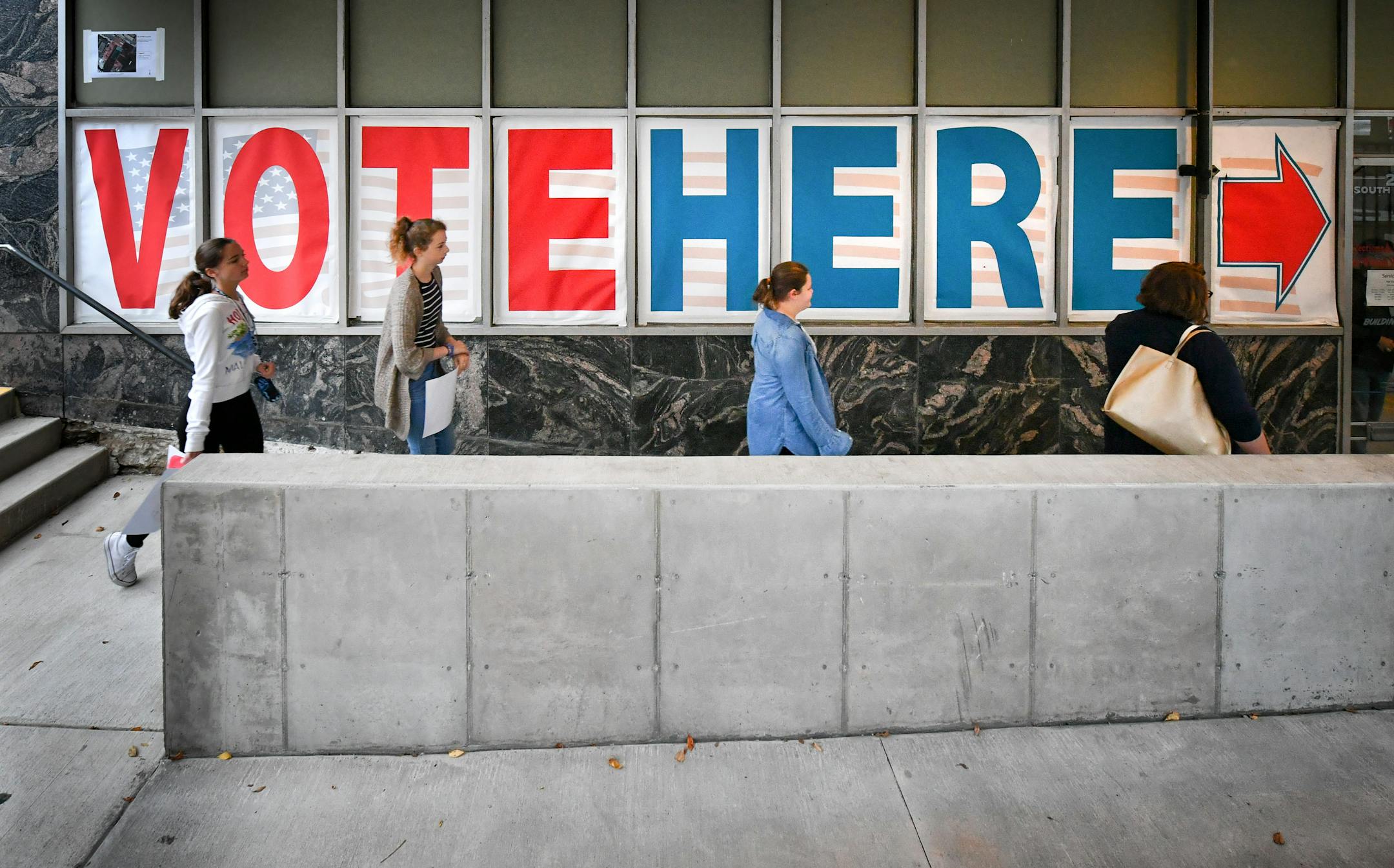
Minnesotans will vote Tuesday in dozens of local elections. (Glen Stubbe/The Minnesota Star Tribune)

Minnesota voters will cast ballots Tuesday in dozens of local races, including contests that will determine leadership of the state’s two largest cities, Minneapolis and St. Paul.

This year’s election may not have as much buzz as a presidential contest, but the outcomes matter for local issues, including growth and development, school funding and the balance of power at the Legislature.

Here’s what voters need to know before heading to the polls.

Find your polling place

Polls are open from 7 a.m.-8 p.m., and anyone in line to vote at closing time will be allowed to cast a ballot. Find your polling station here.

If you need to register to vote on Election Day, you will need to bring proof of residence. Check whether you are registered at your current address here.

What’s on the ballot?

People can look up a sample ballot for their address on the Secretary of State’s website.

Voters in many cities across the state will consider who to elect to their local mayor’s office or city council, and several school districts are asking for tax increases. In Duluth, voters will consider a measure that would allow renters to bypass municipal red tape and initiate small repairs themselves at the expense of landlords.

In Minneapolis, voters will cast ballots for mayor, the entire City Council, the Board of Estimate and Taxation and the Park Board.

In St. Paul, people will vote for mayor and consider two ballot questions: one to raise taxes for St. Paul Public Schools and the other to allow a new category of fines called “administrative citations.”

Special elections for Senate seats in Wright County and Woodbury will determine the makeup of the Legislature.

Learn about the candidates

There are several Minnesota Star Tribune candidate guides you can reference before casting your ballot in Minneapolis races.

Read up on coverage of issues in Minneapolis and St. Paul. Learn more about the leading candidates — Sen. Omar Fateh, Mayor Jacob Frey, Jazz Hampton and DeWayne Davis in Minneapolis; Mayor Melvin Carter and Rep. Kaohly Her in St. Paul — or watch the top mayoral candidates make their pitches in their own words.

Here is a collection of nearly every election story we’ve done this fall.

How does ranked-choice voting work?

Minneapolis, St. Paul, Bloomington, St. Louis Park and Minnetonka use ranked-choice voting to determine winners.

Ranked-choice voting allows voters to select multiple candidates for one office in order of preference.

Unless a candidate gets more than 50% of first-round votes, ranked-choice voting requires a reallocation process to count voters’ second and third choices (or sometimes even more) in multiple rounds of tabulation.

When will results be available?

Not immediately after polls close, but it usually doesn’t take too long before results start trickling in, often precinct by precinct as they get reported to the Secretary of State’s Office.

The Minnesota Star Tribune will have full results for races across the state as they become available. Some contests, especially those that use ranked-choice voting and go beyond the first round, may require tabulating in subsequent days.

about the writer

about the writer

Star Tribune staff

See Moreicon

More from Elections

See More
card image
Alex Kormann/The Associated Press

Nearly 1 in 5 voters only had one pick, even though ranked-choice voting allows for multiple candidates.

card image