Editor's Pick

Editor's Pick

How Minneapolis’ Somali community became an important source of support for Mayor Jacob Frey

Frey’s top challenger was the son of Somali immigrants. But Frey has been running with East Africans for decades.

The Minnesota Star Tribune
November 24, 2025 at 12:00PM
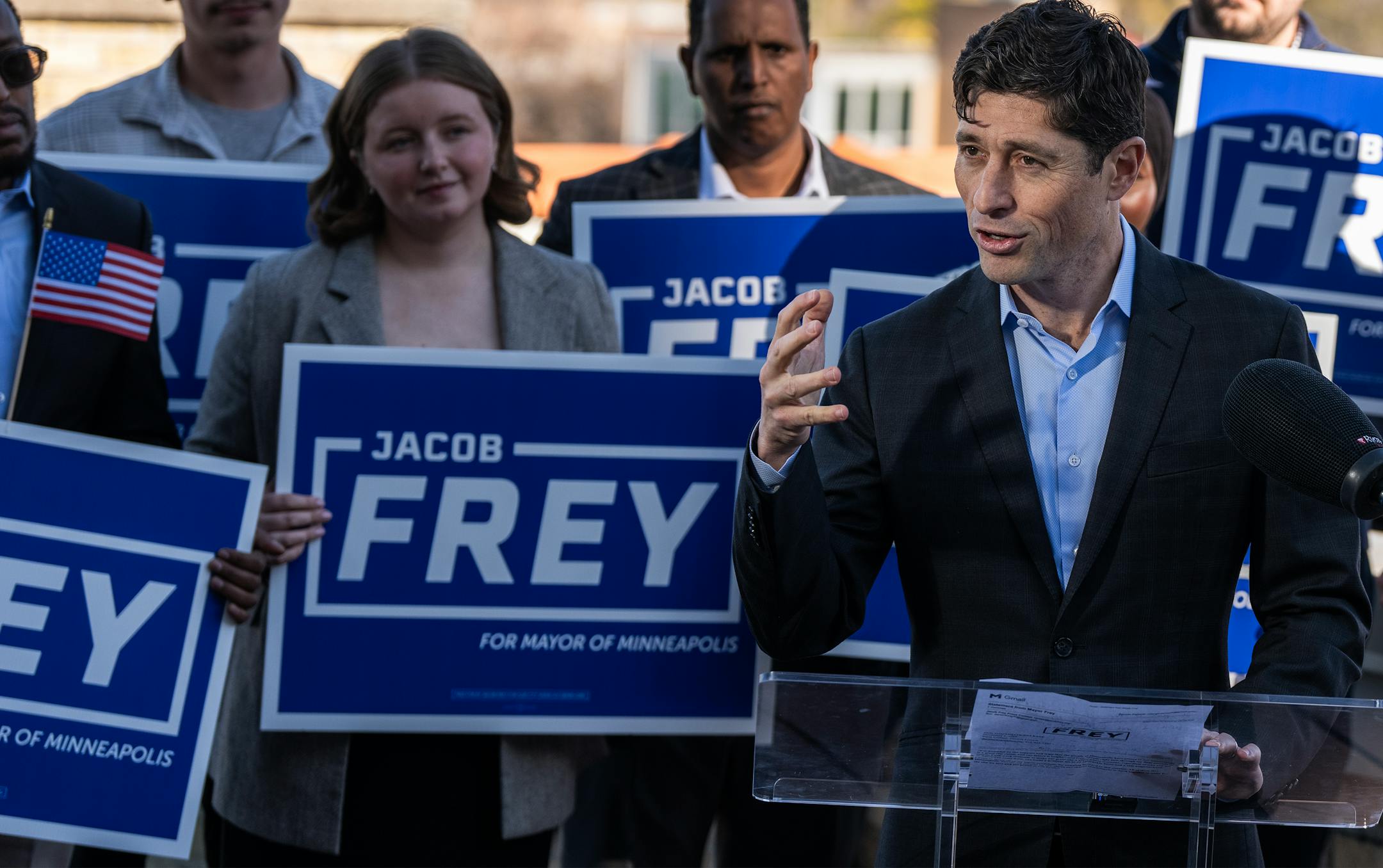
Mayor Jacob Frey speaks during a press conference after being re-elected for a third mayoral term in Minneapolis on Nov. 5. (Richard Tsong-Taatarii/The Minnesota Star Tribune)

Minneapolis Mayor Jacob Frey delivered two victory speeches on election night earlier this month: One to a mostly white crowd, and another to a mostly East African audience, where he briefly spoke in Somali.

While a cynic might view the move as performative, Frey’s support among Minneapolis’ Somali voters has been part of his coalition since he entered politics, reflected in his victory earlier this month over Omar Fateh, Minnesota’s first state senator of Somali descent.

While it’s impossible to say exactly who got what portion of votes from any particular group, both campaigns say Frey won a decent chunk — albeit a minority — of the Somali vote.

It’s a relationship that was neatly summed up with an interaction Frey had this fall with one voter, a Somali-American man who took pains to explain why he couldn’t vote for the mayor.

“I really love you,” he told Frey, “but Fateh’s my nephew.”

The boy who ran alongside the champion

Frey’s connection to the East African community traces back to his childhood.

He grew up in northern Virginia, home to a large Somali population. (Fateh grew up not far away.) When Frey, an aspiring young runner, was 10 years old, he was jogging along a path and spotted a tall, lanky man he recognized: world champion miler Abdi Bile.

Bile attended George Mason University, near Frey’s home. The young Frey began running alongside his boyhood idol. “He totally forgot about me, but I forever remembered him,” Frey said.

Abdi Bile, who is a running legend of sorts in his country of Somalia, has found himself planted in Minneapolis through his ties to Mayor Frey. Bile is running director at The Loppet, helping underprivileged young people, especially Somali youth.] RICHARD TSONG-TAATARII ¥ richard.tsong-taatarii@startribune.com
Former world champion runner Abdi Bile moved to Minneapolis after taking a jog through the city with Mayor Jacob Frey. Bile took a job at The Loppet, helping underprivileged young people, especially Somali-American youth. (The Minnesota Star Tribune)

Bile doesn’t remember that day, but he also doesn’t doubt it happened, saying people often socialized and jogged together in that area. He does remember Frey as a standout high school and college runner who went on to run professionally.

More than three decades years later, Bile reached out to Frey to ask if he could visit him in Minneapolis. When the two went for a jog, Bile was amazed by the city’s trails — and the reception Frey got.

“Everybody was just ‘Hi mayor’ ‘Hi mayor’ ‘Hi mayor,’” said Bile, who would later move to Minneapolis.

When he was a professional distance runner, Frey literally rubbed shoulders with many East African runners, not only during races but before and after, rooming, hanging out, and warming up with Ethiopians, Somalis and Kenyans.

After falling in love with Minneapolis while running a marathon, Frey moved here and made fast friends with members of the city’s large Somali community before he ever ran for office, watching soccer games and drinking tea at cafes.

That familiarity would also lead Frey to be a regular presence in the community during his political career. In June, he danced on stage at a Somali festival and proclaimed July 1 Somali Culture Day in Minneapolis. The community even nicknamed him Yurub Farid, an Arabic version of his name.

During an October campaign swing through Karmel Plaza, a south Minneapolis mall with more than a hundred East African-run shops and restaurants, Frey didn’t hesitate to join a gaggle of men digging their hands into a giant, communal bowl of rice, goat meat and bananas.

Frey has picked up bits and pieces of the Somali language over the years. He knows how to say phrases like, “Hey, how you doing?” and “It’s nice out today,” or “It’s good to see you.”

“I’m certainly not fluent, but I’ve learned the niceties,” Frey said. “I try to pick up a phrase every time I’m hanging out with Somali people.”

Both campaigns went after the Somali vote

Mahamoud Wardere, who ran for Minneapolis mayor in 2001, supported Fateh this year, but said Frey has done a good job engaging the Somali community.

Not only does Frey show up at community events and celebrations, he specifically asks for the community’s vote, Wardere said.

“I like when candidates ask for your vote,” Wardere said. “When I started ... nobody was asking for our vote.”

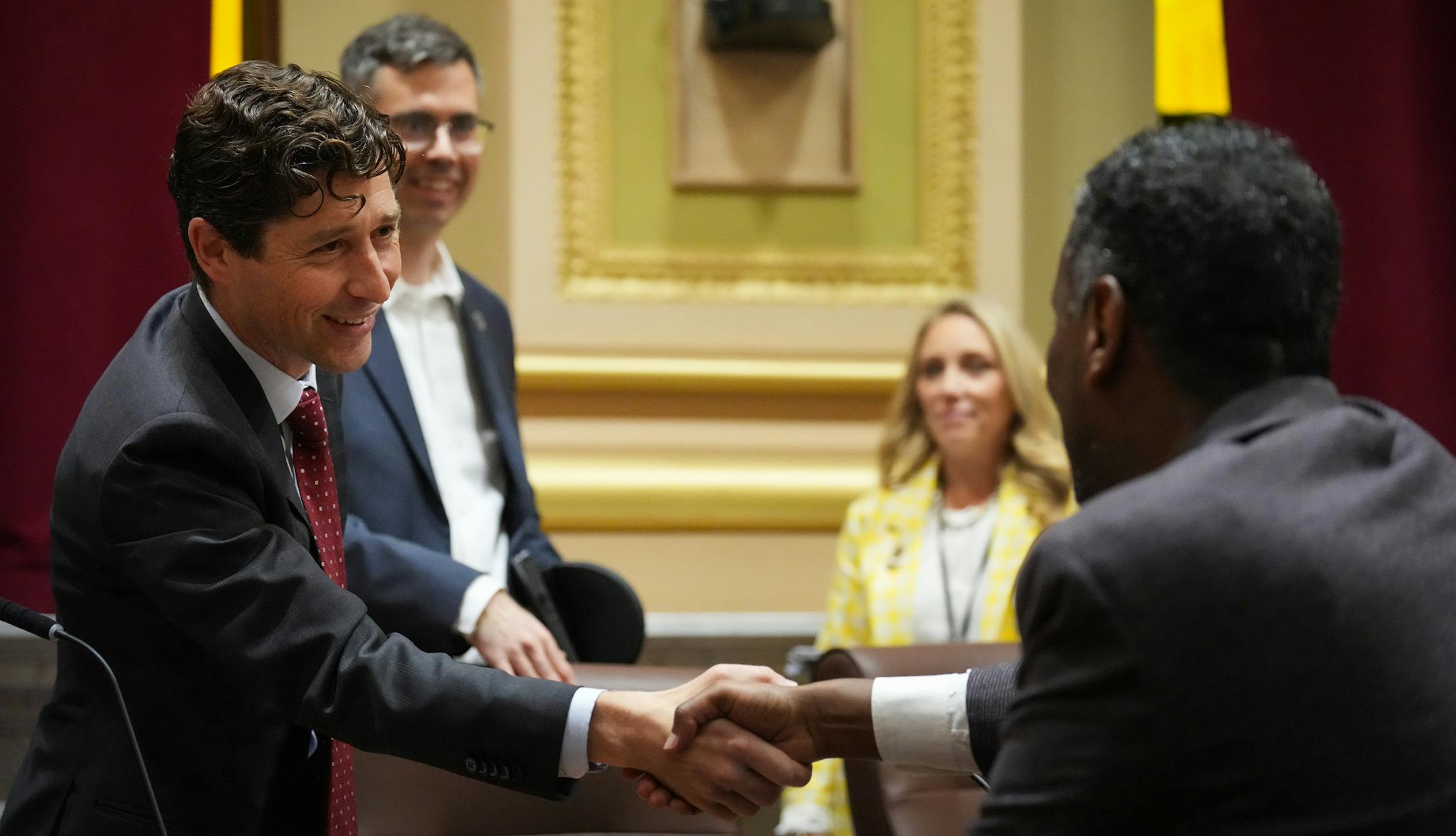
Mayor Jacob Frey greets former City Council member Abdi Warsame during a City Council meeting in Minneapolis on Aug. 15, 2023. (Shari L. Gross/The Minnesota Star Tribune)

Frey has also garnered support from the community in other ways. After being elected to the Minneapolis City Council in 2013, Frey became close with Abdi Warsame, the city’s first Somali council member who became another bridge to the community.

As mayor, Frey also won Somali support for signing an ordinance allowing the Muslim call to prayer to be broadcast from the city’s mosques any time of the day.

That impressed local Somali leader Liban Hussein. He’d voted for Frey before, but this year he actively campaigned for him along with over a dozen other community leaders.

After it became clear Fateh would be Frey’s top challenger, Frey’s campaign decided it wouldn’t simply cede the Somali vote: It set up a satellite campaign office in Cedar-Riverside, a heavily Somali neighborhood where Fateh’s campaign was headquartered.

Frey had a team of 15-20 staffers, volunteers and advisers. Their goal was to get 40 to 50% of the East African vote, according to Abdiqafar Jama, Frey’s East African campaign manager.

Frey Campaign Manager Sam Schulenberg said the campaign created an East African outreach team and gave them resources to get out the vote.

Last summer, about 15 leaders from the city’s Somali-American community decided to support Frey based on his stances on key issues such as public safety, affordable housing and homeless encampments. They said they want more police, more Somali police, more Somali representation in the Frey administration, and a new community mall in south Minneapolis.

They hosted a half dozen events to rally support for Frey, efforts that signaled it was OK to be of Somali descent and support the mayor over Fateh.

“That’s what showed the community that we’re not a monolithic group,” said Mohamed Omar, former chairman of the Hennepin Healthcare System, which oversees HCMC. “We are diverse community members, and we have diverse political opinions. For us, it was important not just to support Fateh because he’s from our community, but to support Fateh if he had a winning argument, and we felt his argument didn’t resonate with many of the community’s interests.”

Mohammedamin Kahin, a volunteer adviser for Frey’s campaign, said both Frey and Fateh are “very famous” in the Somali community, but he thinks Frey also just spent more time engaging with community members over the years.

“The people will remember that,” Kahin said.

It also didn’t hurt, Kahin said, that Frey was endorsed by Somali hip hop star Ilkacase Qays, who flooded social media with messages encouraging people to vote for Frey in the final days of the campaign.

A community divided?

After the election, social media lit up with some Somalis celebrating Frey’s win and others claiming that divisions among Somali clans split the vote between Fateh and Frey.

Some news outlets have reported that clan loyalties affected the race, with the Hawiye clan supporting Frey and the Darod clan supporting Fateh.

Abdirizak Bihi, a Somali community activist and longtime Cedar-Riverside resident, chalked up the clan chatter to “YouTubers and influencers based in Somalia and Europe” trying to get clicks. He said the community was divided but had “mostly civil debates.”

Some Fateh supporters accused Frey of encouraging such division by meeting with members of certain clans.

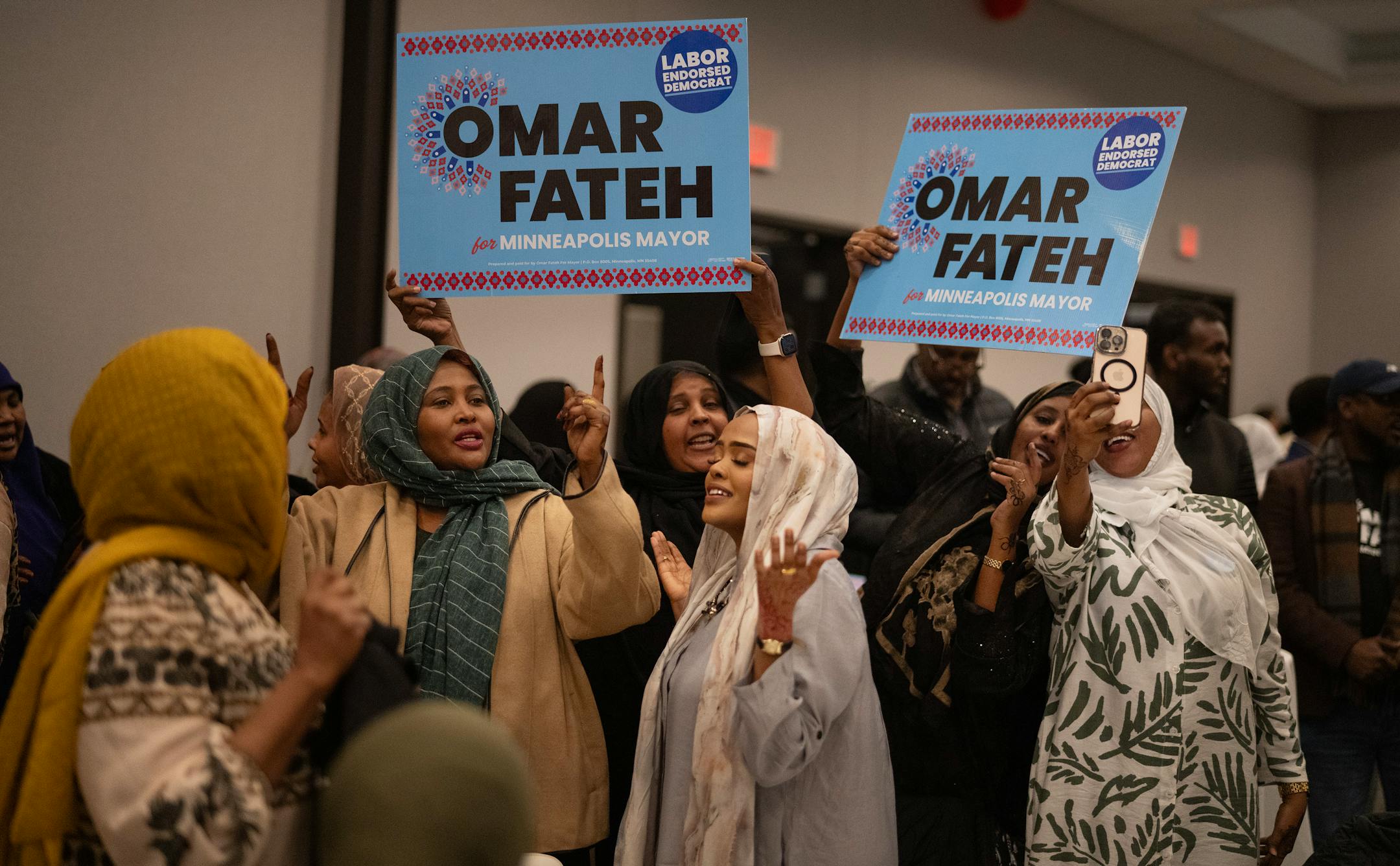
Supporters of Minneapolis mayoral candidate Omar Fateh danced at his watch party at the Courtyard by Marriott Minneapolis Downtown Tuesday, November 4, 2025 in Minneapolis. ] JERRY HOLT • Jerry.Holt@startribune.com (Jerry Holt/The Minnesota Star Tribune)

Minneapolis Council Member Jamal Osman, who represents the heavily Somali Ward 6, said hyping up the divide among clans — which has roots in the Somali civil war —makes for good TikTok fodder, but he doesn’t think Frey’s campaign intentionally sought to divide Somalis, although he said Frey needs to be careful not to do so unwittingly.

Frey’s campaign manager, Schulenberg, also dismissed the allegation, saying the election came down to a stark choice between a more moderate incumbent and a democratic socialist with very different positions on policing and rent control.

“Minneapolis is extremely polarized right now,“ Schulenberg said. “I think this election was seen as a watershed moment.”

But Frey seemed to acknowledge the toll the election took when he closed his election-night speech to the Somali-American audience by saying, “This election means this is a moment for unity, where the entire Somali community can come together and say, ‘This is our people. This is our city. We are united behind each other.’”

about the writer

about the writer

Deena Winter

Reporter

Deena Winter is Minneapolis City Hall reporter for the Star Tribune.

See Moreicon

More from Minneapolis

See More
card image
card image