

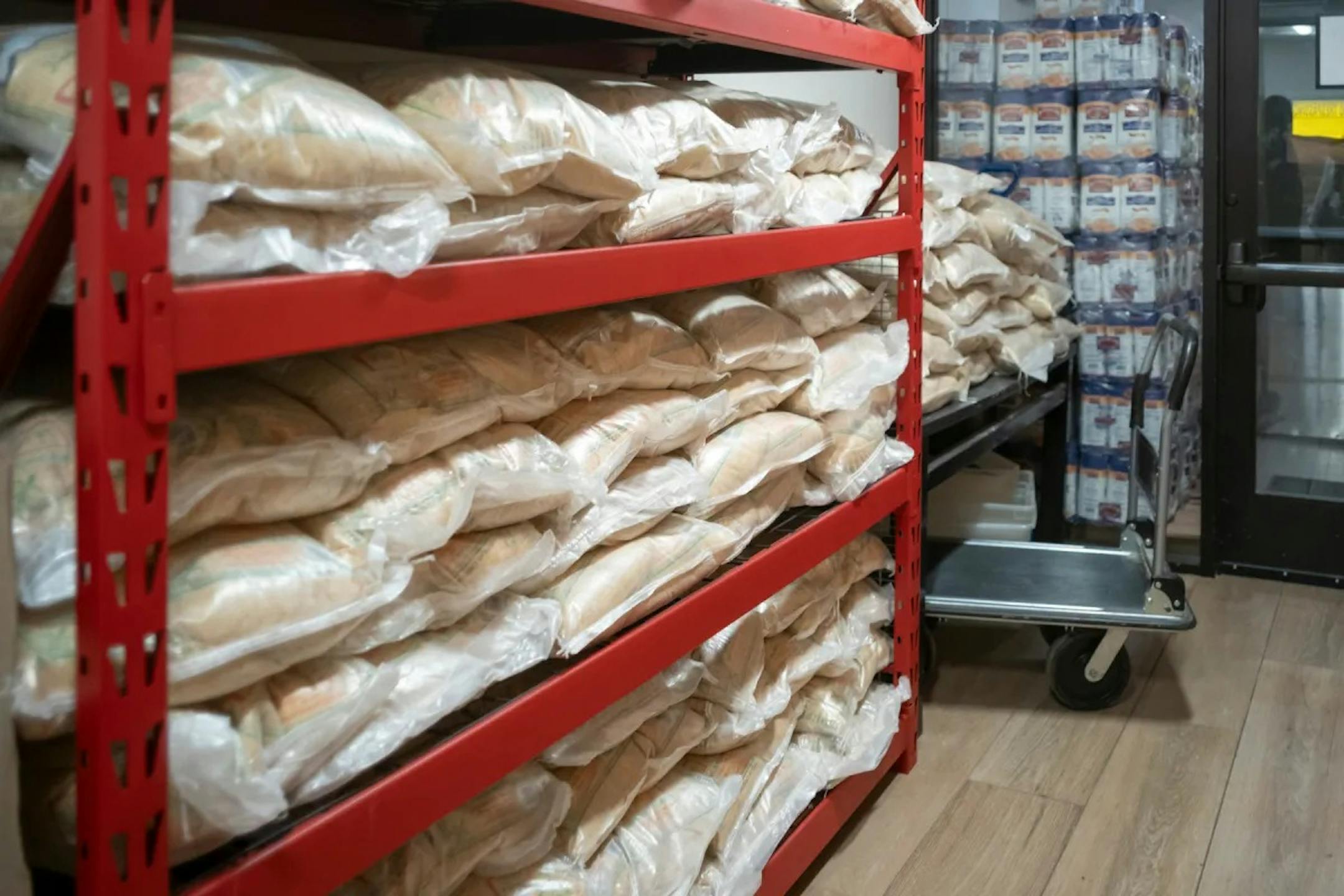
On a chilly morning at the Brian Coyle Center in Minneapolis, Muna Mustafa waited in line long before the center’s food shelf opened its doors. Muna, a mother of four children between the ages of 8 months and 8 years, quietly stood behind her cart in line, hoping to get enough food for her family.
Over the past two years, this food shelf has been a lifeline for this stay-at-home mother, whose family of six lives on a single income. Food stamps and her husband’s paycheck barely cover food, rent, utilities and other household expenses, she said.
“I don’t know what we would have done without this extra help,” she said as she wheeled her cart away from the distribution site after she received her food. In it was milk, macaroni and some fresh produce.
Food shelves across the state are facing a spike in demand, even as rising prices and on-again, off-again federal funding for food stamps affect Minnesotans. For those serving immigrants, the challenges can be even greater.
At a gathering at Karmel Mall last month, Khalid Omar, an organizer with Isaiah Minnesota, said President Donald Trump’s attacks on Somali Minnesotans are a distraction from rising costs that are hitting immigrant communities hard.
“We’re dealing with people not able to pay their rent. We’re dealing with people not able to afford groceries,” he said. “We see our food shelves running out.
“The reality is that people are struggling, our communities are struggling,” he said.
In November, Isuroon, which provides halal food through four distribution centers, was forced to close its location at the Hubbs Center in St. Paul.


