
St. Paul schools asking voters to back tax increase keeping ‘extras’ in place

New Superintendent Stacie Stanley warns of cuts to popular offerings if voters reject $37.2 million-a-year tax increase.

The Minnesota Star Tribune
October 26, 2025 at 10:30AM
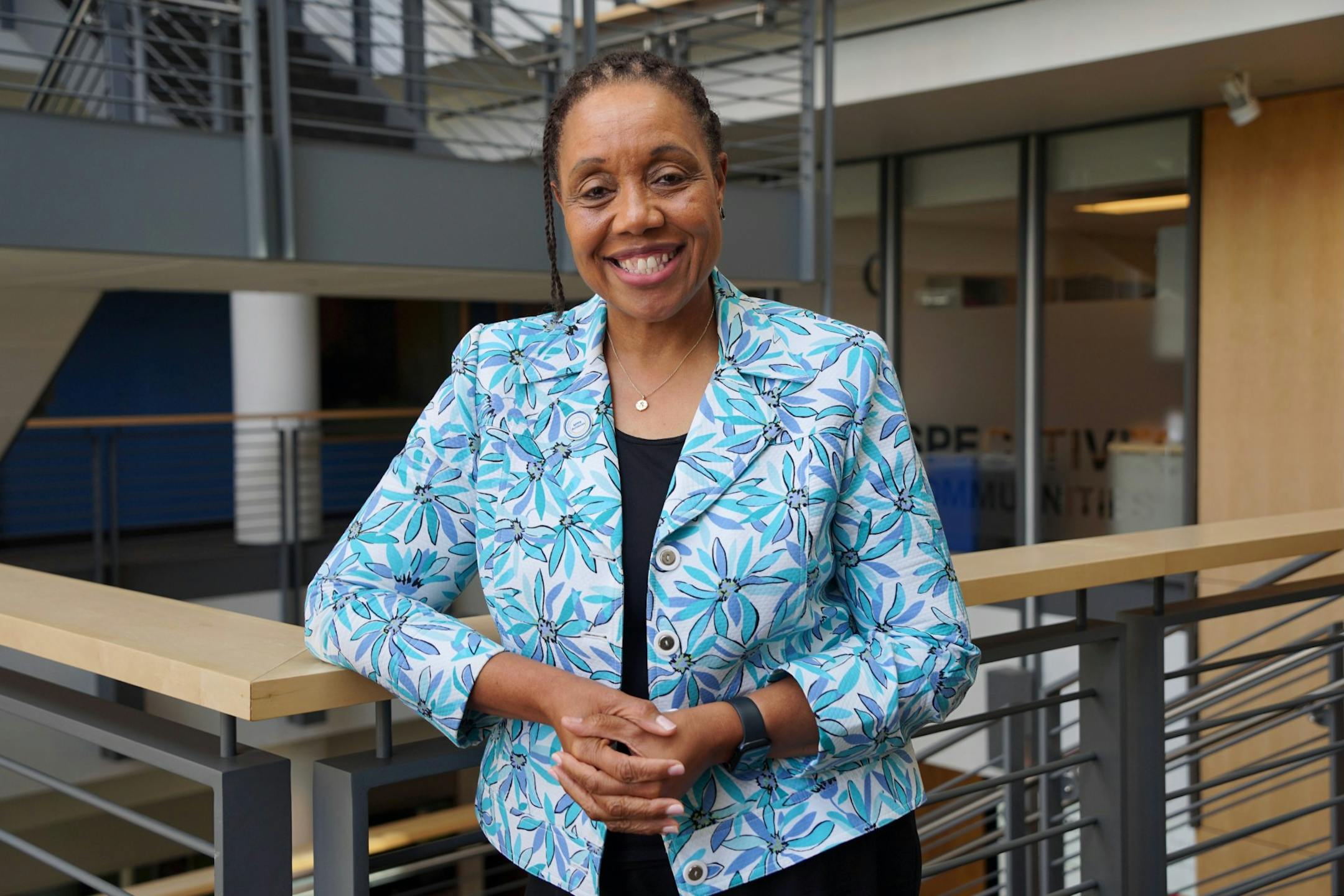
St. Paul Public Schools Superintendent Stacie Stanley said she’s been busy “hitting the pavement” speaking with residents about a Nov. 4 ballot measure seeking to raise $37.2 million in new school taxes to steady district finances. (Nikhil Kumaran/MPR News)

St. Paul Public Schools is asking voters on Nov. 4 to back a $37.2 million-a-year tax increase — not to add extras, but to preserve what it’s got.

Think not just the essentials, but programs dedicated to the arts, and building trades, and non-English languages and cultures.

Superintendent Stacie Stanley, now five months into the job, has been busy “hitting the pavement,” she said, to speak with residents about securing a stable fiscal foundation for her district and avoiding cuts to potentially vulnerable programs.

“This isn’t the icing on the cake,” she said. “This is the cake.”

A campaign committee, Yes for Strong Schools, has drawn sizable support from the district’s teachers union. Mayor Melvin Carter and state Rep. Kaohly Vang Her — who is challenging Carter in this year’s mayoral race — also say they strongly back the ballot measure.

Many taxpayers, however, have grown increasingly frustrated with the cost of government in St. Paul — so much so that Stanley has been encouraging homeowners to look into the state’s property tax refund program for potential relief after they’ve paid their tabs.

If the tax increase is approved, the owner of the city’s median-valued $289,200 home would pay an additional $309 in school taxes in 2026.

“It is not lost on me what I’m asking families to do right now,” Stanley said.

New St. Paul superintendent

Stanley, a 1984 Central High graduate, is the first SPPS alum to be named superintendent. She previously served as schools chief in Edina.

In an interview this week, Stanley said that, as a student, she had access to and enjoyed the kind of programming that could be endangered if this fall’s ballot measure fails and the district is left with a $37 million hole in its 2026-27 budget.

St. Paul residents were surveyed this summer to gauge support for the potential levy request, and when asked what they liked most about the state’s second-largest district, the “variety of programming” landed atop the list.

Stanley and other district leaders, in turn, have pointed to investments in language and culture instruction, college and career readiness, and arts and music as examples of ways in which the district has broadened its offerings to appeal to family and community interests.

If the referendum doesn’t pass, potential cuts to arts and music have come up often in discussions with residents. That’s because in many cases, the district said, schools are seeking to attract students with courses that are popular yet aren’t graduation requirements, “making them vulnerable when budgets are tight.”

For example, two semesters of performing or visual arts are required to graduate from high school, the district said, but many students are taking additional credits in courses ranging from acting and music production to honors band and advanced-level art history.

When she was a student at Central, Stanley said she took advantage of a program then offered through the University of Minnesota that allowed prospective first-generation college students to go to the U of M campus and U students to visit Central to speak with and advise high school students.

She participated in dance and debate, too.

This fall, St. Paul Public Schools launched a program in partnership with the International Union of Operating Engineers Local 49 giving high school seniors a chance to explore careers in heavy equipment operation and earn high school, college and apprenticeship credits in the process.

“It really does take multiple opportunities to develop that whole student who eventually graduates and goes into the real world,” Stanley said.

First 100 days

St. Paul dedicated one-time COVID federal relief money to hire interventionist teachers to help students struggling with reading. Many positions were cut when the federal money dried up, but some were retained with the use of district general fund dollars.

They again would be “on the table” for possible elimination if the ballot measure fails, Stanley said.

Last week, she reported to school board members about the district’s strengths and potential areas of improvement — lessons learned through various outreach methods — and noted how one parent described test scores at some schools as “just heartbreakingly, shockingly low.”

In an interview, Stanley said she was encouraged, however, that reading scores districtwide had stabilized with 34% of students meeting grade-level standards in 2025. Twelve schools posted increases of at least 5 percentage points over 2024, according to the district.

She now is hopeful the levy passes and students continue to “get that extra scoop, that extra focus,” that interventionist teachers can help provide.

Stanley concluded in her board report:

“These [first] 100 days have reinforced my conviction that St. Paul Public Schools has extraordinary strengths — dedicated staff, innovative programs and deep community connections — alongside urgent challenges that demand immediate attention and planning," she wrote.

“Our families and students are not asking for perfection,” she continued. “They are asking for consistency, equity, dignity and follow-through. They are asking us to see them, hear them and create systems that serve all children with the same excellence we provide to some.”

Voting on the ballot measure is underway.

about the writer

about the writer

Anthony Lonetree

Reporter

Anthony Lonetree has been covering St. Paul Public Schools and general K-12 issues for the Star Tribune since 2012-13. He began work in the paper's St. Paul bureau in 1987 and was the City Hall reporter for five years before moving to various education, public safety and suburban beats.

See Moreicon

More from St. Paul

See More
card image
Renée Jones Schneider/The Minnesota Star Tribune

A recent death of a client highlights providers’ concern that adults with disabilities are being left “out in the cold.”