Mayoral candidate DeWayne Davis says he has the heart to solve Minneapolis’ most intractable issues

Davis says getting his hands deep into community as a pastor has given him a perspective that contrasts career politicians.

The Minnesota Star Tribune
October 8, 2025 at 3:00PM
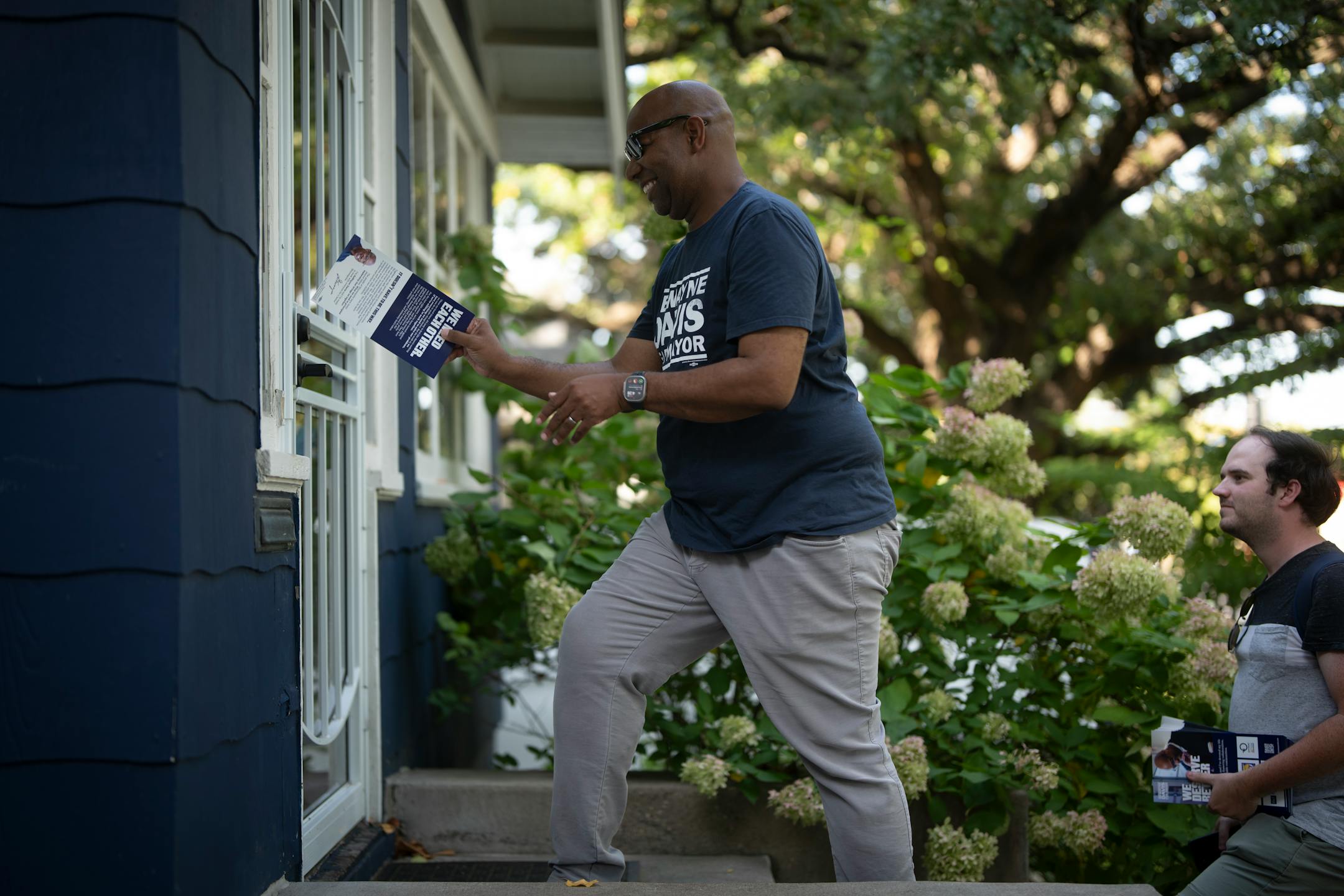
DeWayne Davis puts a flyer in a door as he door knocks for his mayoral campaign in the Kingfield neighborhood on Sept. 29 in Minneapolis. (Renée Jones Schneider/The Minnesota Star Tribune)

Last month,­ Dinner Du Nord transformed downtown’s Nicollet Mall into a giant dinner party, feeding thousands of guests at America’s longest table. A few days later, mass shootings rocked gatherings of homeless people on E. Lake Street, the immigrant business corridor still struggling to rebuild from the civil unrest following George Floyd’s murder.

Minneapolis mayoral candidate DeWayne Davis, who left his preaching job to run for mayor, has been using that moment to draw a stark comparison central to his campaign message: There’s the Minneapolis of superlative abundance — the city with the best parks, most walkable blocks and fittest people. And there’s the Minneapolis where the deeply rooted issue of addiction-driven homelessness is on display daily.

“What I’m wanting is a much more intentional and a much more consistent understanding of that dilemma, of that disparity,” Davis said in an interview with the Minnesota Star Tribune.
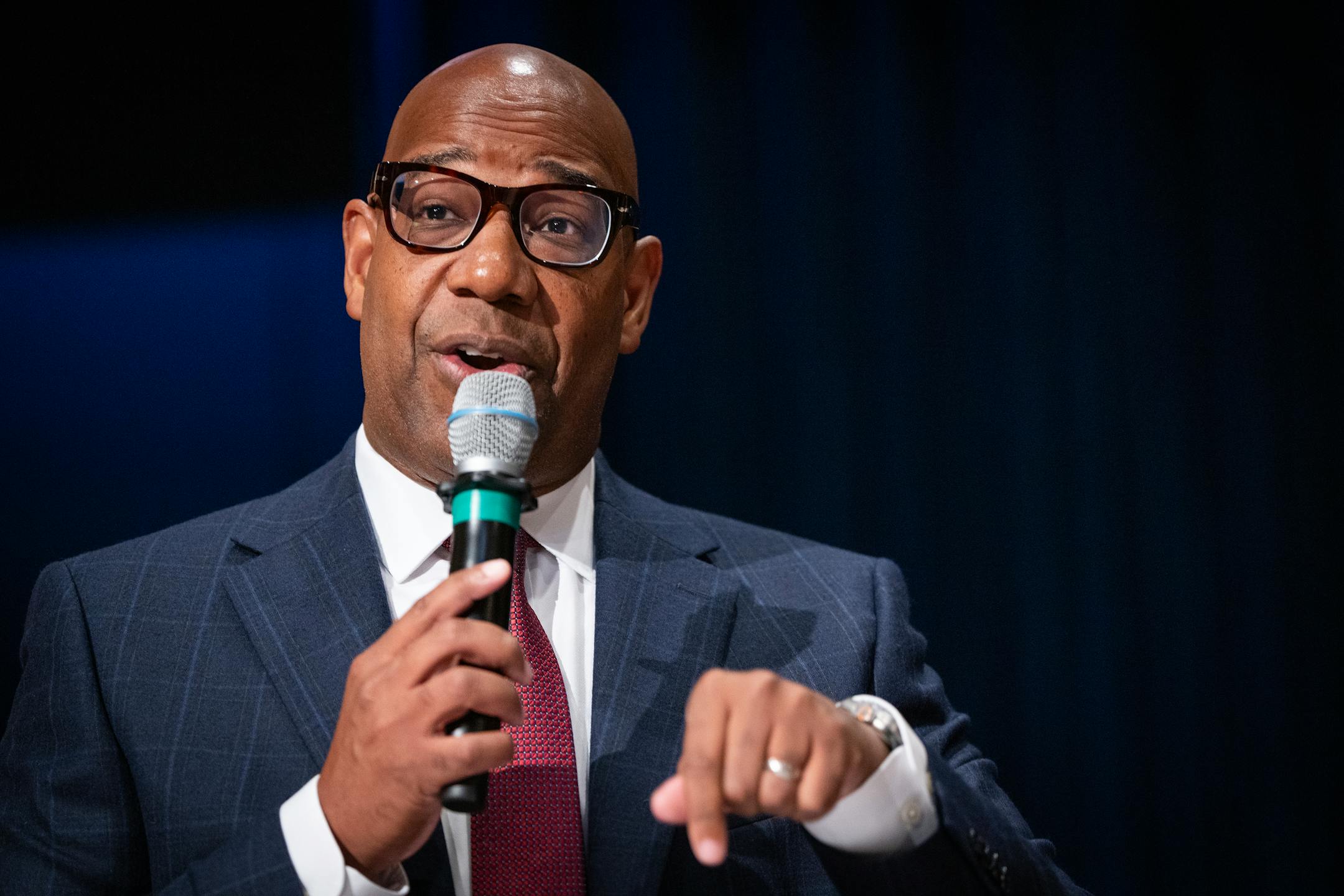
Rev. DeWayne Davis speaks during a Minneapolis mayoral candidate debate at Westminster Hall in Minneapolis on Sept. 26. (Leila Navidi/The Minnesota Star Tribune)

Davis doesn’t begrudge anyone their wealth, he clarified, but he does want to see the table expanded for those on the margins of society. He defines himself as a sort of “New Deal” Democrat, a concept of government intervention in poverty that existed decades before “democratic socialism” became the rallying cry of the party’s left wing.

It’s a belief system born out of his personal theology — when he talks about social issues, he weaves in scriptural stories about Jesus embracing the unwanted — as well as his pre-preacher days on Capitol Hill. Between 1994 and 2006, Davis was an aide to Democratic Congressmen Pete Visclosky, Chet Edwards and Steny Hoyer before becoming a lobbyist for the publicly traded student loan company Sallie Mae.

While watching the Wall Street ticker board with fellow lobbyists one day, Davis had an epiphany: He didn’t want to be yoked to Capitol Hill and what he saw as its unending grind of power and money forever. So he quit and enrolled in seminary. In a way, this 15th child of a Mississippi Pentecostal minister returned to the family business.

In 2013, Davis moved to the Willard-Hay neighborhood of north Minneapolis with his husband, Kareem Murphy. He was a pastor at All God’s Children in south Minneapolis before becoming the lead minister of Plymouth Congregational in 2020. Pandemic-era Minneapolis contended with a vortex of crime and police brutality, addiction and loneliness — the consequences of which echo across neighborhoods today. In 2023 he was the Minnesota Senate chaplain.
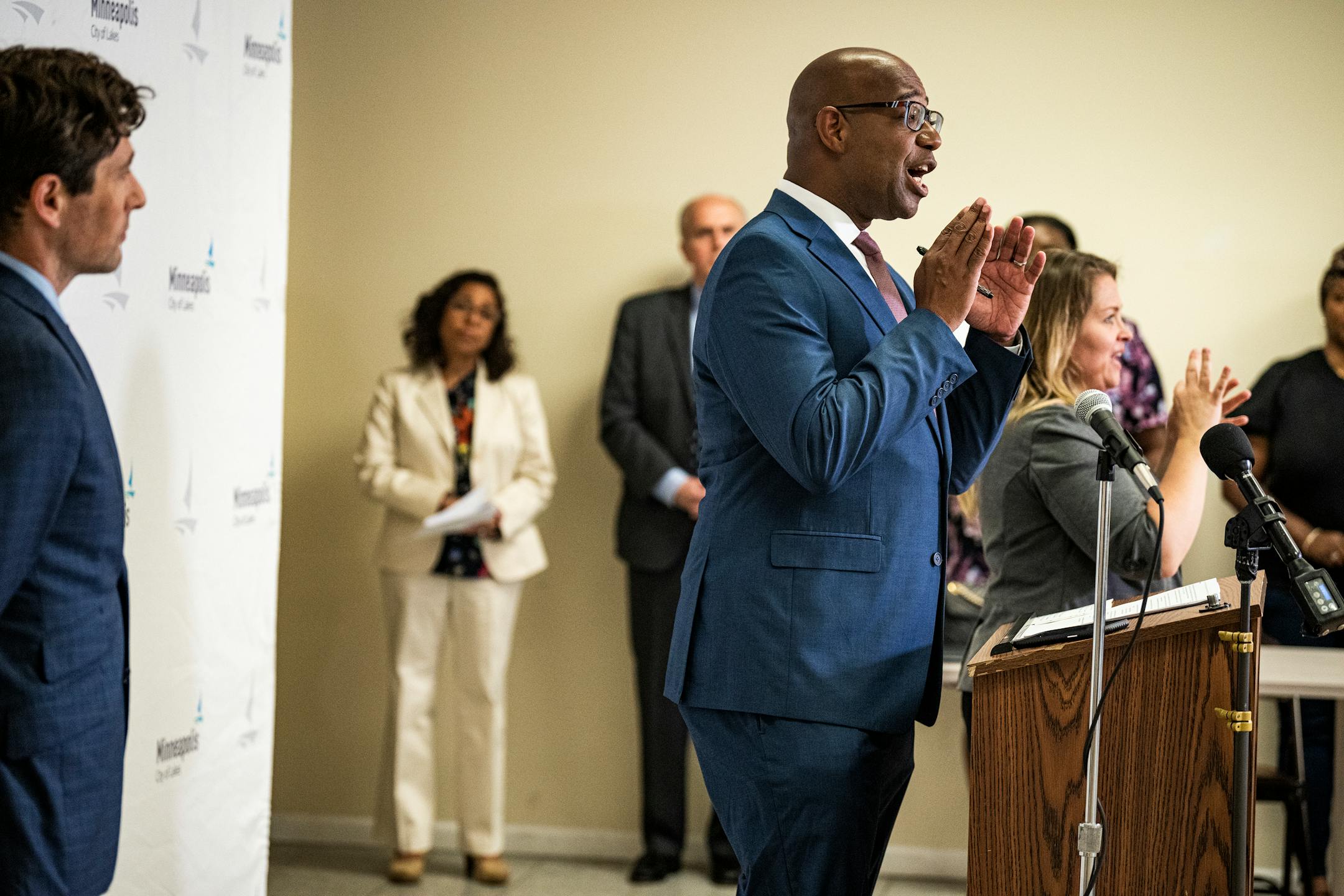
As Mayor Jacob Frey watches, then-reverend DeWayne Davis goes over violence prevention and intervention recommendations at the Minneapolis Urban League in Minneapolis on June 27, 2022. (Richard Tsong-Taatarii/The Minnesota Star Tribune)

Davis has never held public office, though he has long worked behind the scenes and orbited politics from the vantage of a faith leader, championing trans rights and warning against the rise of fascism. But if he had not become a minister, accompanying people through hardships, he would not have run for mayor, he said.

Anxious about increasing nihilism in national politics while watching the neighborhood around his church try to guard against crime, Davis decided running for office would be the best way to do his part.

“Wherever this democracy is going, I am going to give everything I’ve got to make sure that it stays,” he said. “My faith is a bulwark against what I think we are experiencing now.”

Davis’ husband is deputy director for human services and public health with Hennepin County.

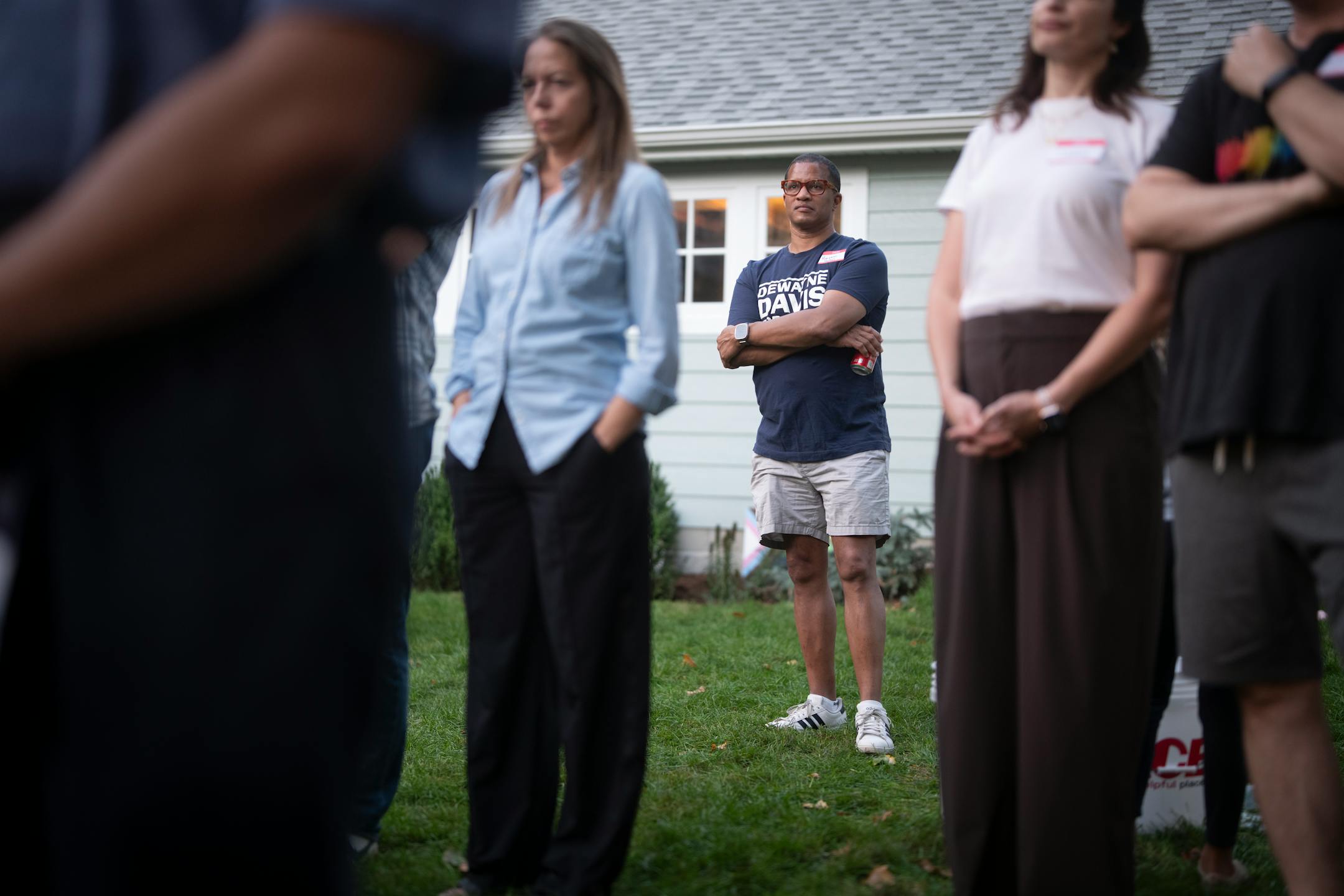
DeWayne Davis’ husband Kareem Murphy watches as he speaks to a crowd attending a fundraiser for Davis’ mayoral campaign at a home in Linden Hills on Sept. 29 in Minneapolis. (Renée Jones Schneider/The Minnesota Star Tribune)

Davis says he has two main goals as mayor. He wants to find a better response to unsheltered homelessness than the city’s current approach, which he sees as little more than dispersing people. And he wants to ensure meaningful public safety reform, which he does not believe has happened in the five years since Floyd’s killing because city leaders haven’t put their hearts into the promises they made.

After the last mayoral election, Mayor Jacob Frey formed a work group to recommend improvements for public safety. He appointed Davis and activist-attorney­ Nekima Levy Armstrong as co-chairs. But shortly after the group began to meet, Minneapolis police killed 22-year-old Amir Locke, who wasn’t wanted for any crime, while conducting a no-knock warrant.

Locke’s death and what followed were formative moments for Davis.

Frey previously had claimed to have banned no-knock warrants. That was false, although the mayor’s campaign removed the claim from its website and argued that he never said he banned them. The Police Department subsequently made the officer who killed Locke a use-of-force trainer. He was eventually removed after public outcry.

None of it sat well with Davis, and it was during this time that other members of the Public Safety Workgroup asked him to consider running for office, he said.

“I don’t think the rhetoric and the promise will do the work for me, and you shouldn’t allow it to,” Davis said.

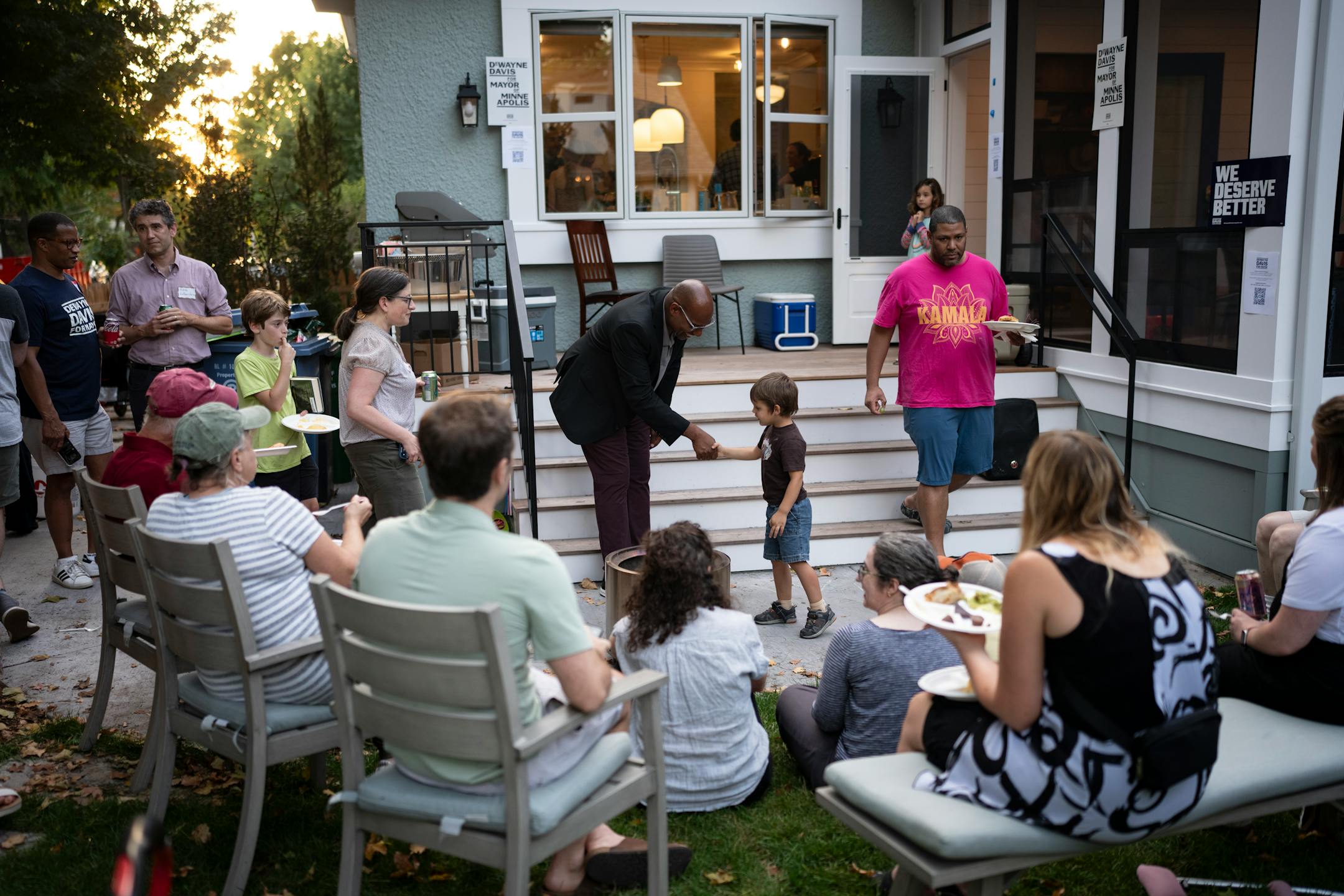
DeWayne Davis greets a little boy while attending a fundraiser for his mayoral campaign at a home in Linden Hills on Sept. 29 in Minneapolis. (Renée Jones Schneider/The Minnesota Star Tribune)

Levy Armstrong said she intends to rank Davis first on her ballot because he’s willing to talk about the city’s disparities despite the topic not being a pleasant subject matter for the well-off, who turn out to vote with the greatest consistency. She described Davis as “calming” and “unflappable” by nature, someone who withstood political pressure to back the mayor’s position on certain public safety issues if it didn’t align with his values.

“He does his best to be judicious in his approach and to choose his battles. I think he’ll be an excellent listener,” Levy Armstrong said. “That’s the kind of energy that our city needs because our city is still very much divided. Not only internally, but with the external pressures coming from the White House, we need a unifier and a person who will stand on business for what is in the best interest of the city.”

At Lake Harriet Bandshell Park in September, Davis held a joint rally with the other leading challengers for mayor. Together, he, Omar Fateh and lawyer-businessman Jazz Hampton asked voters to choose “change” by ranking anyone but the two-term incumbent this fall.

After the rally, the mayor’s supporters criticized Davis and Hampton as running just to boost Fateh, the democratic socialist whose clashes with the mayor are sucking up most of the oxygen in the race.

Davis rejects that notion, saying that while polarizing candidates dominate headlines, the ranked choice voting system tends to favor those in between the extremes — if voters manage to learn who they are. He pointed out that he refused to release his delegates to help Fateh at the city convention and said he just wanted to get back to work telling voters who he was.

“We’re all challenged with keeping that balance between your ambition, your ego, your call and your work,” he said, promising to show Minneapolis the difference between a “workhorse” mayor and a “show-horse” mayor. “If I don’t believe it deeply, if I’m not committed to the thing I said I was committed to … you throw me out, because that’s the way this is supposed to work.”

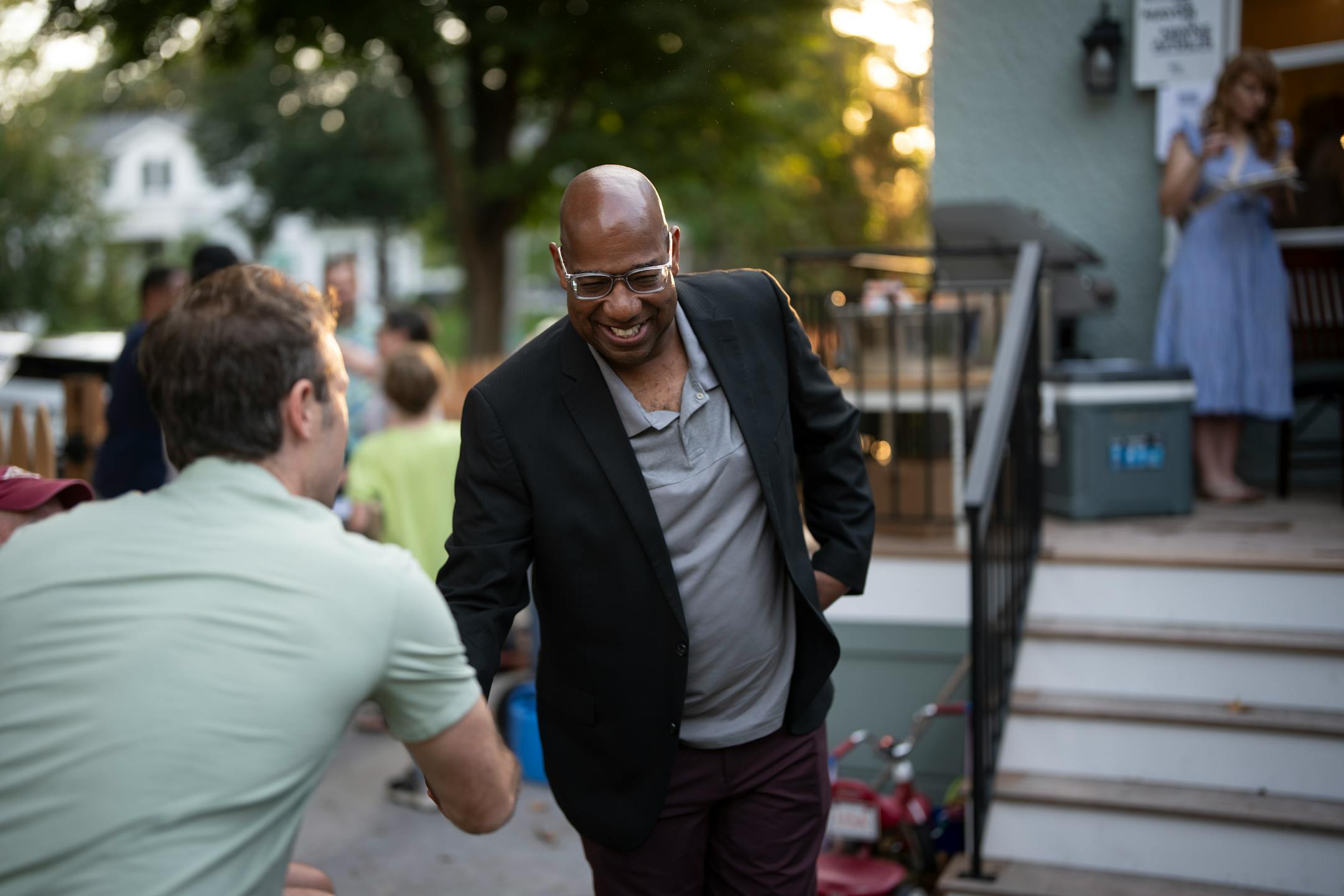
DeWayne Davis greets people attending a fundraiser for his mayoral campaign at a home in Linden Hills on Sept. 29 in Minneapolis. (Renée Jones Schneider/The Minnesota Star Tribune)
about the writer

about the writer

Susan Du

Reporter

Susan Du covers the city of Minneapolis for the Star Tribune.

See Moreicon