Roper: Minneapolis mayoral candidate DeWayne Davis is a lefty but not quite a leftist

The ebullient preacher is motivated to assist the vulnerable but also wants businesses to thrive.

Columnist Icon
The Minnesota Star Tribune
September 26, 2025 at 11:00AM
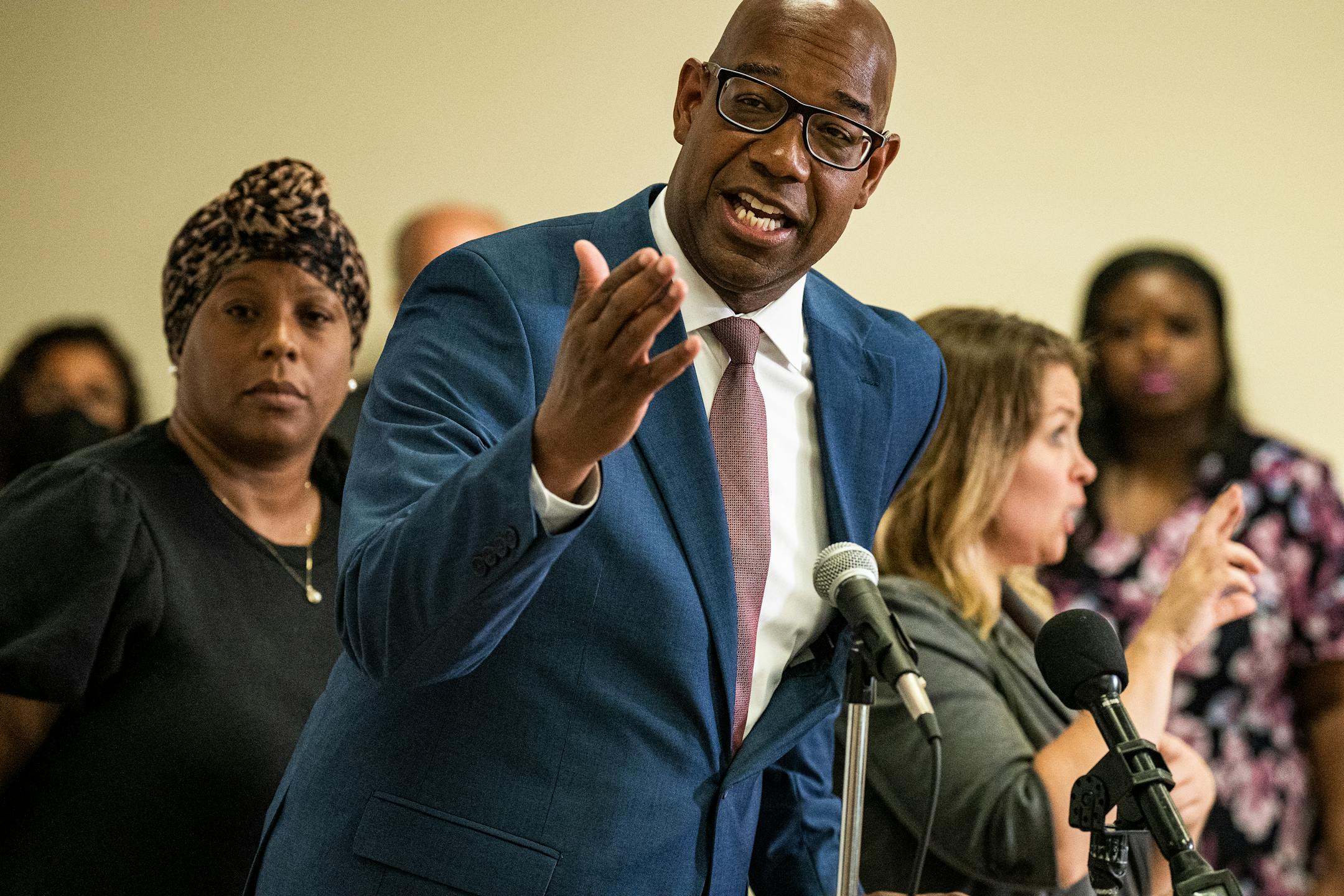
The Rev. DeWayne Davis speaks about police reforms in 2022 at the Minneapolis Urban League. (Richard Tsong-Taatarii/The Minnesota Star Tribune)

Sign up here to follow this column by email.

DeWayne Davis was reading a book about poetry when I met him for coffee one recent afternoon — specifically, a chapter on Langston Hughes’ poem “Harlem.” It’s a short poem with a central question, “What happens to a dream deferred?” that taps into a driving theme of Davis’ campaign for mayor of Minneapolis.

“This isn’t an abundant city if you have a whole segment of your city that’s not doing well,” Davis said deep into our conversation about where he stands on local issues.

It’s hard not to take note of Davis on the campaign trail. The former minister of Plymouth Congregational Church speaks with an enthusiastic, thundering-yet-melodic cadence of someone who knows how to command the pulpit. Up close, his gesticulations and broad smile have a magnetic effect.

Davis and Jazz Hampton are serious candidates in the mayor’s race, even if the polarity between Mayor Jacob Frey and democratic socialist Omar Fateh has garnered most of the ink. I asked each of them to coffee to suss out the nuance of their positions (a column on Hampton is forthcoming).
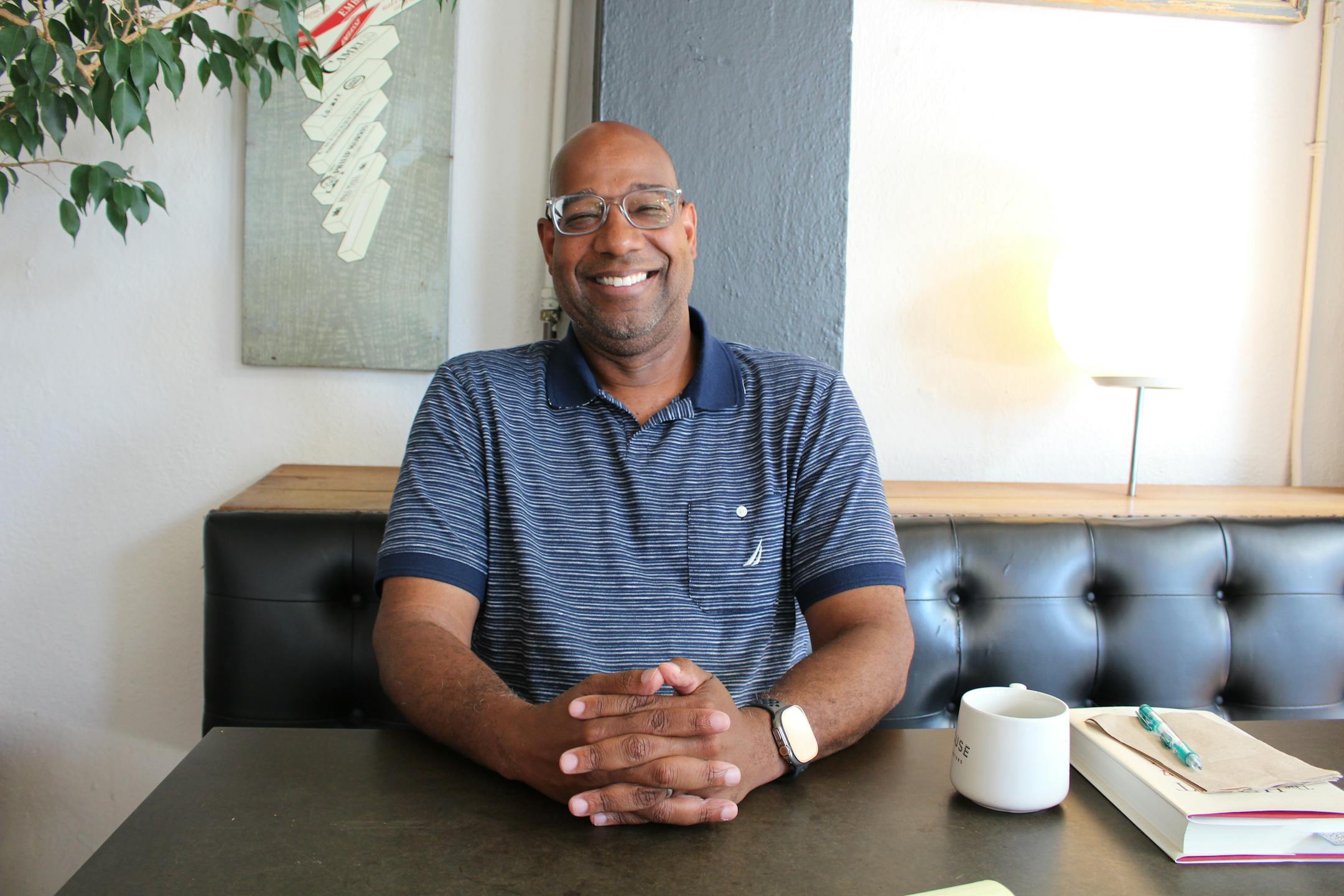
DeWayne Davis at Spyhouse Coffee on Nicollet Avenue in Minneapolis. (Eric Roper)

Davis, who got 20% support in the first round of voting at the DFL convention, represents an option for lefty voters who aren’t ready for the Full Fateh. He thinks the city should have a larger role helping the lowest rungs of society, declaring that “the disparities in this city are just downright criminal to me.”

But compared with democratic socialists, Davis appears more attuned to the impact that city policies have on businesses. He is committed, he says, to maintaining Minneapolis’ status as the economic engine of the state.

Davis doesn’t think that the government should be capping private rent increases (i.e. rent control), for example. But he wants to steer the market by accelerating nonprofit and public development of housing.

“I think we need to … make sure that they are playing in the market to such a degree that they have an impact on the price of housing,” Davis said, floating the idea of a $400 million state bonding infusion into the city’s affordable housing efforts.

When he introduces himself at events, one of Davis’ three top priorities is ensuring businesses are thriving across the city — to make up for the decline of the downtown tax base. Asking him about this over our coffee, he mentioned an Uptown business owner who lamented the challenges of opening a business in the city.

“I think we really need to do a real look at the regulatory regime, the licensing and permitting process. All that stuff needs to be streamlined,” Davis said.

The city has a lot of levers it can pull that affect the relationship between employees and their employer.

Davis supports the creation of an advisory Labor Standards Board, which was vetoed by Frey over objections about its composition (many small businesses opposed it). He believes strongly in a “living wage” and thinks the argument that higher minimum wages tank businesses is “overstated.” But he expressed caution about the city imposing scheduling policies on business, something Fateh supports.

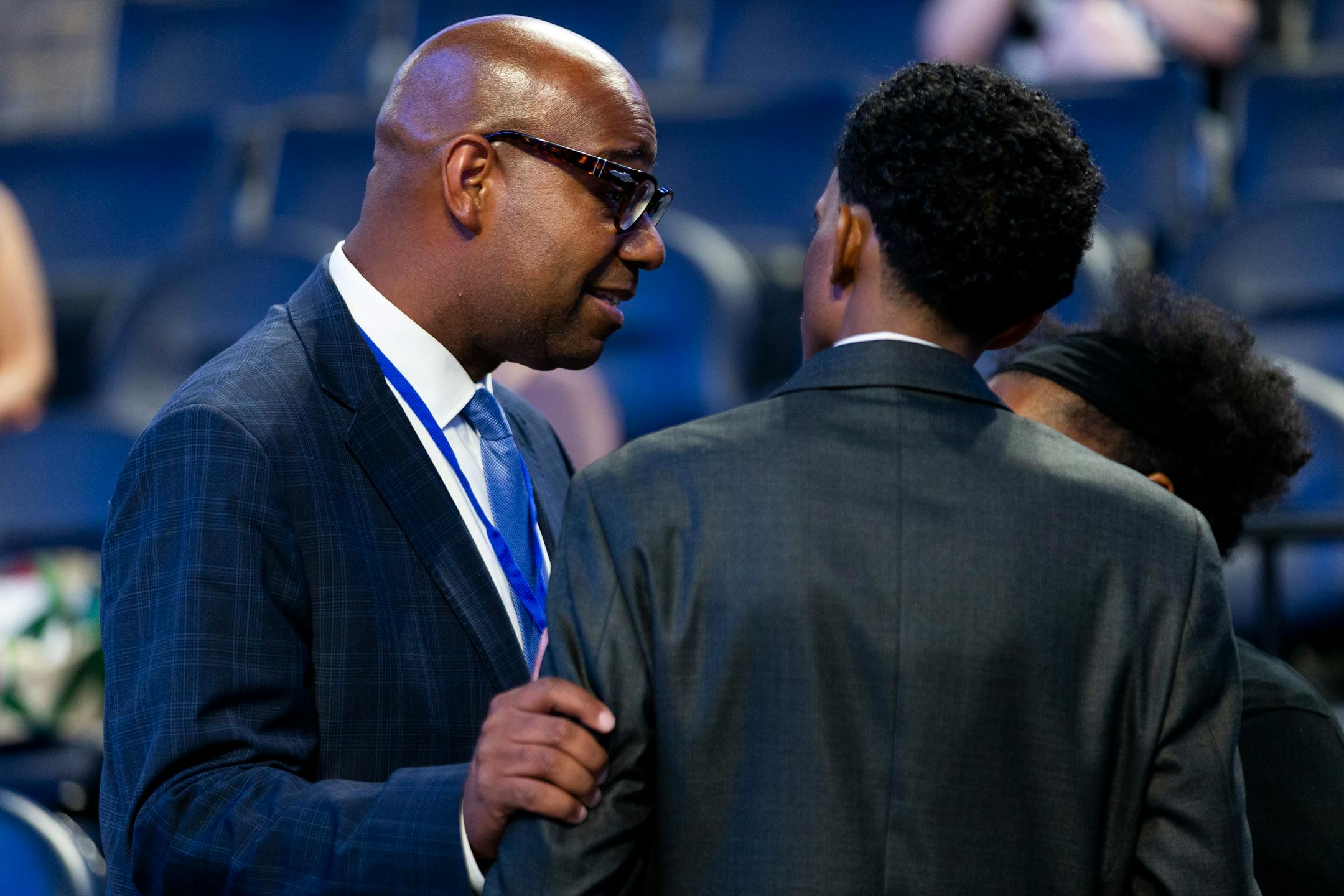
DeWayne Davis, left, speaks with Sen. Omar Fateh and Hennepin County Commissioner Angela Conley at the DFL convention in Minneapolis in July. (Rebecca Villagracia/The Minnesota Star Tribune)

“If there’s anything that makes it hard for small business to provide those [living wage] jobs, we’ve got to be very careful,” Davis said. “We’ve got to have the balance there.”

Transportation is another area where Davis wants to strike a balance.

Davis’ website says that “protected bike lanes belong everywhere,” and he has an entire page devoted to his support of transit. But while talking about Uptown, he told me the city should also consider how to make up for parking that is removed from commercial areas.

“The biggest complaint I’ve got with bus rapid transit and bike lanes is the removal of parking on the street, which also impacts small business,” Davis said.

I was intrigued this summer by a video Davis’ campaign released putting a big emphasis on the ubiquitous fencing that has sprung up around Minneapolis — juxtaposed with his tagline “We Deserve Better.”

Why the focus on fencing?

“It’s reactionary, and there’s no vision,” Davis said of the fences. “If something is wrong or something’s going on, [they] close it off.”

A lot of those barriers were erected because of homeless encampments. Davis wants to see a more robust city homelessness response team housed out of the health department — rather than regulatory services — to engage with and depopulate encampments before they grow larger. He elucidated his stance during a recent rally at Lake Harriet:

“We keep answering deep human need with our police department,” Davis boomed from the bandshell. “Need for food and shelter, for mental health services, for substance use counseling. We have been asking for help and the only policy we get is warriors — under the color of law — bearing guns.”

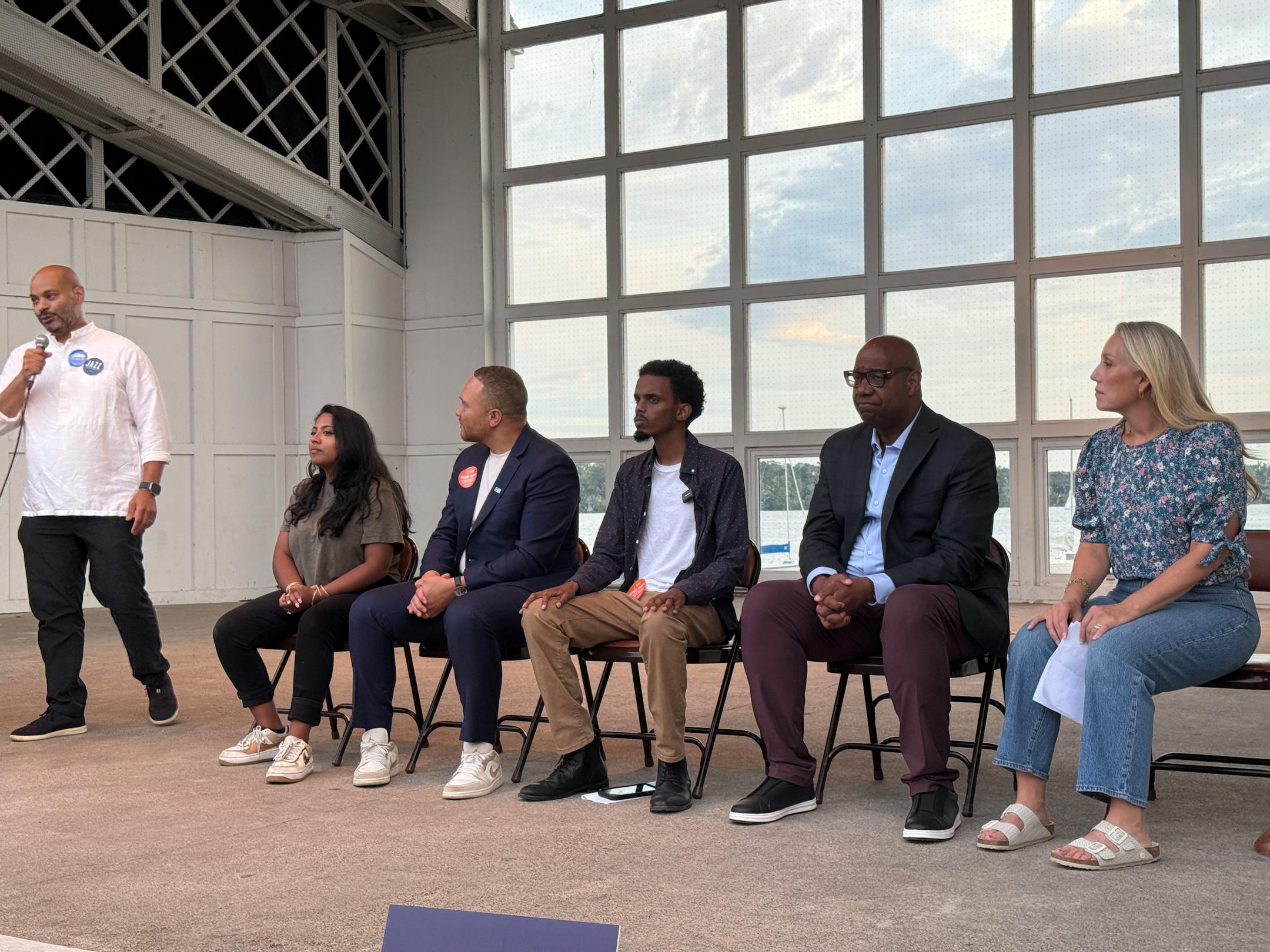
DeWayne Davis, second from right, sits with other candidates and several City Council members at a "Rally for Change" at Lake Harriet in September. (Eric Roper)

Back at Spyhouse, I wondered aloud: Isn’t Hennepin County in the driver’s seat for these social services? (Incidentally, Davis’ husband Kareem Murphy now oversees them after becoming deputy county administrator in July.)

“The county has a role, but that doesn’t mean that the city has no role,” Davis said.

He added: “[The city’s] got to expend some of our own money, our own capital, to be dealing with this. And then … we have more reason to point to the county and say, ‘Here’s where I need you to be.’”

Public safety is another major issue in the campaign. Davis’ resume includes a unique role as the co-chair of the city’s Community Safety Work Group, tasked with developing public safety reforms in the wake of the failed 2021 referendum to dismantle the police department.

He believes the city does not have enough police officers and needs to lower its response times, while also leaning on the work of violence interrupters. But he chides the mayor for painting an overly rosy picture of an independent monitor’s assessment this spring about the city’s reform efforts.

“There were some red flags in the meat of that report,” Davis said, highlighting a section about senior department officers resisting training of new use-of-force policies.

I left our coffee with a much more well-rounded picture of Davis the candidate. At a time when binary options are fostering cynicism about politics at all levels, voters should take the time to review all the major candidates. I’ll be rooting around in the details between now and Election Day, so please send me any questions at eric.roper@startribune.com.

about the writer

about the writer

Eric Roper

Columnist

Eric Roper is a columnist for the Star Tribune focused on urban affairs in the Twin Cities. He previously oversaw Curious Minnesota, the Minnesota Star Tribune's reader-driven reporting project.

See Moreicon