Roper: ICE tactics threaten to unravel trust with local law enforcement

Mysterious federal agents zipping around the Twin Cities and bending the local norms of policing are creating confusion.

Columnist Icon
The Minnesota Star Tribune
January 11, 2026 at 11:00AM
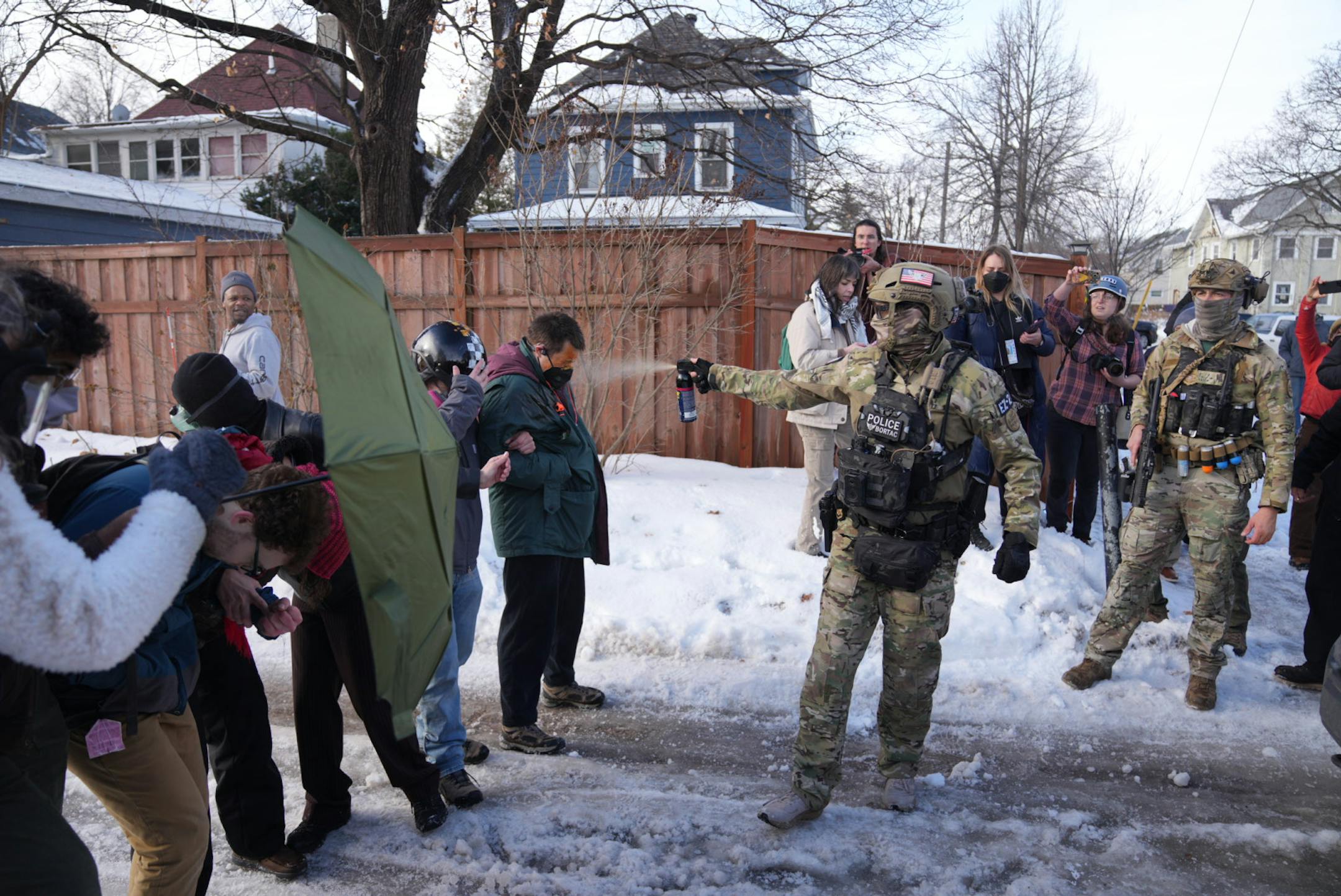
A law enforcement agent sprays a line of protestors with chemical spray at the scene where a federal agent shot and killed Renee Good on Jan. 7. (Alex Kormann/The Minnesota Star Tribune)

Sign up here to follow this column by email

The fury directed at Minneapolis police officers guarding the scene of Renee Good’s death showed the insidious consequences of federal agents’ fast-and-loose campaign.

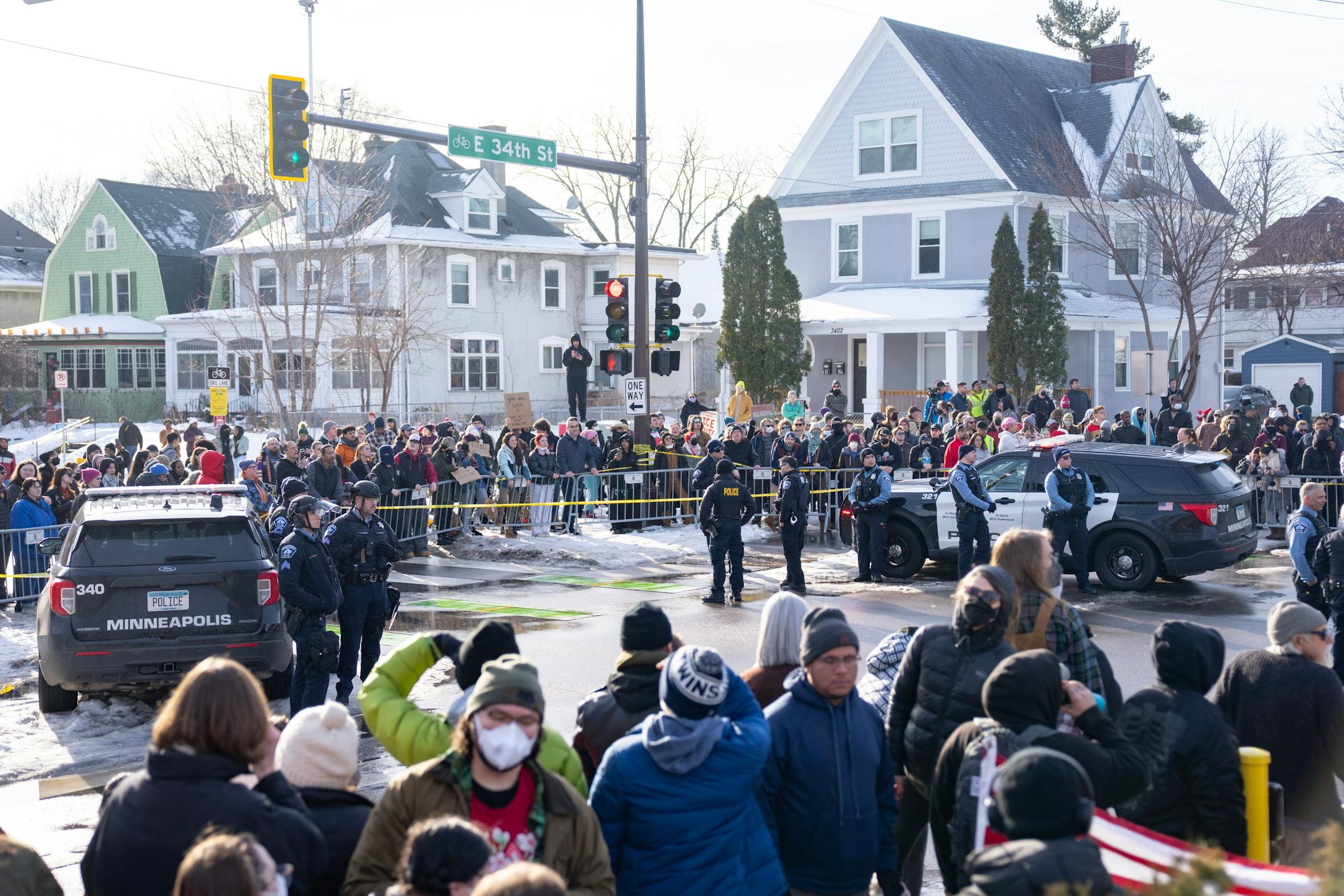
“M-P-D, K-K-K, I-C-E, THEY’RE ALL THE SAME,” a fired-up crowd behind barricades chanted on Jan. 7 at 34th Street and Portland Avenue, as a group of stone-faced Minneapolis Police Department officers stood quietly.

The protestors were justifiably angry. But local cops were taking a lot of heat for something they had nothing to do with.

It left me thinking about how these roving bands of unidentified federal agents zipping around town in unmarked cars and aggressively snatching people — sometimes because of how they look — are undermining trust with law enforcement more generally. And we’ll be living with the fallout of that long after the “surge” has ended.

It’s especially worrisome in this town, which has been slowly rebuilding police-community relations in the wake of George Floyd’s murder. And it felt like we were making progress, to the point where the conversation had gradually shifted to the need for a robust local police force.
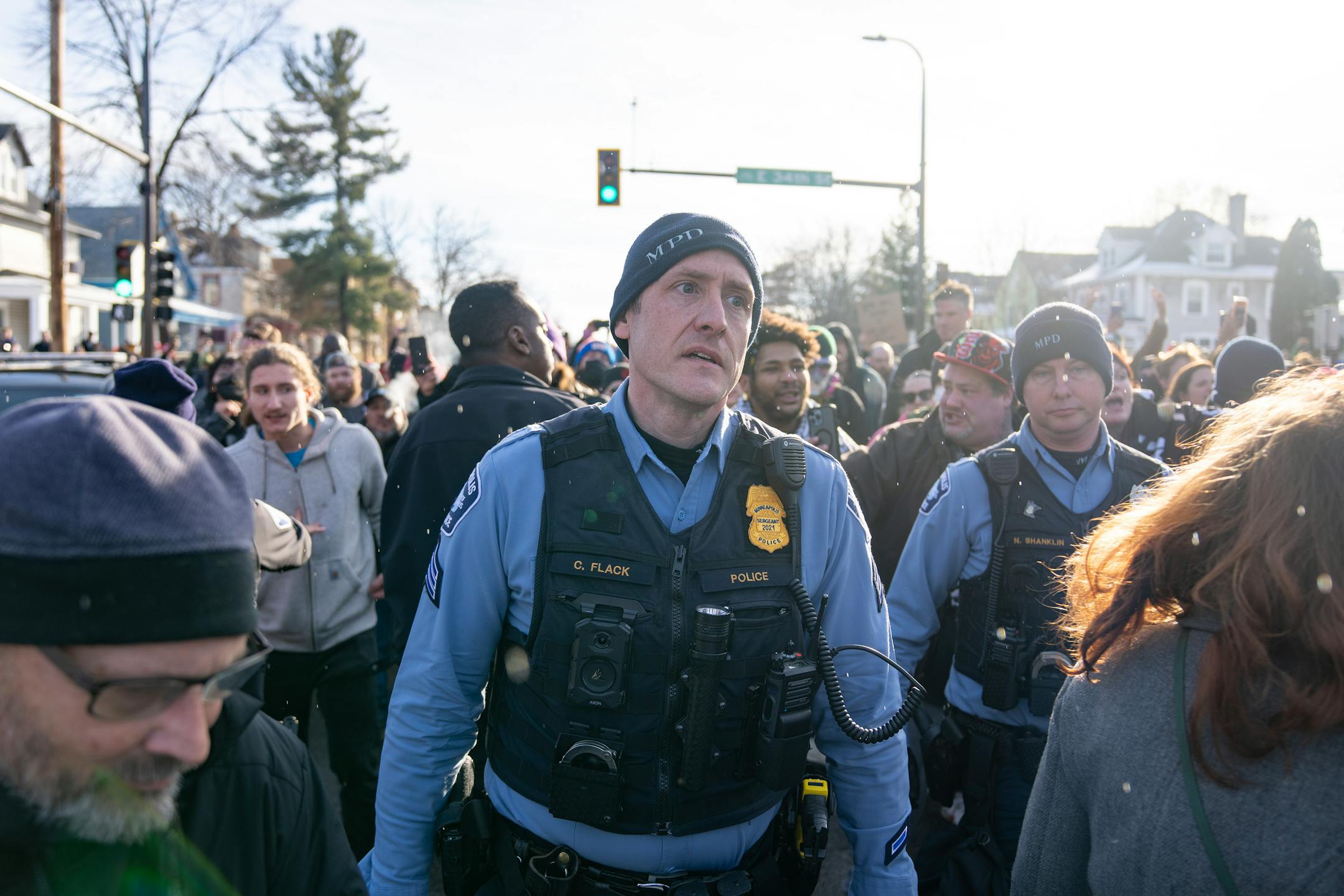
Community members and protestors yell and throw snow balls at Minneapolis police officers as they begin to leave the scene where a federal agent shot and killed Renee Good on Jan. 7. (Alex Kormann/The Minnesota Star Tribune)

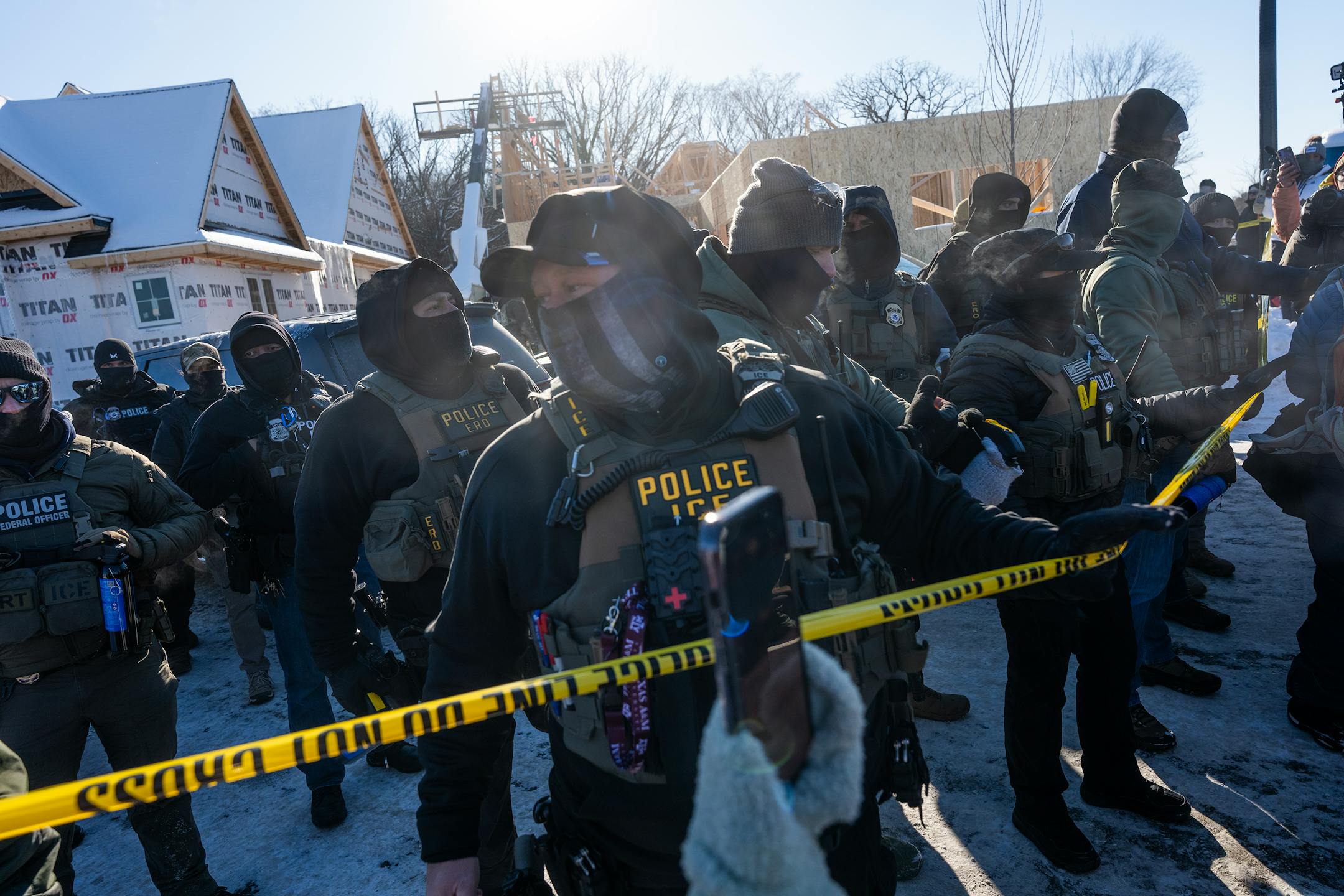
But now we’ve got these federal cowboys out there, and you don’t have to look far to find them. I was on the bus the other day when a bunch of guys with “POLICE” vests and face coverings tackled someone next to a Minneapolis police precinct. We all started filming, and a woman got off with her kid and started blowing a whistle — now the universal signal of ICE activity.

Half of the country, and nearly half of Minnesota, endorsed this initiative to root out undocumented immigrants, based on Donald Trump’s 2024 election. Those living in the cities, who largely didn’t support it, are now watching just how messy and hostile it all is — bending the norms of policing and harassing plenty of citizens.
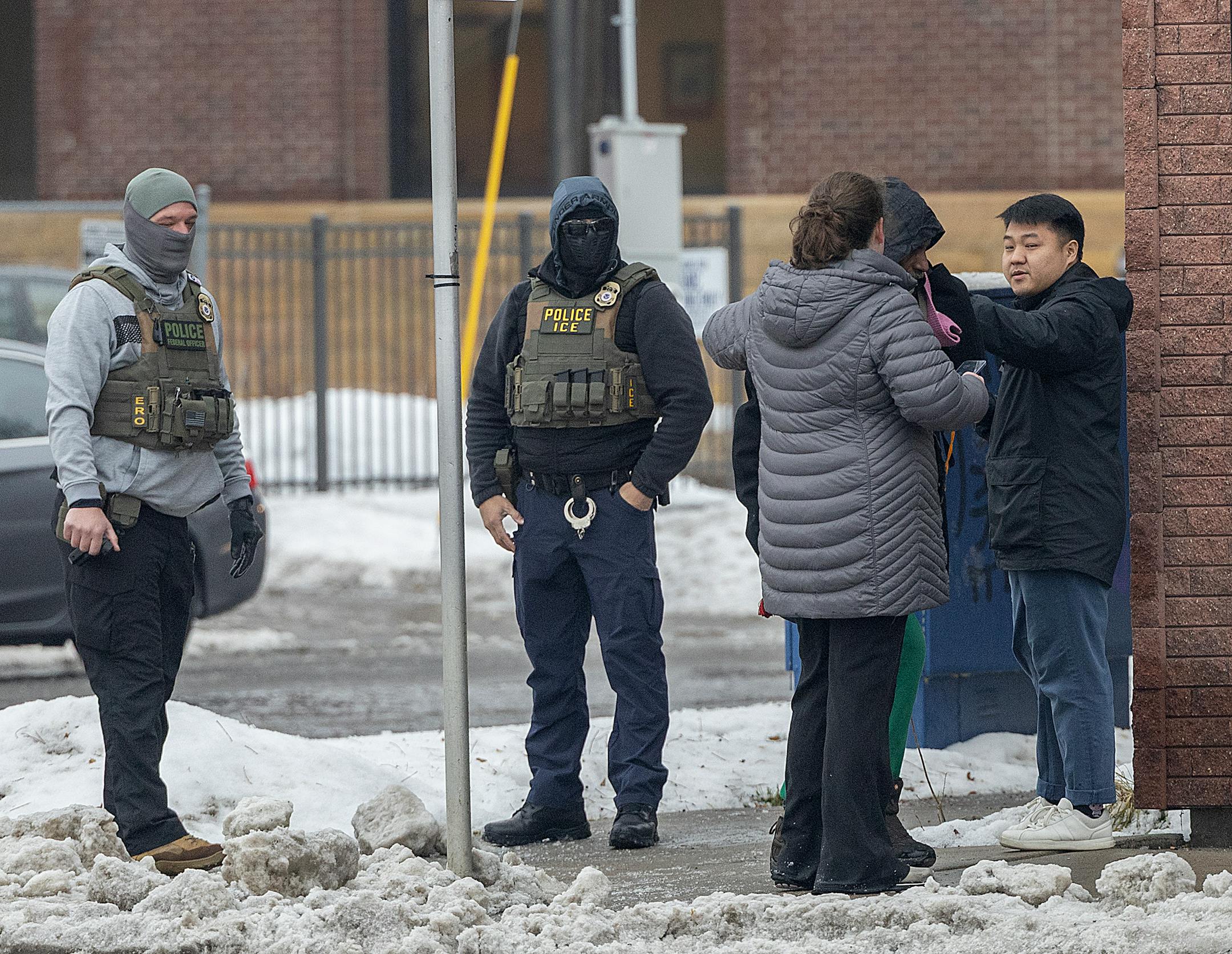
What kind of chilling impact will this landscape of fear have on the public interacting with local law enforcement, a key ingredient for safe neighborhoods? How do you explain to a child that the guy with “POLICE” emblazoned on his chest, disappearing people from the streets, is distinct from a local cop?

ICE agents patrol Rice Street near University Avenue in St. Paul on Jan. 6. (Elizabeth Flores/The Minnesota Star Tribune)

ICE’s mysterious practices (unmarked cars, face coverings, no name tags) make them part of some shadowy law enforcement apparatus.

My husband recently encountered a crowd surrounding a large law enforcement presence outside a predominantly Hispanic church in our neighborhood. The vehicles and uniforms said it was the sheriff’s office. But many of the people filming nearby assumed it was an ICE raid because of how federal agents have been obfuscating their identities.

In other words, it’s a big, confusing mess out there.

“Over the past five years, local law enforcement agencies have worked deliberately to rebuild trust with our community in Hennepin County,” Hennepin County Sheriff Dawanna Witt told me in a statement. “That trust has been significantly undermined by the federal government’s deployment of ICE-ERO agents in uniforms that prominently display the word ‘POLICE,’ creating confusion and fear across our communities.”

A group of ICE agents at a construction site in Chanhassen in December, where they attempted to arrest construction workers. (Richard Tsong-Taatarii/The Minnesota Star Tribune)

People already have trouble distinguishing among the region’s police departments. In Minneapolis alone, different agencies oversee the parks, the University of Minnesota and the transit system. Our multitude of suburbs have their own forces. Then you’ve got county sheriffs, and state agencies like the Bureau of Criminal Apprehension and the state patrol.

In fact, many complaints submitted to MPD are dismissed because they are about officers from other agencies, said University of Minnesota Professor Michelle Phelps, who wrote a 2024 book about policing and police reform in Minneapolis.

Phelps said federal agents’ obscuring their identities is a marked departure from how local law enforcement operates.

“You can see how that would create a lot of confusion. And the confusion is partly the point, right? Federal agencies do not want their agents to be able to be identified,” Phelps said.

MPD’s presence guarding the scene of Good’s death illustrates the tricky tightrope the agency walks.

Hundreds of community members gathered and shouted at Minneapolis police officers near the scene where a federal agent shot and killed Renee Good on Jan. 7. (Alex Kormann/The Minnesota Star Tribune)

“What the MPD’s role is in that moment is really unclear,” Phelps said, noting that the agency is required to maintain public order but also remain separate from ICE operations.

So these cops wearing helmets and carrying batons, who arrived after the incident, incurred the wrath of protestors who urged them to arrest the shooter. People threw snowballs at them as they left the scene.

Reflecting on Wednesday’s protest, Gov. Tim Walz said in a news conference Thursday that local and state agencies “are there to protect Minnesotans. Throwing your anger at them only inflames the situation.”

An explosive example of local police dealing with the fallout of a federal action occurred in November in St. Paul. Federal agents asked St. Paul police to respond to protestors throwing rocks and bricks. The local cops ended up firing rubber bullets and chemical irritants at the crowd. City elected leaders were outraged, with a City Council member accusing the police of being “complicit in fascism.”

To state the obvious, we’re living in unusual times. A federal directive is being carried out against a community that largely didn’t vote for it, spurring widespread antagonism among residents — some of whom are taking to the streets. Local elected officials are telling the federal agents to get out.

When the fog clears from this traumatic event, it’s going to take time to rebuild trust.

about the writer

about the writer

Eric Roper

Columnist

Eric Roper is a columnist for the Star Tribune focused on urban affairs in the Twin Cities. He previously oversaw Curious Minnesota, the Minnesota Star Tribune's reader-driven reporting project.

See Moreicon

More from Minneapolis

See More
card image
Alex Kormann/The Minnesota Star Tribune

Mysterious federal agents zipping around the Twin Cities and bending the local norms of policing are creating confusion.