Roper: Delayed George Floyd Square decision came at a cost

Minneapolis finally agreed to a street plan after years of debate, but still has major decisions to make about the intersection.

Columnist Icon
The Minnesota Star Tribune
December 17, 2025 at 12:00PM
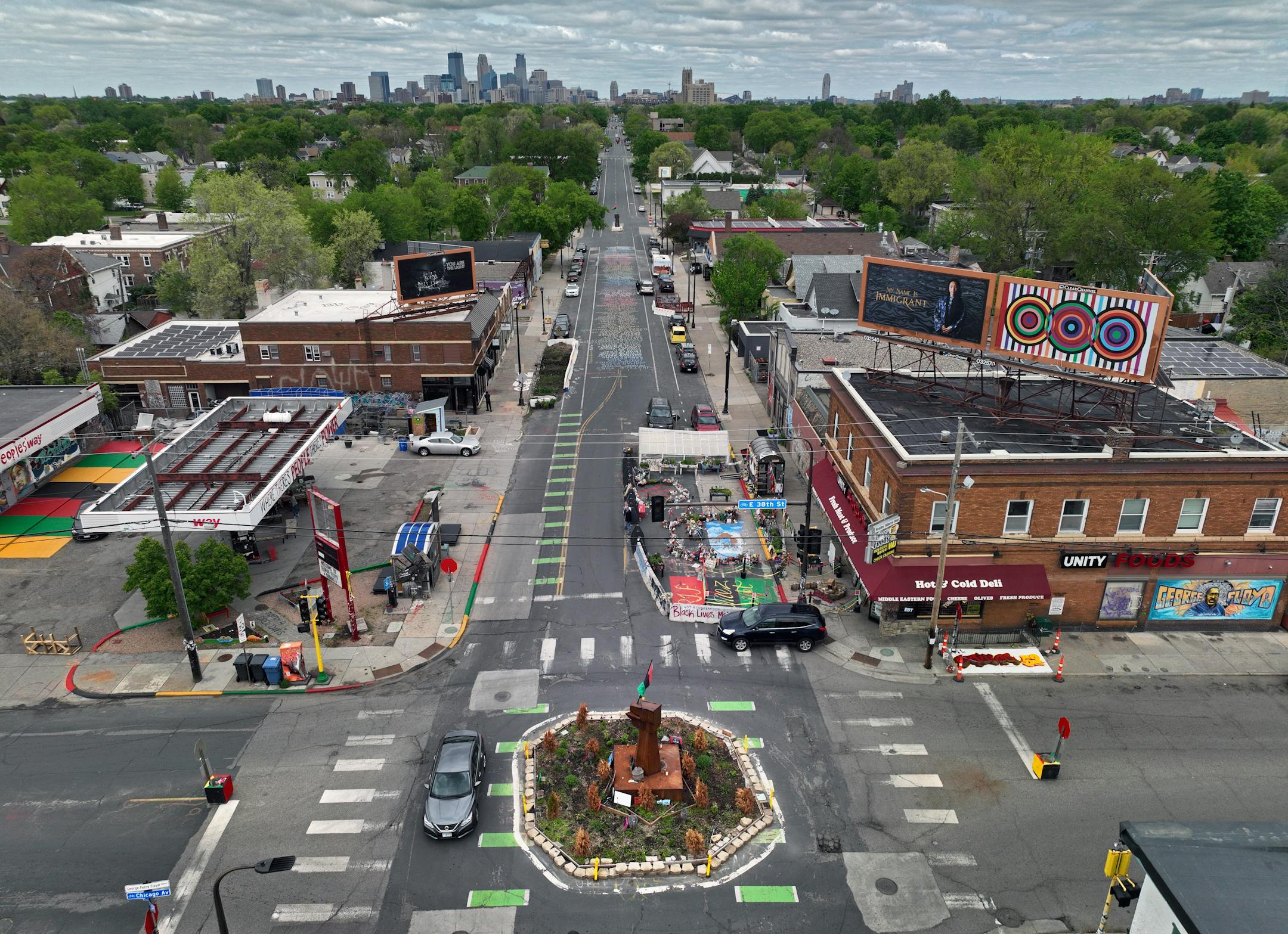
The view of George Floyd Square looking north on Chicago Avenue in 2023. (Brian Peterson/The Minnesota Star Tribune)

Sign up here to follow this column by email.

Let the debacle over George Floyd Square be a lesson: There is a cost to delay.

It’s not just the nearly $400,000 that Minneapolis spent driving in a circle to arrive at the same street design for Chicago Avenue that city staff proposed a year ago.

There is also the psychological toll of our leaders taking more than five years to declare that they are going to keep this street open. It showed that one long-term consequence of Floyd’s murder was paralysis.

Let’s hope it’s not a permanent condition.

That tragic day in May will forever stain this city. So it is not surprising the government that killed Floyd is sheepishly approaching decisions about the physical legacy of that event.

But the drawn-out process has contributed to the impression that 38th and Chicago is a quagmire, a place so fraught with acrimony that it’s intimidating to visit or even discuss publicly. A place that’s frozen in a traumatic time and allowed to wither while City Hall dithers.

Someone told me last spring that it seems like Minneapolis is in therapy. I think there is truth to that. And in many ways, the geographic center of our angst is George Floyd Square — where a city’s grief, rage and shame collide.
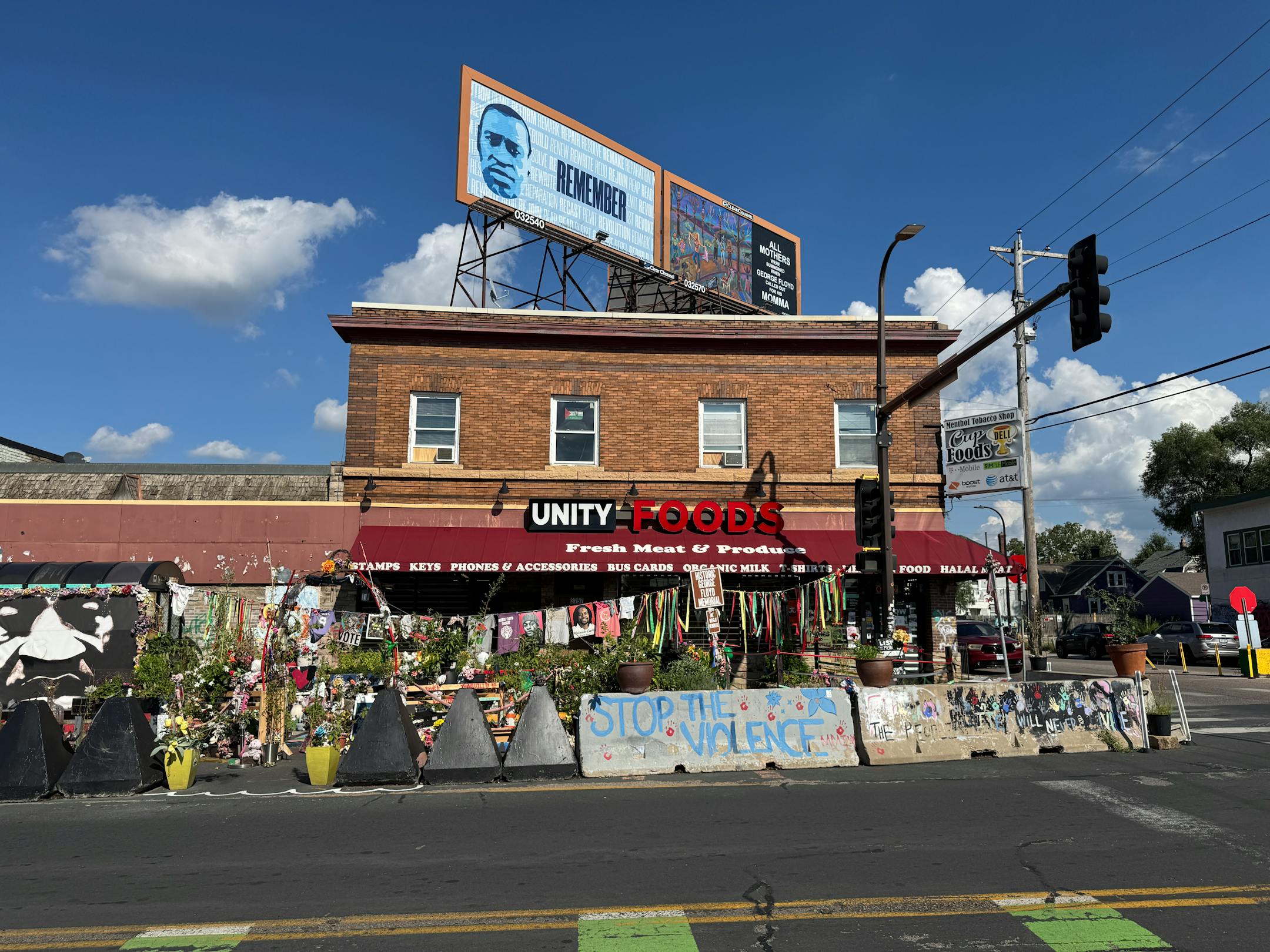
George Floyd Square as photographed on August 19, 2025. (Eric Roper)

Minneapolis needs to write a hopeful next chapter for George Floyd Square before people become completely disillusioned. The galvanizing effect of Floyd’s death has a half-life, as evidenced by the recent shift in the national discourse over race.

The city’s forthcoming investment in reconstructing the intersection should be an opportunity to turn the page, without turning our backs on racial justice. With any luck, the area will emerge as a hub of successful Black enterprise — while also honoring the movement that began there. But the businesses will need plenty of customers to survive the construction.

That construction could have been well underway by now, had the City Council not sent staff and the public back to the drawing board to study closing the street for a pedestrian plaza — even though most neighbors and businesses didn’t want it closed.

After dragging out the maps and the posterboards and the Post-It notes and little round stickers, the city ended right where it began. The City Council voted 9-4 to keep the street open as a two-way thoroughfare and restore transit access, but without traffic on the site where Floyd died. The democratic socialist members of the council and Council President Elliott Payne still voted against it.

As a nod to the Community Visioning Council, an activist-led group focused on the intersection, the city pledged to study a number of proposals — including traffic calming, diagonal parking and raised crosswalks.

Yet, we’re still not out of the woods.

The tricky question about how to redevelop the People’s Way — the former gas station and gathering space beside the memorial — remains in bureaucratic limbo. The city was supposed to name a preferred developer last spring, then pushed the decision to the summer, and now a city spokesperson says there is no update.

Three development teams are seeking to redevelop the People’s Way, after a promising team led by the Urban League Twin Cities pulled its proposal last spring because the numbers didn’t pan out without city investment. Proposals range from preserving the space as a memorial garden to erecting a multi-story building featuring a museum.

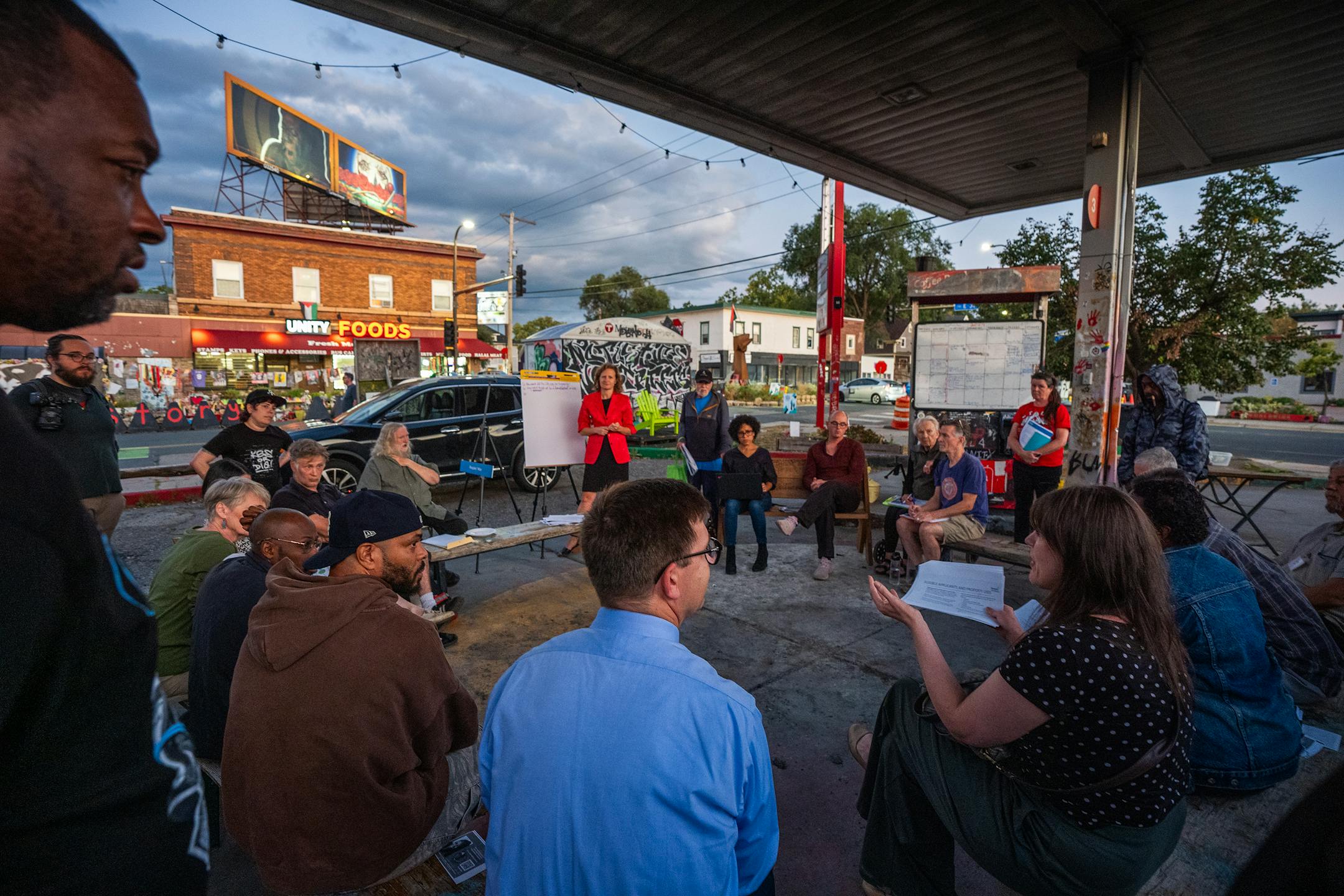
City staff lead a workshop at the People's Way in 2024. (Richard Tsong-Taatariii/The Minnesota Star Tribune)

This is not an easy decision. But inaction is the worst choice.

A group of businesses at the intersection wrote in August that the city-owned People’s Way site is in “visible disrepair,” which is impacting “nearby businesses, housing, and foot traffic. This is not a dignified presentation of community memory.”

That group, 38th & Chi Business Coalition, formed this year to speak on behalf of the area’s business owners.

“If this was 50th and France, do you think this would be happening?" said PJ Hill, a member of the coalition who owns several buildings near the intersection. “Do you think you can have an abandoned gas station for six years straight that people are lighting fires at every single day? No chance.”

Hill said the intersection is worse off than it has been, despite a new lineup of very committed business owners. There is a big appetite for the facelift and investment, though.

“Everything inside of me wants to hope that we’re finally turning the page,” Hill said.

The group has proposed that the area’s small businesses receive grants to buy their buildings and improve their facades, property tax abatements, and low-interest loans and marketing assistance.

In the meantime, consider taking a coffee meeting at Bichota Coffee, picking up a sandwich at Just Turkey or smoked meat at Smoke in the Pit, buying some art at Listen2Us Studio or Plot Gallery, or taking a class at City Food Studio.

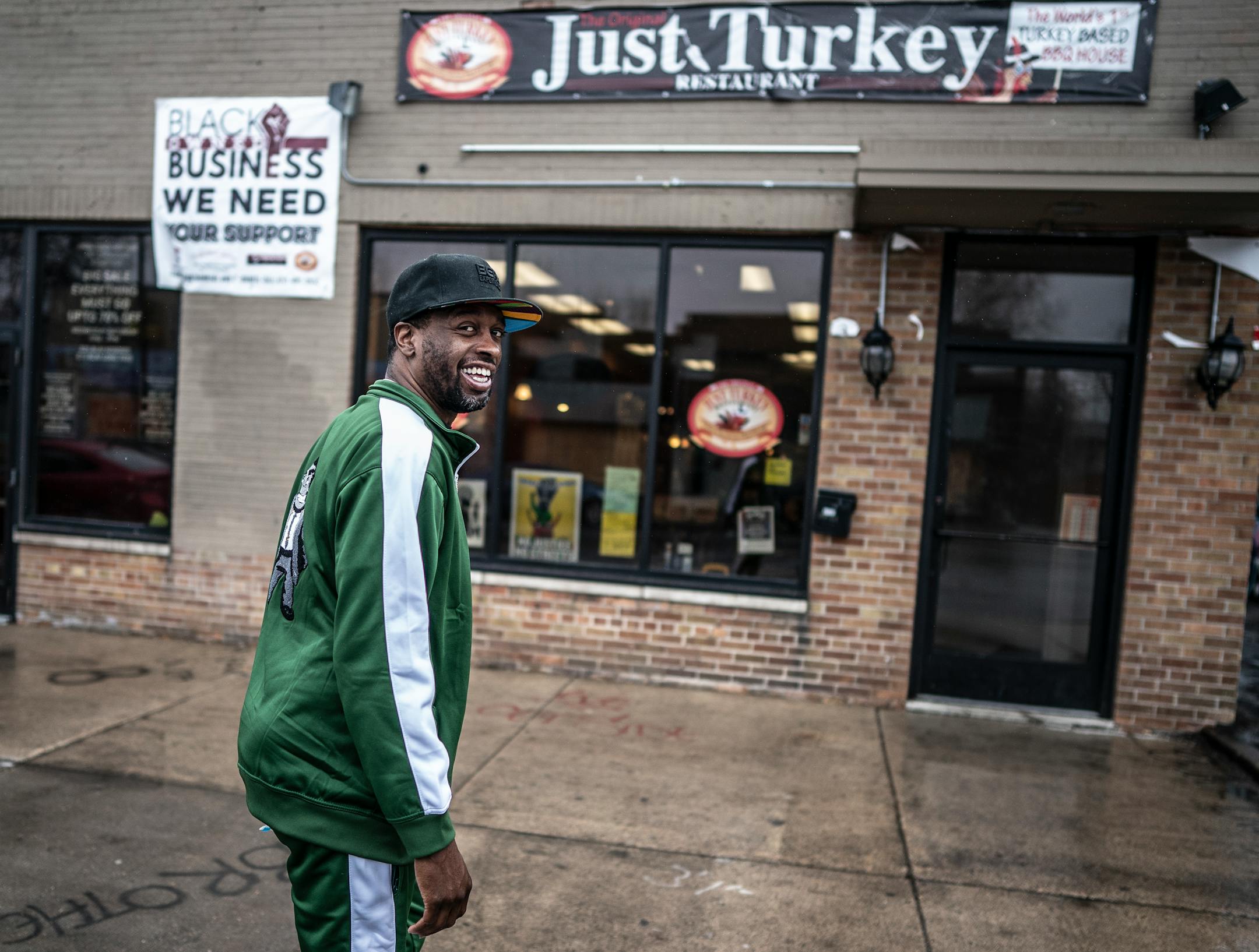
Just Turkey's owner Sam Willis at his store at 38th Street and Chicago Avenue in 2021. (Jerry Holt/The Minnesota Star Tribune)

George Floyd Square isn’t the only symbol of inaction tied to Floyd’s death.

Elsewhere in south Minneapolis, the city is inching toward progress, turning the former Third Precinct building — which burned during the 2020 unrest — into an election hub and community space known as the Minneapolis Democracy Center.

City spokesperson Allen Henry said that, as of Dec. 1, the building has been fully repaired. Architectural design work is ongoing, with construction documents expected in spring 2026 — and construction starting in the fall.

Our paralysis might be wearing off after all.

about the writer

about the writer

Eric Roper

Columnist

Eric Roper is a columnist for the Star Tribune focused on urban affairs in the Twin Cities. He previously oversaw Curious Minnesota, the Minnesota Star Tribune's reader-driven reporting project.

See Moreicon

More from Minneapolis

See More
card image
Brian Peterson/The Minnesota Star Tribune

Minneapolis finally agreed to a street plan after years of debate, but still has major decisions to make about the intersection.

card image
card image