Roper: Why Mayor Jacob Frey and his polarizing politics are at the center of the Minneapolis election

Don’t expect unity any time soon as warring factions vie for total control of City Hall.

Columnist Icon
The Minnesota Star Tribune
September 18, 2025 at 11:23AM
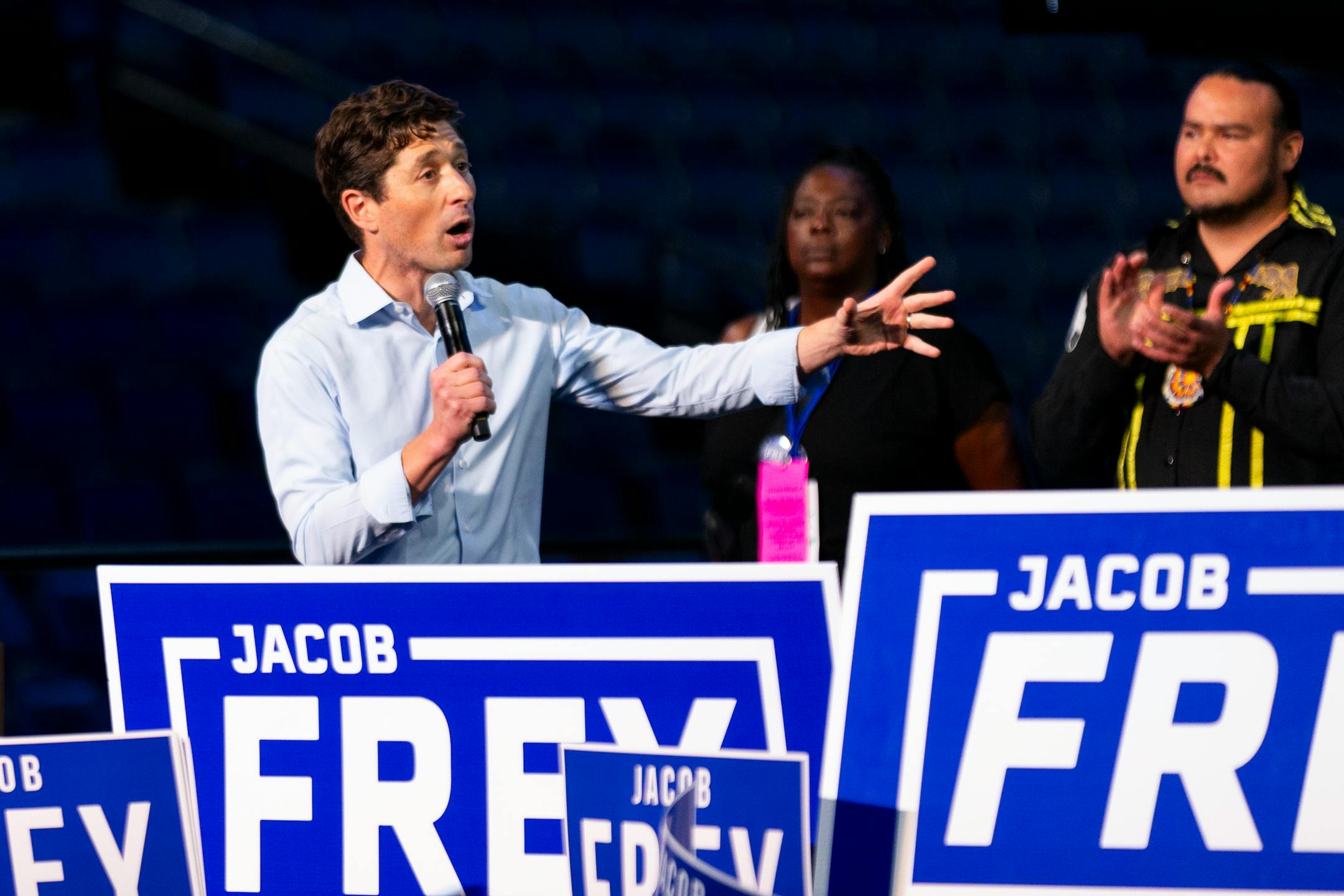
Mayor Jacob Frey speaks during the Minneapolis DFL convention at Target Center in July. (Rebecca Villagracia/The Minnesota Star Tribune)

Enough with the combative politics, Jacob Frey declared eight years ago after ousting an incumbent Minneapolis mayor. The city’s new leader said his first priority was stitching this divided town back together.

Unity seems laughable now as Frey struggles to stay at the helm for a third term as Minneapolis’ polarizing leader — despite momentary harmony in the wake of the recent Annunciation church shooting.

The city is at a crossroads on a number of decade-defining topics, from saving downtown to addressing homelessness and modernizing public safety. But the election is really about something more fundamental: whether Frey or his opponents can grab enough power to steamroll the other side.

The mayor and the City Council haven’t been on the ballot together since 2021, a complicated year that was clouded by the pandemic and efforts to dismantle the Police Department. In the years since, voters handed the mayor more power and elected enough progressive council members to stand in his way — a recipe for the acrimony that now defines City Hall.

Mayor Jacob Frey worked with his deputy campaign manager Jacob Hill in 2021. Hill is now affiliated with the All of Mpls political action committee. (Aaron Lavinsky/The Minnesota Star Tribune)

So both sides are hoping this fall to lubricate the wheels of government, winning alignment between the mayor and the council. Political action groups supporting Frey — including many real estate interests spooked by the threat of rent control — have so far raised more than $600,000 this year to boost favorable City Council campaigns and smear the mayor’s opponents.

Far-left members of the council, meanwhile, are working hard to keep a slim legislative majority and elect democratic socialist Omar Fateh as mayor — or at least anybody but Frey. This bloc’s funding disadvantage is offset by its organizing skills, as evidenced by the strong turnout for Fateh at the DFL convention.

Frey carries the baggage of a two-term mayor with a long record to defend.

“Elections for a third term are notoriously hard for mayors,” former Minneapolis Mayor R.T. Rybak wrote in his 2016 book, “Pothole Confidential.” “Many lose them, in large part because over a couple terms the bad calls start to pile up and the list of people mad at you keeps growing.”
Rybak, who crowd surfed into a third term, developed a knack for working with all council members to find agreement on different issues. His strong partnership with council president Barb Johnson resulted in some Big Stuff getting done (like funding U.S. Bank Stadium and Target Center renovations). But Rybak wasn’t the first to realize the importance of such a partnership; Mayor Sharon Sayles Belton and Council President Jackie Cherryhomes made Big Stuff happen in the ’90s, too.

That seems elusive today. Just as Minneapolis faces tough financial decisions — like responding to slower growth and declining downtown property values — Frey has backed himself in a corner. Though he rose to power as a cheerleader for a city, his us-vs.-them style has earned him a lot of enemies. He pours blame on the council in a broad-brush way that impedes his ability to build alliances with the more moderate progressives.

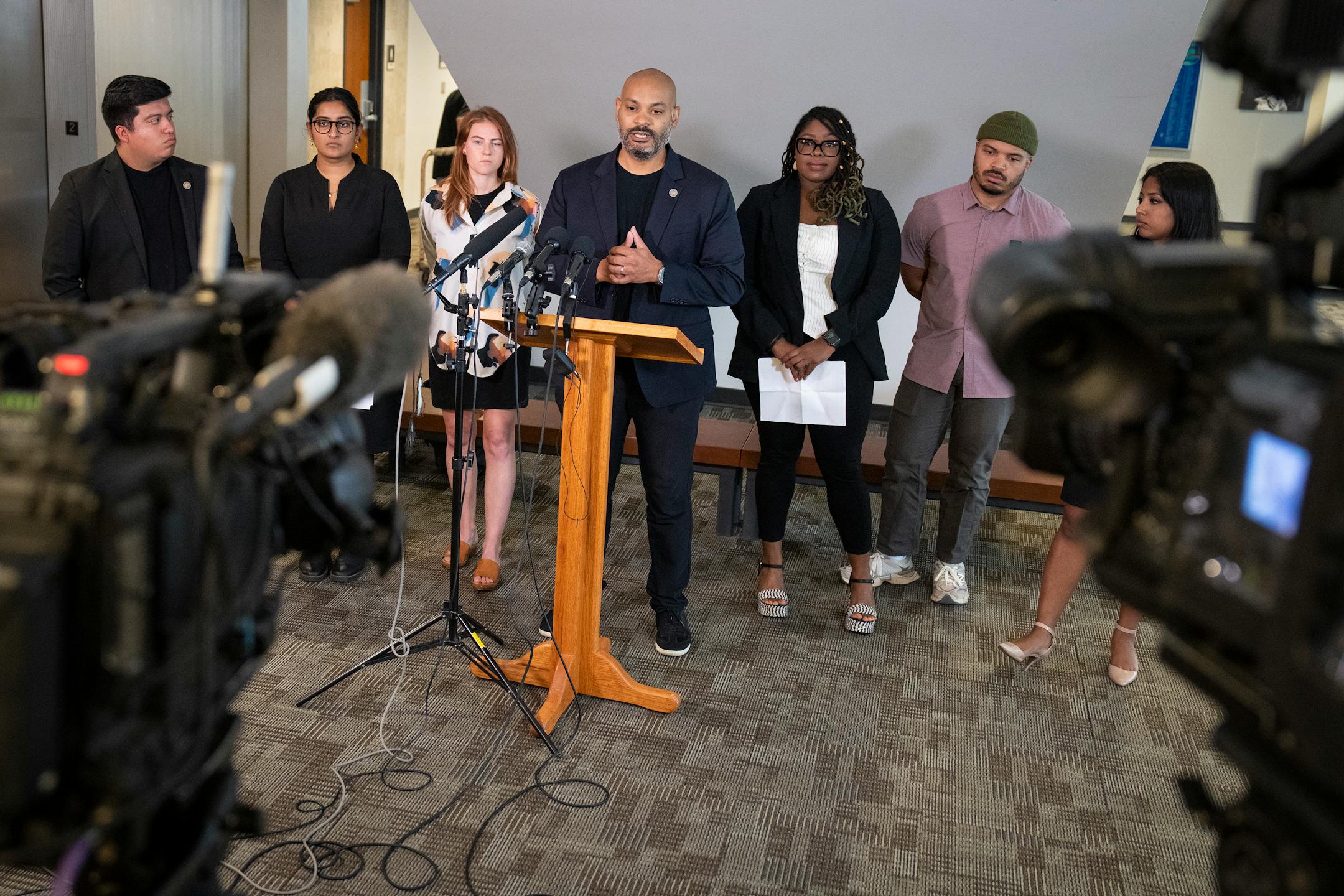
Council President Elliott Payne speaks at a news conference with other Minneapolis City Council members in July 2024. (Leila Navidi/The Minnesota Star Tribune)

To be fair, the council’s furthest-left members also have some extreme ambitions, and some seem like they would rather see Frey fail than find common ground. The council’s vice president, Aisha Chughtai, recently used an expletive about Frey on stage. And who could forget Robin Wonsley’s unsubstantiated 2023 claim that Frey threatened city services in his opponents’ wards, which even her allies wouldn’t corroborate.

But these democratic socialists represent a minority of the council, and it’s the mayor’s job to find a path with the council members that voters sent to City Hall. Frey’s hyper-competitive nature — perhaps a holdover from his professional running days — seems to conflict with the unity theme he promoted as mayor-elect.

Even if the council shifts in Frey’s direction this November, whoever is the next mayor will likely be dealing with a council that remains split between progressive and moderate council members.

A lot of tension stems from the 2021 referendum that made the mayor a true chief executive, akin to the governor and his power over the state bureaucracy. The mayor no longer needs to show as much deference to the council. This has resulted in the council’s progressive majority using the budget and the bully pulpit to assert its power.

Take the council’s major changes to the mayor’s proposed budget last year over issues like public safety and homelessness, which culminated with Frey vetoing the budget (unprecedented) and the council overriding his veto (also unprecedented). It was an embarrassing breakdown of City Hall communication and collaboration.

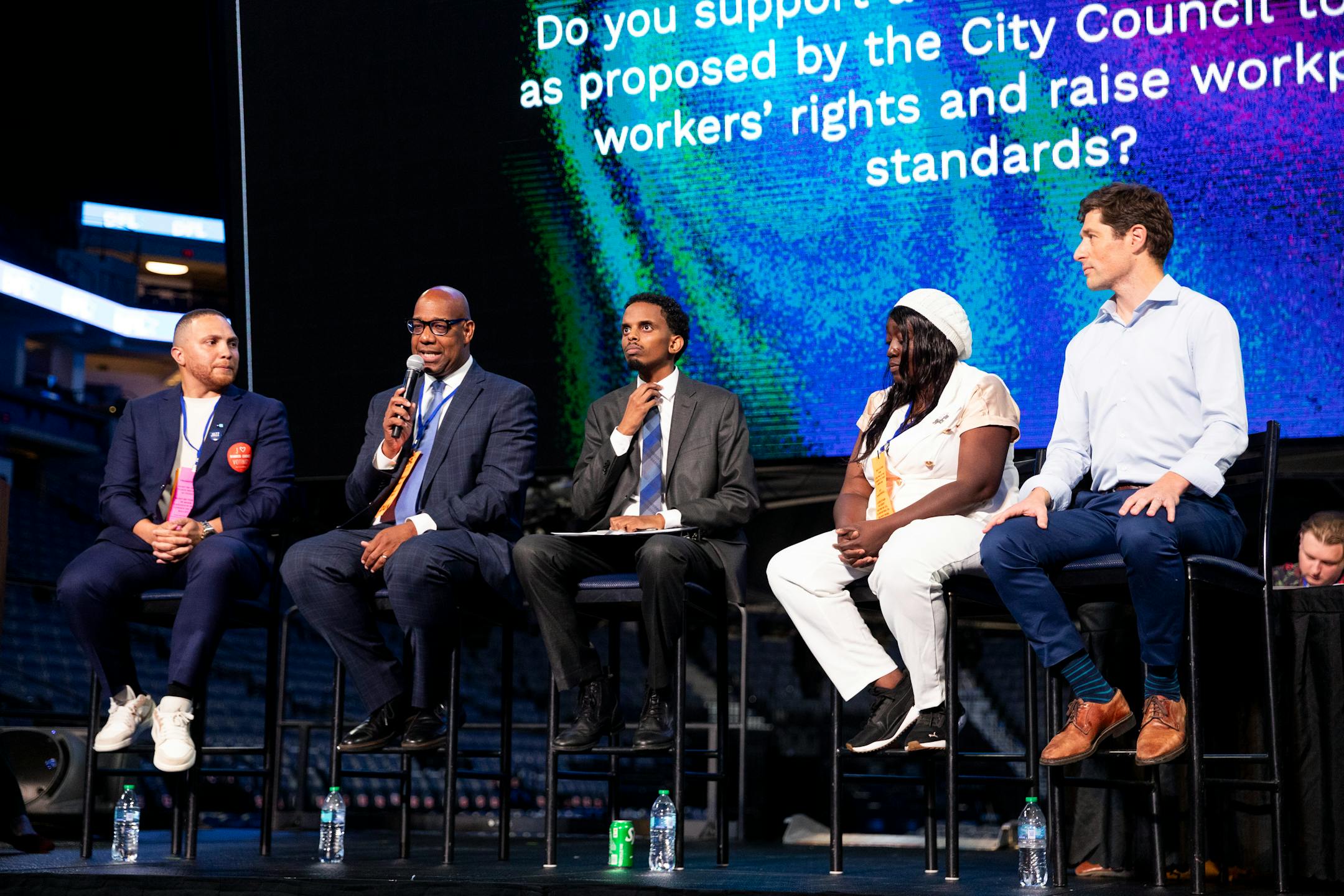
Candidates for mayor Jazz Hampton, Rev. DeWayne Davis, Omar Fateh, Brenda Short and Jacob Frey speak on a panel at the DFL convention in July. (Rebecca Villagracia/The Minnesota Star Tribune)

Early voting in the race begins Friday.

The big question as the mayoral campaigns hit full stride is whether Frey’s other opponents, Rev. DeWayne Davis and Jazz Hampton, can capitalize on people’s frustration with this bickering. Davis and Hampton represent different flavors of liberalism that could prove refreshing for voters who want a change but can’t stomach the democratic socialist agenda.

First, however, voters will be eyeing the two candidates sucking the most oxygen out of the room.

It’s perhaps telling that there is no “vision” section of Frey’s website — only an area labeled “progress.” The mayor isn’t proposing big changes from what the city is doing now. Get the basics right, he’s been saying. His campaign represents a backstop to a more expansive city government championed by the council’s progressive majority (and Fateh).

The democratic socialist-endorsed candidates are pushing a message focused on renters and workers (the blue-collar kind), in particular.

Fateh supports the city capping rent increases, restricting evictions and ensuring tenants have the first right to buy their apartment buildings, for example. For workers, he wants the city to impose scheduling policies on businesses and ramp up the city’s nearly $16 minimum wage — already the highest in the state — to $20.

These policies fit into a broader antagonism among the far-left candidates toward developers, landlords and corporate interests. This ignores the fact that Minneapolis is a tiny slice of the region, and investments by these groups can easily shift to nearby suburbs.

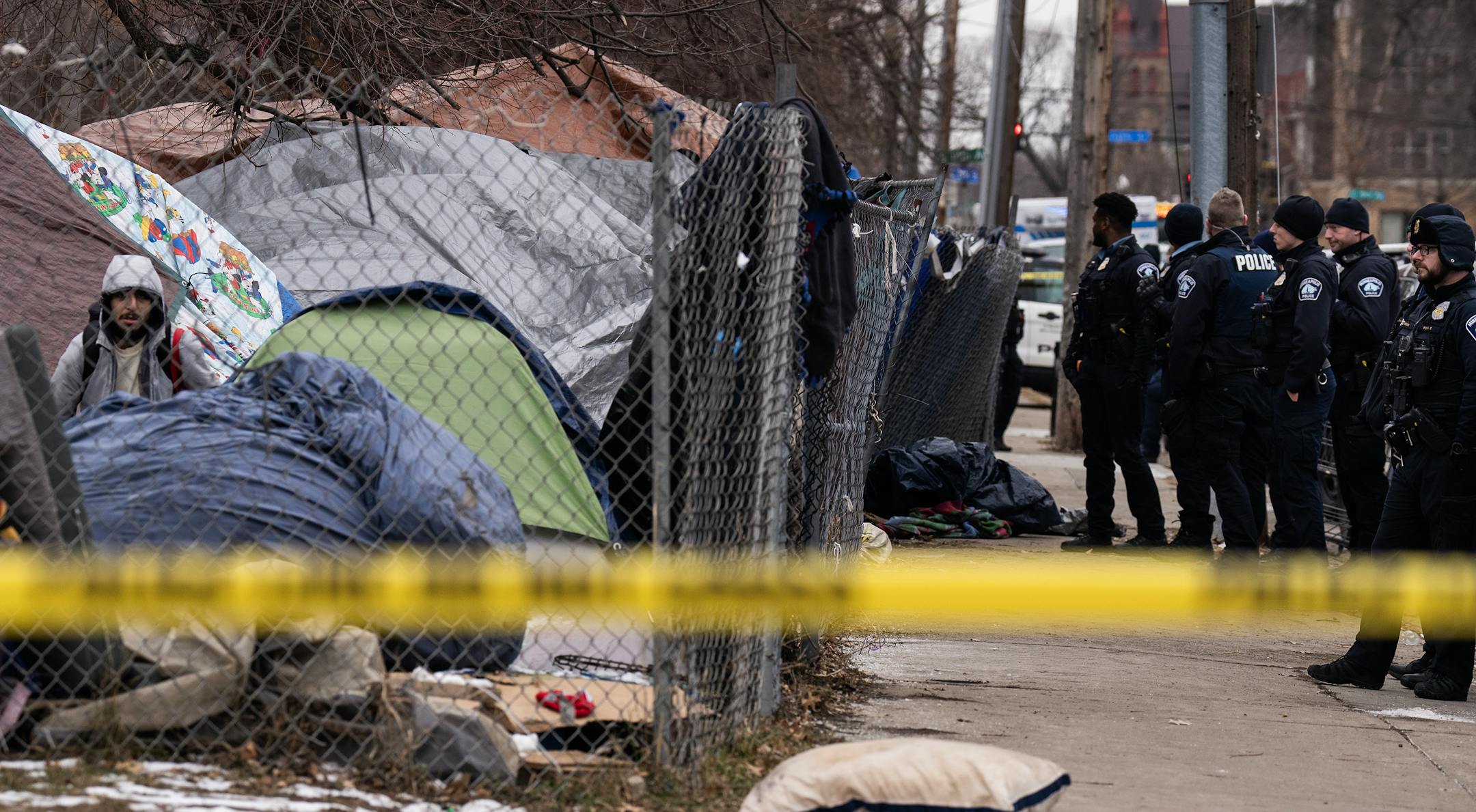
The city’s response to homeless encampments is another key battleground. The Frey administration’s clearing of encampments and stepped-up prevention of new ones has fueled rage among the far left. Fateh, by contrast, would like to provide encampments with hand-washing stations, bathrooms, needle disposal and drinking water.

Police arrive ahead of the shutdown of Camp Nenookaasi in Minneapolis in January 2024. (Richard Tsong-Taatarii/The Minnesota Star Tribune)

The encampments had become dangerous threats to neighborhood safety, and many residents — including a coalition of Native American leaders — support more enforcement to prevent them. But Frey’s unnecessary victory lap this spring asserting there was minimal street homelessness conflicted with what the public could see with their own eyes. (Solving homelessness is also chiefly the responsibility of Hennepin County, whose role often gets left out of the public debate.)

Being pro-police is a theme of Frey’s campaign. Fateh supported the failed 2021 referendum to replace the city’s Police Department, but says he doesn’t support the national DSA organization’s platform to defund the police. That’s a touchy subject in this town. Despite pushing for alternatives, even DSA members of the council these days are voting for police budget increases.

Luckily for Frey, the Minneapolis Police Department has largely steered clear of high-profile killings in recent years. But the mayor will have to answer for his 2021 campaign statement that he banned no-knock warrants, which proved false when police shot Amir Locke during a raid in 2022. More recently, the department put the officer who shot Locke in charge of use-of-force training — a decision that was reversed after public outcry.

Plenty of people who don’t live in the city will say that Minneapolis is a hellhole that gets what it deserves. Yet, despite many challenges, Minneapolis has been building something special over the last several decades.

Its ambition is reflected in a towering skyline that shows out-of-state visitors that this region has a center of gravity. Even suburban naysayers buy tickets to attend events at the restored historic theaters and impressive sports complexes, which have made Minneapolis an enduring cultural and commercial hub.

The city’s reclamation of its industrial riverfront as a thriving district and tourism attraction — where the water is eternally crashing at St. Anthony Falls — draws a steady stream of diverse crowds, while a forward-thinking public works department is now routinely making streets more pleasant for pedestrians, bicyclists and transit riders. Zoning changes are gradually increasing the density of neighborhoods, where green space thrives alongside small-scale commerce.

Minneapolis has work to do, and its successes haven’t been shared equally, but it is one of the best cities in America. Hopefully our candidates can at least find some unity around that idea this fall.

about the writer

about the writer

Eric Roper

Columnist

Eric Roper is a columnist for the Star Tribune focused on urban affairs in the Twin Cities. He previously oversaw Curious Minnesota, the Minnesota Star Tribune's reader-driven reporting project.

See Moreicon