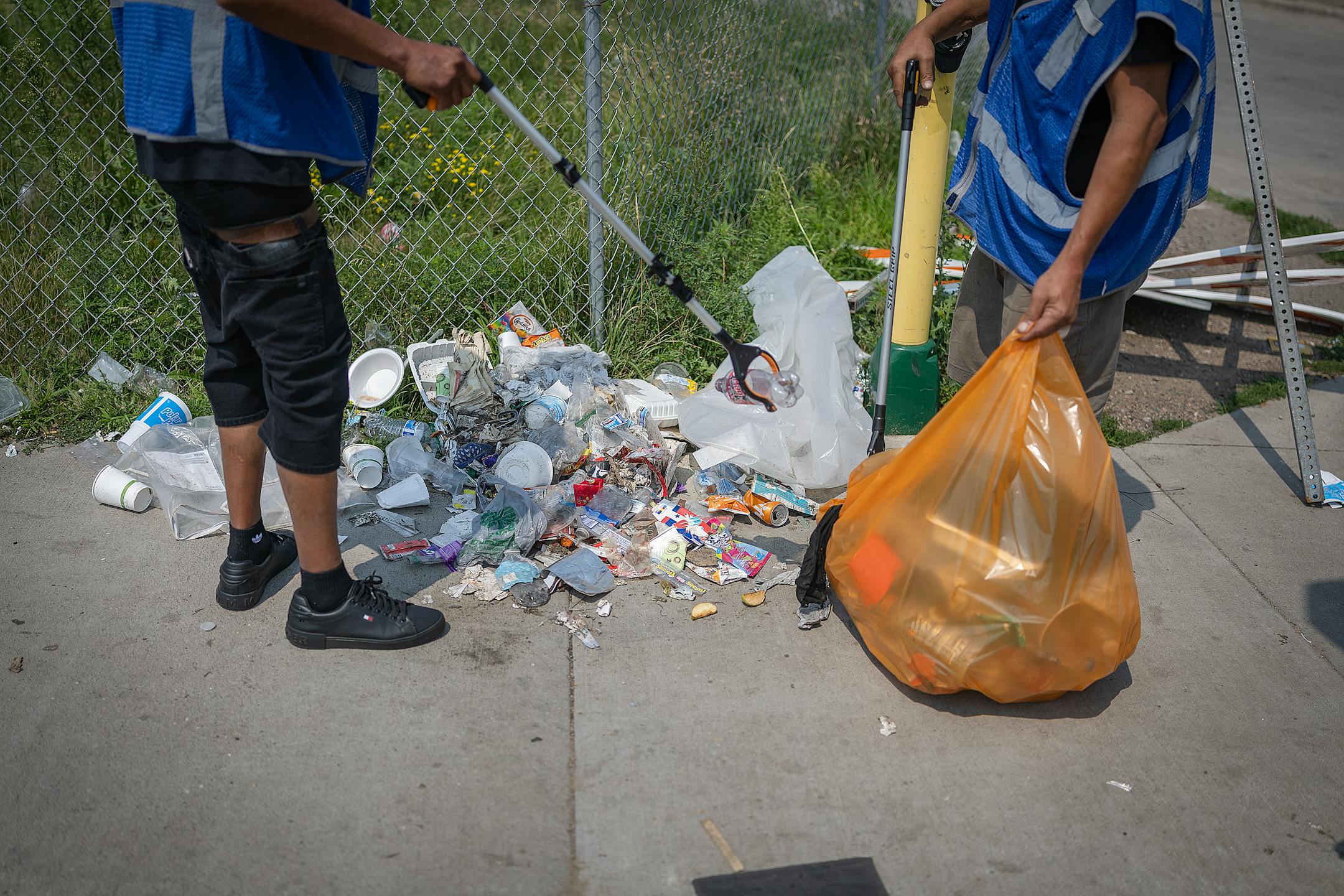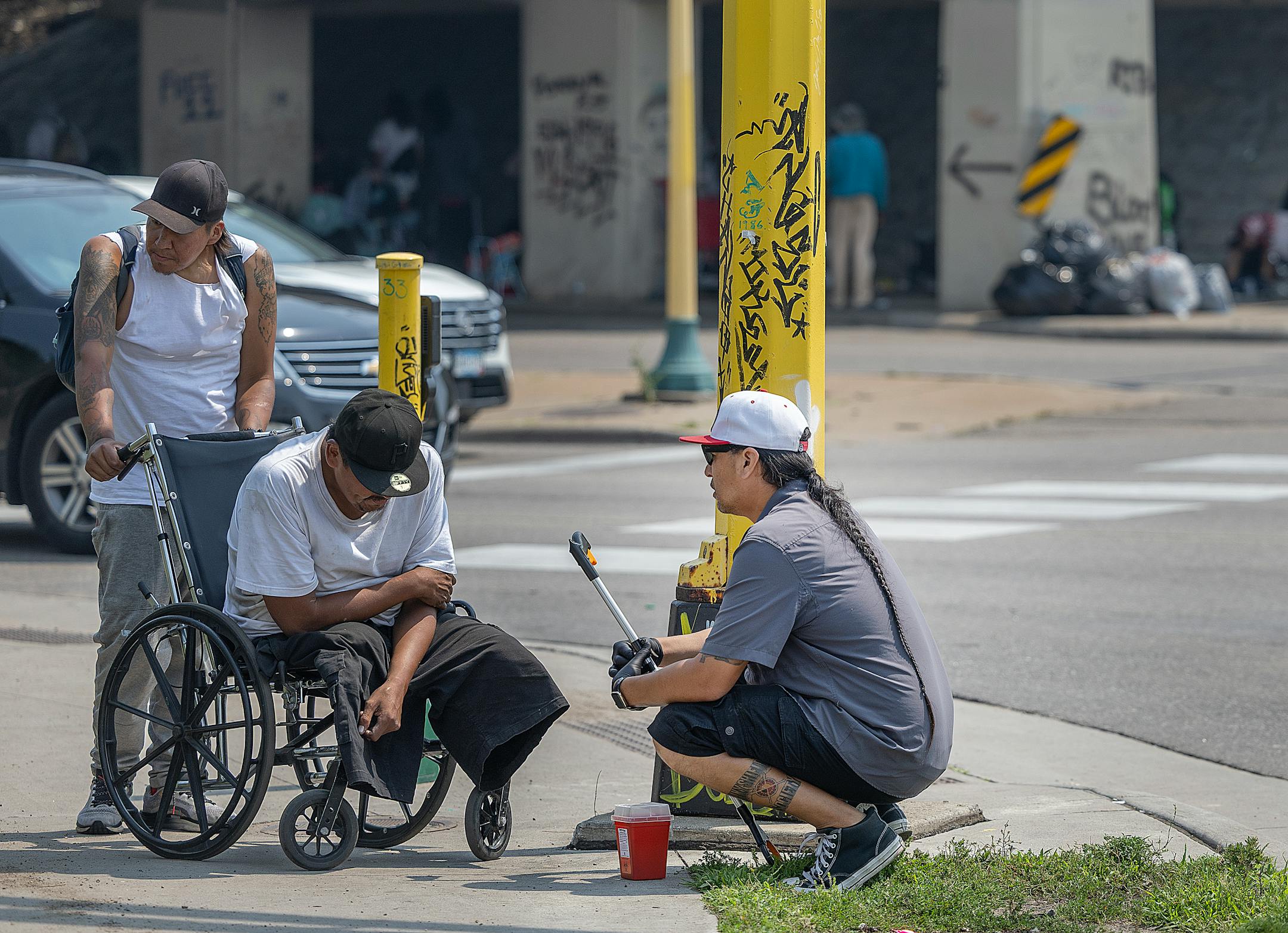
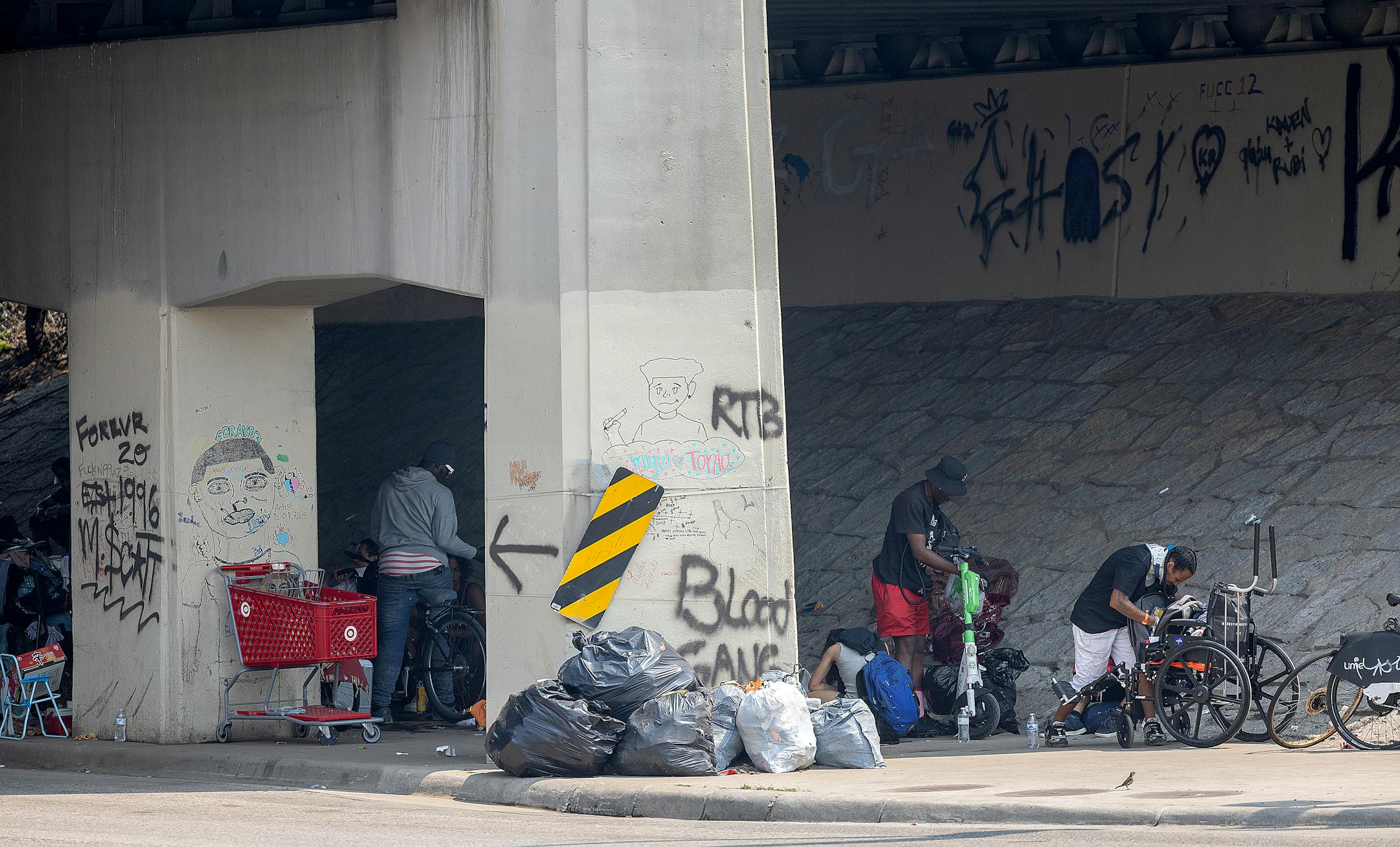
American Indian leaders on Minneapolis’ South Side say they’ve been overwhelmed this summer with large outdoor gatherings of transient people, drug users and dealers, and are demanding police escalate arrests.
Executive directors of several community organizations have resolved to draw 50-yard “exclusionary zones” around their properties, prohibiting homeless encampments and volunteers from helping the homeless with food, Narcan and other survival gear. If an encampment forms within the zone of one organization, others are now obligated to help clear it.
The Metropolitan Urban Indian Directors (MUID), a coalition of organizations trying to craft cohesive positions on issues in the Native community, adopted the resolution.
Many of its members also serve the South Side’s most vulnerable residents, taking in homeless people on winter nights and providing supplies while doing street outreach.
MUID Chair Robert Lilligren, who is also a Metropolitan Council member and CEO of the Native American Community Development Institute, acknowledged that not everyone in the coalition agrees with the resolution.
He said conversations have been filled with “passion and anger,” and ultimately organizations will have to interpret it for themselves.
“At the risk of sounding a little dramatic, this was a desperate cry for help,” Lilligren said. “Things are really untenable in our Native community.”
Calling for arrests
Joe Hobot, president of the American Indian Opportunities Industrialization Center (OIC) vocational school, said he proposed the resolution because addiction has destabilized his campus.