Kaohly Her is ‘relentless’ and un-flashy. She says that’s exactly what St. Paul needs.

Why Mayor Melvin Carter’s former policy director and mayoral opponent is challenging her old boss.

October 27, 2025 at 3:00PM
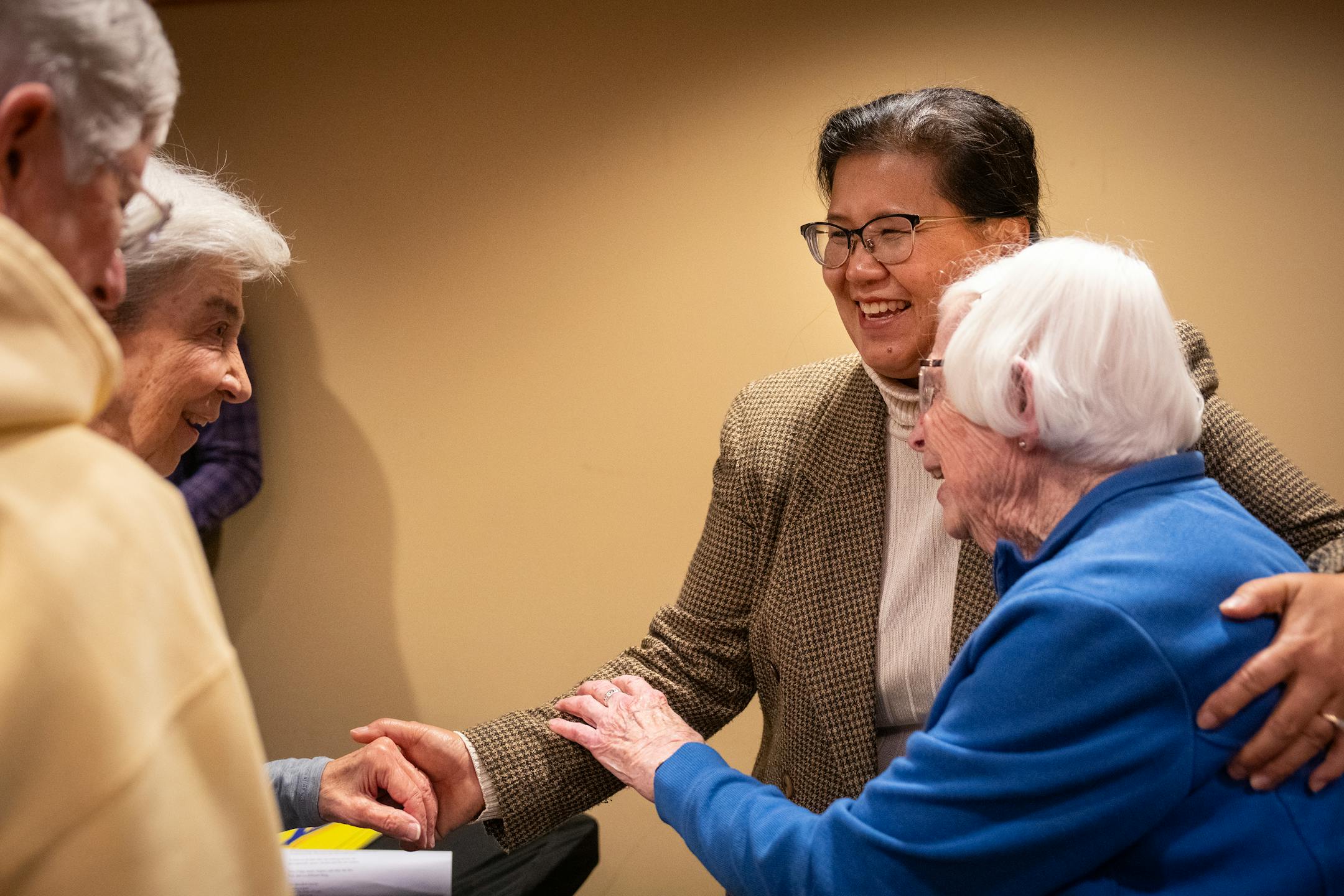
DFL state Rep. Kaohly Her, second from right, who is running for St. Paul mayor, speaks to Joan Wittman, from right, Susan Oeffling and Cathy Steffens during a campaign event at Carondelet Village in St. Paul on Oct. 8. (Leila Navidi/The Minnesota Star Tribune)

State Rep. Kaohly Vang Her was late to her own event at an assisted-living facility one recent afternoon because she lingered too long at a meeting about improving St. Paul’s competitive bid and contracting processes.

Getting in the weeds on less-than-glamorous operations work is central to Her’s campaign for mayor of St. Paul.

In running against St. Paul Mayor Melvin Carter, Her is challenging a political mentor, but she isn’t pitching a new vision for St. Paul. Her campaign promises are not so different from Carter’s.

Instead, she’s trying to give voice to those in St. Paul who feel the city’s malaise in shaking off the pandemic doldrums — and arguing she is the one who can actually make things happen.

“If I win, I have the hard job of being mayor,” Her says in her stump speech explaining why she’s challenging Carter. “And if I lose, I made him a better mayor.”

In speaking about why she challenged Carter, Her has invoked the late DFL House Speaker Melissa Hortman, who said lawmakers should campaign every cycle, no matter how safe their seat, to talk to voters and earn their terms.

“These seats don’t belong to us,” Her remembers Hortman saying. She wants Carter to remember that.

But her challenge to Carter is far from symbolic. In a campaign that only began in mid-August, Her has jam-packed her days. Rallying votes from Battle Creek to Highland Park, she is promoting a vision of a city that, through more listening and a focus on the unsexy work of process improvement, just works a little better.

To that end, predicted former DFL state Rep. Ryan Winkler, who worked with Her: “She will be relentless.”

From Laos to Summit Avenue

The story of how Her’s family “broke the cycle of poverty in one generation” is a key part of her campaign’s story, with Her often talking about how she wants to find ways for St. Paul to provide the same opportunities she had.

Her, 52, was born in Laos, but the family fled with thousands of other Hmong families at the end of the Secret War, when she was a toddler.

They spent several months in a refugee camp before arriving in Chicago in 1976 and eventually following relatives to Wisconsin, where the three youngest of Her’s five siblings were born. In 1991, the family moved again, joining Her’s maternal grandparents in St. Paul.

It was in St. Paul that the family began to prosper, Her said. Relatives bought three vacant houses in St. Paul for $1 apiece through a city program, and her father finished a college degree and found office work.

After she graduated from the University of Wisconsin-Madison, Her landed a job in finance, beginning a 15-year career in banking in which she and her husband went from the Twin Cities to Chicago and then to the Washington, D.C., area.

After their second child was born in Maryland, the family decided to return to Minnesota, because Her wanted her children to attend St. Paul schools.

She and her husband both work in finance, and they have saved aggressively since their early 20s, she said. Their earning power and savings allowed them to build wealth as they bought houses that served both as family homes and investments, starting with a small property on St. Paul’s East Side.

“I trusted these principles that I had been taught in school,” Her said. “We didn’t buy brand-new cars. We knew to invest in land, and invest in housing.”

Her’s family now owns a home on Summit Avenue, purchased last year for $740,000 after selling a home on Mississippi River Boulevard. The family also owns a hobby farm in Stillwater.

“No one handed us any money. We built all this wealth from scratch,” Her said.

Now, she wants to help build a St. Paul where her story isn’t unusual. “I want people to thrive here,” Her said, noting that vital businesses and stable housing can change the trajectory of a family for generations.

“It’s not just about people starting businesses. It’s about what they can pass along to their children and what they can leave behind.”

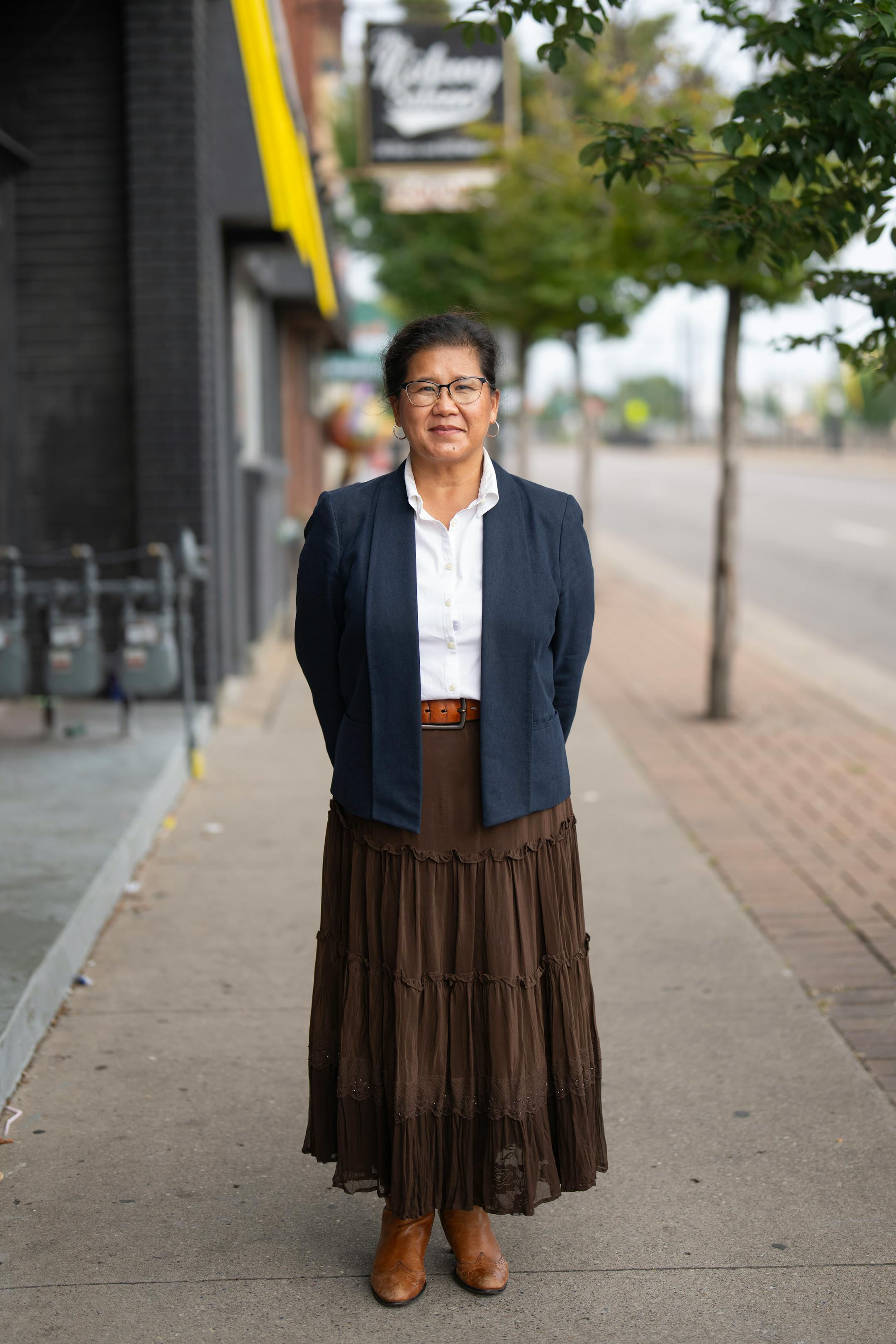
Kaohly Her, a Minnesota state representative and candidate for mayor of St. Paul, stands at the intersection of University and Snelling avenues in St. Paul's Midway neighborhood. (Alex Kormann/The Minnesota Star Tribune)

Trust out of turmoil at SPPS

After returning to Minnesota, Her stayed at home with her two children for a few years, and consulted with nonprofit organizations before taking a job as an administrator for the St. Paul school board.

“It was a challenging time to build trust,” said John Schumacher, a former St. Paul school board chair who was elected in 2016 along with a class of board members aligned with the teachers union, which worried the central office administration, he said.

Schumacher said Her was hired for her background in finance and retirement plans, but it was her people skills that left an impression.

“The one thing we didn’t really understand at the time was her ability to build community,” Schumacher said. “Especially at a time when there was so much mistrust.”

Her excelled at listening, and she liked to build personal relationships with colleagues. Those skills helped bring creative solutions, Schumacher said, and gave Her the credibility to get people on board with ideas.

“She does her homework,” Schumacher said. “She comes with a full portfolio of skills to analyze situations, understand the voices that need to be in the room.”

But in the campaign, Her’s search for nuance has not always translated in a campaign environment looking for yes-or-no answers.

During recent debates, Her has said she wants to learn more about the proposed Summit Avenue Regional Bike Trail, and thinks the debate over the plan has unnecessarily pitted cyclists against Summit Avenue homeowners.

Some bike advocates see Her’s position as inadequate compared with Carter’s full-throated support.

“The process has been extensive, so to hear Kaohly Her say the process has been incomplete or wrong is just frankly offensive,” said Dan Marshall, a bicyclist and co-owner of the Mischief Toy Store on Grand Avenue. He worries Her’s approach signals deference to the lane’s opponents, when the plan has already been approved by other neighborhood groups, the city and the Metropolitan Council.

Time in the Legislature

Her left the school board to work in Carter’s first administration as his policy director in 2018.

Her’s campaign has praised some of the initiatives she worked on during her time with the city, including the $15 per hour minimum wage and the $50 deposit in a college savings account for babies born in St. Paul. But she wonders if some of Carter’s other initiatives were off-target.

A program like the one that used $1 million in city funding to buy out $100 million of St. Paul residents’ medical debt made an enormous difference in people’s lives, Her says, but it did nothing to prevent new medical debt.

“The intentions of it are really good, but you’re not changing systems,” she said.

While she was still working in Carter’s office, Her ran for state representative in District 64A, the seat formerly held by Erin Murphy, now in the state Senate.

Winkler, the former state representative, said from the time she took office in 2019, Her was “a surprise to people, in a good way.”

Her was not as “progressive and impractical,” Winkler said, as some expected her to be as a woman of color who represents an urban district, in part because of her upbringing in small-town Wisconsin.

“She has a practical, pragmatic understanding of how most people live and what their lives are like,” Winkler said.

State Rep. Kaohly Her speaks at a news conference in 2018, as St. Paul Mayor Melvin Carter, left, looks on. (Glen Stubbe/The Minnesota Star Tribune)

During her first term in the House, Her kept her day job in Carter’s office — and drew rebukes when she carried a bill to partially fund the city’s college savings program for newborns, with critics saying it was a conflict of interest to carry a bill related to Her’s day job.

“If a legislator was working for a major corporation, a nonprofit or any other employer and was carrying bills directly that were not only directly related to their employer, but the stated policy priorities of its leader, people would be up in arms,” said Rep. Mary Franson, R-Alexandria, in 2020.

Her resigned from the mayor’s office not long after to focus on being a legislator.

Her has never served in an executive role and has said she likes the collaborative nature of the Legislature. She enjoys close working relationships with many legislators and can sometimes be found talking with colleagues while playing pingpong in House offices between committee meetings.

Her’s background has helped her understand how money flows through state agencies and the organizations that seek state funding, Winkler said, and Her’s fluency with financial data means she doesn’t need others to explain the numbers.

Winkler was majority leader while Her served as a whip for the DFL caucus, and Winkler said Her excelled at keeping the Democrats organized.

“There was no slack in the line in the whip operation under Kaohly Her,” he said.

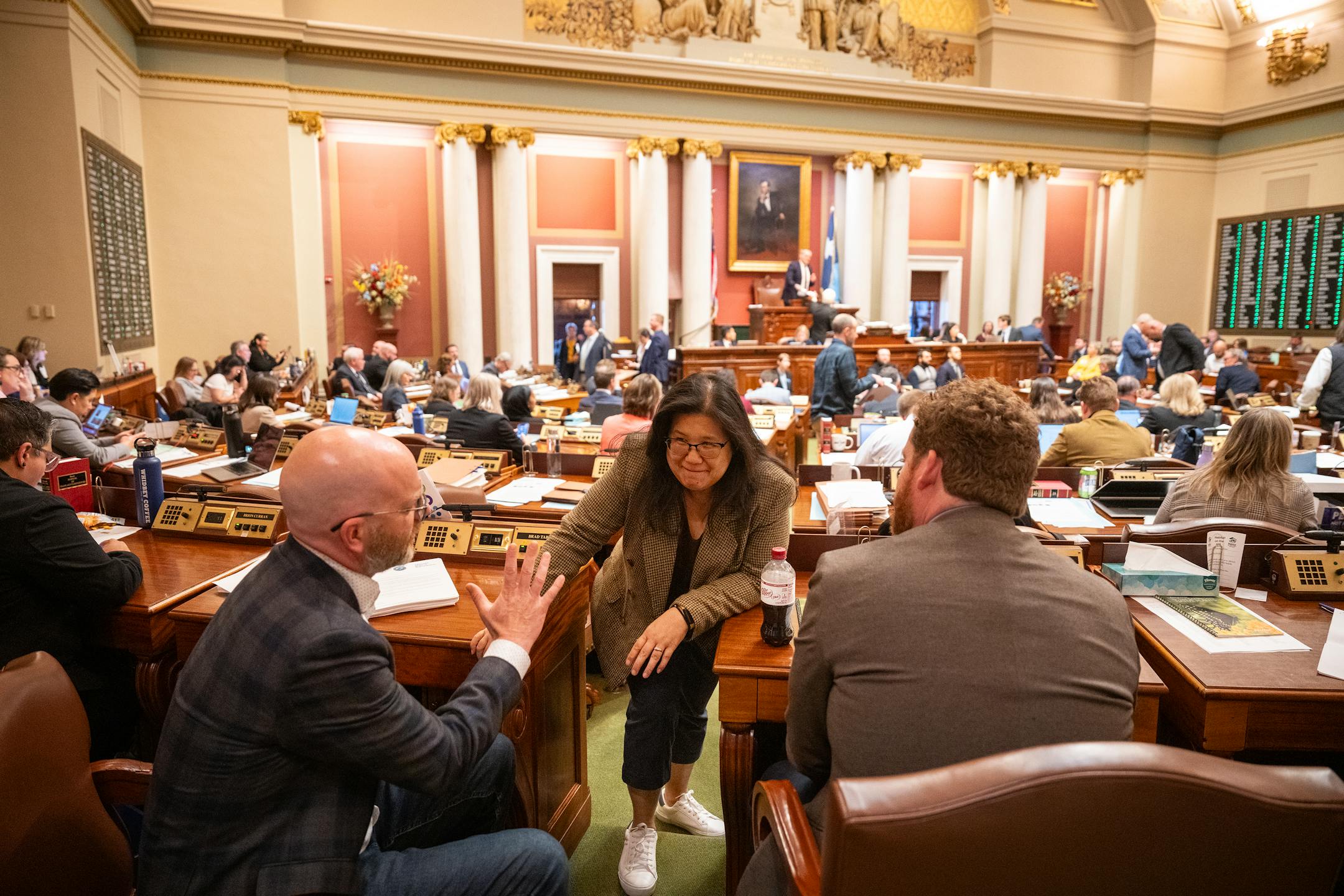
Rep. Kaohly Vang Her, center, talks to DFL Reps. Brad Tabke of Shakopee, left, and Rep. Zack Stephenson of Coon Rapids during the last day of the legislative session at the State Capitol on May 19. (Leila Navidi/The Minnesota Star Tribune)

Showing up

Her prides herself on keeping a full schedule, attending meetings and taking every opportunity to listen.

During her time in the Legislature, she sometimes shows up to community gatherings and public meetings even where there’s no state business, she said, because she considers it her job to know what is going on in her district.

Her says that showing up consistently, not just when she needs something, has been key to the ability to get things done.

Winkler agreed.

“She shows up for my kids’ high school graduation parties. If she’s hosting an event, she’s making sure people feel personally invited and are welcomed in,” he said, noting she makes trays of eggrolls to help people feel at ease. “It’s very hands-on and very engaged.”

Her has made that approach a point of contrast with Carter.

“Values-wise, he and I share a lot of similar values,” Her said of Carter. But as she has sharpened her critiques of the mayor, Her has emphasized the difference in approach.

“It is so transactional now,” Her said. “Show up even when it’s not an election year. You have to build those relationships.”

Her said she makes a point to keep showing up, to make sure policies are working as intended and to look for ways to keep tinkering, to keep making things a little better.

“That’s how you honor the tax dollars that have been given to you,” she said. “And that matters to me.”

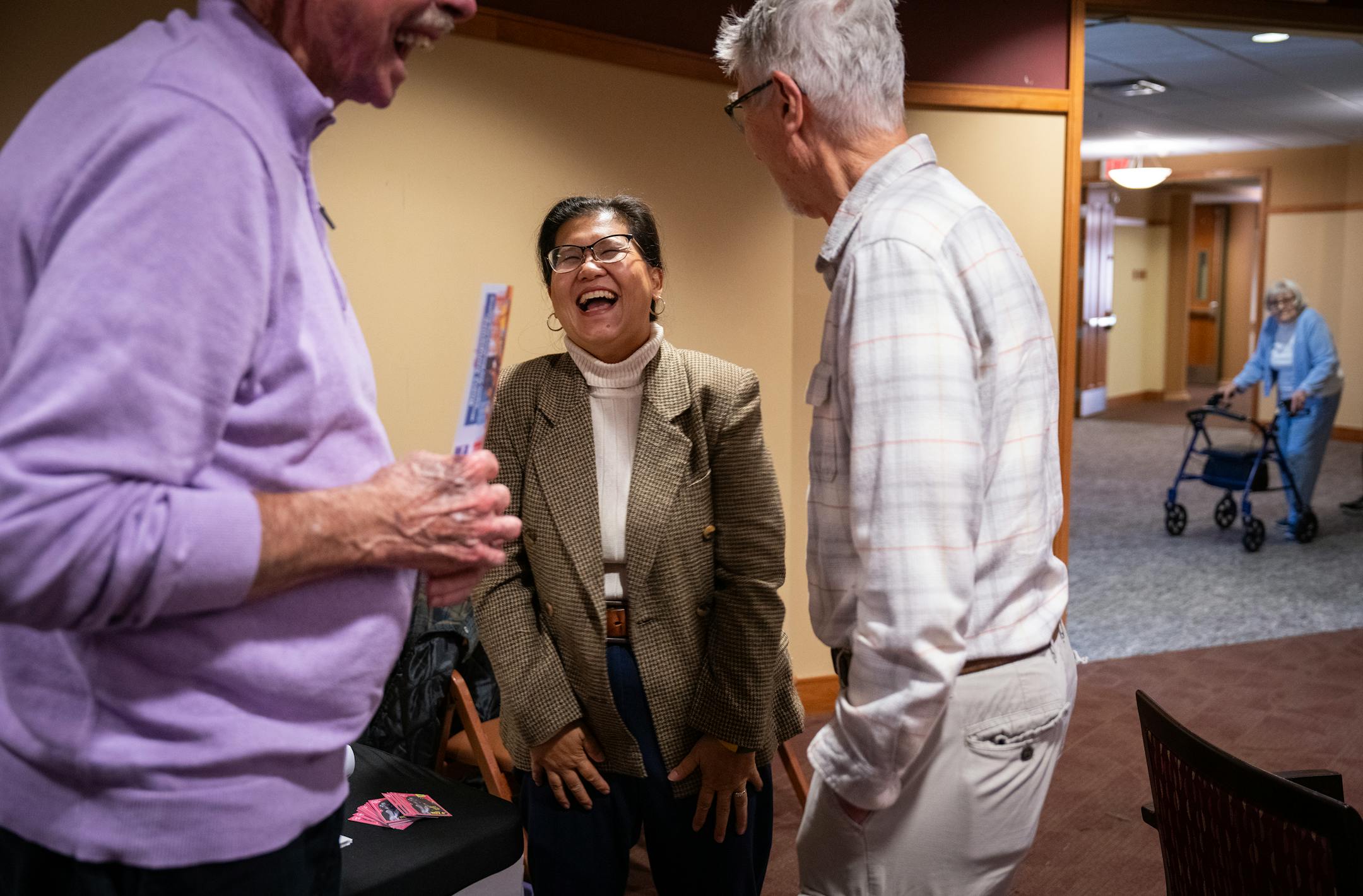
Kaohly Her speaks to Bernie Rodel, left, and Jim Martin during a campaign event at Carondelet Village in St. Paul. (Leila Navidi/The Minnesota Star Tribune)
about the writers

about the writers

Josie Albertson-Grove

Reporter

Josie Albertson-Grove covers politics and government for the Star Tribune.

See Moreicon

Allison Kite

Reporter

Allison Kite is a reporter for the Minnesota Star Tribune.

See Moreicon