
Summit Avenue bike lane feud runs through St. Paul mayoral race

Neighborhood activists just sued Mayor Melvin Carter’s administration, while challenger Kaohly Her, who lives on Summit, won’t pick a side.

The Minnesota Star Tribune
October 23, 2025 at 11:00AM
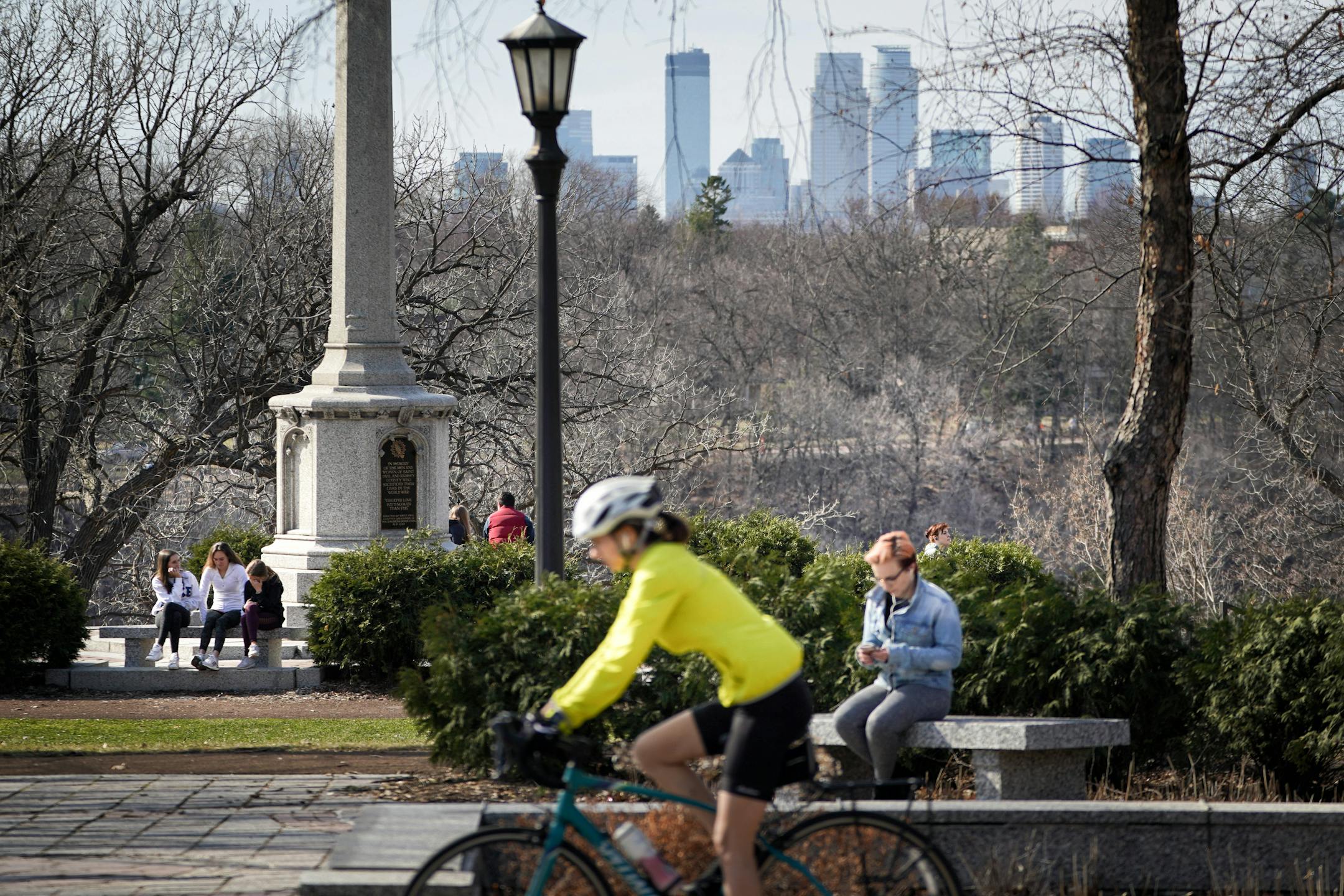
Blue sunny skies and temperatures in the high 50s brought many outdoors, sometimes struggling to distance themselves from each other as they enjoyed the Monument at the west end of Summit Avenue along Mississippi River Boulevard on Sunday afternoon. (Glen Stubbe/The Minnesota Star Tribune)

The fate of a proposed bicycle lane on Summit Avenue has been one of the hottest issues in St. Paul’s mayoral election, and it got even hotter this week when a group fighting to stop the project filed a new lawsuit.

The question of how to move forward on Summit has become one of just a handful of policies where the leading candidates, Mayor Melvin Carter and state Rep. Kaohly Her, truly differ. The suit, seeking public records, heavily criticizes the Carter administration. And while Her does not want to take a position on the bike lane, she lives on the stately boulevard.

The 4 miles of Summit, out of St. Paul’s 500-some miles of roads, could play an outsized role as the campaign heads into its final weeks.

Carter is in full support of the project, which over the course of several years would dig up the road, install new sewers and water mains, and move a bike lane up to the level of the sidewalk, similar to bike lanes on Hennepin Avenue in Minneapolis.

Her has repeatedly declined to take a stance on the project, but has questions about the process that moved Summit ahead of other major bike thoroughfares in less-affluent neighborhoods, and wants to find a way to take down the temperature of the debate.

The 2018 death of a 75-year-old cyclist on Summit galvanized bicycling advocates around the need for safer infrastructure. But Summit Avenue residents have grown worried about the loss of trees, and are skeptical that a sidewalk-level bike lane would be safer. Some residents also worry about their property values, and about the tax assessments they would each have to pay to help fund the project.
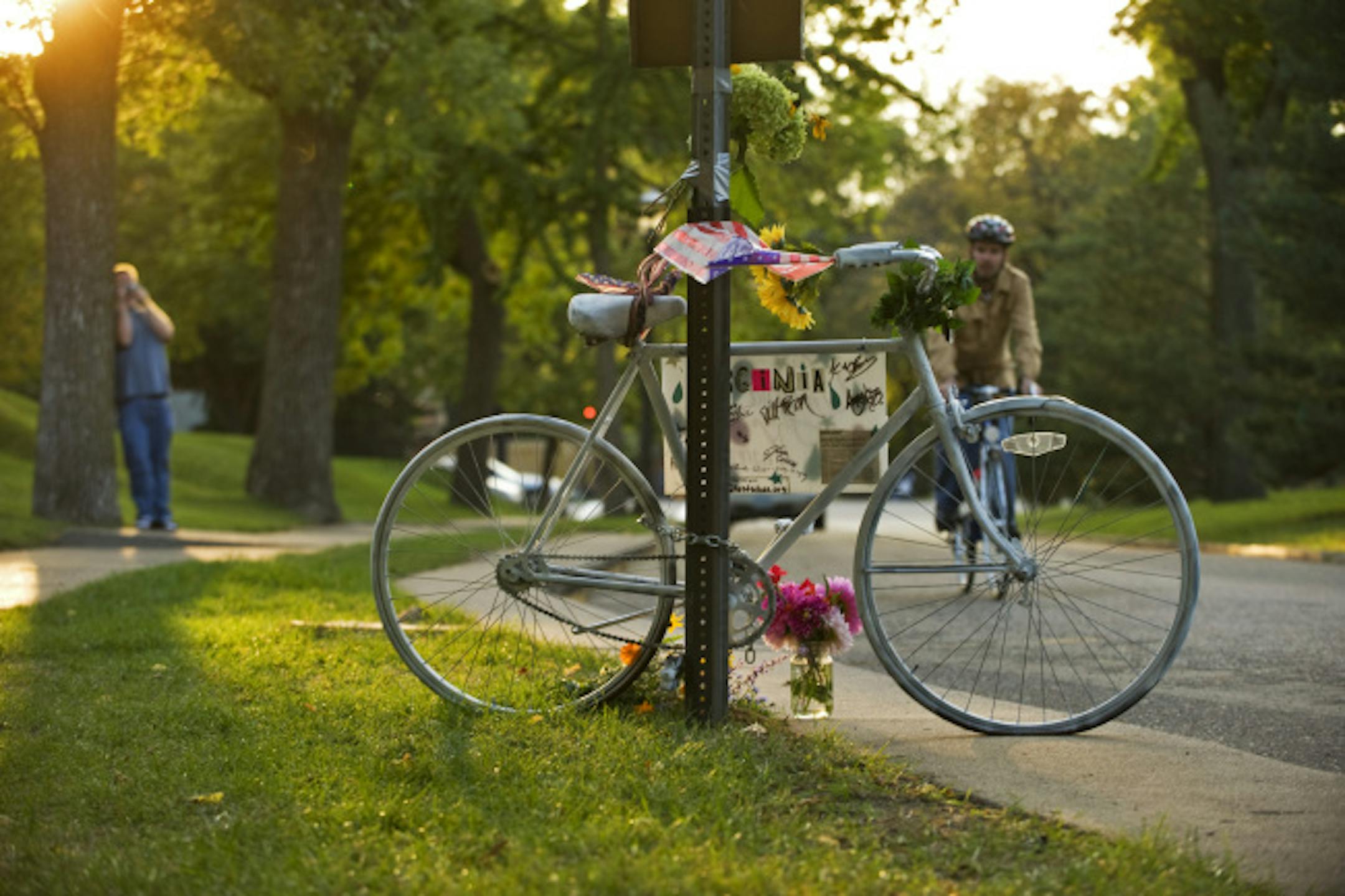
Passers by view the "ghost bike" at the scene of the accident on Summit Av. east of Snelling where Virginia Heuer-Bower lost her life Saturday morning. Ghost bikes are painted white and left near the scene of an accident to commerate a cyclist who has lost their life in a traffic accident.
Passers by view the "ghost bike" at the scene of the wreck on Summit Avenue east of Snelling Avenue in St. Paul where Virginia Heuer-Bower died in 2008. Ghost bikes are painted white and left near the scenes where cyclists died in wrecks. (Elliott Polk (Clickability Client Services) — Star Tribune/The Minnesota Star Tribune)

St. Paul estimates reconstructing Summit Avenue and all its subterranean infrastructure will cost $100 million, and city officials say the cost of the bike lane will not add or subtract from the cost.

A green house divided

Both sides in the Summit Avenue debate see themselves as progressive environmentalists fighting climate change. But they diverge on whether encouraging bicycle commuting is a better solution than preserving as many trees as possible.

The sides also differ on whether the street reconstruction will disrupt trees at all.

The city’s Department of Public Works does not have an exact count of how many trees would be cut down to add a sidewalk-level bike lane, but estimated about 200 could be at risk. Save Our Street, the group organized by Summit residents, believes the entire canopy of thousands of trees could be at risk, because excavation in the street could disturb tree root systems.

During a candidate forum at Gloria Dei Lutheran Church in Highland Park this month, the project was the subject of the most questions submitted by the audience of more than 200.

Carter has been adamant that bike lane or no, Summit needs work.

“Taft was president the last time we reconstructed Summit,” he said. Though anti-construction advocates say city maps show the street was reconstructed last in 1979, and some blocks as recently as 1989, the city says sewers and water mains date to the 19th century, and officials warn of the risk of sinkholes, similar to the one that opened this spring on 7th Street W.

Her told the audience she was concerned that the Summit lane was the most asked-about topic, and said she wanted to see more improvements to bike lanes in less-affluent, less-white neighborhoods to help people without cars move around the city rather than building up a recreational trail.

Her also said she had questions about the Summit process.

“I’m not going to scrap everything that was done,” she said, especially where money has already been spent on the project. But she said she would take a hard look at the plan moving forward.

Lawsuit over public records

Save Our Street’s lawsuit is not seeking to block the Summit Avenue project, but is asking a court to make St. Paul officials turn over more records about how the trail project was planned.

For Bob Cattanach, a leader with Save Our Street, the issue is bigger than this bike lane.

The process included two years of public engagement, but Cattenach contends that feedback was not considered because so many people vocally opposed the project.

The bike lane vote

A special election held in August for the Ward 4 City Council seat suggests the issue is one that could turn out voters.

Carolyn Will, who works with Save Our Street, received more than 1,300 votes — the second-highest total behind Molly Coleman, who won with more than 3,000 votes, or 52%, in the four-way race.

Coleman was a vocal supporter of the bike lane, but Will outperformed her in the precincts touching Summit Avenue.

Summit voters will have more opportunity to weigh in during next month’s citywide election, with residents of the street voting in 13 precincts in four of the city’s seven wards.

Whoever wins the election, Cattanach promises that the Summit residents will keep trying to stop the bike lane.

“If they want to improve Summit Avenue, we’re not going away.”

about the writer

about the writer

Josie Albertson-Grove

Reporter

Josie Albertson-Grove covers politics and government for the Star Tribune.

See Moreicon