
Here’s what to know about Minnesota’s fraud crisis

For more than a decade, Minnesota has grappled with a fraud crisis in its Medicaid programs. The Star Tribune covered it extensively and can guide you through the process.

December 18, 2025 at 12:00PM
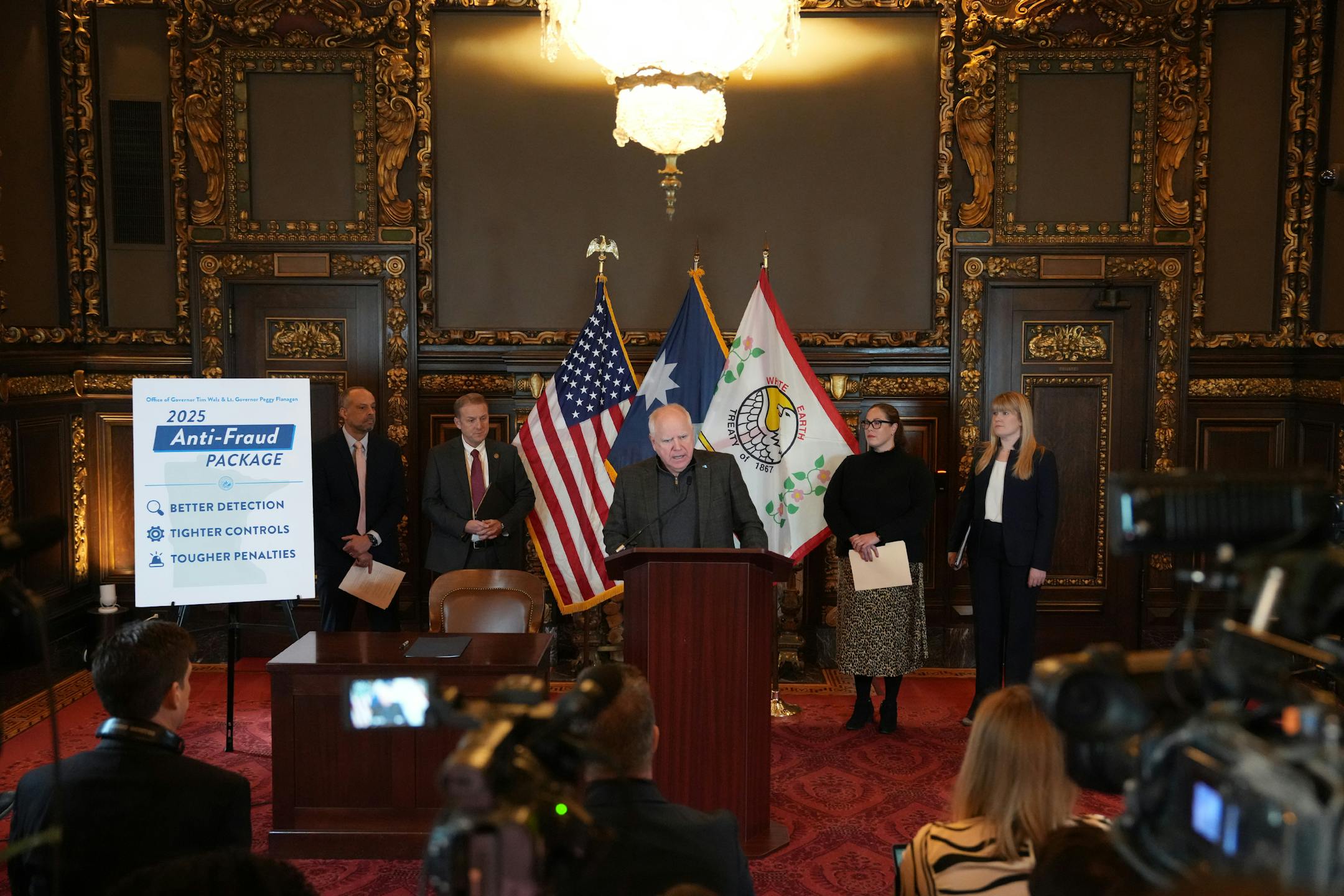
Minnesota Gov. Tim Walz announces a package of fraud prevention proposals and an executive order during a news conference on Jan. 3 at the State Capitol in St. Paul. (Anthony Soufflé/The Minnesota Star Tribune)

President Donald Trump’s recent comments about fraud in Minnesota has given the issue national attention. But the Minnesota Star Tribune has covered the issue for more than a decade.

Investigators have documented fraud totaling more than $200 million in the Education Department’s meals program and various Medicaid services overseen by the Department of Human Services (DHS).

The three common threads: The state was billed for services that were never provided, DHS has failed to provide sufficient oversight and many of those implicated are from Minnesota’s Somali community.

The Minnesota Star Tribune has written hundreds of stories about the unfolding fraud crisis in the state. Here’s what you need to know.

How did this start?

One of the first major scandals involving fraudsters in the Somali community started in 2015 when three Minneapolis day care centers were raided by police and accused of overbilling the state’s Child Care Assistance Program.

The program was aimed at helping low-income families with child care costs, but investigators discovered some day care operators billed the state for more children than were actually present.

Ultimately, investigators filed charges against 10 day care operators. The cases drew public outrage after an incendiary Fox 9 report alleged in 2018 that as much as $100 million annually was being misappropriated and possibly diverted to terrorist groups in East Africa.

A 2019 report from the Legislative Auditor found “no evidence” to support those claims. The total amount stolen from the child care program was between $5 million and $6 million, the report said. But investigators also concluded that internal controls at the state DHS were “insufficient to effectively prevent, detect, and investigate fraud.”

It wasn’t the first warning. A Legislative Auditor report from 2009 found that the fast-growing personal care services program remained “unacceptably vulnerable to fraud and abuse.”

DHS has long been criticized for insufficient oversight across various programs including behavioral health grants, housing support grants and home care.

Years before the uproar over day care fraud, providers and investigators said a lack of updated technology — such as electronic verification — was hampering fraud detection in home care services.

What program had the most money stolen?

In 2022, the FBI raided the offices of Feeding Our Future, a nonprofit that grew rapidly by claiming to serve meals to tens of thousands of needy children during the pandemic. Aimee Bock, the nonprofit’s founder, battled state regulators in court over failed efforts to curb the nonprofit’s extraordinary growth. In interviews with the Star Tribune, Bock defended herself and claimed she was being targeted for suing the state and serving mostly minority children.

A few months later, federal prosecutors unveiled the first of more than 70 indictments against fraudsters who participated in the program. Most of those charged were individuals of East African descent. In 2025, Bock was convicted on multiple federal charges after a lengthy trial where her co-conspirators testified about the kickbacks she solicited and the phony invoices they created to cover up their crimes.

Feeding Our Future collected $246 million in government funding from the federal Child Nutrition Program, but prosecutors have yet to provide evidence showing all of that money was misappropriated. So far, they have filed charges against 59 entities that operated meal sites under Feeding Our Future’s sponsorship that amounted to more than $128 million. More than 200 site operators have not been charged.

Did this catch government regulators by surprise?

As previously reported by the Star Tribune, the state Education Department — which oversaw the meals program — was a ripe target for fraud. Federal regulators had repeatedly faulted the department before the scandal broke, noting mounting oversight problems that left the meals program vulnerable to predators.

Moreover, Star Tribune reporters uncovered documents showing that the Education Department and the state Attorney General’s Office failed to act when a whistleblower accused the leader of Feeding Our Future of breaking the law in 2018, before a single dollar had been paid to the nonprofit. Instead of opening an investigation, Attorney General Keith Ellison’s office referred the whistleblower to other state and federal agencies.

In late 2022, two months after the first indictments were issued, the Star Tribune revealed that day cares owned by several defendants in the Feeding Our Future fraud scheme were still receiving payments from the state.

Republicans have frequently criticized Gov. Tim Walz’s administration for not doing enough to stop the fraud sooner. Democrats have defended state officials for bringing their suspicions to the FBI in early 2021 after complaining federal officials didn’t take their concerns seriously enough. But a Star Tribune review of state and federal records shows that Minnesota officials provided federal authorities with little or no evidence that Feeding Our Future was misappropriating government funds.

A report by the Office of the Legislative Auditor found the Minnesota Department of Education’s inadequate oversight “created opportunities for fraud.” Then-Education Commissioner Willie Jett, who assumed the role in 2023, said the state stopped payments after seeing explosive growth in Feeding Our Future. The nonprofit sued, and the department resumed payments after a Ramsey County judge said the department couldn’t withhold money unless it first took other steps to deal with its questionable conduct, such as reviewing receipts and verifying other records. The department chose not to impose such conditions.

What other programs have been implicated?

In February, the Star Tribune revealed providers within the Medicaid-funded Housing Stabilization Services program warned the state that predatory providers were signing people up for services that were never provided. Months later, the FBI raided the offices of several companies purporting to provide services.

So far, eight people have been charged with defrauding Medicaid through the Housing Stabilization Services program, which pays providers to help vulnerable people find and maintain stable housing. One person has also been charged with defrauding Early Intensive Developmental and Behavioral Intervention, which provides services for young people with autism spectrum disorder.

An attorney for Asha Farhan Hassan, the defendant in the autism services case, said when the charges were unveiled that his client intends to plead guilty. Anwar Adow, 25, pleaded guilty in the Housing Stabilization Services case, becoming the first person convicted in the scheme.

In October, Walz ordered an outside audit of payments to providers in 14 state programs and announced a new system to review reimbursement claims.

Investigators also have been looking into Medicaid fraud among addiction treatment providers. Last year the Star Tribune found many providers paid for their clients’ housing, which federal investigators said was an illegal kickback. Nuway, the state’s largest provider of such services, is paying $18.5 million to resolve allegations of fraudulent claims. That fraud scheme does not involve the Somali community.

How big is the crisis?

Trump claimed in December that Somalis have already stolen “billions” of dollars from the state, but prosecutors have not filed cases that come close to that total, records show.

While Minnesota is confronting one of the largest social services fraud scandals in its history, a Star Tribune review of court records shows the alleged fraud uncovered to date is closer to $218 million, including $24 million in the recent indictments involving housing and autism services. Programs across the country meant to help Americans weather the COVID-19 pandemic — from the meals program implicated in the Feeding Our Future crisis to the Paycheck Protection Program — were rife with fraud.

Those numbers are widely expected to grow as ongoing state and federal investigations into the state programs continue. Assistant U.S. Attorney Joe Thompson has predicted that prosecutors will ultimately find evidence showing more than $1 billion has been misappropriated from state programs.

Who is investigating this?

The Minnesota Attorney General’s Office, the FBI and other state and federal law enforcement agencies have been investigating fraud in Medicaid programs, and the U.S. Attorney’s Office continues to bring charges against providers.

The Minnesota DHS and managed-care providers, such as HealthPartners and UCare, review allegations of fraud and forward them to law enforcement.

Walz also hired Optum, a health technology company, as an outside investigator to look for unusual billing patterns among providers in high-risk services, a pattern that was found in the meals program as well as housing and autism services.

What else is the state doing?

This summer, under new authority from the Legislature, DHS began cutting off payments to companies at the first credible allegation of fraud. That’s a significant shift from previously allowing providers to keep billing the state while investigators built a case.

In response to the ongoing investigations, DHS also took the unprecedented step of terminating its 5-year-old Housing Stabilization Services program in late October. This December, DHS also announced a two-year moratorium on new group homes due to allegations of fraud.

Walz has signed into law several new provisions aimed at reducing fraud and issued an executive order this summer. In December, Walz also announced that he has tapped former FBI agent and Public Safety Commissioner Tim O’Malley as his new point man on fraud cases.

O’Malley will report directly to Walz but said he will have autonomy in his work.

Along with O’Malley’s appointment, the Walz administration announced it would contract with an outside firm run by former law enforcement and federal agents to establish a fraud prevention plan.

At a news conference announcing O’Malley’s appointment, Walz said he took accountability for fraud in Minnesota’s programs and criticized the federal government for citing the fraud problem to target the state’s Somali community.

The fraud, he said, makes him furious.

“It undermines faith in government at a time, to be quite honest with you, that I think is one of the scariest in our nation’s history,” Walz said.

Has the Legislature weighed in?

In 2025, state lawmakers passed legislation bolstering fraud prevention efforts, including allowing state agencies to share data, requiring licensing for autism services providers, requiring greater oversight of the housing program and allowing the state to withhold payments from providers suspected of fraud.

A bipartisan bill to create an independent Office of the Inspector General passed the DFL-led Senate last spring but not the evenly divided House.

Fraud is expected to be a major focus during the upcoming legislative session.

Does DHS provide information about its investigations?

Generally, yes.

As of late November, DHS opened 918 investigations, referred 95 to law enforcement and had cut off payments to providers 485 times this year.

In December, DHS temporary Commissioner Shireen Gandhi said the department’s inspector general had more than 1,300 open cases.

But the state has been slow to hand over records requested by the Star Tribune. The news organization has requested billing data, emails and other records to understand the scope of the issue. The department has also denied requests by the Star Tribune for lists of providers subject to payment withholds because of credible allegations of fraud.

DHS has the authority to disclose that information and has done so in selective cases, but said “disclosure must not jeopardize the investigation and is not required.”

Has anyone lost their jobs over fraud?

Former DHS Commissioner Jodi Harpstead left the department in February after more than five years at the helm, but an agency spokeswoman said Harpstead chose to leave voluntarily.

DHS’ former Inspector General Kulani Moti changed jobs within the agency at the start of the year. She was replaced by James Clark, who previously worked on Medicaid fraud cases at the Attorney General’s Office.

Former Education Commissioner Heather Mueller left her post after Walz won a second term in 2022. Her agency had been criticized over the Feeding Our Future scandal.

At a news conference in December, Walz said former top staffers who have left state government should have been more skeptical of fraud, mentioning — though not naming — the former commissioners of Education and Human Services.

“There is no evidence or even no inkling that any of these people did anything illegal, but we needed a culture change,” Walz said.

Asked directly whether people lost their jobs over their response to fraud, Walz said “new leadership was needed” because of the issue.

Why is this getting national attention now?

Trump reacted to the fraud allegations just days after the conservative website City Journal alleged that money stolen from Minnesota’s Medicaid program had wound up in the hands of terrorists.

In a Truth Social post, Trump said that Minnesota is “a hub of fraudulent money laundering activity.”

Walz has also been a frequent target for Trump since running alongside former Vice President Kamala Harris last year. Trump criticized Walz in a lengthy Thanksgiving Day post on social media, calling him a slur for people with intellectual disabilities while also connecting him to the fraud cases and criticizing Somalis.

Walz, who is running for a third term, responded by saying Trump was spreading lies about the immigrant community and called his language “deeply offensive.”

What does this have to do with immigration?

Trump has cited Minnesota’s fraud crisis to attack Minnesota’s Somali community, calling them “garbage.” He has said he doesn’t want them in the U.S. and that they “contribute nothing.”

The Trump administration has cited the fraud crisis as justification to target Somalis for deportation and vowed to cancel Temporary Protected Status for Somalis.

Only a few hundred Somalis still have Temporary Protected Status, which is given to individuals who cannot return to their home country because of unsafe conditions. Somalis started arriving in Minnesota in large numbers in the 1990s and now number more than 108,000 statewide. The majority are naturalized or U.S.-born citizens.

While many of the defendants in the Feeding Our Future scheme and growing Medicaid fraud are of East African descent, Bock, the leader of Feeding Our Future, is a white woman.

Is the Trump administration doing anything else?

The Treasury Department says it will investigate claims that Minnesota Medicaid funds made their way to al-Shabab. The Small Business Administration also plans to investigate “the network of Somali organizations and executives” it claims have also received Paycheck Protection Program loans. Trump signed the PPP bill into law in 2020 during his first term.

U.S. Department of Homeland Security Secretary Kristi Noem has said Trump directed her to look into immigrants’ visas in Minnesota. Citing reports on fraud, the U.S. Department of Health and Human Services’ Administration for Children and Families wrote to Walz and other Minnesota officials to request data on recipients of Temporary Assistance for Needy Families (TANF).

The Centers for Medicare and Medicaid Services has demanded weekly updates from Minnesota on its review of high-risk service. It has also instructed the state to issue a moratorium on new provider enrollments and, by the end of the year, submit an action plan regarding how it will prevent future fraud.

The U.S. Department of Labor also plans to “conduct a targeted review of Minnesota’s Unemployment Insurance Program” for possible fraud in the state benefits program.

What’s Congress doing?

The U.S. House of Representatives Committee on Oversight and Government Reform will investigate fraud in Minnesota. The committee is seeking documents from Walz and Ellison “showing what your administration knew about this fraud and whether you took action to limit or halt the investigation into this widespread fraud,” according to a letter sent by the committee.

Ellison called the effort “completely political” but said his office will evaluate it and cooperate where they can and push back when they are asking for things that are “not legally disclosable.”

Lancaster said of the committee’s investigation: “We look forward to working together. While the governor has been working to ensure fraudsters go to prison, the president has been letting them out.”

Sydney Kashiwagi of the Minnesota Star Tribune contributed to this story.

about the writers

about the writers

Allison Kite

Reporter

Allison Kite is a reporter for the Minnesota Star Tribune.

See Moreicon

Jeffrey Meitrodt

Reporter

Jeffrey Meitrodt is an investigative reporter for the Star Tribune who specializes in stories involving the collision of business and government regulation. 

See Moreicon

Jessie Van Berkel

Reporter

Jessie Van Berkel is the Star Tribune’s social services reporter. She writes about Minnesota’s most vulnerable populations and the systems and policies that affect them. Topics she covers include disability services, mental health, addiction, poverty, elder care and child protection.

See Moreicon

More from News & Politics

See More
card image
Richard Tsong-Taatarii/The Minnesota Star Tribune

Court records show Gregory Holmes has a long and varied criminal history in Minnesota.

card image
card image