

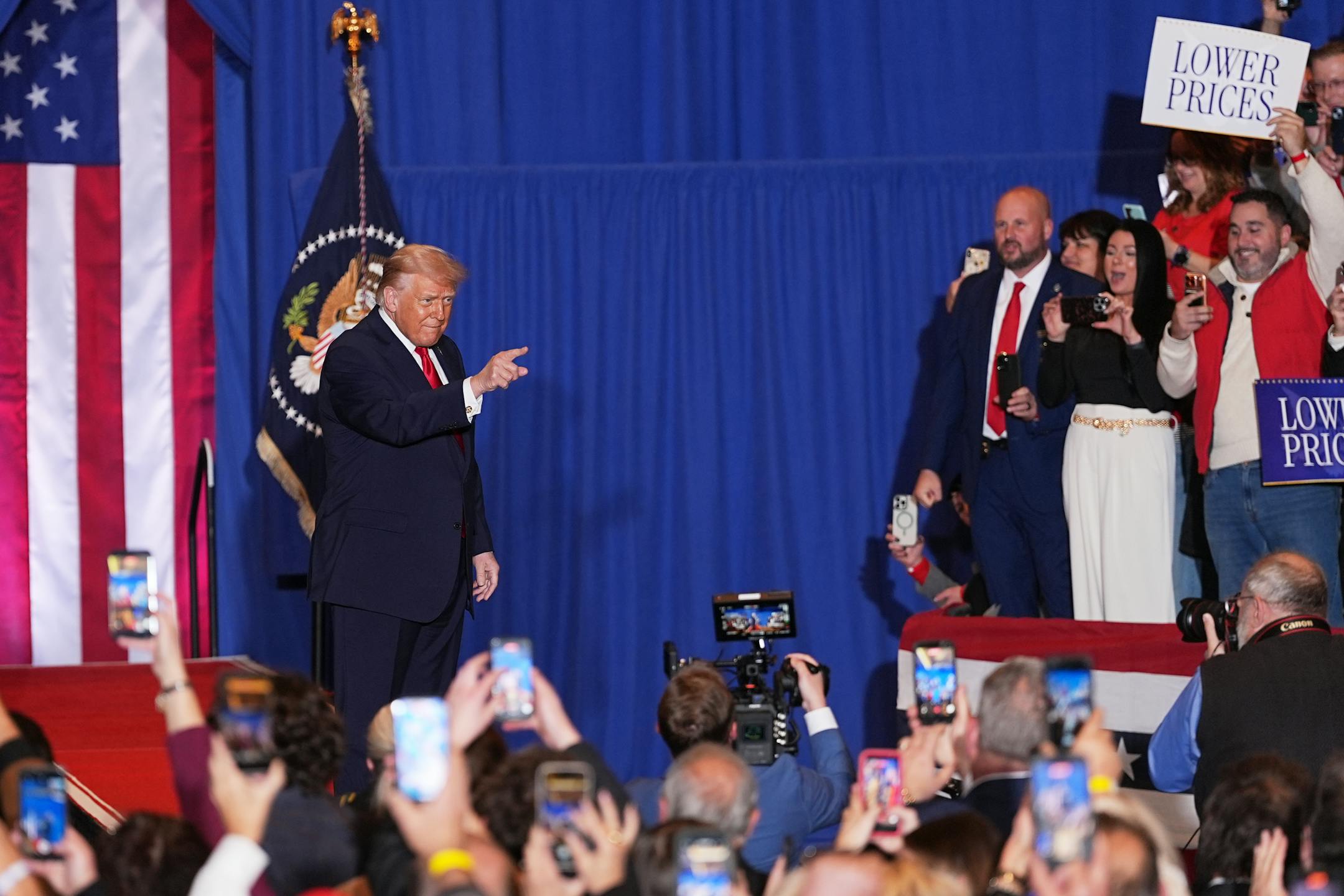
When President Donald Trump said Somalis in Minnesota had stolen “billions” of dollars in public funds, his claim raised some eyebrows among Star Tribune reporters and editors who have reported extensively about numerous fraud investigations over the years.
There’s no doubt that those schemes involved huge amounts of public money, but was it billions — with a b?
To answer that question we conducted our own accounting based on court records, criminal charges and convictions across dozens of cases that have dominated headlines in the state for years.
Our tally: $217.7 million to date. That number is likely to grow as fraud investigations continue, but it is currently far short of both Trump’s claim and the figures commonly cited by prosecutors and widely reported by some local and national media outlets.
Our calculation has been criticized by conservative activists, media outlets and others who’ve followed the cases. Here’s a closer look at how we got there.
What we counted — and didn’t
First, we set some ground rules:
- We counted only the amount of taxpayer money alleged to be stolen or misused, not the total amount that may have passed among defendants. For example, if someone stole $10 in taxpayer money and gave $5 of it to a partner in crime, it’s still $10 in stolen taxpayer money — not $15.
- We counted only money cited in the public record, such as criminal charges, plea agreements and convictions.
- We did not use projections or estimates. When more evidence — charges, plea agreements, convictions, audits — is presented, we’ll update our tally.
We first analyzed a database the Star Tribune built during the Feeding Our Future investigation that focused on a meals program overseen by Minnesota’s Department of Education. The database tracks every criminal case involving the theft of state and federal funds since the first Feeding Our Future indictment was issued in September 2022.
Feeding Our Future obtained a total of $246 million in public money since 2018, according to documents presented by the U.S. Attorney’s Office. But those records show only $127.7 million went to 59 groups or individuals whose owners and operators have been charged or convicted of fraud. More than 200 other entities that received reimbursement payments through Feeding Our Future for providing meals to needy children have not been accused of wrongdoing, so we did not include that money.


