Feds charge eight in connection with housing program ‘riddled with fraud’

September 18, 2025
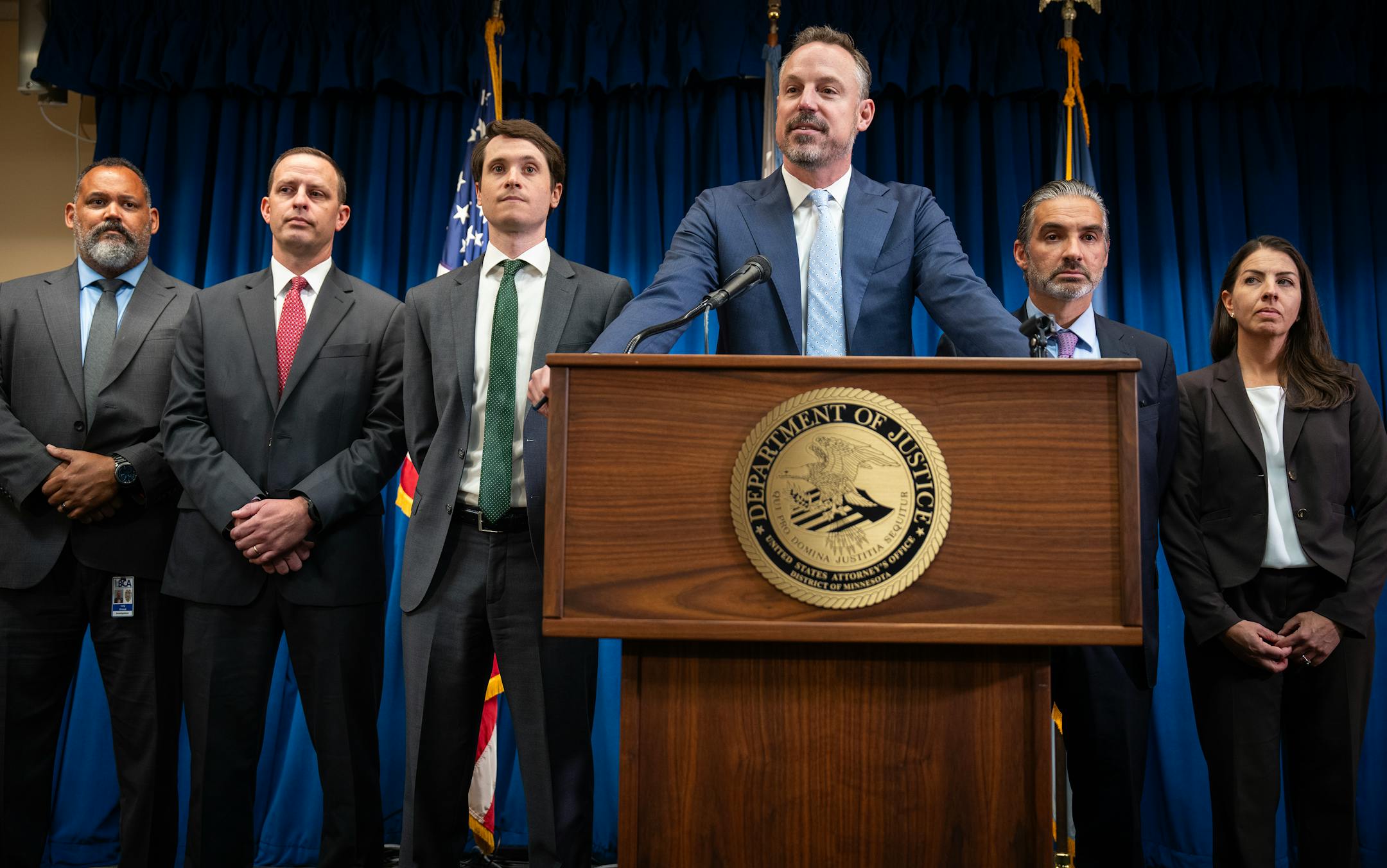
Acting U.S. Attorney Joe Thompson holds a news conference Thursday on charges in the fraud investigation of Minnesota's housing stabilization services. (Leila Navidi/The Minnesota Star Tribune)

Acting U.S. Attorney Joe Thompson said the state “cannot prosecute our way out of this problem.”

The Minnesota Star Tribune

Federal prosecutors charged eight people Thursday with wire fraud in connection with an investigation of the state’s embattled Housing Stabilization Services program. Prosecutors called the case a “massive” scheme to defraud a program meant to provide housing service to vulnerable people.

In July, federal investigators searched five locations after widespread complaints about the program that one agent wrote in a warrant is “extremely vulnerable to fraud.”

Minnesota’s housing program was once heralded as groundbreaking, as the state was among the first to start using Medicaid dollars to help people find and keep housing.

Minnesota built a program without other examples to guide its work. After the program launched five years ago, it quickly ballooned, dramatically surpassing projections from the Minnesota Department of Human Services. The program was expected to serve about 8,000 people and cost roughly $2.6 million annually. Last year more than 700 providers received a total of more than $100 million in Medicaid payments through the program, according to data the DHS provided to the Minnesota Star Tribune.

Follow live updates below:

12:33 p.m. - Minnesota Attorney General Keith Ellison said in a statement that “today’s indictments are a step in the right direction.”

“I hope this sends a message to all those who would take advantage of Minnesotans’ generosity and desire to help those in need,” Ellison said. “My office gladly partnered with federal law enforcement in these investigations that led to these indictments by interviewing key witnesses, executing search warrants, analyzing data and more.”

Ellison said he was disappointed state lawmakers did not provide funding during the legislative session this spring to expand the Medicaid Fraud Control Unit in the Attorney General’s Office.

“No matter what the Legislature does, my team and I will continue to fight Medicaid fraud, hold wrongdoers accountable and protect our tax dollars,” Ellison said.

Allison Kite

12:20 p.m. - Department of Human Services Acting Commissioner Shireen Gandhi said the charges announced should serve as a “warning” to fraudsters.

“The charges announced today are the result of ongoing collaboration between the Minnesota Department of Human Services and our law enforcement partners to root out fraud in state programs and hold criminals accountable,” she said in a statement. ”Let today’s actions serve as a warning to anyone who steals from Minnesota taxpayers: you will be prosecuted to the fullest extent possible by our law enforcement partners.”

— David Taintor

12:15 p.m. - Federal prosecutors say that before the Housing Stability Services program was launched, it was predicted to cost about $2.6 million annually. In 2021 alone, it paid out more than $21 million in claims. That was followed by $42 million in 2022, $74 million in 2023, $104 million in 2024 and $61 million in the first half of 2025.

— Abby Simons

12:10 p.m. - The Housing Stabilization Services program launched in 2020 as a groundbreaking program using federal Medicaid funds to help address housing insecurity. It’s meant to help people with disabilities find and maintain stable housing.

But the cost of the program and the number of enrollees and providers quickly spiraled. More than 1,700 companies are listed in the state’s directory. Last year, providers billed the state for more than $100 million in services.

Predatory providers started to emerge, and other providers started to see organizations that didn’t seem reputable signing clients up for services that they never received.

This spring, lawmakers passed reforms meant to prevent fraud in the program, including allowing unannounced site checks, fingerprinting owners and looking at providers’ history and internal controls before enrolling them in the program. Starting last month, providers were required to have clients sign off to verify they received services.

— Allison Kite

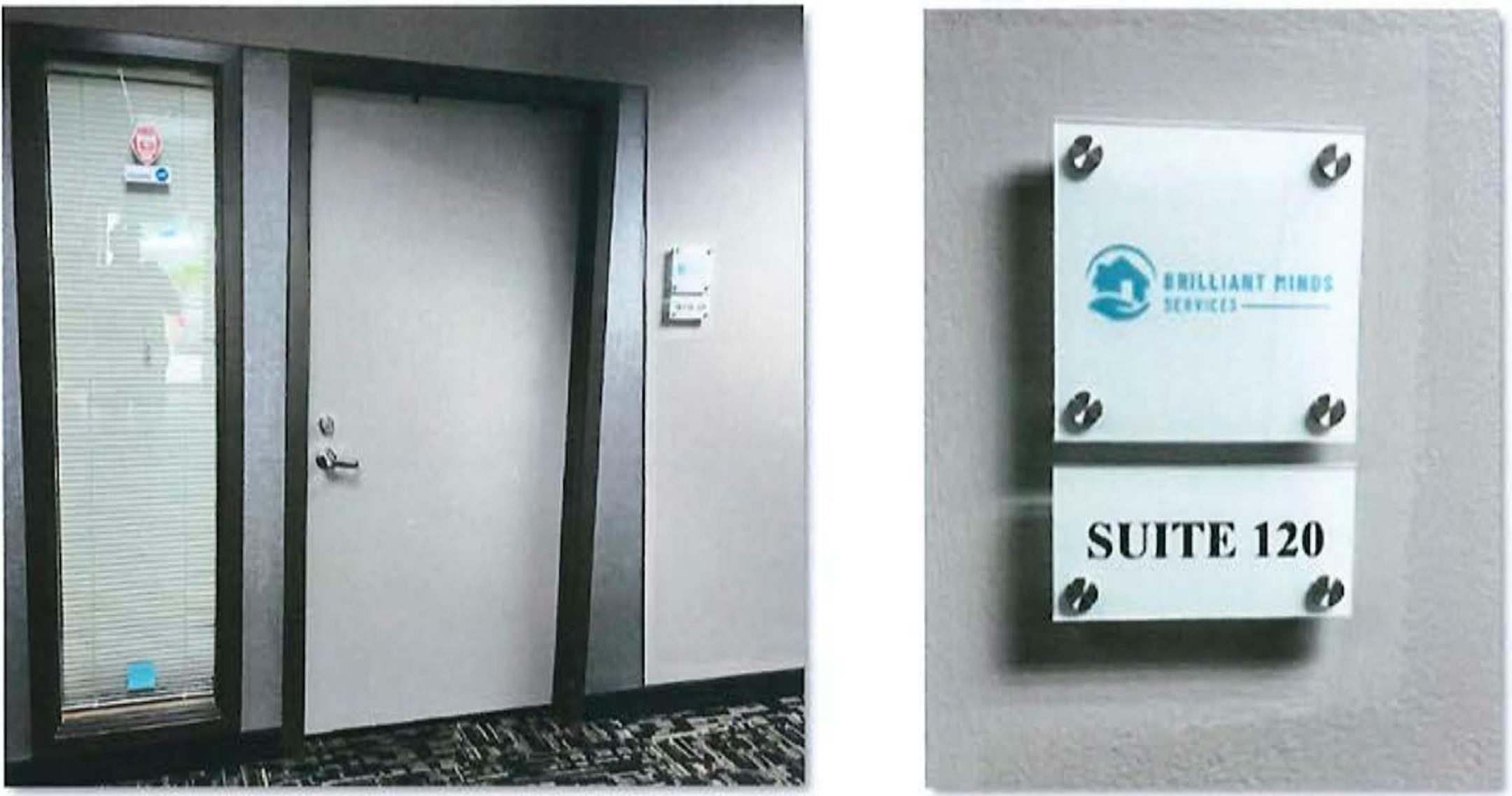
Investigators searched the offices of Brilliant Minds Services in St. Paul's Griggs-Midway Building in July. (US District Court of Minnesota)

12 p.m. - Eight defendants face federal charges of wire fraud in the housing stabilization services fraud scheme. Federal prosecutors alleged they “devised and carried out schemes to defraud federally funded health care benefits collected within Minnesota’s Housing Stability Services Program.”

The defendants ran the following businesses:

Brilliant Minds Services: Moktar Hassan Aden, 30; Mustafa Dayib Ali, 29; Khalid Ahmed Dayib, 26; Abdifitah Mohamud Mohamed, 27.

Faladcare, Inc.: Christopher Adesoji Falade, 62; Emmanuel Oluwademilade Falade, 32.

Leo Human Services:Asad Ahmed Adow, 26.

Liberty Plus:Anwar Ahmed Adow, 25.

— Abby Simons

11:45 a.m. - Minnesota officials have cut off payments to 115 providers of Housing Stabilization Services as they investigate fraud in the program. The Minnesota Department of Human Services has also asked the federal government to terminate the program, which DHS temporary Commissioner Shireen Gandhi told legislators has seen overwhelming levels of fraud.

In 2024, providers billed more than $100 million in services. It’s unclear how much of that figure may be fraudulent.

— Allison Kite

11:35 a.m. - Thompson said Minnesota is seeing a “systematic and wholesale attack” on its state government programs.

“These programs aren’t designed to have hundreds or even thousands of bad actors all try to defraud them from day one,” he said. “Most of these cases, unlike a lot of Medicare fraud and Medicaid fraud cases nationally, aren’t just over-billing. These are often just purely fictitious companies solely created to defraud the system, and that that’s unique in the extent to which we have that here in Minnesota.”

Sofia Barnett

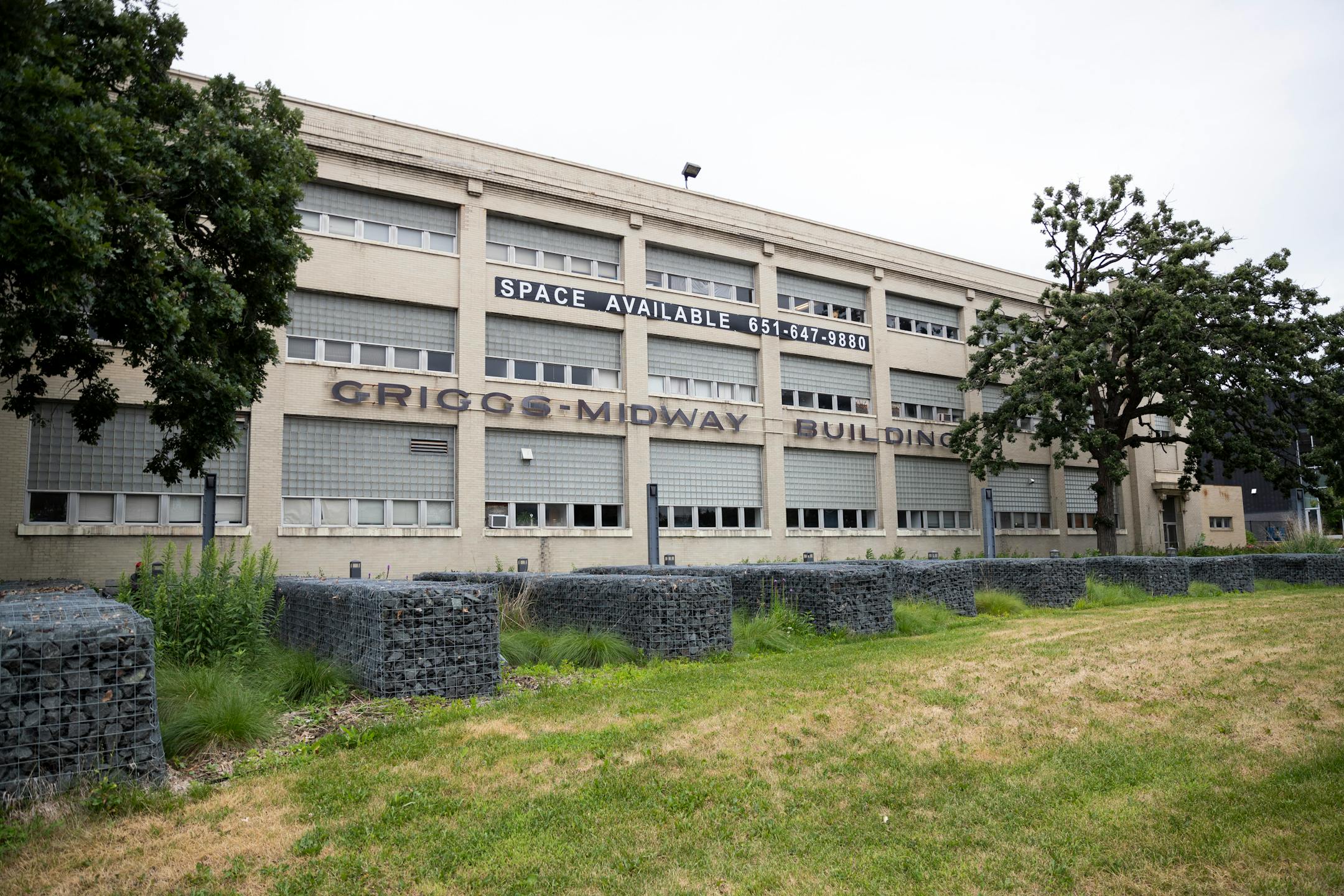
The Griggs-Midway building, the corner of University and Fairview avenues, houses 22 businesses described as providing housing services that took in a combined $8 million between January 2024 and this May. (Rebecca Villagracia/The Minnesota Star Tribune)

11:30 a.m. - The FBI pointed out in search warrants filed in July that 22 housing stabilization providers working from a single building in St. Paul billed the state for more than $8 million between January 2024 and May 2025.

The Griggs-Midway building, an imposing structure along University Avenue, housed Brilliant Minds Services, one of the businesses searched in July.

At the time, the DHS said it had opened approximately 40 investigations into providers associated with the building and stopped payments “everywhere we have seen evidence of fraud.”

Allison Kite

11:25 a.m. - Thompson referred to the investigation into state programs as an iceberg.

“As we keep digging in this,” he said, “You see more and more of them that are riddled with fraud.”

— Sofia Barnett

11:21 a.m. - Thompson said there is “significant” overlap between the housing stabilization case and the Feeding Our Future case.

“Most of these health care fraud investigations ... essentially grew out of the Feeding Our Future investigations through which we saw bank records routinely, where people were purporting to serve meals to thousands of kids a day and are also purporting to run an Autism Clinic or a (personal care attendant) services program or home health care,” he said.

— Sofia Barnett

11:18 a.m. - Thompson said the system of trust that underpinned the state’s services no longer works, and the level of fraud is “staggering.”

“These programs have been abused over and over to the point where the fraud has overtaken the legitimate services,” he said. “I’ve been prosecuting these cases for years, and I’ve literally run out of ways to express what is happening in our state and our state programs.”

“We can and will prosecute many of these individuals as we have them,” he said. “But we cannot prosecute our way out of this problem.”

— Sofia Barnett

11:15 a.m. - Thompson said this is just the first round of indictments in this case.

“Unlike in similar cases such as Feeding Our Future, we’re going to charge this case in waves as we develop the evidence for individual defendants and companies,” he said.

— Sofia Barnett

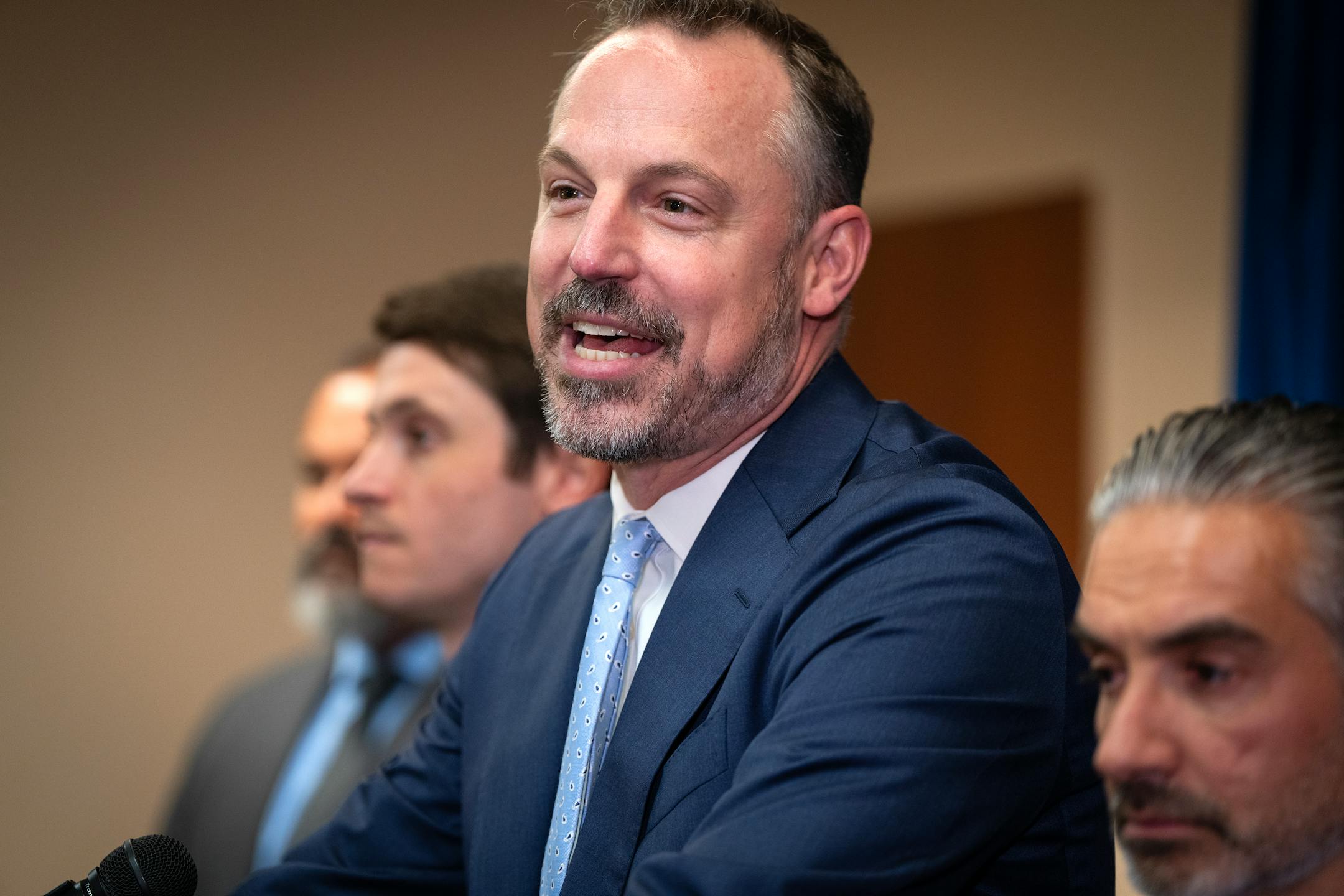
Acting U.S. Attorney Joe Thompson said Thursday that the system of trust that underpinned the state’s services no longer works, and the level of fraud is “staggering.” (Leila Navidi/The Minnesota Star Tribune)

11:12 a.m. - Eight defendants are being charged in the fraud scheme, Thompson announced. The defendants, he said, identified vulnerable people, many of whom were being released from drug or alcohol rehabilitation facilities.

“They signed them up to receive housing stabilization services to purportedly help them find stable housing, and then they billed Medicaid for services they did not actually provide,” he said.

— Sofia Barnett

11:10 a.m. - Acting U.S. Attorney Joe Thompson said the Housing Stabilization Services is “riddled with fraud.”

“We were the first state in the nation to make this Medicaid benefit available. At the time, the program was estimated to cost approximately $2.6 million a year, but it quickly exploded,” he said. “It grew to more than $100 million a year in Medicaid billing in just a few years. Hundreds of companies enrolled in the program began claiming to provide housing stabilization services to thousands of clients from the state of Minnesota.”

“Many of these companies operated out of dilapidated forefronts, or run-down office buildings that were full of other fraudulent health care companies,” he said, including the Griggs-Midway building in St. Paul.

— Sofia Barnett

10:45 a.m. - A state official overseeing employees administering the embattled Housing Stabilization Services program is no longer in his position at the Minnesota Department of Human Services. Eric Grumdahl’s last day was Tuesday.

The agency would not give details on why he was no longer employed as an assistant commissioner. Rep. Kristin Robbins, who chairs the House Fraud Prevention and State Agency Oversight Policy Committee, cast the departure as a firing. She said the state was finally seeing accountability for fraud in DHS programs.

“They keep rearranging the deck chairs,” said Robbins, R-Maple Grove, “and people have to take responsibility for changing these programs or they need to move on from the state government.”

Grumdahl was the assistant commissioner of the Homelessness, Housing and Support Services Administration.

Allison Kite

about the writer

about the writer

Star Tribune staff

See Moreicon

More from News & Politics

See More
card image
Dymanh Chhoun/Sahan Journal

Many situations call for knowledge of resources and mental health rather than a police response, advocates say.

card image
card image