
Wolf conflicts down in Minnesota after 2024 spike

Ranchers and pet owners have reported far fewer attacks. Mild winters and increased deterrence may be responsible.

The Minnesota Star Tribune
February 10, 2026 at 12:00PM
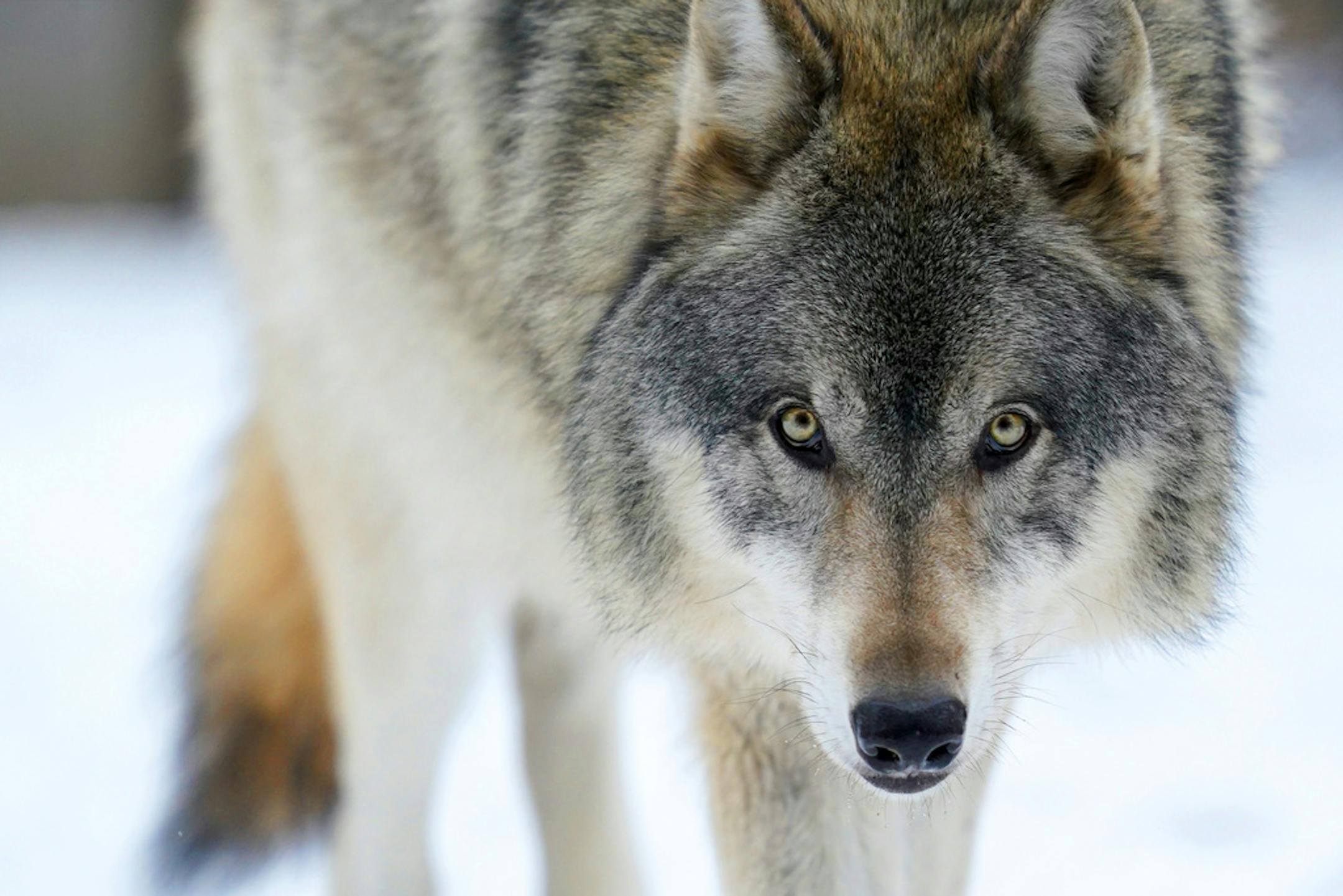
Lia, a gray wolf in the exhibit pack at the Minnesota Zoo, wanders her snow filled enclosure Tuesday, Feb. 2, 2021, in Apple Valley, Minnesota. (Anthony Souffle/Minneapolis Star Tribune/TNS) ORG XMIT: 98987309W (Anthony Soufflé/The Minnesota Star Tribune)

Wolf attacks on Minnesota livestock and pets fell sharply in 2025, marking a return to normal for the state.

Federal trappers received a total of 185 complaints about wolf encounters, according to a recently released U.S. Department of Agriculture report. That is down from a record 252 calls in 2024 and slightly below the annual average for the last decade-plus.

Verified kills fell from 166 to 121.

This latest report comes as lawmakers continue efforts to remove federal protections for the wily predators.

The drop in attacks may be partly due to the unseasonably mild winters in northern Minnesota in 2024 and 2025. Minnesota’s wolves tend to struggle when there is no snow on the ground to slow down deer, their main prey.

While state wildlife managers have not yet completed a wolf population estimate for the year, Voyageurs National Park may provide an early indication of a possible dip in numbers. Wolf researchers who study the area surrounding the park saw their lowest wolf numbers in more than a decade.

The USDA also has been increasing support for non-lethal deterrents, such as added fencing and help disposing of livestock carcasses, said Dakota Bird, the district supervisor for the USDA’s Wildlife Services. The agency helped build 10 composting sites on Minnesota ranches over the past three years.

The combination of fencing and composting “has proven to be less incentivizing for predators to spend time” near living cattle, Bird said.

The agency is working with the University of Minnesota to study how effective the compost sites are at reducing wolf conflicts.

Minnesota’s wolves have been remarkably stable since the 1990s. Their populations tend to fluctuate between 2,500 and 3,000 animals, living in hundreds of packs across the northern half of the state.

They cause little damage overall to Minnesota producers, killing livestock on less than 1% of the state’s ranches. But wolves can become persistent problems to individual farmers when they home in on certain locations year after year.

Stressed cattle can lose weight, and sometimes they get injured or break their legs in a panic when wolves are around, said Wes Johnson, a cattle rancher in Orr who has struggled with wolves for years.

The state Department of Agriculture pays ranchers for any livestock lost to wolves. And when a wolf kills a domesticated animal, federal trappers are called in to kill any wolves living in the area.

Federal trappers destroyed 203 wolves in 2025.

Minnesota is one of the few places in the country where federal trappers are allowed to kill wolves. That’s because Minnesota is the only state in the Lower 48 that never eradicated the species, and the state’s population has remained far healthier than in other places.

It’s been healthy enough that the U.S. Fish and Wildlife Service has tried to remove federal protections for Minnesota’s wolves under every presidential administration since the 1990s. Those efforts ultimately failed or were overturned by the courts.

Lawmakers are considering two competing bills that would remove protections for wolves. A largely Republican-backed measure, which passed the House in December, would order the Fish and Wildlife Service to enact a final rule that removes federal protections for nearly all wolves in the country. The legislation includes language that would prohibit that rule from “being subject to judicial review.”

Lawmakers used similar language to successfully remove federal protections from wolves in the Northern Rocky Mountain region in 2011. The language has held up in court, and wolves in the northern Rockies remain under state management.

Sen. Amy Klobuchar, D-Minn., has backed a separate proposal to de-list the predators only in Minnesota, Wisconsin and Michigan’s Upper Peninsula, where wolves have long surpassed recovery goals. That bill would remain open to judicial review.

“That is the better approach for Minnesota,” a spokesman for Klobuchar said.

Neither bill seems to have much momentum, said Collette Adkins, an attorney for the Center for Biological Diversity, which has led efforts to keep wolves under federal protection.

“These bills do come up every session, and I don’t see any particular reason that these would have legs,” Adkins said.

The courts have long made it clear that in order for wolves to be de-listed, the federal government has to come up with a broader recovery plan that will restore the animals to more of their native range, including along the West Coast, the Southwest and the Northeast, she said.

about the writer

about the writer

Greg Stanley

Reporter

Greg Stanley is an environmental reporter for the Minnesota Star Tribune. He has previously covered water issues, development and politics in Florida's Everglades and in northern Illinois.

See Moreicon

More from News & Politics

See More
card image
Alex Kormann/The Minnesota Star Tribune

Heads of ICE and Border Patrol will testify before a House committee in Washington.

card image
card image