Eight people were charged Thursday in what federal prosecutors are calling a “massive” scheme to defraud Minnesota’s embattled Housing Stabilization Services program of millions of dollars for services they never provided to vulnerable people.
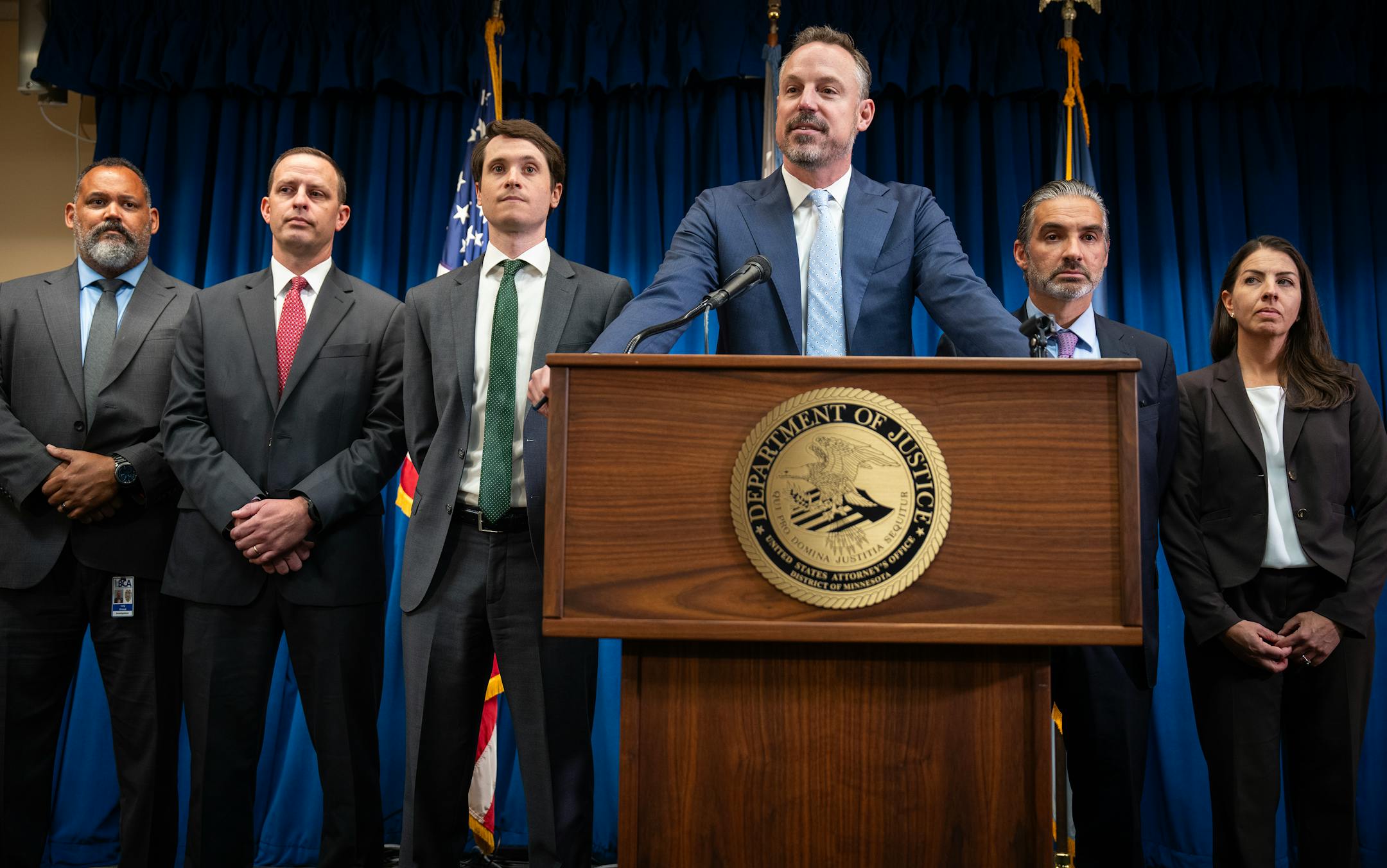
In a news conference, the U.S. Attorney’s Office announced the “first wave” of wire fraud cases connected to what was described as a sprawling plot to defraud the Medicaid benefit program by creating sham housing companies.
“The HSS program is riddled with fraud,” said acting U.S. Attorney Joe Thompson. “Many of these companies operated out of dilapidated storefronts or run-down office buildings that were full of other fraudulent health care companies.”
Thompson said the defendants charged Thursday followed a similar pattern by identifying Medicaid-eligible individuals, many of whom were exiting drug or alcohol rehab facilities, and signing them up to receive housing stabilization. The defendants then billed Medicaid for services they did not provide.
“The money was just simply stolen,” Thompson said. The money stolen among the defendants in the latest indictment amounted to more than $10 million, he noted.
The charges are the latest development to rock the program created to find and maintain housing for older adults and people with disabilities, mental illness and substance-abuse disorder. Minnesota was the first state to opt into the Medicaid-funded benefit in 2020, with an estimated annual cost of $2.6 million, according to the Department of Justice. The spending quickly and dramatically surpassed those projections. Last year, more than 700 providers received more than $100 million in Medicaid payments, according to data the DHS provided to the Minnesota Star Tribune.
Eric Grumdahl, the state official overseeing housing instability programs, departed his role Tuesday as assistant commissioner of the Homelessness, Housing and Support Services Administration. The Minnesota Department of Human Services declined to say why. His exit came the day before Gov. Tim Walz announced his signing of an executive order detailing measures to combat fraud, including data-driven reviews of billing, increased transparency and coordinating council between inspectors general of different agencies.
In July, federal investigators searched locations tied to five Minnesota businesses after widespread complaints about the program, which one agent referred to in a warrant as “extremely vulnerable to fraud.” Search warrants noted 22 providers working from a single St. Paul building had billed the state for more than $8 million between January 2024 and May 2025.