

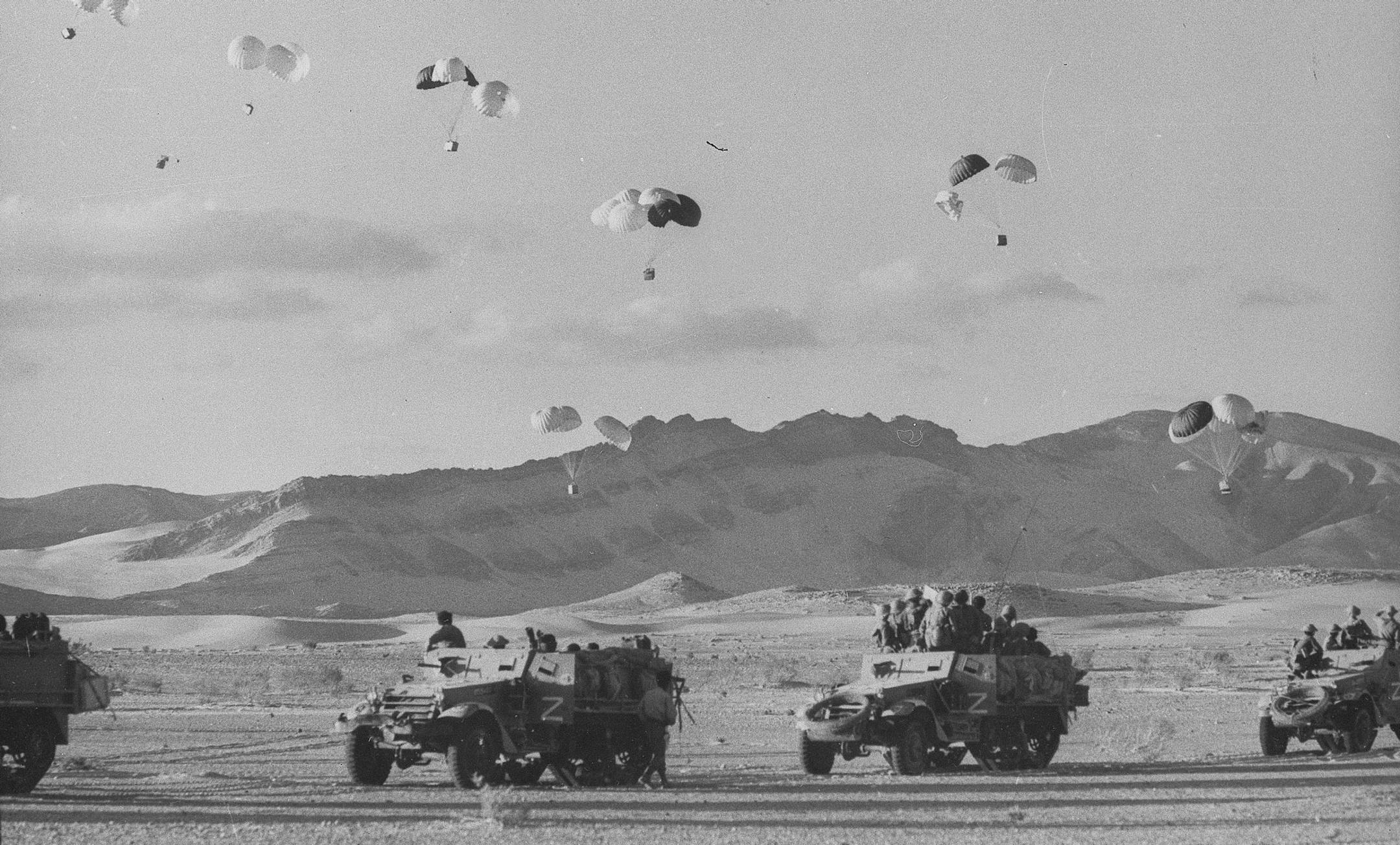
Fifty years ago — in May 1967 — Egypt's president Gamal Abdul Nasser intimidated U.N. Secretary of General U Thant into withdrawing the United Nations peacekeeping force from the Egyptian-Israel border.
Nasser then declared the closing of the Straits of Tiran — an act of war against Israel.
Israel responded to this existential threat with a full mobilization of its military and a diplomatic mission led by Foreign Minister Abba Eban seeking an international effort whether by naval force or suasion to break the blockade.
When such an effort was not forthcoming, after two weeks at existential razor's edge for the nation, Israel launched a pre-emptive air attack that destroyed Egypt's air force and laid the foundation for Israel's stunning military successes against Egypt, Jordan and Syria in the Six-Day War.
The relief, if not outright jubilation, that accompanied Israel's victory soon confronted a reality of promise and peril that has defined the last 50 years.
The Six-Day War forever changed the nature of the U.S.-Israel relationship for the betterment of both countries. As Ambassador Michael Oren noted in "Six Days of War," President Lyndon Johnson was "staunchly pro-Israel."
Nevertheless, a State Department spokesman — on June 5, 1967, the first day of the fighting — described the American position with respect to the conflict as "neutral in thought, word, and deed." Richard Wilson, chief of the Minneapolis Tribune's Washington Bureau, had written on May 28, 1967: "America's interest [in the Middle East] is not that clearly definable."
This ambiguity gave way as the U.S. began a decades-long process to reconfigure attitudes and relationships between Israelis and Palestinians and the Middle East Arab states while emerging as Israel's foremost ally, profoundly sharing democratic values and with strategic interests mostly aligned.


