

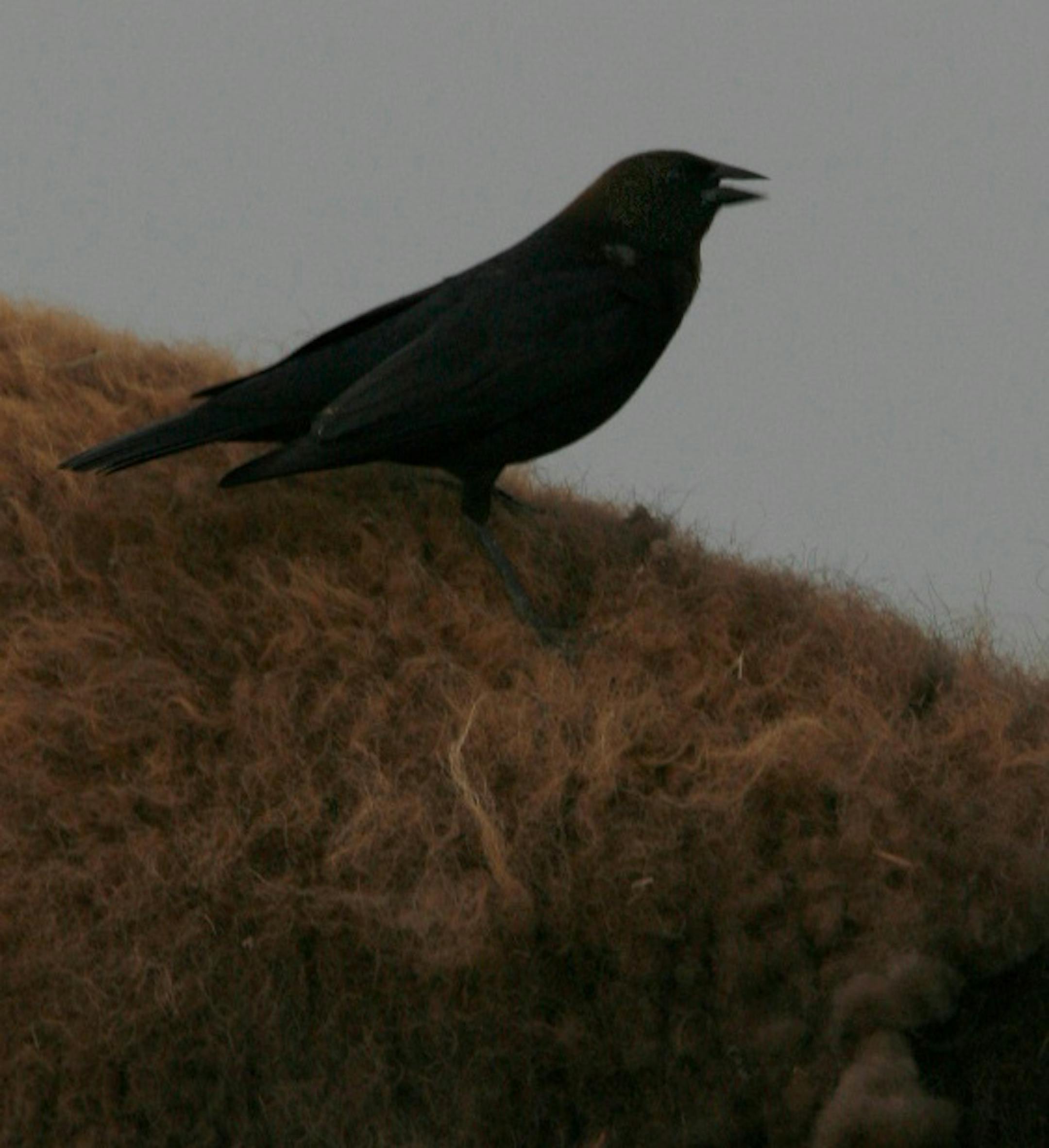
The movements of blackbirds from their roosts to their feeding grounds is a phenomenon worth watching.
Beginning around sunrise and continuing for about five minutes, an interested observer might see several thousand blackbirds flying in a narrow band, like a fast-moving stream, leaving a roosting area. Many times it's from a low wetland. About a half-hour before sunset the steady stream of blackbirds, often more than a mile long, moves back to the roost.
Blackbirds begin to flock together soon after adults stop caring for the young. Each night in summer until they move farther south later in fall, huge congregations of common grackles, red-winged blackbirds and brown-headed cowbirds, all members of the blackbird family, will fly from their feeding grounds to their roosts, creating the largest and most commonly observed groups of land birds in North America.
Assemblies of red-winged blackbirds reach a peak about mid-October, and grackle flocks are at their peak a bit later. Slowly, as the season progresses, the enormous flights drift south into Iowa and beyond. Most of these blackbirds winter in southern states. Very few attempt to winter in southern Minnesota.
The reason for the evolution of migration is easy to understand. Take mobile animals and a seasonally fluctuating food supply, and the natural consequence is migration. Long ago, and even today, the birds that moved in the right direction survived. A few of the other bird species to join blackbirds during the winter in southern states are house wrens, eastern bluebirds, yellow-rumped warblers, wood ducks and American coots.
Jim Gilbert's Nature Notes are heard on WCCO Radio at 7:15 a.m. Sundays. His observations have been part of the Minnesota Weatherguide Environment Calendars since 1977, and he is the author of five books on nature in Minnesota. He taught and worked as a naturalist for 50 years.


