

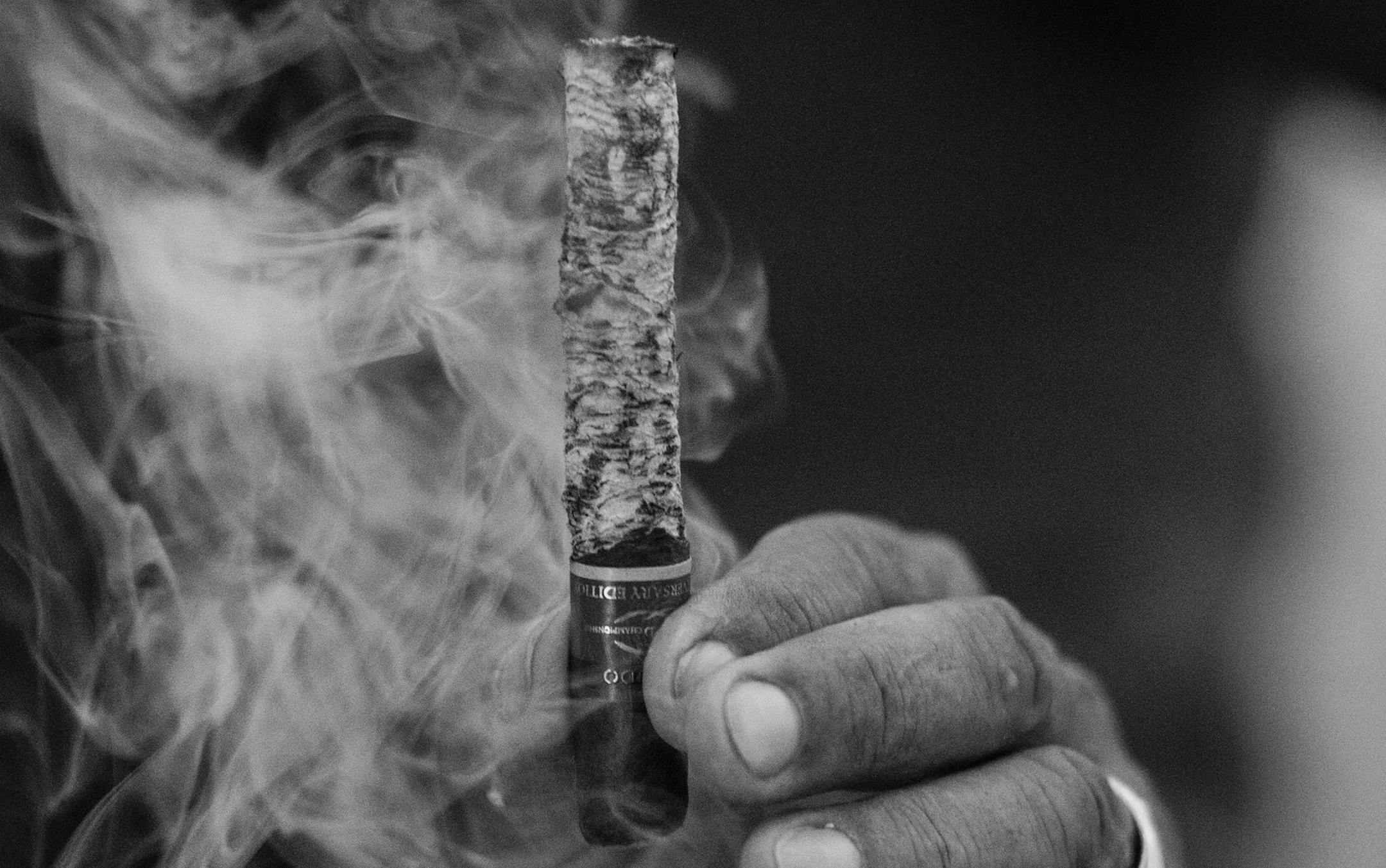
The Oc. 27 Star Tribune article "New rules squeeze corner stores" didn't tell the whole story. It's missing important elements, specifically the human and economic costs that tobacco has on everyone. These costs are disproportionately paid by my community: Black smokers use menthol tobacco at far higher rates than does the general population. That is no accident. Tobacco companies have long targeted us with menthol tobacco marketing. Menthol makes tobacco easier to start and harder to quit. As a result, black people bear a higher burden of tobacco related illnesses and deaths. According to the Centers for Disease Control and Prevention, tobacco is a major contributor to the leading causes of death for my people.
This isn't just theoretical to me; I lost my own father to tobacco use at a young age. Tobacco took away so many years I could've spent with my father. This is why I co-chaired a coalition of more than 50 organizations that asked the Minneapolis City Council to help us end this cycle for the next generation by restricting where menthol tobacco can be sold. While I have sympathy for store owners, I take issue with a business model that is completely dependent on selling a product that takes more lives than any other product on the market. In Minnesota alone, tobacco is responsible for over 6,000 deaths and $3 billion in excess health care costs each year.
I applaud the City Council members for their bravery on this issue. It is my hope that their action will spare future generations from the harm caused by tobacco use.
LaTrisha Vetaw, Minneapolis
The writer is the health policy and advocacy director at Northpoint Health & Wellness Center.
TRUMP AND ISIS
Stop griping and just be glad Baghdadi is dead
As a die-hard Never Trumper, I think it's shameful the way that the president has been criticized from some quarters about the killing of ISIS leader Abu Bakr al-Baghdadi.
While the president's rhetoric when announcing the incident over the weekend and the accompanying optics left a lot to be desired, the carping about the undertaking and his role in it is vastly overblown.
Had he commandeered Air Force One to the remote ISIS safe house in northern Syria and single-handedly slain Baghdadi, with or without assistance of a trained militia dog, the critics would probably complain that he used too much jet fuel to get there.
He deserves praise for being the titular head, as commander in chief, of the venture; uncharacteristically maintaining and preserving extreme confidentiality; and recognizing and articulating, albeit inartfully, the impact of it on global terrorism.


