
Gitmo 'Diary' author thanked captors as he departed, soldiers say

U.S. soldiers said prisoner had a gracious farewell.

October 23, 2016 at 10:34PM
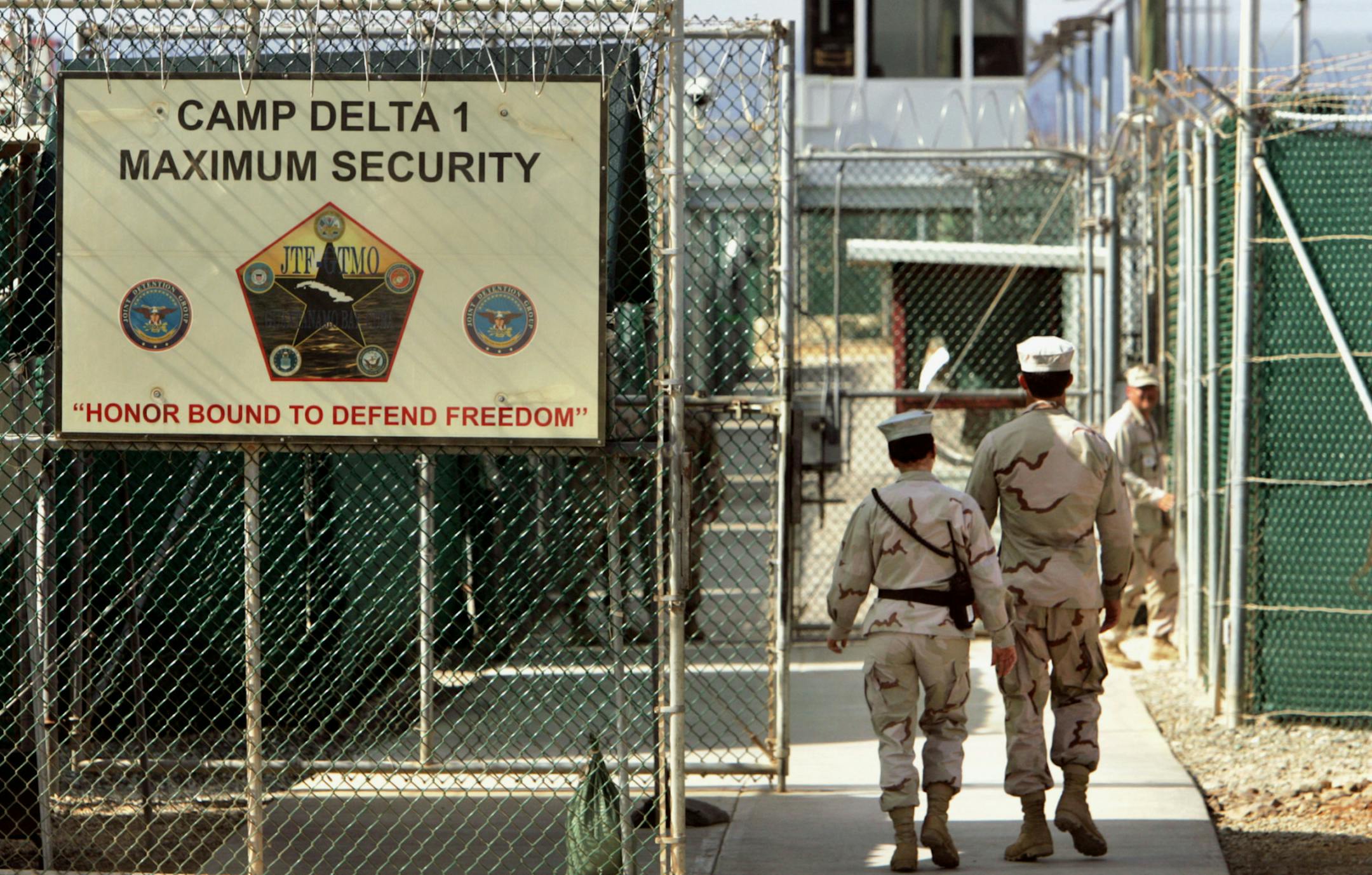
FILE - In this June 27, 2006 file photo, reviewed by a Defense Department, U.S. military guards walk within Camp Delta military-run prison, at the Guantanamo Bay U.S. Naval Base, Cuba. A federal appeals court expressed concerns on Thursday, Sept. 8, 2016, about the prospect of ordering the Obama administration to release graphic videos of a former Guantanamo Bay inmate being force-fed during a hunger strike. (AP Photo/Brennan Linsley, File) ORG XMIT: WX110
FILE - In this June 27, 2006 file photo, reviewed by a Defense Department, U.S. military guards walk within Camp Delta military-run prison, at the Guantanamo Bay U.S. Naval Base, Cuba. A federal appeals court expressed concerns on Thursday, Sept. 8, 2016, about the prospect of ordering the Obama administration to release graphic videos of a former Guantanamo Bay inmate being force-fed during a hunger strike. (AP Photo/Brennan Linsley, File) ORG XMIT: WX110 (The Minnesota Star Tribune)

GUANTANAMO BAY NAVAL BASE, Cuba – The captive who wrote "Guantanamo Diary" didn't autograph any copies of his book before he went home, but he thanked some of the troops as he ended 14 years of detention without being charged, prison staff said Saturday.

"He was very happy, probably one of the most jovial people here," said an Army captain, an unnamed woman now serving as the commander of Camp Echo — the prison compound where Mohamedou Ould Slahi spent years apart from the other captives.

She quoted him as saying, "thank you for everything, and said good luck to us" as he left for his native Mauritania, adding that "as far as I know," no soldier brought him a copy of his memoirs for an autograph.

The book was drawn from his 2005 handwritten account of his at-times brutal Pentagon-authorized interrogation here as U.S. military intelligence agents sought to tie him to the Sept. 11, 2001, terror attacks — something he confessed to after nearly going mad through isolation, only to retract it later, apparently convincingly. He was never charged with a crime.

In the book, he comes off as a sometimes fearful figure who finds a way to forgive, or pity, his captors. He was allowed to write the pages only once his prison conditions improved.

In the Mauritanian capital Nouakchott, the Associated Press quoted Slahi, 45, on Saturday as saying, "My slogan is to not pursue complaints against anyone who made me suffer injustice."

"Honestly, I think he was thanking us for the way that we had taken care of him here," said Army Col. Steve Gabavics, who is essentially warden of the prison.
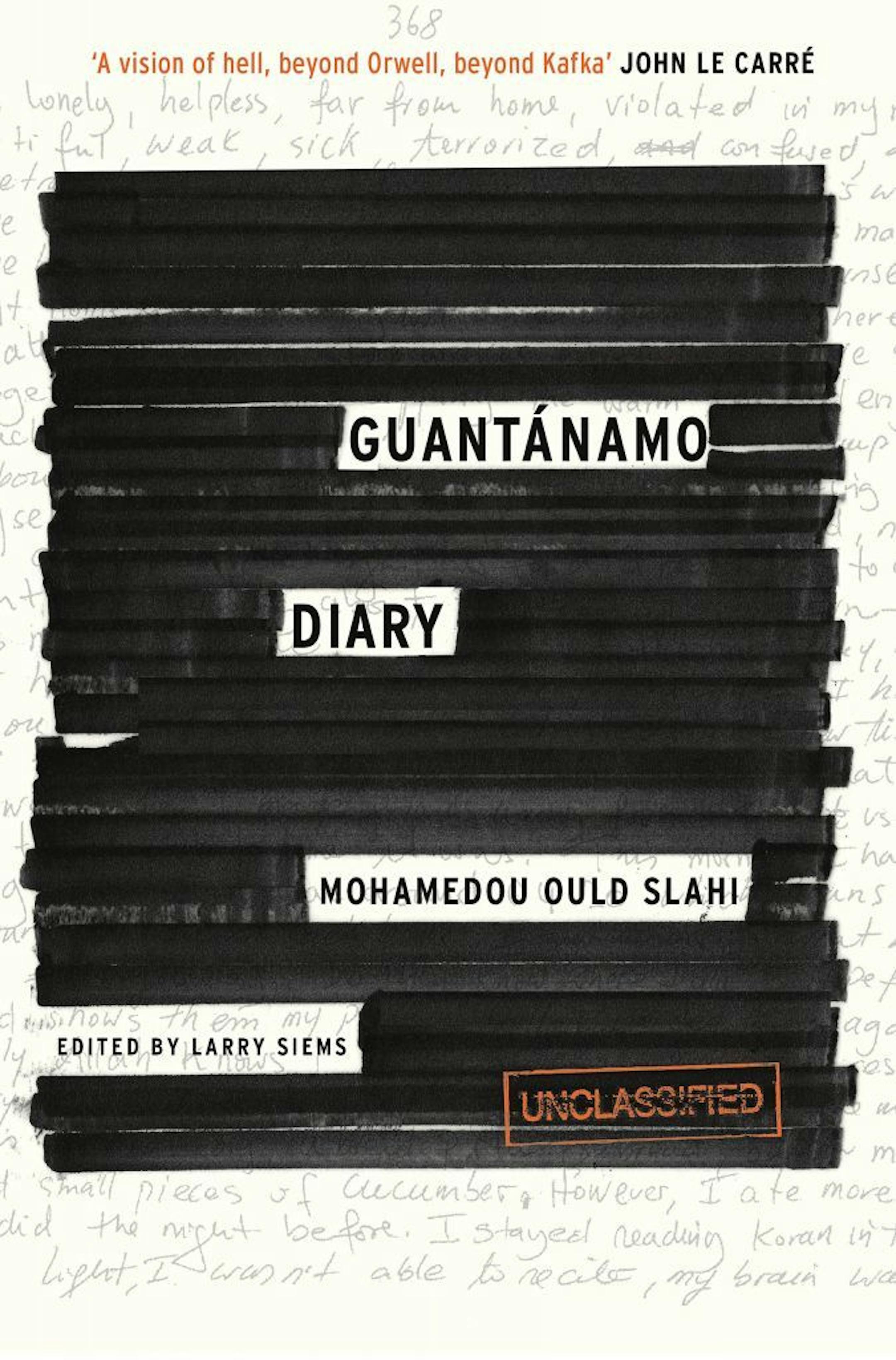
Guant�namo Diary,� by Mohamedou Ould Slahi
Guant�namo Diary,� by Mohamedou Ould Slahi (Star Tribune/The Minnesota Star Tribune)
about the writer

about the writer

Carol Rosenberg, Miami Herald

More from No Section

See More
FILE -- A rent deposit slot at an apartment complex in Tucker, Ga., on July 21, 2020. As an eviction crisis has seemed increasingly likely this summer, everyone in the housing market has made the same plea to Washington: Send money — lots of it — that would keep renters in their homes and landlords afloat. (Melissa Golden/The New York Times) ORG XMIT: XNYT58
Melissa Golden/The New York Times

It’s too soon to tell how much the immigration crackdown is to blame.