

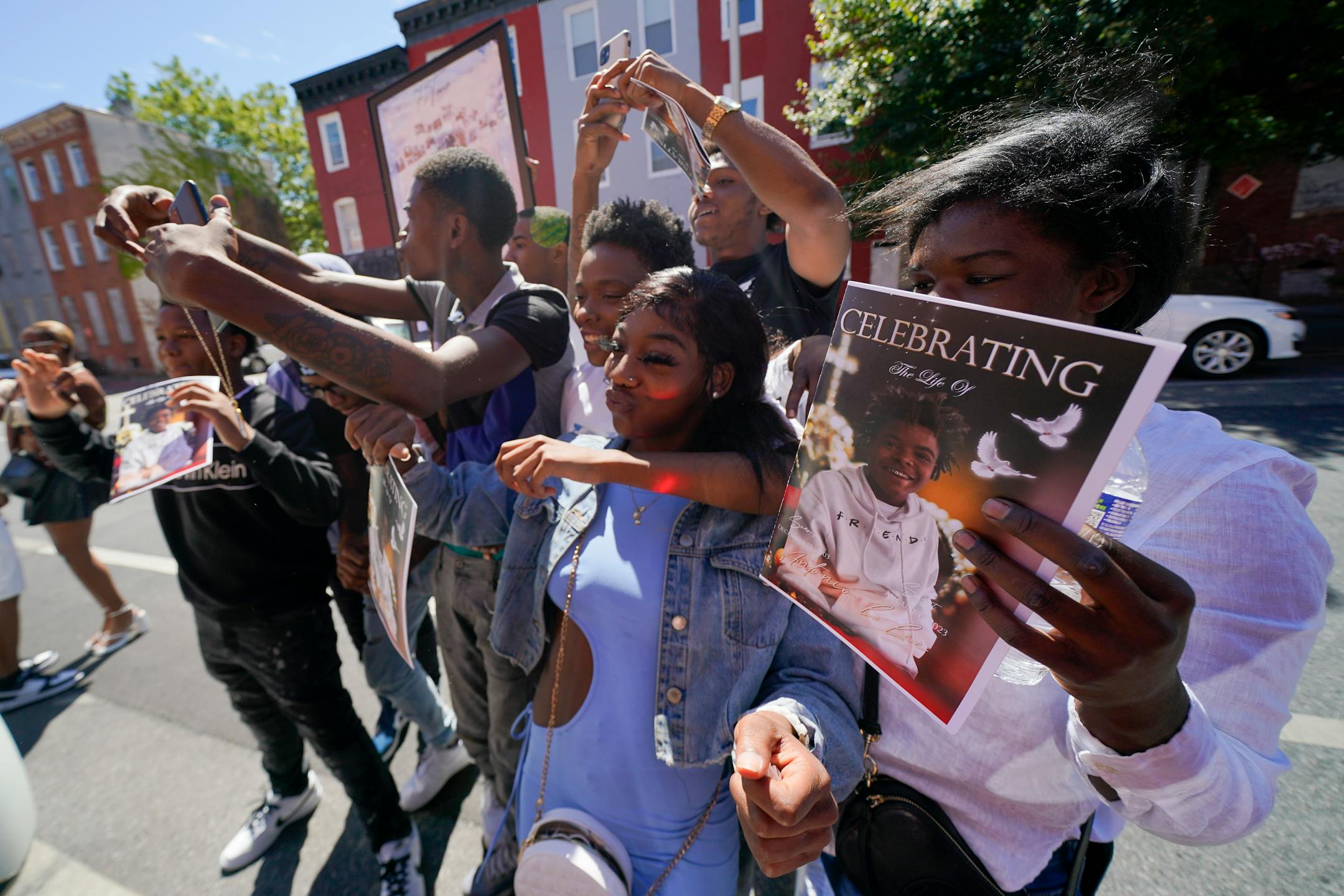
BALTIMORE — Growing up in the streets of east Baltimore surrounded by poverty and gun violence, two kids named Antonio became fast friends. Both called ''Tone,'' they were similarly charismatic and ambitious, dreaming of the day they would finally leave behind the struggles that defined their childhoods.
One has. The other never will.
Antonio Lee was shot and killed last summer. In the weeks that followed, his friend Antonio Moore warned their peers about the consequences of retaliation, trying to prevent more needless bloodshed and stolen futures in a city that consistently ranks among the nation's most violent.
''This s--- will keep going for the next 20 years, or it'll stop,'' Moore said at Lee's funeral service in August. ''Y'all gotta make a choice.''
Moore, 24, is a successful real estate investor and entrepreneur. He founded a consulting company that helps brands and nonprofits connect with urban youth. His accomplishments serve as a reminder of what's possible.
Moore said Lee was committed to forging a similar path; he just didn't have enough time to see it through.
How was Moore able to break the negative cycles of his youth while Lee fell victim to them?
It's a question with no simple answers, but their disparate fates highlight the sometimes insurmountable challenges facing young Black men from Baltimore's poorest neighborhoods and similar communities across the country. They live in a world where rampant gun violence often draws an arbitrary line between life and death, where the fight for survival is constant and trauma is passed down through generations.


