
Anoka increases downtown riverfront security

Officers are working overtime to patrol trails and parks as the city looks to add part-time help.

August 25, 2015 at 2:38AM
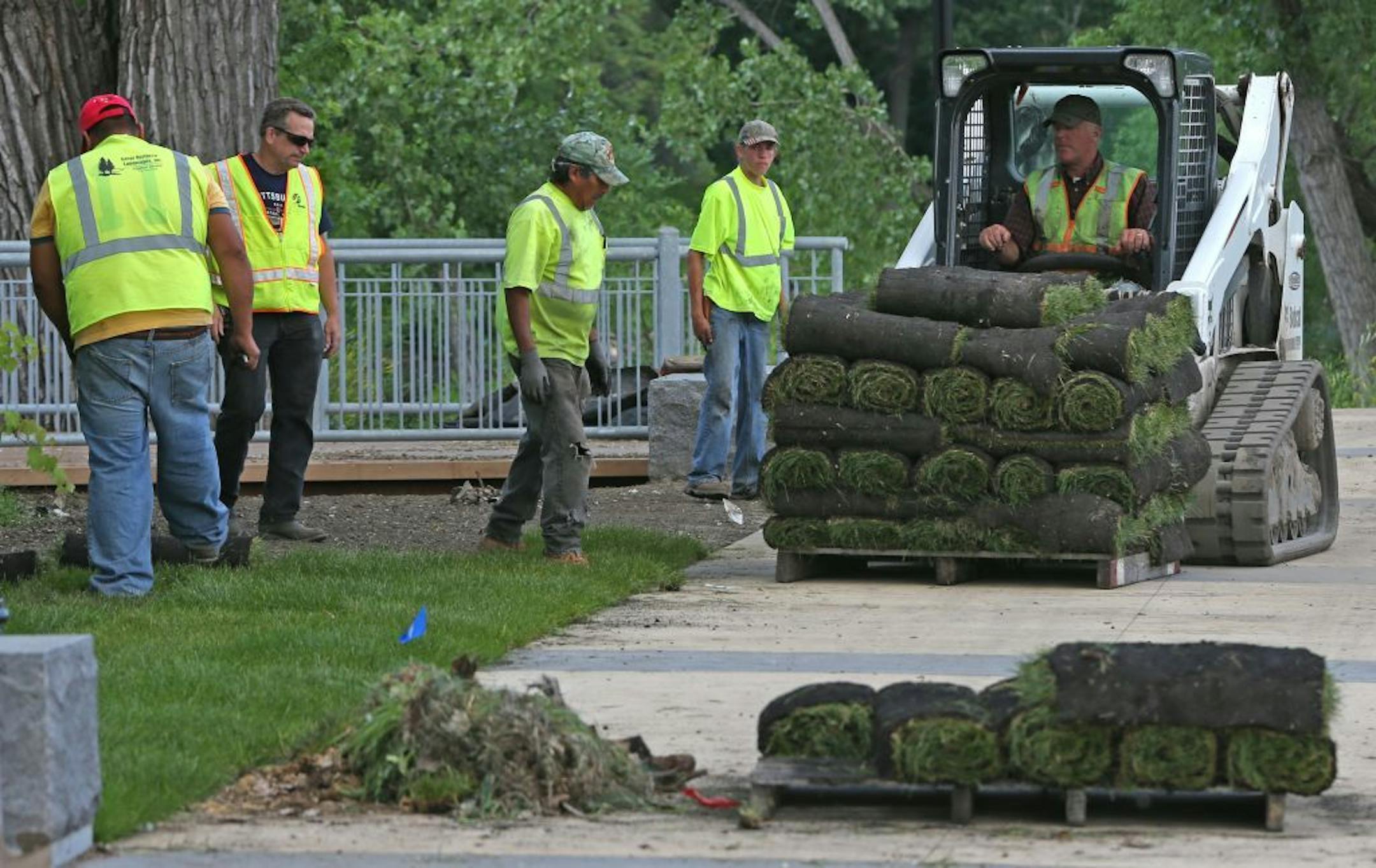
Landscaping crews put the finishing touches on the last, short link of the Rum River Regional Trail this week, winding up the year-long project in time for Riverfest Saturday in downtown Anoka. The decorative quarter-mile segment will run behind City Hall along the Rum to the existing paved bike trail three blocks north, said Greg Lee, city public services director. The $1.4 million project, nearly half covered by a federal transportation grant, will include two river overlooks, rain gardens wit
Landscaping crews put the finishing touches on the last, short link of the Rum River Regional Trail this week, winding up the year-long project in time for Riverfest Saturday in downtown Anoka. The decorative quarter-mile segment will run behind City Hall along the Rum to the existing paved bike trail three blocks north, said Greg Lee, city public services director. The $1.4 million project, nearly half covered by a federal transportation grant, will include two river overlooks, rain gardens with large granite stone benches, historic signs and kiosks with trail maps. It will cost nearly $1.4 million, about half paid by a federal transportation grant of $760,000, he said. (Star Tribune/The Minnesota Star Tribune)

Additional security officers are being sought to patrol Anoka's trails and riverfront in response to concerns about people taking shelter there after dark.

Anoka Police Chief Phil Johanson said the area along the Rum River just north of Main Street has seen some vandalism and become a hot spot for vagrancy. Warm weather and completion of the riverfront park have attracted more people, he said.

"Have we had an increase of crime down there? No," he said. "Have we had an increase of people sleeping in the park overnight? Yep, we have. We just want people to feel safe on the trails and in the park."

Several weeks ago, police found people sleeping in a historic stone house off the Rum River. The structure previously had been vandalized with spray-painted graffiti, he said.

Police have written several tickets to people found in the park after hours. The park is closed between 11 p.m. and 6 a.m.

"There has been some step-up in enforcement there," Johanson said.

City officials are in the early stages of approving a $55,000 addition to the city's budget for part-time security officers. That would help pay for about 3,800 hours of additional manpower per year, or about five more bodies, said Lori Yager, the city's finance director. Officials also plan to hire an additional sworn officer to patrol downtown and the river area.

The city contracts with security officers from the Anoka-Metro Regional Treatment Center, Anoka Technical College and Anoka High School. If the $55,000 is approved, the city will give current security officers more hours, Johanson said.

In the meantime, current sworn officers will work some overtime on foot patrol in the downtown and riverfront areas, Johanson said.

Several months ago, after being prompted by reports of aggressive panhandling, city officials set strict limits on how people can ask strangers for cash.

Tom Jenson, owner of Jenson's Department Store on E. Main Street, said he'd notice people cross the street to avoid panhandlers. "People were really intimated by it," he said.

The city added an officer to patrol the downtown district on foot, which helped, Jenson said.

Police have written a few tickets regarding solicitation, Johanson said.

He stressed that downtown is safe, and that beefing up security there is more of "a quality-of-life type of issue." Meanwhile, people live and work downtown, locals park their pontoons at the docks behind City Hall and eat at nearby restaurants, and there's an active shopping area with a flower shop, antique and clothing stores.

"We have bigger crowds especially in the parks, which is a good thing," he said. "But along with bigger crowds, other not-so-good things come. It's not about arrests, but it's about making people feel safe down there. And engaging with the public."

Karen Zamora • 612-673-4647

about the writer

about the writer

Karen Zamora

See Moreicon

More from No Section

See More
FILE -- A rent deposit slot at an apartment complex in Tucker, Ga., on July 21, 2020. As an eviction crisis has seemed increasingly likely this summer, everyone in the housing market has made the same plea to Washington: Send money — lots of it — that would keep renters in their homes and landlords afloat. (Melissa Golden/The New York Times) ORG XMIT: XNYT58
Melissa Golden/The New York Times

It’s too soon to tell how much the immigration crackdown is to blame.