

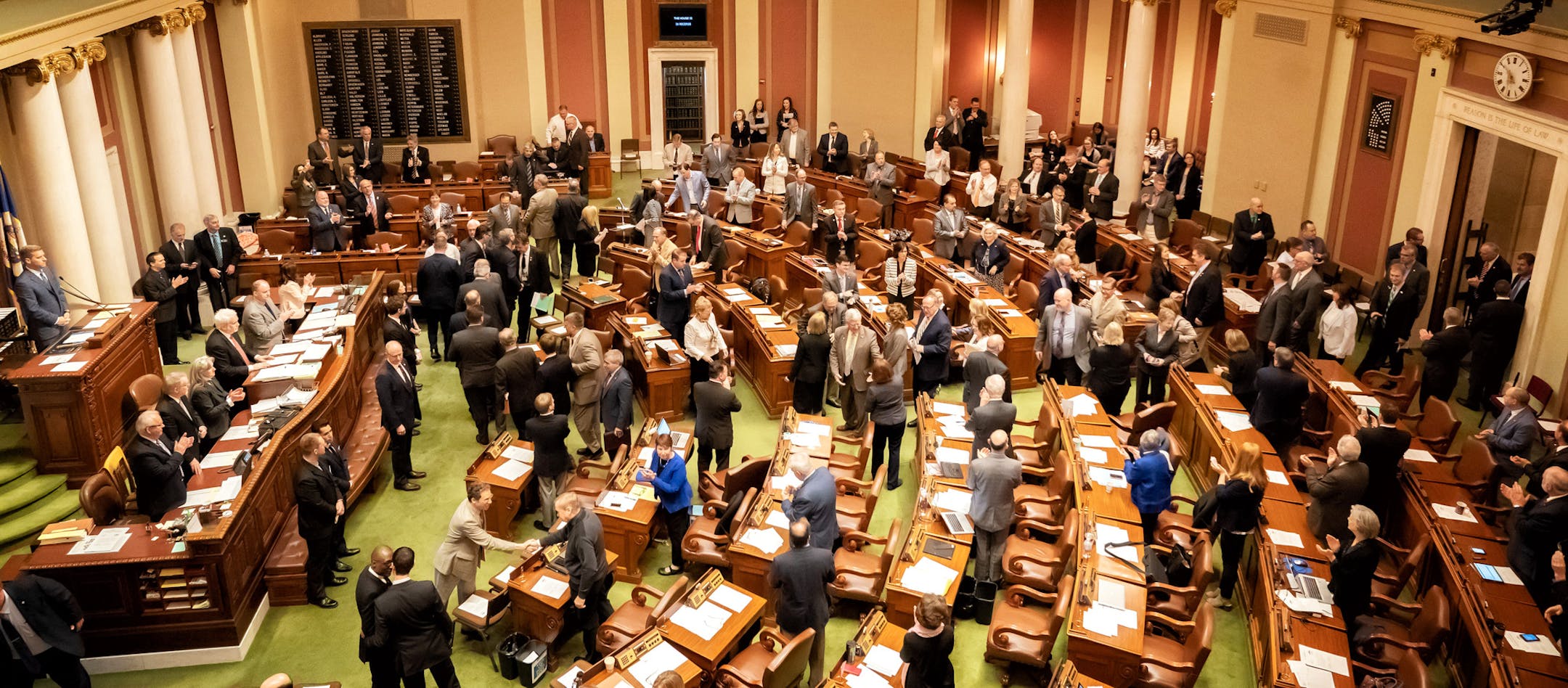
Minnesota's political leaders could overhaul the state tax code, make a big investment in roads and buildings, give money to schools for safety programs and to help offset budget cuts, and approve new spending on elder care and opioid addiction treatment — all in the next week.
Or they could do none of that.
As they head into the last week of the legislative session, state lawmakers are racing to reach agreements on a handful of major initiatives under discussion the past three months at the State Capitol. For DFL Gov. Mark Dayton, now in his final months in office, it's one last chance to notch major accomplishments — but he must work with a GOP-led Legislature whose leaders have frequently been at odds with him, resulting in partisan breakdowns at the end of recent legislative sessions.
Last year, Dayton and lawmakers set a two-year state budget that covers the state through the first half of 2019. That means there's not much they absolutely must do this year. But state lawmakers, many of whom will face voters in November, say a gridlocked session would have devastating consequences.
"This could be a great, great success — but we need leadership from the governor to make that happen — or it could be a bust," House Taxes Committee Chairman Greg Davids, R-Preston, said of the tax bill, which he called the "centerpoint" of the 2018 session.
GOP legislators reached an agreement on a tax plan Friday but now need to negotiate with Dayton. If they fail, many Minnesotans could end up with tax increases and a complicated filing process. Inaction on other measures would mean the continued deterioration of water systems, roads and state buildings. Efforts to stem opioid addiction would be stunted. Schools would lack money to add counselors or building security.
Dayton has made schools his top priority in his final round of end-of-session negotiations. At the beginning of May, he called for an additional $138 million in one-time "emergency" funding for schools, and he urged lawmakers to pass gun legislation and school safety spending.
House and Senate leaders said they expect to allocate tens of millions to school safety, but say the emergency funding request came too late and is for too much money. They are trying to divvy up the state's projected $329 million surplus among a plethora of other causes.


