

 1:38
1:38Just before 9 a.m., Ahmed Makaraan passes 8th Street in downtown Minneapolis, eyes the bright food trucks jammed along Marquette Avenue and wonders if he'll make it today.
The daily dash to find a profitable space is part of an increasingly fierce competition among the growing number of food trucks — from 10 just three years ago to 69 today — and bricks-and-mortar restaurants for the lunch business of downtown's roughly 160,000 employees.
As several restaurants have closed in recent weeks — including Taco Bell and Taco John's — food trucks continue to lure employees on hot summer days for oyster and crab gumbo, red curry burritos, BBQ pulled pork sandwiches and yes, authentic tacos.
"It's like going to a different country all week long," said Art La Beau, an employee of TCF Bank who has stopped going as often to the skyway restaurants for lunch and now hits the food trucks on Marquette three or four times a week. He likes the life they bring to the sidewalks, too: "There's a lot of activity; you see people are standing around, talking while they eat, talking while they wait."
Still, Makaraan and other food truck entrepreneurs face struggles of their own.
The first is laying claim to a profitable patch of road. On this recent morning, Makaraan starts pulling his Greek Stop truck into the only space left between eight trucks, Number 15345 next to the fire hydrant, when he sees an idling Honda Civic hogging the spot and directs the driver to leave.
"We're all going to fit!" Makaraan says. The guy who makes cone-shaped Chilean empanadas two trucks down runs over to help him squeeze in — "Go back all the way, you got plenty of room, back, there, come forward, you got it" — until, much to Makaraan's relief, he is ready for yet another day.
Spread the trucks out?
The tension between the two groups is embedded in a much larger issue: How can the city create a vibrant street life in a downtown overshadowed by 8 miles of skyways that keep too many people and businesses off the sidewalks and tucked indoors?
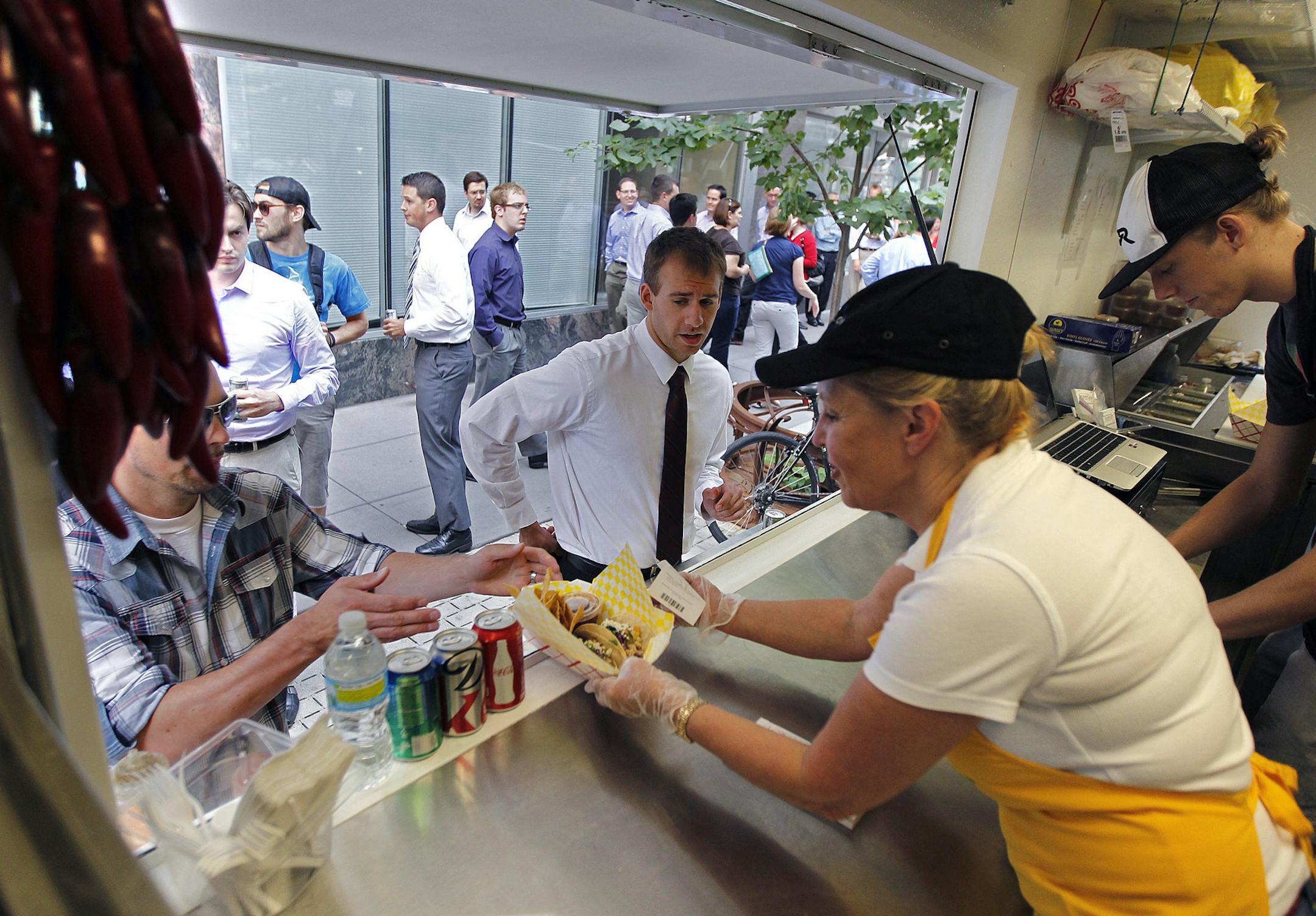
![Food trucks line up in downtown Minneapolis, Minn., on Thursday, July 25, 2013. ] (ANNA REED/STAR TRIBUNE) anna.reed@startribune.com (cq)](https://arc.stimg.co/startribunemedia/56PWJ6SYZ7XGCE6JNMRQLLU32M.jpg?&w=1080)


