

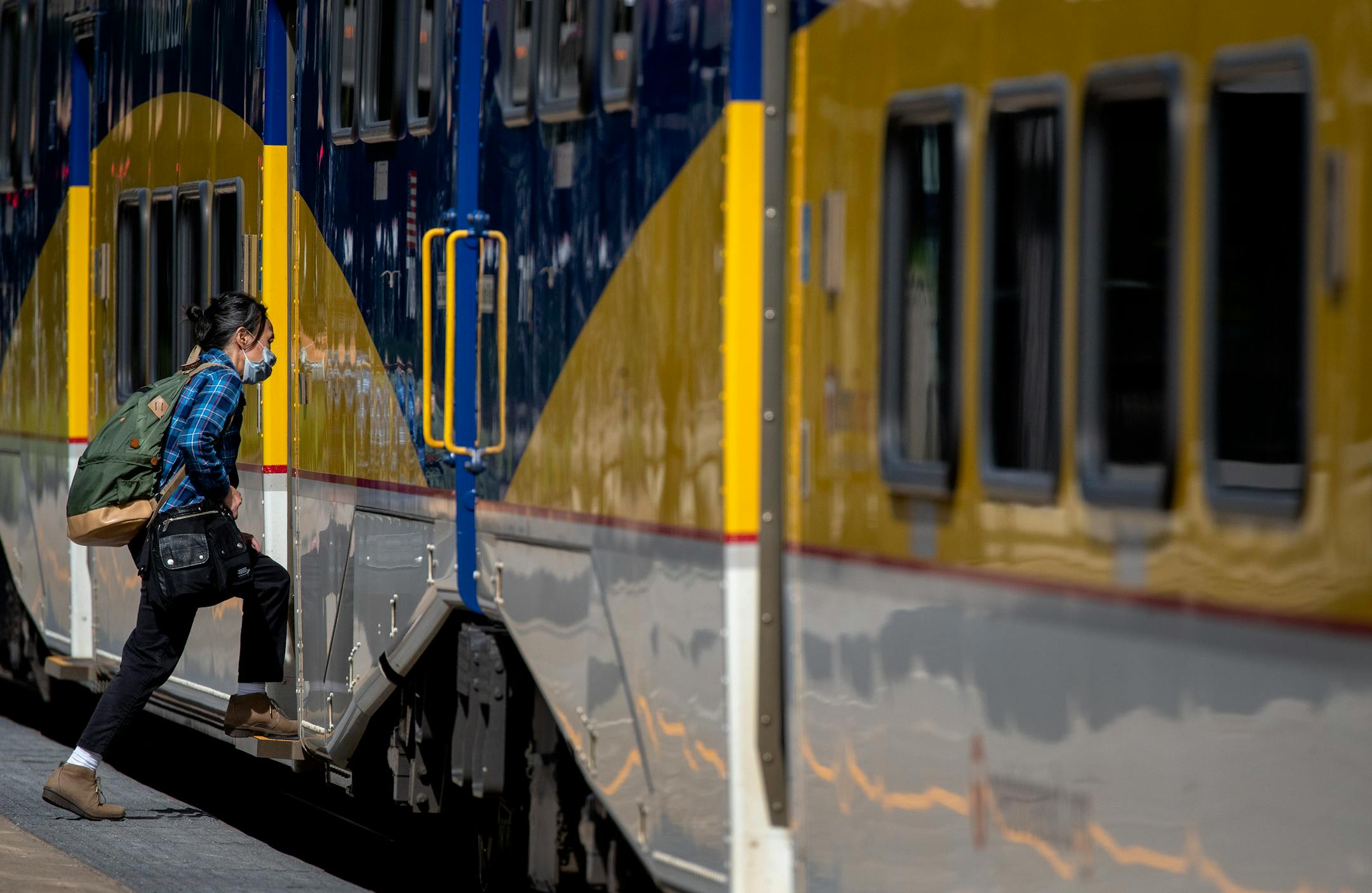
The possibility of shutting down the deficit-plagued Northstar commuter rail line between Minneapolis and Big Lake is back in the news, but doing so unilaterally also has a price: $85 million paid back to the feds for early termination and $107 million invested in train path capacity that cannot be recovered ("Northstar rail runs into more trouble," front page, Nov. 1). Better, instead, to save and leverage these funds by reinvesting in more relevant rail-based transportation in that corridor. Here's how:
First, keep the train service, but scale it back, replacing the six weekday round trips out of Big Lake with three round trips out of St. Cloud, morning, midday and evening, with stops limited to Coon Rapids and Ramsey. This would recognize that Minnesota's busiest intercity travel corridor is likely to remain popular with students, intermittent commuters and the transit-dependent even as traditional downtown commuting to Minneapolis declines.
This would remove Northstar train miles from the host freight railroad's congested Minneapolis terminal trackage and add them to the lower-cost, wide-open tracks west of Big Lake, making additional track capacity charges to extend service to St. Cloud unlikely. It will also enable the sale of at least two of the five NorthStar train sets to fund station improvements in the St. Cloud area and better bus-to-rail transfer service to/from remaining commuter rail stations.
Then, move management and operation of what will really be an intercity service to Amtrak. That would make it easier and cheaper to add service, remove the bus- and transit-oriented Met Council from the mix and, most notably, federalize the inevitable operating and capital subsidies.
Jerome Johnson, St. Paul
GLASGOW SUMMIT
A chance to commit to climate
President Joe Biden hopefully will commit the U.S. to being a leader at the climate summit in Glasgow ("G-20 moves to weaken coal's future," front page, Nov. 1).
The feeling expressed by Johan Rockstrom and David Attenborough in the documentary "Breaking Boundaries" is that we are approaching a tipping point.
Drastic weather events worldwide have been a harbinger of far worse things to come. Australia's recent summer from hell killed or harmed an estimated 3 billion animals. Scientist Terry Hughes is teary-eyed when he sees the Great Barrier Reef bleaching out. He adds that it is frustrating that climate scientists haven't been listened to for decades.


