

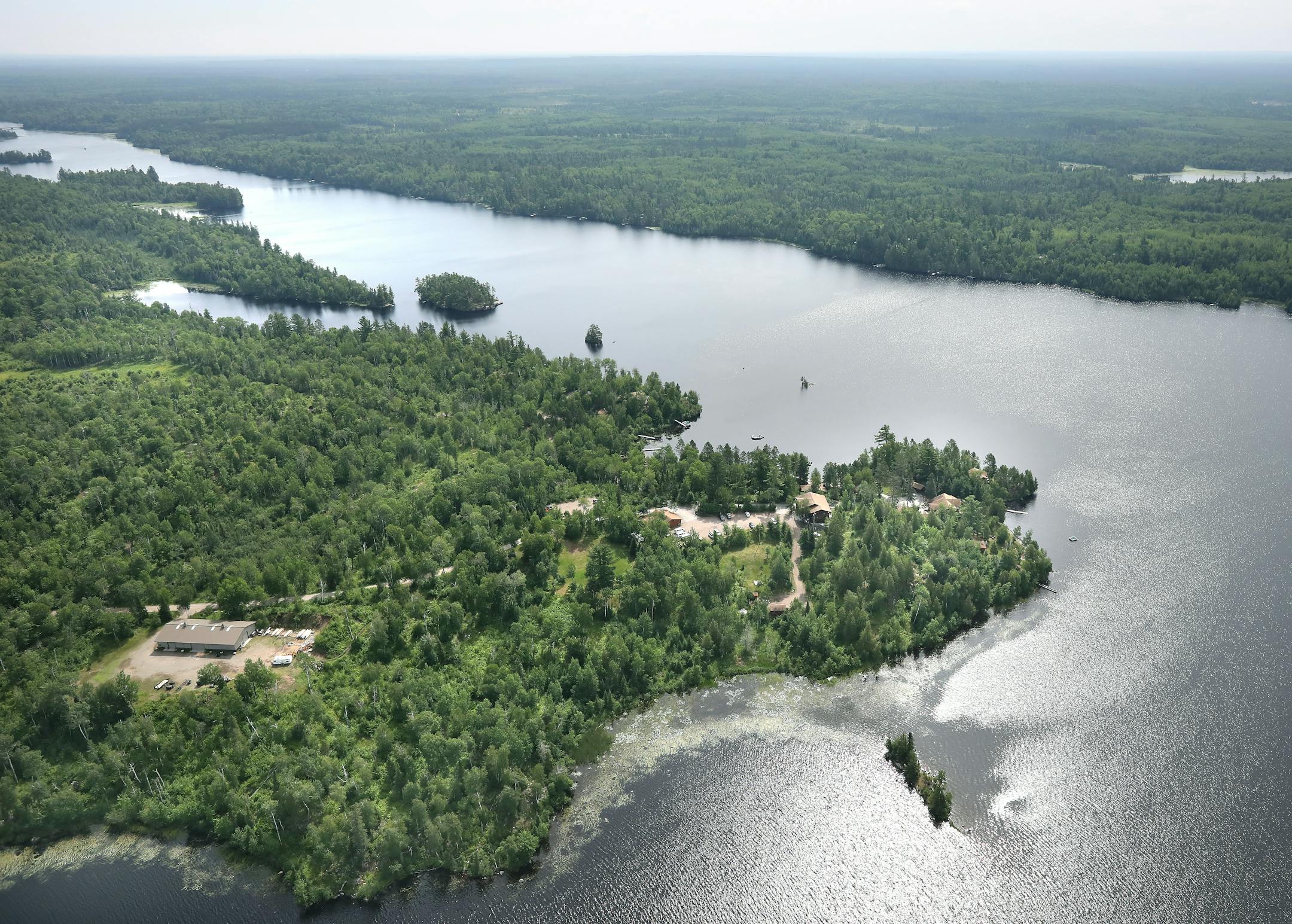
Thanks to the Star Tribune Editorial Board for alerting its readers to the recent Miami Herald story about what's currently taking place in Chile involving the owner/parent company of Twin Metals, Antofagasta. One can only hope that our state and federal legislators on both sides of the aisle take the opportunity to read the editorial, "A win for stewardship of Boundary Waters" (Oct. 25), because it's both critical and timely. Apparently, in Chile, a newly opened copper mine's obligations and accountability to address a direct environmental problem with respect to the flow of a nearby river suddenly became elusive. Yet, here we are, at the critical stage of deciding whether or not to allow Antofagasta to move ahead with an underground copper mine in the name of Twin Metals on the edge of the Boundary Waters Canoe Area Wilderness, taking the company at its word, with some degree of financial leverage, that it'll be the environmental stewards we need it to be.
One might assume that I'm just another vocal anti-mining person, jumping on the environmental bandwagon. On the contrary, I grew up on the Iron Range, the son of a mining engineer who spent his entire career employed in the taconite mining industry. I also worked in the taconite industry for six years myself. My father, who raised a family working in the industry, also had a deep passion for canoeing the border lakes, as he called them. He introduced me and my siblings to canoeing that area, and I've continued the tradition by taking canoe trips with my children and grandchildren. I truly believe that my father, if he were still alive, would place a higher value on the preservation of the border lakes over the risk of opening a copper mine on the edge of that unique wilderness. He would also recognize that the relatively safe process of mining taconite and iron ore on the Iron Range over the past 100 years or so does not necessarily translate to safe copper-nickel mining with its residual sulfide waste.
At the very least, let's uncover the findings of the study that the Trump administration chose to bury, determine why it was halted and complete the necessary study that was started.
Patrick Bloomfield, Chisholm, Minn.
'FOREVER CHEMICALS'
Let's minimize their use
It's a good first step that the Environmental Protection Agency will require companies like 3M to disclose the use of PFAS in their products ("3M must disclose PFAS in products," Oct. 19), but it doesn't go far enough or fast enough. PFAS are a group of toxic chemicals and are building up in our bodies and the environment. They're impossible for consumers to avoid because they are used in hundreds of products. The EPA estimated there may be as many as 120,000 industrial sites in the U.S. alone where PFAS is handled. 3M's Decatur, Ala., settlement ("3M to pay $99 million to settle PFAS lawsuits in Ala.," Oct. 20) is just another example of the damage done to communities that manufacture these chemicals or use the chemicals in their products.
3M says PFAS is necessary for "lifesaving medical devices." Yes, that is true, but most products do not fall into that category. It's time to restrict PFAS to products that are needed for the health and safety of society and phase them out everywhere else. Maine passed a bill in July to do just that, and the European Union has also decided to phase out PFAS for all but essential items where an alternative is not available.
I welcome the opportunity to know which products contain PFAS chemicals, but I prefer that we stop contaminating our water, our bodies and the environment with "forever chemicals." Let's just stop making this stuff so we can be confident that our everyday purchases are PFAS-free.
Lori Olinger, North Oaks


