
'Not so fast' is growing fact of life on road

21.5% of metro freeways were congested last year, MnDOT says.

March 4, 2011 at 11:11PM
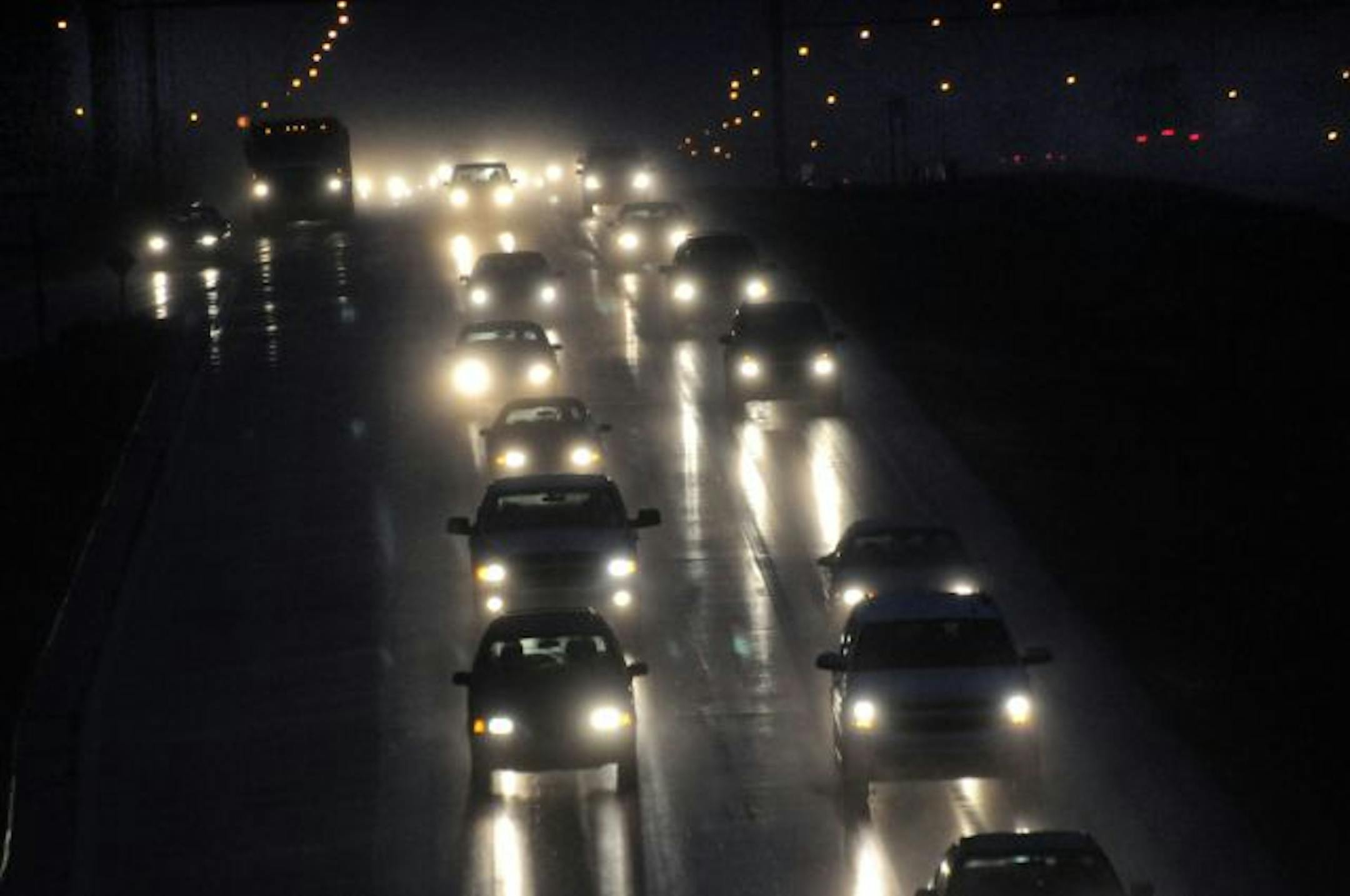
Rush hour traffic on 169 looking south towards the Bloomington Ferry Bridge.
Rush hour traffic on 169 looking south towards the Bloomington Ferry Bridge. (Dml - Star Tribune/The Minnesota Star Tribune)

Thought you were stuck in traffic more often last year?

It's a fact: Congestion on Twin Cities freeways continued to worsen in 2010 as motorists faced traffic jams on more and more miles of highway.

The Minnesota Department of Transportation said on Thursday that more than 21.5 percent of the metro freeways -- 379 miles -- were congested. In 2009, 18.2 percent of Twin Cities freeways were congested.

"Over time ... you're going to see this growth in congestion as the metro grows," said Brian Kary, freeway operations engineer for MnDOT.

He said the recent spike also may be related to more people driving to work as the economy starts to pull out of a recession.

MnDOT defines congestion as traffic moving at less than 45 miles per hour for a sustained time.

It's the second year in a row that traffic congestion worsened. In 2008, 17.3 percent of freeway miles were deemed congested.

Congestion levels are now the same as in 2007, when the Interstate 35W bridge collapsed.

The I-35W-Crosstown Expressway overhaul, designed to relieve severe traffic jams in south Minneapolis, Richfield and Bloomington, was not included in the 2010 report because the project was not completed until November.

Faced with budget constraints, MnDOT has placed greater emphasis on alternatives to freeway expansion such as voluntary toll lanes, bus rapid transit and carpool lanes.

So far 6,500 people have signed up to pay MnPass tolls for I-35W in south Minneapolis.

Some of the worst congestion is on I-94 westbound at the Lowry Tunnel in downtown Minneapolis, westbound I-94 approaching I-694 and I-35E approaching I-694.

Kary said MnDOT's goal is to slow the increase in congestion.

The agency estimates that the state could use $65 billion to spend on highway improvements through 2028 but expects only $15 billion in projected revenue, thanks in part to shortfalls in funding from the gas tax, motor vehicle sales tax and registration fees.

"To really try to decrease or eliminate congestion is probably too costly," he said.

Pat Doyle • 612-673-4504

about the writer

about the writer

PAT DOYLE, Star Tribune