

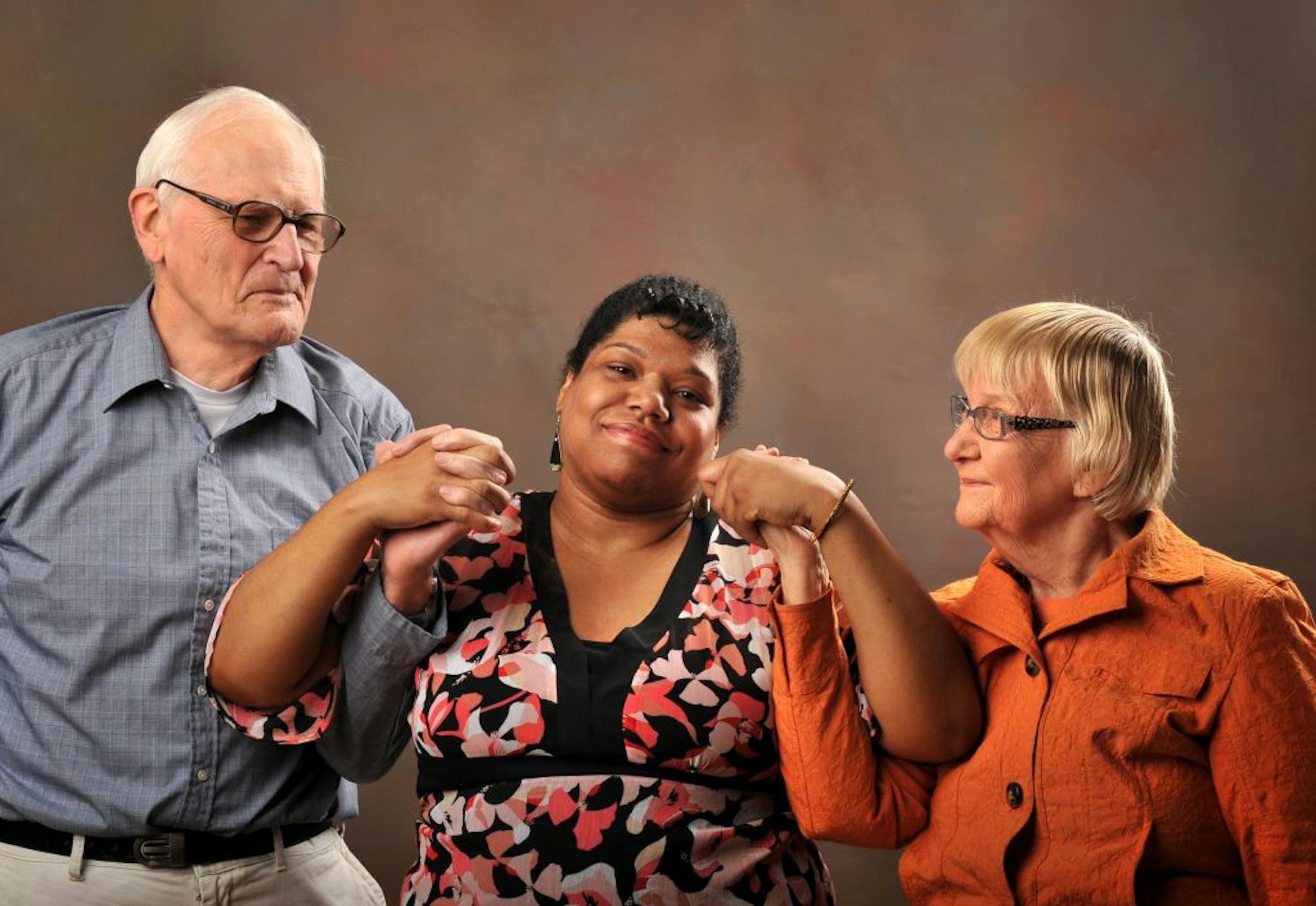
Michelle K. Johnson was born 42 years ago to a poor, unmarried 15-year-old girl, then adopted and raised by middle-class professionals. She speaks lovingly of her adoptive parents, using words like "supportive," "exceptional" and "the best family I could have had for the situation that took place."
Yet she also bluntly calls her adoption "a mistake." Johnson, who is black, contends that growing up in a white family and largely white community exposed her to years of self-esteem and identity problems. She says county officials should have placed her with one of her birth mother's 12 older siblings instead.
"I don't have a crystal ball to know whether things would be better or worse for me, easier or harder," she said. "But it's what should have happened, and my adoptive family agrees."
Although not all adoptees share Johnson's strong views, others are also speaking up about their experiences with adoption. Many share feelings of abandonment, loss and conflicts involving identity.
In Minnesota, home to an estimated 135,000 adopted and fostered adults and children, a novel state program provides them a place to talk. Adoptees Have Answers opened last year to offer services for and about adult adoptees, including support groups, public events and webinars.
Though apparently the first of its kind in the country, the program reflects a growing interest in open discussion among the nation's 7 million adoptees, said Adam Pertman, executive director of the Evan B. Donaldson Adoption Institute, a research organization in New York. Adoptees are "coming out" to tell a side of the story that has traditionally been overlooked or even hushed up.
"We're talking about the issues of adoption in a much more honest way than we ever have before," said Pertman, an adoptive father and author of "Adoption Nation: How the Adoption Revolution Is Transforming Our Families -- and America" (Harvard Common Press, 2011). "That means we bring out the problems as well as the good stuff."
The group aims to support adoptees but also to promote a better understanding of what it's like to be adopted. The hope is that parents, social workers, adoption professionals, therapists and lawmakers will be listening.


