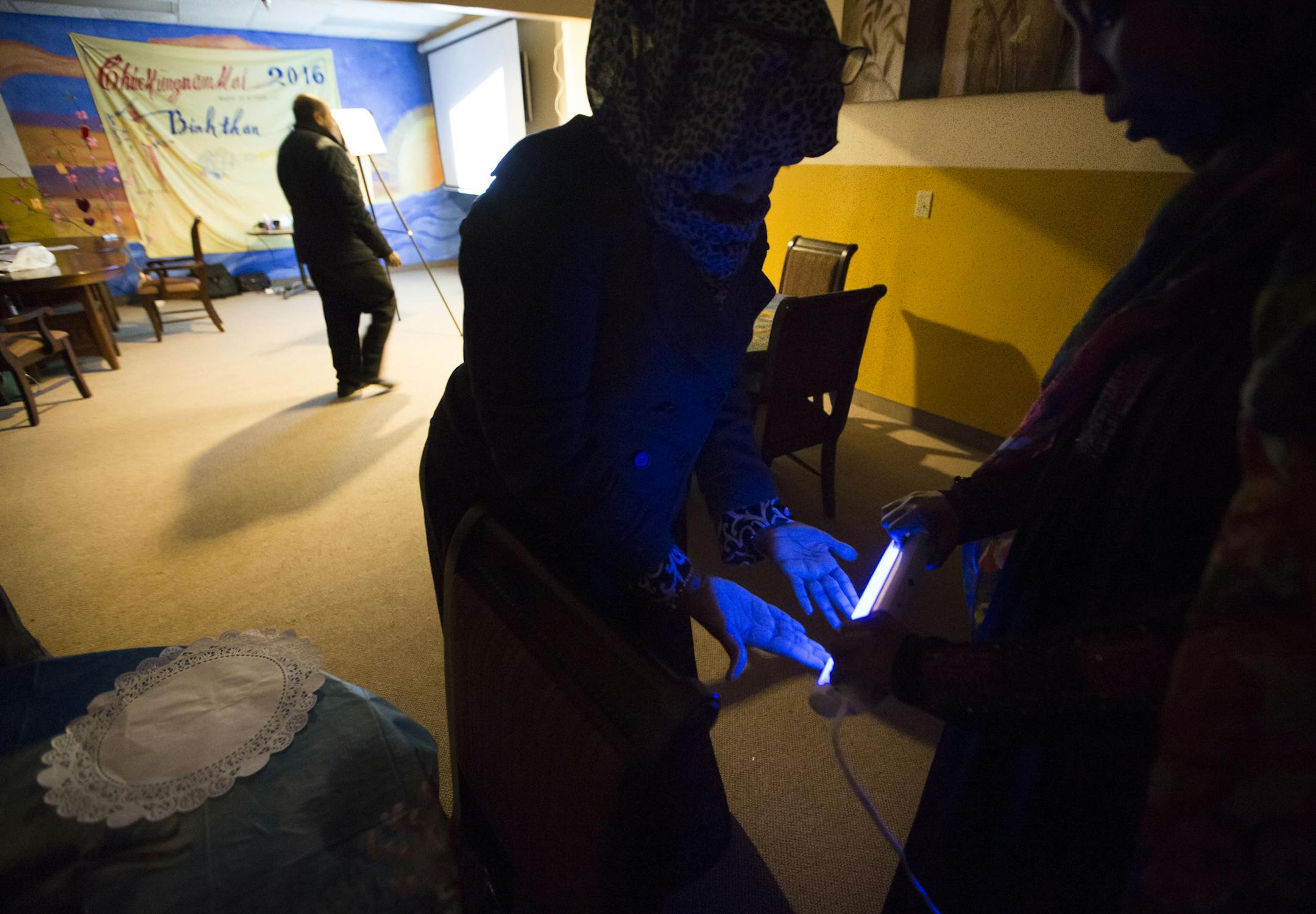
The food service workers lathered their hands with a special fluid and washed them. Then they held their hands under a black light and saw a glowing residue. "I still have it," a woman exclaimed. "Oh my gosh!"
Thorough hand-washing in the kitchen will help keep diners from getting sick. It's one of the lessons these Somali speakers learned one recent evening in a class that an employee in every Minnesota restaurant must take, but until now was unavailable in their native tongue.
Food safety is becoming a universal language in Minneapolis, which subsidized the class as part of a much broader effort to ensure limited-English speakers know how to avoid inadvertently sickening their customers — or getting buried in violations.
From Mexican taquerias on Lake Street to cafes in East African malls, language barriers are falling between food inspectors and the business owners with whom they work.
The city now employs health inspectors speaking seven languages, likely more than any other food safety operation in the metro area. It has released detailed kitchen procedure videos in five languages and has begun hosting meetings specifically with Somali and Latino business owners.
"The food business is the business of the American dream," said Dan Huff, the city's director of environmental health. "So if you're an immigrant, it's a great business to get started in."
The multilingual outreach is part of a larger effort by the city's health department to reform its food inspection program, after being slapped with an "unacceptable" rating from the state health department in 2010. Though not as bad as St. Paul, where the state took over control in 2013, Huff said the audit was a wake-up call for the city.
It isn't known whether restaurants run by limited-English speakers receive more critical violations, since the ethnicity of a restaurant's food does not necessarily reflect who is working in the kitchen. But there is evidence that extra education reduces violations, said Huff, who believes the multilingual effort is one reason the department was able to slash the number of risky violations found in city restaurants last year.