

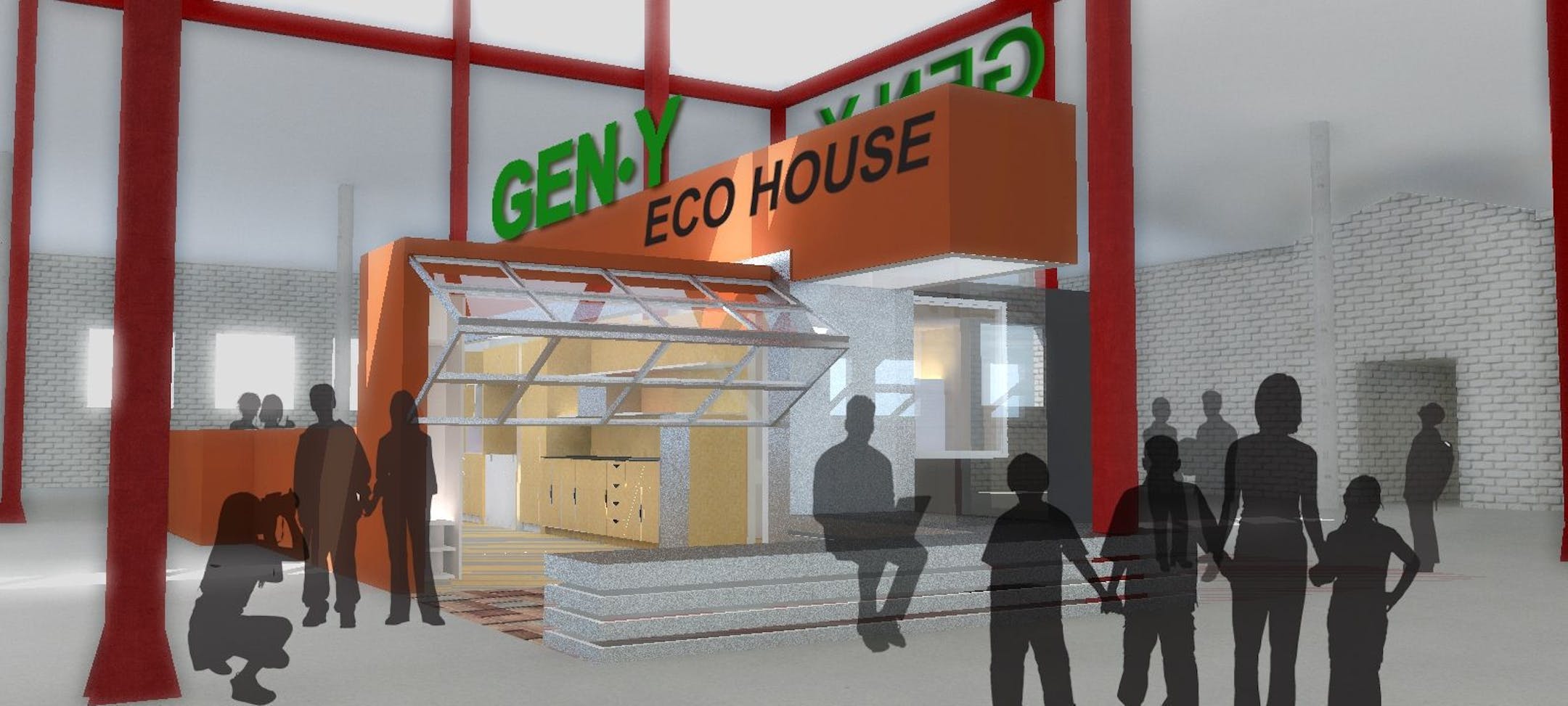
The home of the future will be small and compact and flexible, making more efficient use of space and energy. What energy it does use will come at least in part from renewable resources, such as solar power. The home will have a shower, but perhaps not a bathtub. It might provide a space to store a bike but not a car.
These are developments suggested by research conducted University of Minnesota architecture students on the housing preferences of Generation Y, sometimes called Millennials, born roughly between the early 1980s and the early 2000s. With older Gen Y members reaching the age to start house-hunting, developers will likely start accommodating their tastes.
To illustrate these research findings, the U students designed and built Gen-Y Eco House, a new attraction this year at the fair.
"It's an exhibit that features aspects of the direction we think housing is going to be going as Gen Y becomes more prevalent in the marketplace," said James Garrett, a St. Paul architect and the students' instructor.
Gen-Y Eco House is part of Eco Experience, a building full of free educational exhibits about green technology, energy conservation, environmental protection and other ecological issues, said Pamela McCurdy of the Minnesota Pollution Control Agency, which sponsors Eco Experience. In addition to the house, attractions include cooking and gardening demonstrations, exhibits on light bulbs and water quality, family activities and a sculpture made of 12,000 aluminum cans — a fraction of the 3.6 million cans a day that Minnesotans throw into the trash rather than the recycling bin, according to the agency's Wayne Gjerde.
"We redo the building every year, so there's always tons of new information," McCurdy said. "People definitely come in and say, 'Wow, we've really learned something, this is interesting.' You can come in and learn."
One thing you'll learn this year is that the dream house of typical 20- and 30-somethings bears little resemblance to the suburban ramblers or Cape Cods their parents might have sought. They're the polar opposite of McMansions. What Gen Y members are looking for, Garrett said, are small, energy-efficient dwellings, close to amenities like coffee shops and bars.
"Their version of a starter home is a very small complex space that is a place for them to eat and sleep and bathe and maybe do some homework or play video games with their friends, but not a whole lot much more."


