

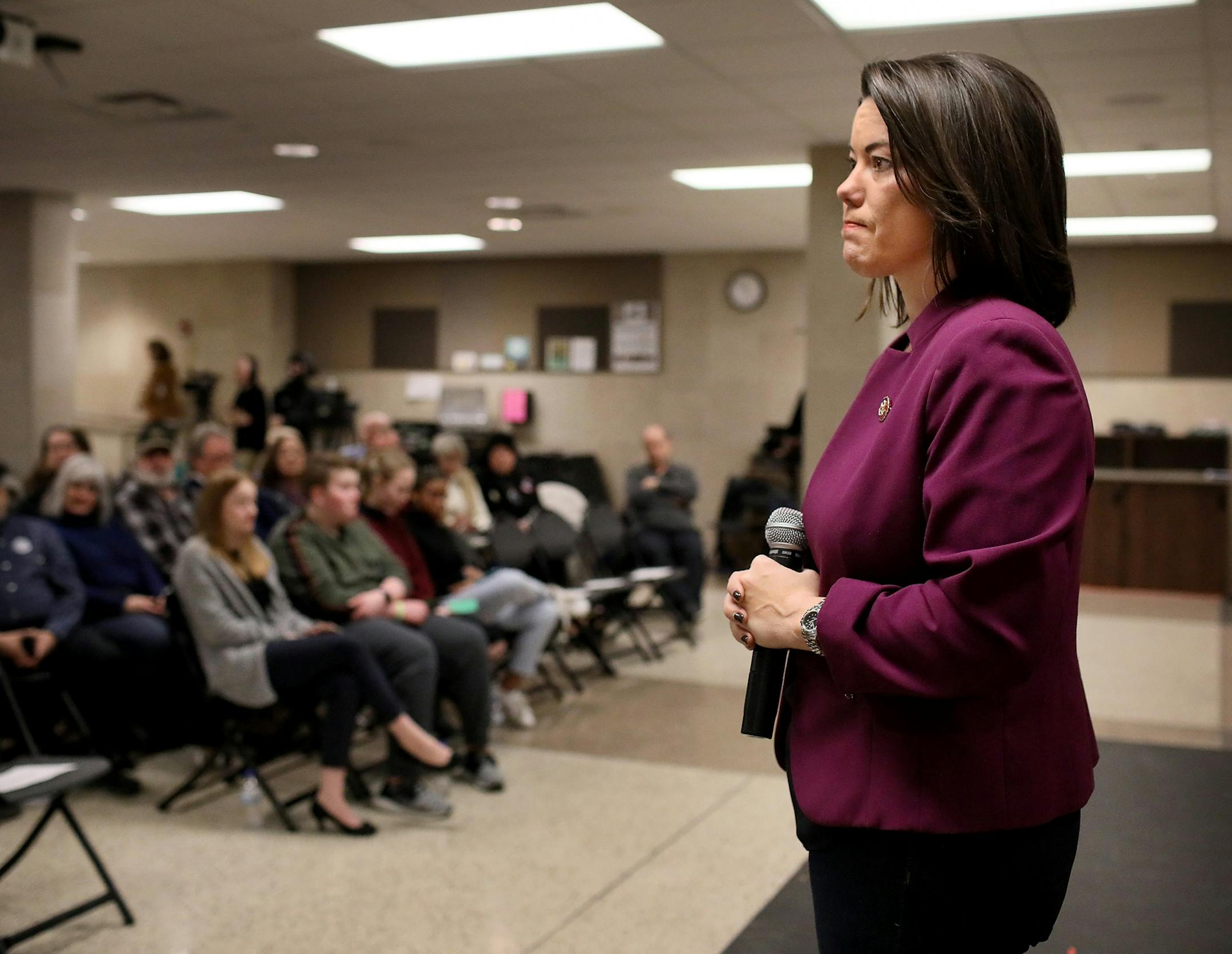
Washington – Six months after U.S. Rep. Angie Craig made health care the central focus of her successful campaign to unseat a Republican incumbent, her first major bill is based on an idea championed by Minnesota Republicans.
Seeking to reduce the cost of health insurance, the centrist Democrat proposed a $10 billion annual infusion of federal money to insurance companies to offset premium hikes driven by coverage for high-cost patients. Minnesota is currently one of a handful of states that already employs this tactic. Craig wants to take it national.
"This is widely accepted as a way to stabilize the individual marketplace," Craig said in an interview. She called federal reinsurance "one piece of the puzzle. It's not the whole solution, but we can't wait for the perfect solution. My constituents need relief for their premiums now."
Craig's push reflects the prolonged partisan standoff over the Affordable Care Act (ACA), the Obama-era health care law that President Donald Trump and his Republican allies in Congress are committed to repealing. Without the needed votes, even from Republicans, the law remains in place, but under legal threat from the administration and a coalition of GOP-led states.
Meanwhile, Republican efforts to formulate replacement legislation that can win broad political support remain on hold. That has left lawmakers in both parties looking for more incremental ways to tame rising premiums and deductibles, scrambling the politics of health care for lawmakers from Minnesota and across the country.
Craig's legislation cleared a House committee last week, and House Democratic leaders are planning to incorporate it into a larger package of fixes to the ACA. While that's a win for a freshman member of Congress, the bill's prospects of becoming law remain perilous: Most Republicans in Washington continue to oppose any efforts to fix the existing law.
"Such efforts are not a response to the underlying problems of the law that fuel these increased costs," read a March report by the Heritage Foundation, an influential conservative think tank in Washington. "They are merely a patch that masks the real problem."
Craig and freshman colleagues like Rep. Dean Phillips, also a Democrat, helped sweep out the Republican House majority last year in an election where polls showed health care and prescription drugs costs to be top concerns for voters around the country. That came after nearly a decade that saw Republicans use the ACA, often derided as "Obamacare," as a political battering ram against Democrats.


