

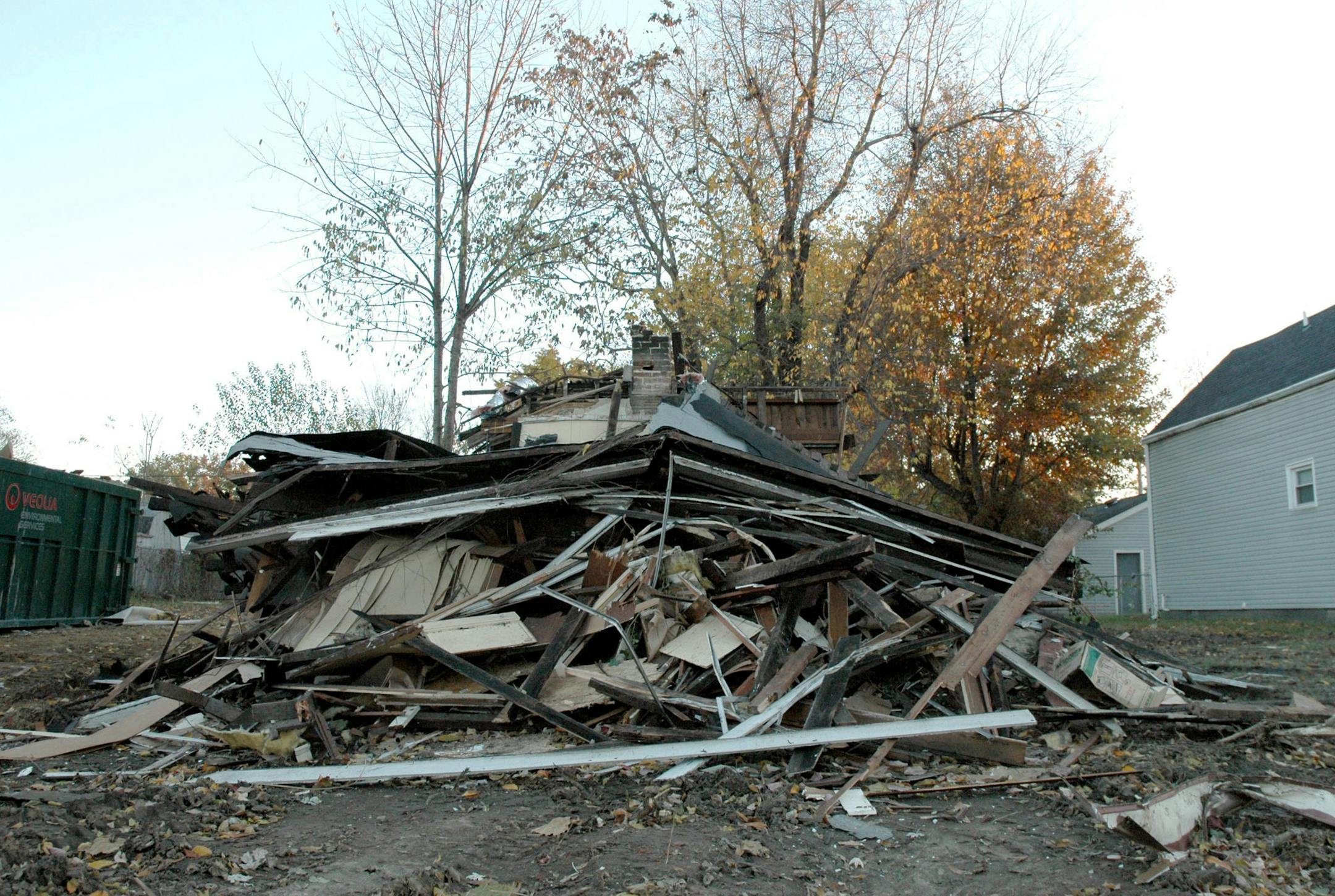
A backhoe rumbles down a tree-lined neighborhood street. It pulls up to the third house on the right. Then the smashing begins. The walls crumble, the roof caves, and the house becomes a tangle of pipes, wires, rubble and glass. They load the whole mess into dump trucks, and then it's off to the landfill. The home is demolished.
The Twin Cities is experiencing a demolition boom. In Edina alone, 100 homes were or will be torn down in 2013. And every time a building is demolished, truckloads of rubble and building materials go to landfills. Just one home demolition produces an average of 40 tons of landfill waste or more.
Clearing old buildings is a necessary part of redevelopment, but there is a better way. Now Minnesotans can recycle their old buildings instead of sending them to the dump. To create jobs, reduce project costs and reduce waste, homeowners and contractors can choose deconstruction, a greener kind of demolition. A deconstruction work crew safely removes reusable items like cabinets, countertops, appliances, windows, flooring, wood framing, and garage doors, which are then sold.
Then, as workers disassemble the rest of the structure into its component parts, the materials are sent off to be recycled into something new. Shingles become asphalt for new roads, wood scraps become composite board, and metal becomes new cans, or even cars. Most new construction and remodeling happens with old homes — which are especially valuable to recycle.
The revenue gained from materials sold, savings from landfill fees, the environmental tax benefit and the tax credit for the value of materials recycled combine to offset the additional cost of labor and then some. Deconstruction keeps a massive amount of garbage out of the landfills and supports living-wage green jobs for our community.
Deconstruction is new to the Twin Cities, and one Minneapolis social enterprise called Better Futures Minnesota is leading the charge. It offers work crews for hire to provide deconstruction services, property maintenance, appliance recycling, groundskeeping and more. But off the clock, the men who work at Better Futures also get help with housing, healing and recovery, and personal coaching — helping these formerly incarcerated or homeless men turn their lives around.
A demolition boom is upon us, and we have a choice as a community. Demolish and send it to the dump, or deconstruct for less money, less waste and more green jobs.


