

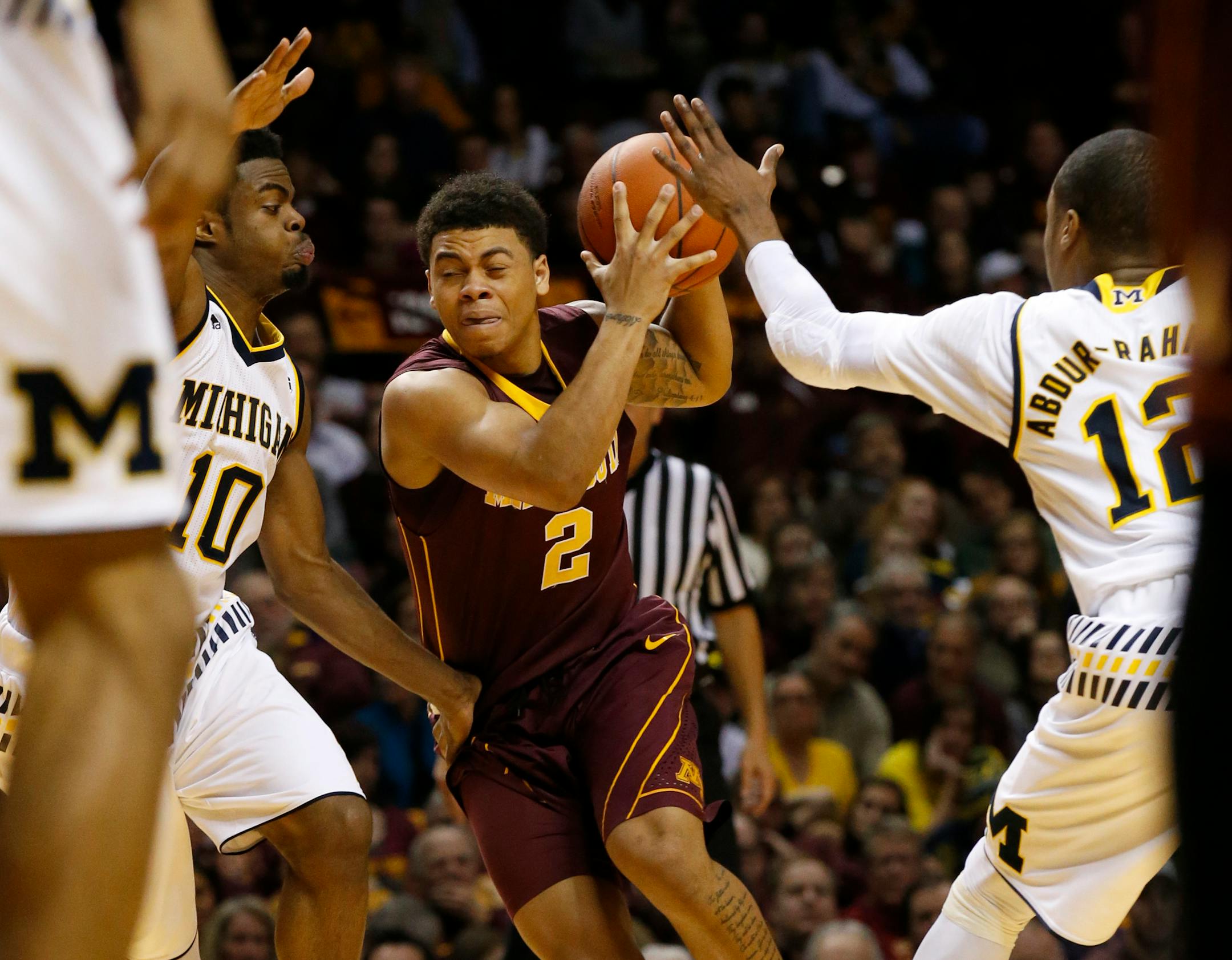
Minnesota (6-18; 0-12) vs. No. 4 Iowa (19-5; 10-2) at Carver-Hawkeye Arena in Iowa City, Iowa.
Sunday, Feb. 14 at 6:30 p.m.
TV: Big Ten Network
Radio: 1500-a.m.
The spread: Minnesota +19.5
Pregame reading:
Gophers sophomore Nate Mason has made big strides, but now he wants to win. Click.
A look at tonight's matchup between Minnesota and Iowa. Click.
This week's national insider, on the surprising power conference powers, complete with this week's power poll and lots of notes. Click.
On the day U-M president Eric Kaler announced the start of the AD search, interim Beth Geotz officially threw her hat in the ring. Click.
As the Gophers dive into their toughest two-game stretch of the year -- they'll play No. 2 Maryland at home after Iowa -- fresh off an 0-12 start, the concept of an upset feels distant and unrealistic. While Minnesota has managed to catch some far superior teams off guard in recent weeks and keep the score close, the Gophers' next two opponents aren't likely to fall for the same trick, especially with both coming off losses. Staying competitive in these two games would be a bigger feat.
But even as the season is now "winding down" as coach Richard Pitino bluntly pointed out the other day, Minnesota should still be looking for positive signs to carry over to next year when the bulk of the group's corps will be back. Working toward consistency, even in small ways, is a good goal.
Here are three places they could start:
Free throws. Last time out, Minnesota shot 84.2 percent from the stripe, by far the Gophers best of Big Ten play. They still lost the game, but it wasn't as mind-numbing as those close losses Minnesota endured while shooting less than 60 percent. The Gophers couldn't breach 59 percent in three consecutive losses against Illinois, Purdue and Indiana, all by six points or fewer. Many of those misses came in big situations down the stretch. If Minnesota can continue to improve those numbers, it would go a long way to showing focus at the end of games whether the score is tight or the win is out of reach.
Launch the attack. When the Gophers are driving to the basket, they're competitive. When they shoot, for the most part, they're not. It really is that simple -- at least as far as the offense goes -- but for some reason Minnesota has only found a way to put together sporadic stretches of a strong attack game and seems to forget that's an option most of the time. Against Michigan, the Gophers attempted 19 threes, which is far to many for a team shooting less than 30 percent. But it was the Gophers' attack late in the second half that brought them within 2 points of the Wolverines. If Minnesota is going to make any improvement by the end of a lost season, the Gophers will have to get realistic and understand what they are and what they definitely are not.


