

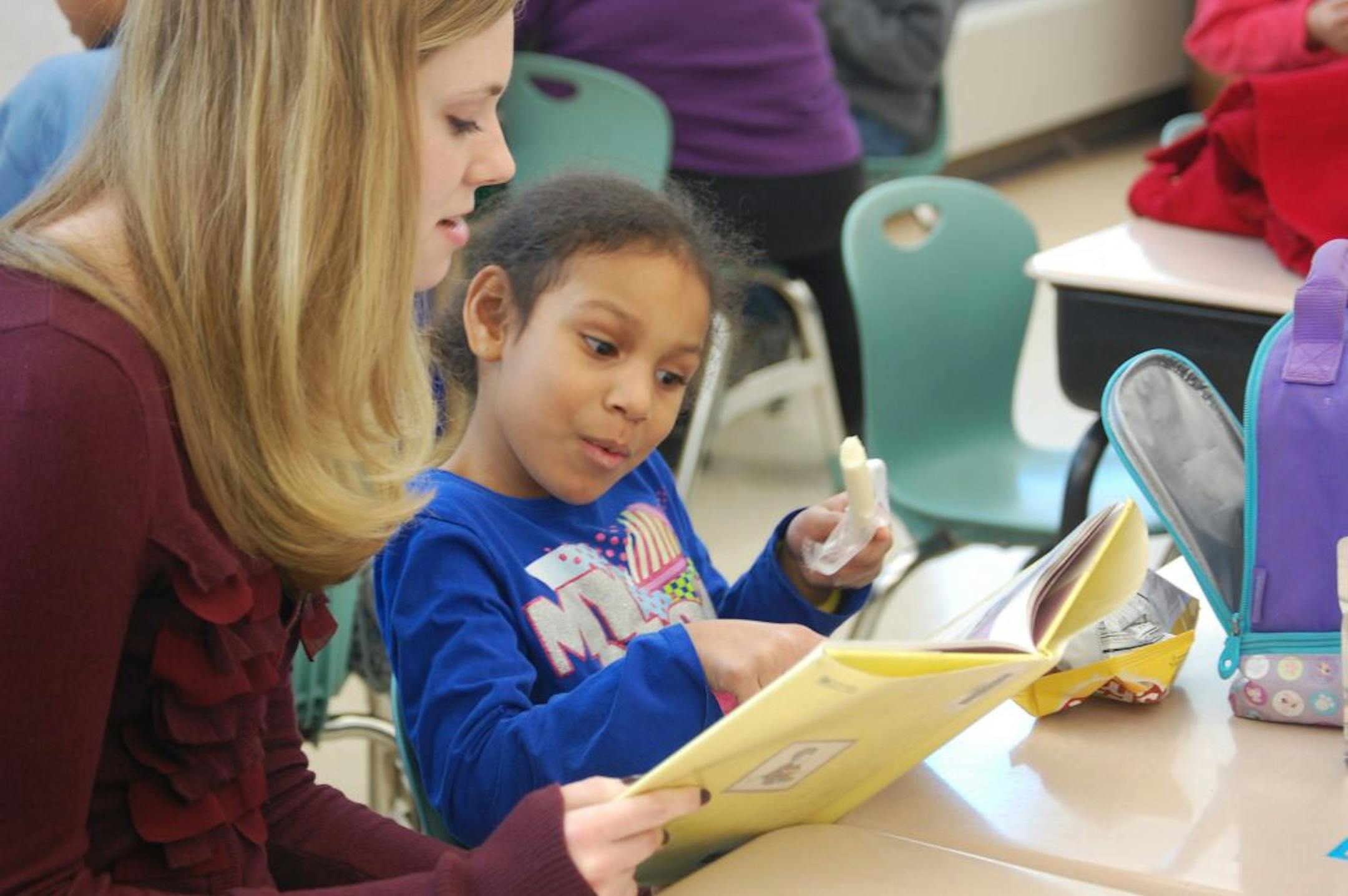
Two classrooms of first-graders scrambling for bag lunches, picking a prime place to sit and pillaging through the book table is chaos for a few minutes. But the teachers at Forest Elementary in Crystal don't mind it at all.
The chaos is part of a new program the elementary school is launching to raise early literacy levels among the youngest students.
Everybody Wins! Minnesota is an offshoot of a national literacy program that pairs students with a reading volunteer over lunch.
Marvin Anderson, the Minnesota state law librarian, helped found the program back in 1996 when the Minnesota Supreme Court was looking for opportunities to volunteer in the community. At that time he recruited 36 justices, librarians and other staffers from the court to read to students in St. Paul.
The program evolved into matching volunteers from area businesses with schools around the metro. Executive director Nicholas Wiebusch said the program now is in 13 Minnesota schools and makes about 1,200 matches per year.
Carolyn Larson, the site coordinator at Forest Elementary, said the students love meeting their "readers" every other week. The program currently does not have enough volunteers, so the four first-grade classes rotate. Half of the students meet each Thursday with readers who arrive for "power lunch" reading sessions.
Forest Elementary is partnering with Honeywell and Phoenix University and currently has about 35 volunteers working with students. Some readers are paired with two students.
Larson said the program addresses early literacy challenges, which have come under more scrutiny under federal No Child Left Behind policies. "You'd be surprised how excited kids get when there's a new face on the horizon," she said. "It's just another caring adult in their lives."


