

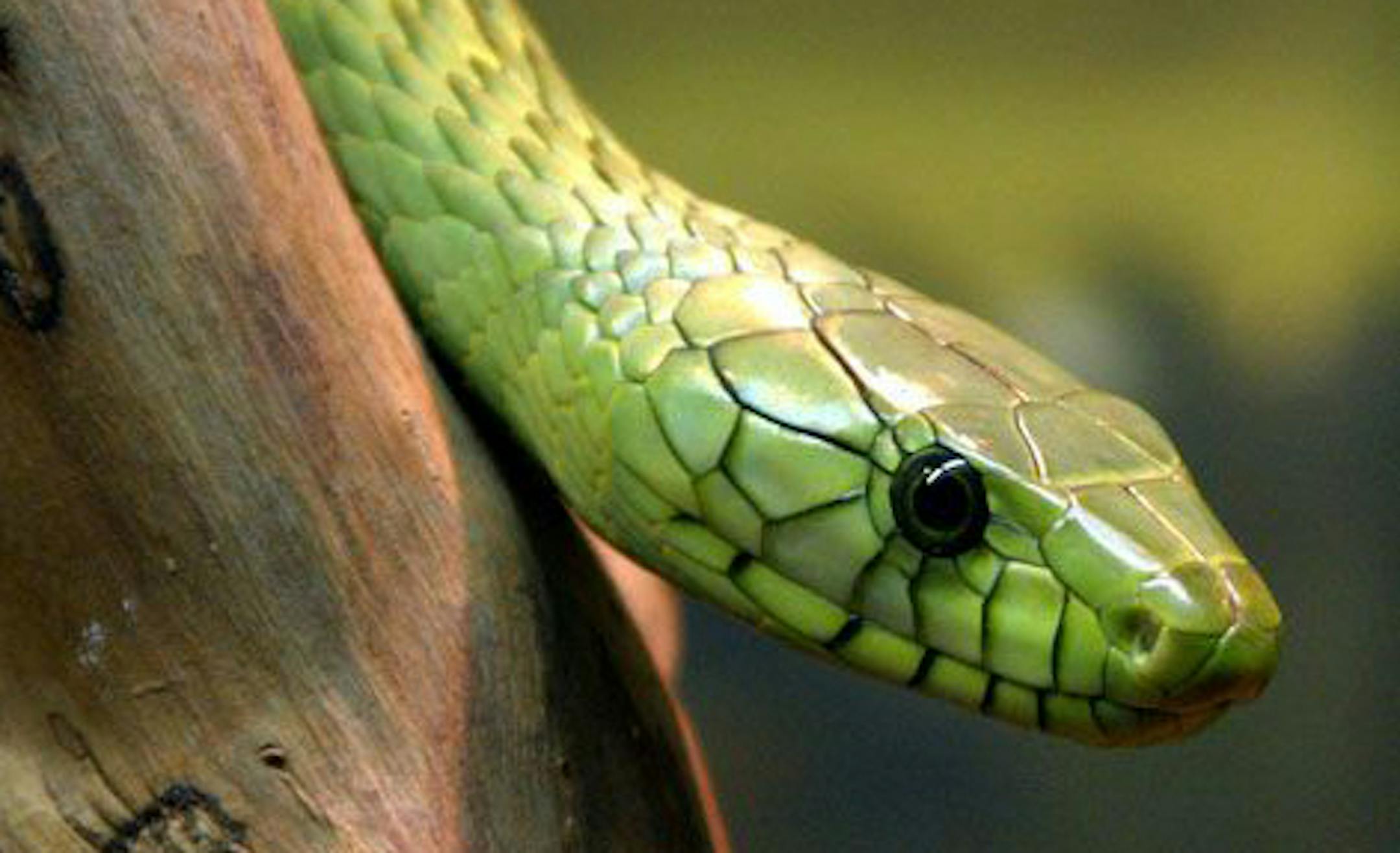
Behold the green mamba.
Researchers at Mayo Clinic have received a $2.5 million grant to study whether a drug based on the venom of the African snake might stop damage after a heart attack.
The drug, an engineered peptide known as cenderitide, already is on a fast track for approval by the Food and Drug Administration for its role in reducing fluid buildup in patients with heart failure, helping to prevent hospital readmissions.
The funding from the National Institutes of Health allows Mayo to try a promising new use for the drug after researchers discovered it also prevents heart cells from dying.
Mayo plans to launch a pilot using 60 heart attack patients still hospitalized at its facilities in Rochester and Jacksonville, Fla. The drug will be given to patients within 72 hours of the heart attack to see if it reduces additional damage to the heart and kidney cells.
"We know even after we put in a stent, there's ongoing damage to the heart cells and the heart muscle cells," said Dr. Horng Chen, a cardiologist at the Mayo Clinic who identified the new direction of research for the venom-derived drug. "Our hope is that this will prevent the ongoing damage. If we can help the heart heal after a heart attack, we may prevent patients from developing heart failure in the future."
Snake venom has long been known for its potential to benefit heart patients. A widely used class of drugs used to treat high blood pressure, ACE inhibitors, was developed in 1965 based on venom from the South American pit viper.
The venom from a snake bite works in two stages: It first opens the blood vessels, causing the prey to faint, and allows the poison to quickly reach the heart and kill the prey.


