

BARRETT, MINN. - In October Steve Ellis counted his losses.
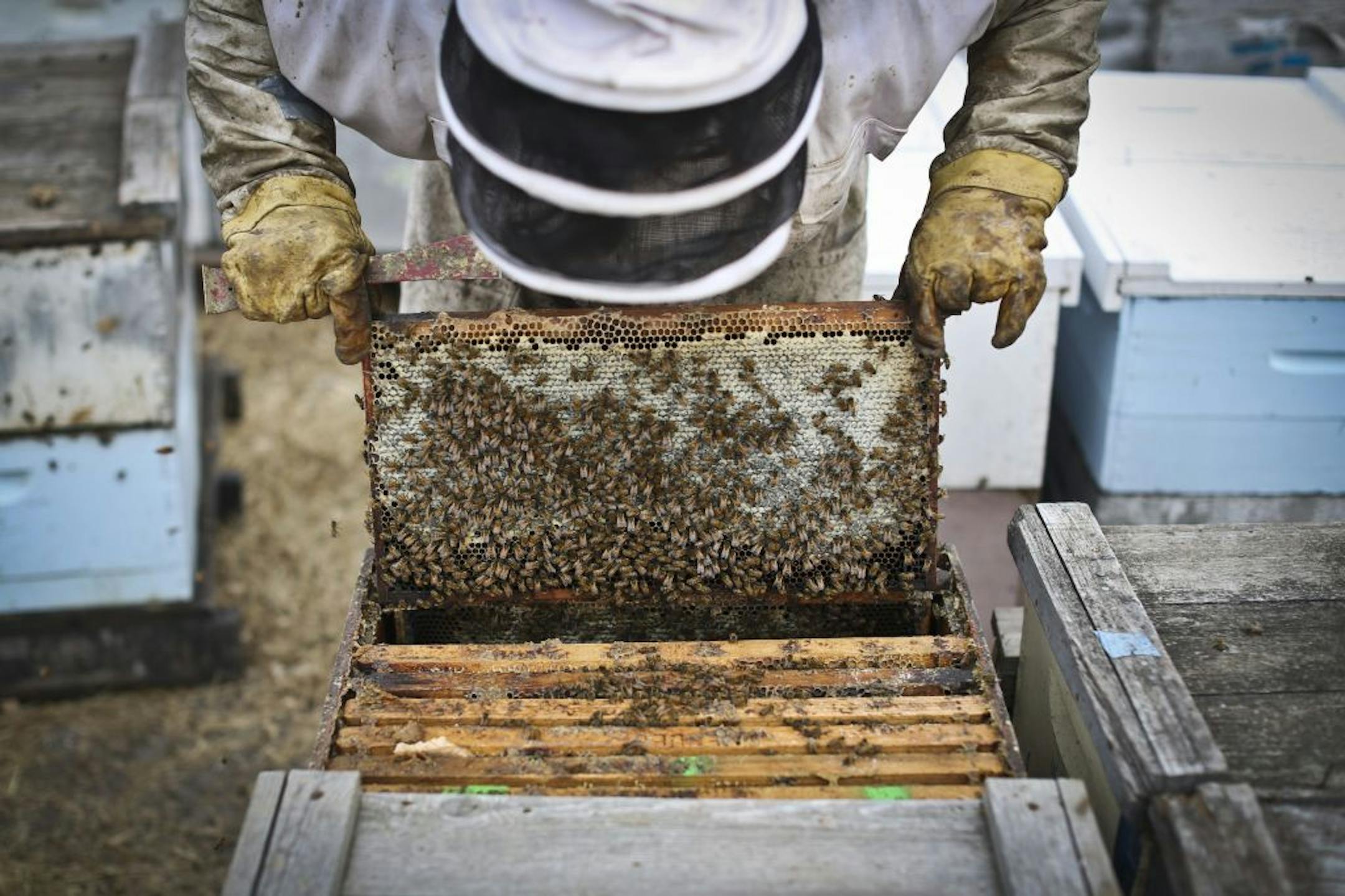
The air was thick with the sound of buzzing bees and the smoke he used to keep them calm as, one by one, he pulled wooden trays from dozens of blue and white boxes. Some held a moving mass of bees. But in too many, the hexagonal spaces were empty.
"I lost 500 hives this summer," he said.
Ellis and other beekeepers across the country say they know why they are facing astronomical losses of bees: agricultural insecticides. The companies that make the chemicals disagree, but they don't dispute the problem. On average, beekeepers are losing 30 to 40 percent of their bees every year.
"The injury does not occur at one time," said Ellis. "A lot fly off and die. Or crawl off and die."
It's not just domesticated bees that are in trouble. Many wild pollinators -- from the rusty patch bumblebee to the Karner blue butterfly -- are also declining in number, and some are in far worse shape. In a recent study of Midwest cornfields, University of Minnesota entomologist Karen Oberhauser linked the widespread use of Roundup and the disappearance of milkweed to an 81 percent drop in eggs of the monarch butterfly, the gaudy insect in mysterious decline across the country.
The threats to these species are numerous and complicated, but biologists say the encroachment of chemical-intensive agriculture on the native prairie is certainly one of them.
The impact could be profound. The honey bee and its wild cousins are a critical link in the life cycles of three-fourths of all the plants on Earth, including almonds, blueberries and most other foods that people eat.


