St. Paul and Minneapolis mayoral property tax bids for 2014 came in Wednesday and Thursday, respectively, and with them the strongest indication to date of how much change in Minnesota's property tax climate was wrought by the 2013 Legislature.
The change is in the right direction, but it's more modest relief than the Editorial Board had hoped for, particularly in St. Paul.
In the final budget recommendation of his three terms, Minneapolis Mayor R.T. Rybak pleased those who had been hoping for at least a small levy rollback when the state boosted aid to cities this year. He recommended cutting the city levy 1 percent next year.
While that's a small shaving from a heavy burden for many city taxpayers, it's the first reduction in city levies since at least 1996. The last two decades brought Minneapolis property owners repeated increases as the city struggled first with rising crime rates, then two recessions, deep state aid cuts and galloping employee pension costs.
Those struggles have finally eased. Crime is down, and the economy is recovering. Rybak deserves credit for getting the city's fiscal house in order, convincing the state to take over two costly closed pension funds, and improving efficiency and effectiveness in city services.
But he told the Star Tribune Editorial Board that major relief finally came from state government this year in affirmation of what he called a "partnership" between the state and the Twin Cities. A $12 million leap in local government aid (LGA) — more than an 18 percent jump — and a new exemption from the sales tax for city purchases set the table for a Minneapolis property tax cut.
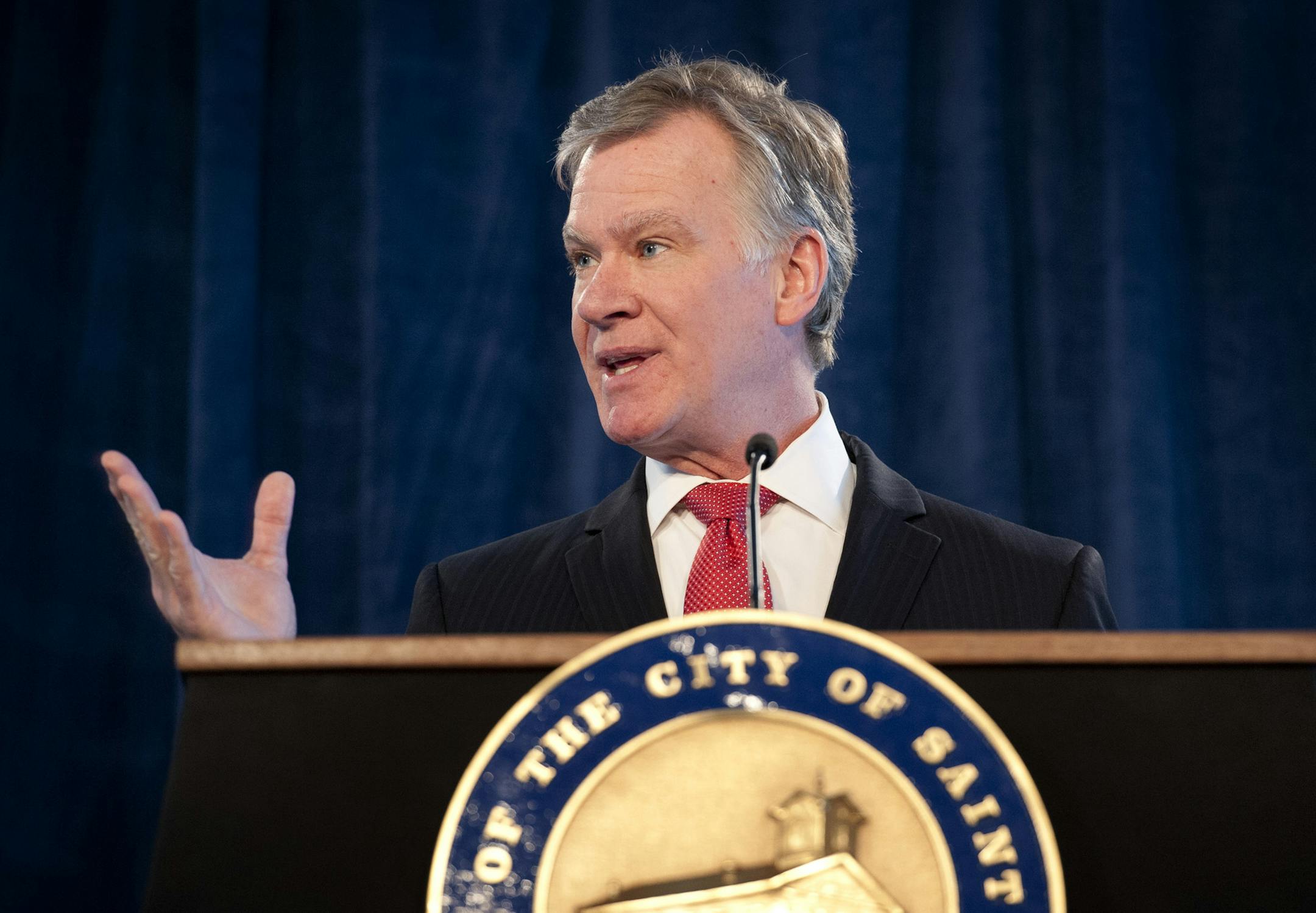
The table was similarly set in St. Paul. There, Mayor Chris Coleman — who is seeking a third term this year — recommended that city levies be held flat next year. He called it a "no-drama" budget. But for St. Paul homeowners hoping for a partial reversal of the big increases in recent years, it was a disappointment. The City Council should aim lower as it sets next year's levy.
While each city's budget will benefit from a state infusion next year, the Twin Cities are not twins in city government size, scope and fiscal condition. St. Paul is in many ways the needier twin, more dependent on state aid, which was slashed in 2003 and has only this year begun to recover, and on homeowner taxes, which rose steeply in response.