By law, no special training or screening is needed to drive students by van. Two grieving parents want that changed.
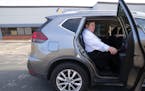
More than 2,000 minivans and passenger vehicles carry special education and other students in Minnesota every year, and the only requirement for their drivers is to have a valid regular driver's license.
Those drivers are not subject to the rigorous requirements set for drivers of school buses, said Capt. Ken Urquhart, pupil transportation safety director for the State Patrol. State and federal laws require school bus drivers to have annual physicals, undergo random drug and alcohol tests and criminal background and driving record checks.
The driver of one van -- known as a Type III vehicle -- had had five speeding tickets in 10 years and was smoking marijuana before he drove a 14-year-old Scandia girl home from school in May. On that May afternoon, he hit the rear end of a school bus, killing himself and his passenger. That has started calls for changes in state laws by a few legislators and others.
"There's room for improvement," Urquhart said. He said state officials and a few legislators have talked about tougher requirements for Type III drivers.
Urquhart said the state pays more attention to the vans, taxis and other passenger cars carrying students than to the drivers.
Urquhart, who oversees the patrol's annual inspections, said 2,400 such vehicles were checked last year, most of them minivans carrying special education students to classes outside the student's school district, although some districts in rural Minnesota pay parents to drive a few students to school from remote areas.
Special ed and other students not riding regular school buses "deserve to be transported safely by people we can rely on who are not impaired and are capable of operating the vehicle," Urquhart said.
The May crash in rural Washington County killed van driver Scott Wendt, 30, and his sole passenger, Amanda Berglund, 14. The Forest Lake Schools student was riding home from a St. Paul school offering classes for hearing-impaired students. Her parents, Bill and Karen Berglund, said they are writing to legislators asking for regulations to require such van drivers to meet standards set for bus drivers.
"They need background tests and drug testing and the same training as school bus drivers," Karen Berglund said.
Legislators are starting to talk about the issue of increasing safety not only for students riding in vans and other vehicles, but also on school buses.
"I think we need to look at strengthening the licensing procedures so just not anybody is jumping into these vehicles," said state Sen. Rick Olseen, DFL-Harris.
That may include measures such as requiring a different kind of license, drug testing and more training for Type III vehicles. He said he would like to stop using regular vehicles and use school bus-strength vehicles for transporting students.
One issue is the cost to support more regulation, he said.
Sen. Paul Koering, R-Fort Ripley, said he believes transportation companies will want to work with legislators on the issue.
"Obviously, we've got to protect people that are riding in these vans," Koering said. "What we have to do is get all sides together and talk about it and try to figure out ... how to fix what could be a potential problem."
Wendt was a driver for Twin City Transportation, which Forest Lake Schools hires to drive about 13 students a year in eight minivans to schools offering special education classes in the St. Paul area, said district transportation director John Gray. Although schools may impose additional requirements on drivers, the district has not done so for Twin City Transportation, he said. He said Wendt's crash was the only Type III accident involving a student that he could recall in his 14 years with the district.
Twin City also supports stronger requirements for its minivan drivers, and has started to require that its minivan drivers meet the same standards as school bus drivers.
"Anybody who's doing this work should be required to get a school bus endorsement," said Mike Weidner, the company's attorney. But that probably wouldn't have changed what happened, he cautioned.
He added, "If a guy goes out on his lunch break and drinks four drinks and gets behind the wheel of my vehicle, there's nothing I can do to prevent an individual from committing an act that's illegal."
Although Type III vehicles carry up to nine students, state education officials were unable on Wednesday to provide numbers on how many students across the state ride in such vehicles, some of which are owned by school districts and others by private contractors.
State records showed 2,790 such vehicles were used in 2004.
State Public Safety Department records showed 142 crashes in 2006 involving school transport vehicles, including minivans and buses of 15 seats or fewer. But there were only 23 injuries, all minor.
Anoka Hennepin Schools, the state's largest district, only uses vans for rare cases for small sports teams or outings, said Chuck Holden, an administrator who oversees transportation services. Such leased vehicles are driven by school employees, who must produce a clean driving record, he said.
Holden said using a regular school bus is considerably more expensive than using a minivan.
In Minneapolis, all students but one are carried on buses driven by certified school bus drivers, district officials said.
"Because the requirements for vans and van drivers are not the same as they are for school buses, Minneapolis Public Schools chooses to use school buses," spokesman Ross Bennett said. In addition to school buses being safer vehicles, Bennett said, "we want certified bus drivers transporting our kids."
The exception is for one student who lives outside the district and is brought in by a taxi because the district has no bus available at the time of day the student travels. That student has been driven by the same taxi driver for at least two years, said Scott James, deputy director of plant operations and transportation. Regulations covering taxi drivers vary by city. Some require background checks, though special driving licenses are not required.
In St. Paul, the district uses taxicabs in a few instances, often with a school staff person riding along. The district runs about a dozen of its own vans at any given time, said Mark Vogel, safety coordinator for the district transportation department. Those vans are driven by district employees, who go through criminal background checks, driving record checks, other monitoring and training, Vogel said.
Putting those van drivers under the same random drug testing and regulations as school bus drivers isn't as easy as it sounds, he explained.
"When it's not required, you really get into a can of worms when you start doing it on your own," Vogel said. "I think the reason for not just doing it ... is then it puts the onus on the company or the district for making sure that you set up a system where nothing falls through the cracks and if you make a mistake you're doing this on your own."
Computer-assisted reporting editor Glenn Howatt contributed to this report. jadams@startribune.com 612-673-7658
![]() Open positions!A new career awaits. Look through thousands of listings to find your new job. Start now!![]() Find Your New Car Here!Search and browse new and used vehicles from area dealers & private sellers. Search now! |
Win tickets to see Acid Mothers Temple at First Avenue.Vita.mn presents Acid Mothers Temple at First Avenue on April 10. |
Comment on this story | Read all 0 comments | Hide reader comments