

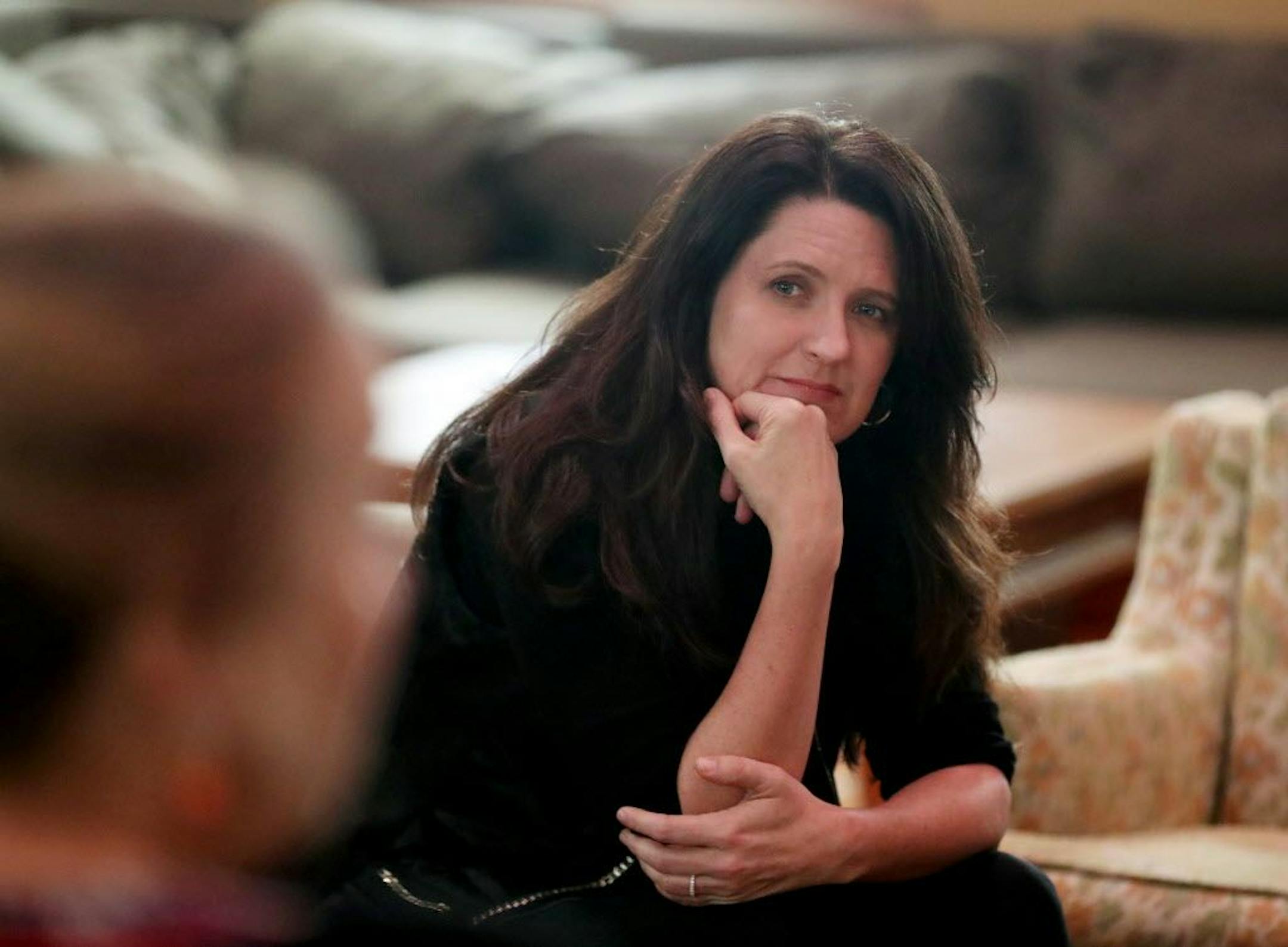
Think you have it rough talking to certain relatives? Yvette Erasmus, 46, grew up in South Africa with a pro-apartheid diplomat father and a "strong revolutionary" mother. The couple eventually divorced, but not before their daughter learned how to be a "good girl" at the dinner table and avoid causing waves. Fortunately she's grown out of that. Erasmus, of Edina, is a psychologist in private practice who also offers free training on the Nonviolent Communication process. There are few better people to tap for guidance postelection and pre-Thanksgiving than Erasmus, who offers tools to try at the turkey table and beyond. Family, she noted wryly, offers us the best training for reaching higher ground.
Q: Clearly, your desire to help people get along began in childhood. You didn't have it easy growing up.
A: In the early 1980s in South Africa, we were experiencing heavy sanctions from the United States. We had military in our schools, white towns and black towns. Because my father was a diplomat, we also traveled a lot, including to Malawi and Germany. I attended 12 schools by 12th grade. I learned a lot of languages and about a lot of cultures. I've always wanted to help people be in dialogue together and bridge the gaps. There's a little girl in me who wonders why we can't love one another. What does it take to get us to stop turning on each other?
Q: That question carries great urgency in light of recent news of terrible violence. Have we hit rock bottom?
A: I hope we have, but I'm not convinced we have. We're in a time of massive transformation; the ugly parts of our culture that we haven't wanted to see are in our faces. If the rhetoric continues, the escalation of physical violence also will continue. People will feel justified in becoming increasingly violent. I've lived through it. I know what it's like to descend into tribalism.
Q: You've also witnessed dramatic shifts toward goodness among people who might not have seen themselves making peace.
A: It's a delightful surprise when you can shift stuck relationships by changing the conversation. Every week, I work with people who are choosing to empathize instead of argue. There are more openhearted people who want what is good for the world than loud people on a public stage with a mic. Many people want a significant shift that includes all voices. They're tired of stridency on both sides. They know the tone needs to change.
Q: But they just might not know how to get there. Is that why you were drawn to the work of Marshall Rosenberg and his Nonviolent Communication model?


