

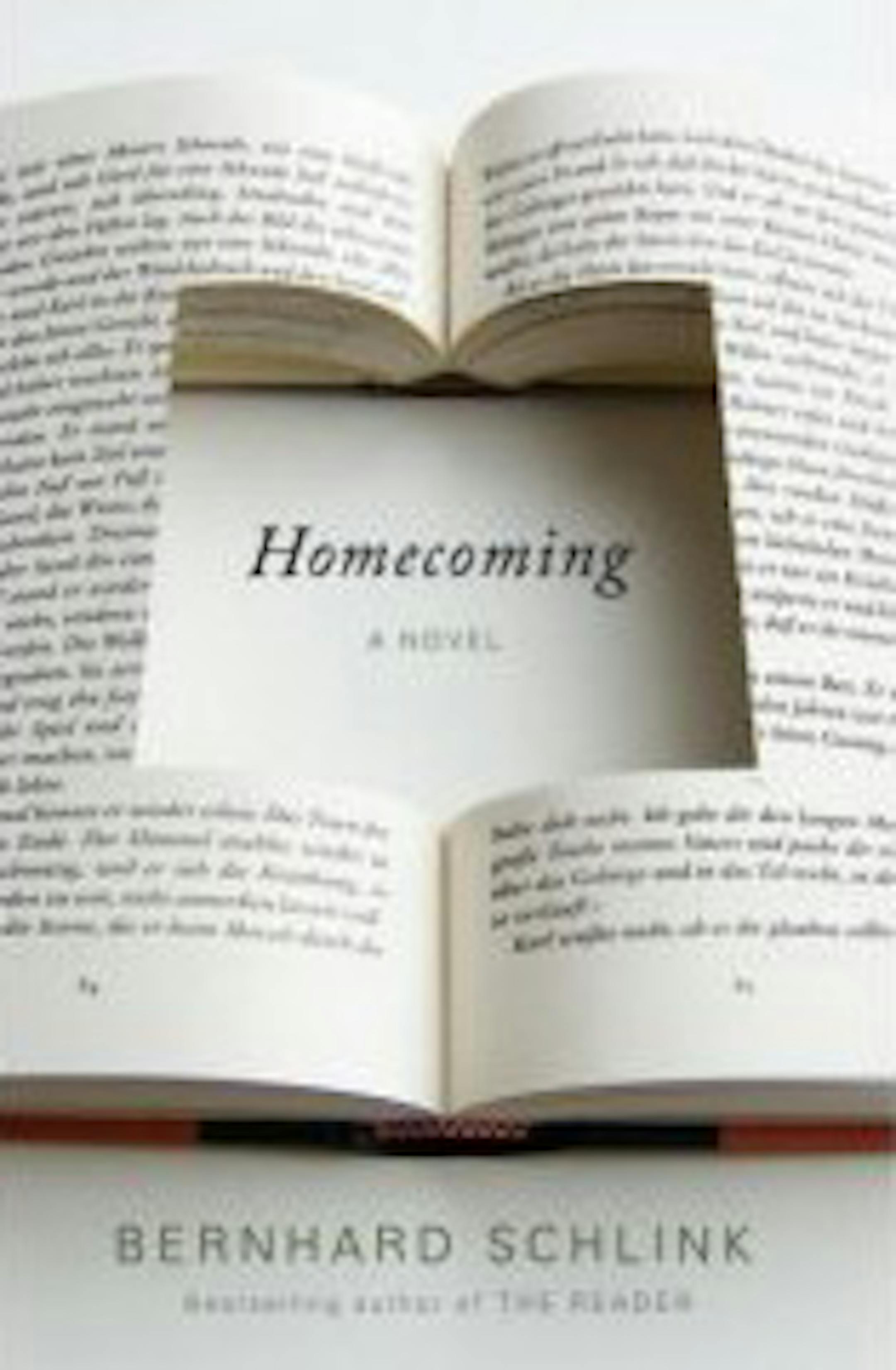
In his widely translated and acclaimed novel "The Reader," Bernhard Schlink took up the dark legacy of the Third Reich, as did Günter Grass and Heinrich Böll before him. He does it again in "Homecoming," a novel that explores the shame the postwar generation feels and whether it, too, must take up the burden of guilt. At the same time, the children of war (and perhaps genocide) desperately try to distance themselves from their elders as if fearing contamination.
The book is a thriller, involving false identities and lots of enticing plot turns, but it has a grave and painful heart. The sober, laconic prose tells you it means business, even as it entertains.
The novel begins quietly, in a seeming paradise. The narrator, Peter Debauer, remembers long, happy summer vacations with his paternal grandparents in their Swiss lake house, which give him a respite from his bleak life with an emotionally cold single mother in Germany.
One year, they send him home with the galleys of one of the popular novels they edit. Don't read the trashy stuff, they admonish; just use the blank sides for schoolwork. A serious and dutiful boy, Peter obeys until some years later, in a fit of boredom, he does read it. By now, whole sections of the book, including the end, are missing, but the plot haunts him: Long after the war, Karl, a German soldier, makes his way home through many travails from a Siberian POW camp, to find that his wife has remarried.
What happens next? the boy wonders.
The adult Peter, unpacking boxes after a move, comes across the novel again. We read portions with him, realizing, as he does, that the plot and structure are based on "The Odyssey." But later homecoming fables, such as "The Return of Martin Guerre," propose a counter-story -- not of triumphant return, but of tra- gedy. Does Karl/Odysseus kill the interloper and leave quietly, or is the real Karl dead and the man at the door an impostor?
Peter dreams of the house and, waking, realizes he has seen it. So the author must be a local man, who perhaps has written a disguised autobiography.
During his private-eye search for the author, Peter lives out yet another version of homecoming.


