

On June 18, barring an 11th-hour intervention, Ronnie Lee Gardner will be executed by the state of Utah for murder. In April, he set off a wave of media attention by telling a judge he wishes to die by firing squad, a method that hasn't been used in the United States since 1996, and relatively rarely before then. Most executions are commemorated by the final words of those who die. But Gardner's case is a strange one: The way he chose to die will probably be remembered as his final statement.
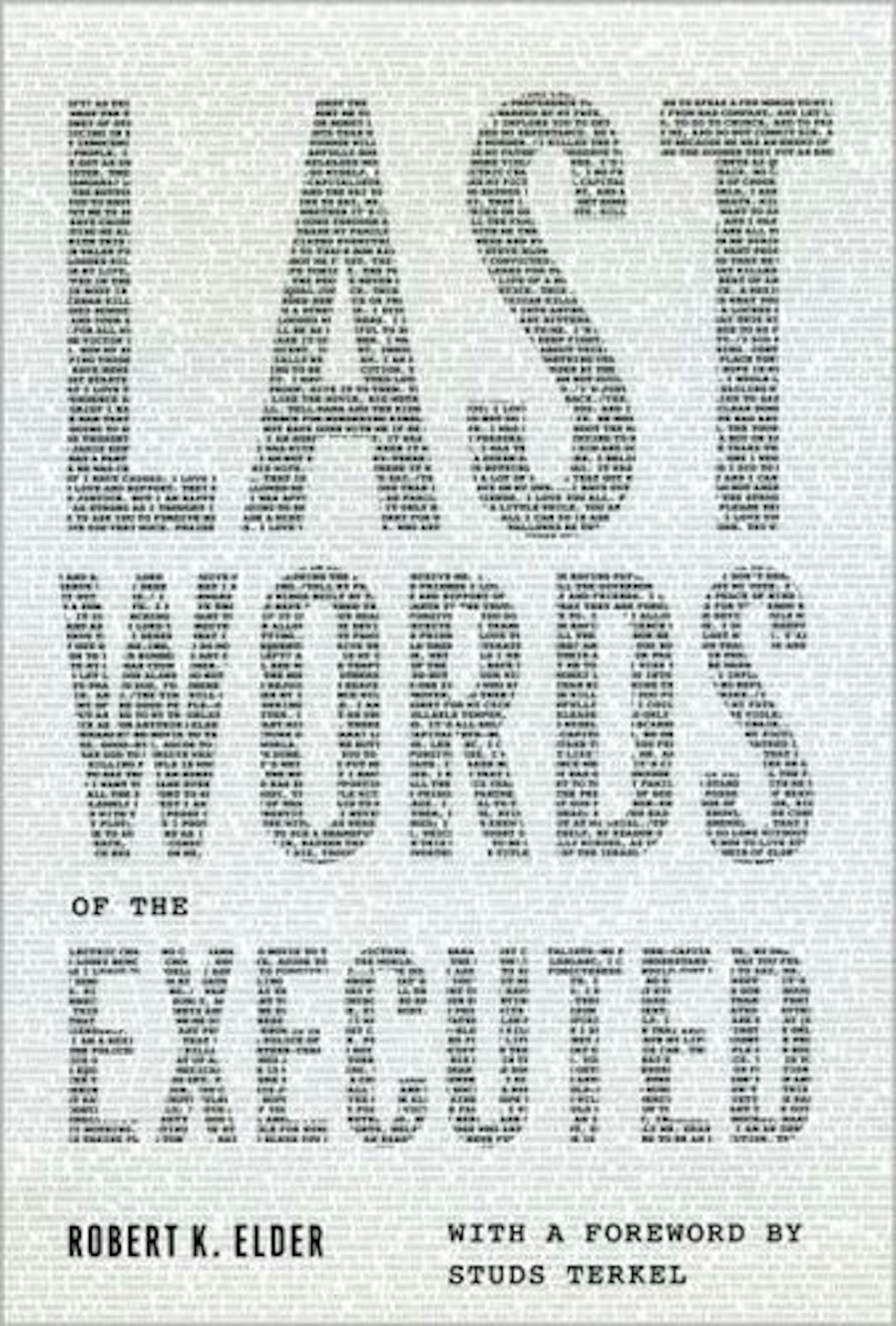
What was Gardner feeling as he made his decision? On the evidence of Robert K. Elder's fascinating yet disturbing collection of final statements, "Last Words of the Executed," the range of emotions among those about to die is grimly narrow. There's contrition: "See what whisky and bad women have brought me to," said Stephen Short, hanged in 1855.
Protest: "Perhaps my execution will help do away with capital punishment," said Robert Harmon, killed in the gas chamber in 1960.
Denial of guilt: "You see an innocent man dying tonight," said Joseph Usefof, electrocuted in 1920.
Defiance: "Let's do it, man. Lock and load," said G.W. Green, killed by injection in 1991.
And black humor: "You are about to witness the damaging effect electricity has on Wood," said Frederick Wood, electrocuted in 1963.
That's a mere five ways to feel about imminent death, a limitation that makes reading Elder's collection profoundly saddening. The book at once evokes the sense of pathos and finality surrounding the executions, and yet after a point there's a rote-ness, a terrifying familiarity to these last moments. The book is at once thick with emotion and desensitizing.
Elder himself is relatively poker-faced. He's organized the book simply by method of execution, with quotes running chronologically within each category. Each quote is supplemented with minimal background, and the last words of Ted Bundy, the Rosenbergs, and Sacco and Vanzetti are no more or less prominent than those of any others.


