
When the good guy is also the bad guy

British actor Mark Strong's new role vacillates between hero and villain.

November 3, 2020 at 3:29PM
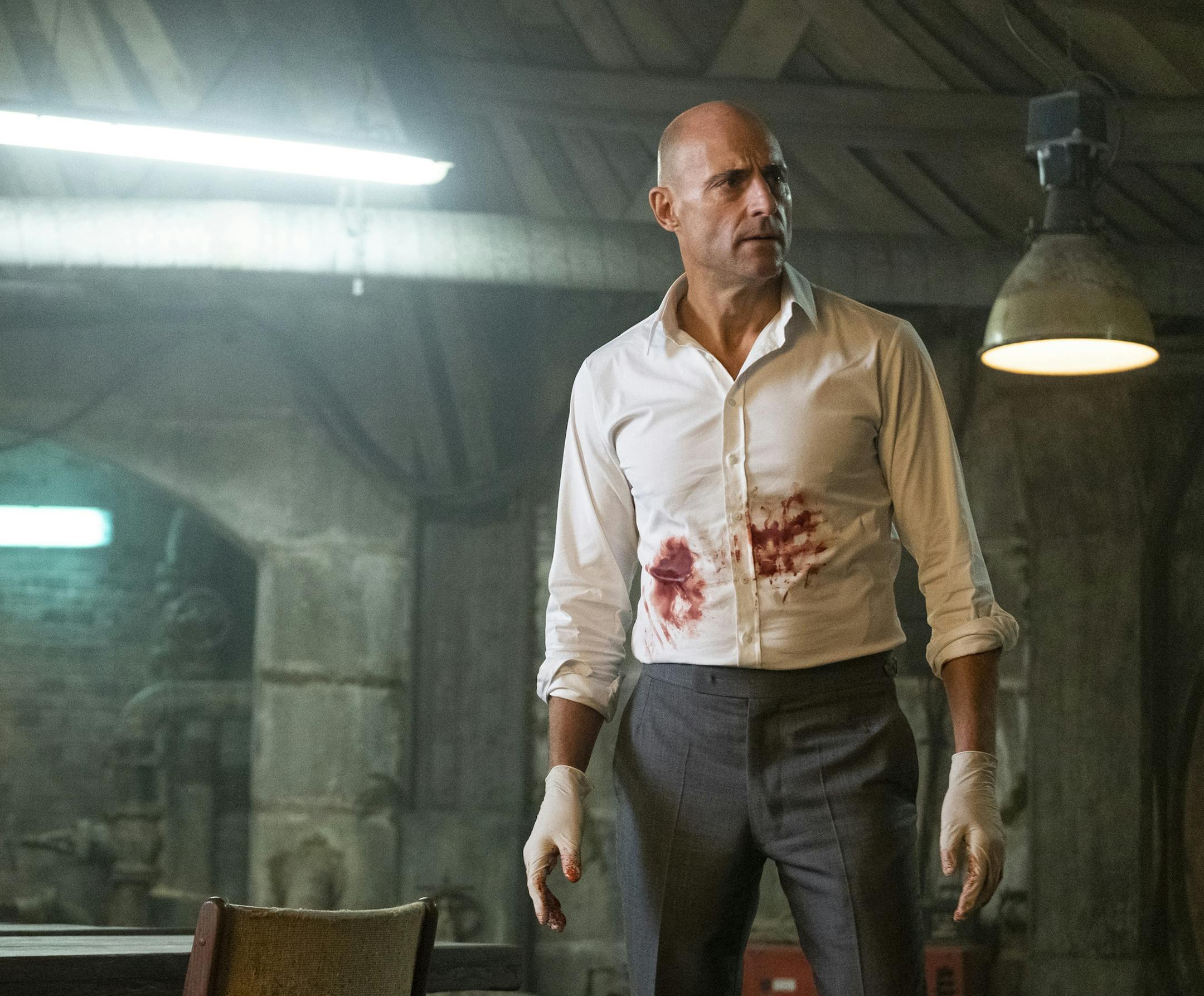
Mark Strong stars in "Temple" as surgeon Daniel Milton. (Gareth Gatrell/Sky UK/TNS) ORG XMIT: 1807694
Mark Strong stars in “Temple” as a surgeon, Dr. Daniel Milton. (The Minnesota Star Tribune)

He's used to playing villains, but even when Mark Strong plays a good guy, he ends up making bad choices.

The British actor's new show "Temple," based on a Norwegian drama and premiering on Spectrum, deals with how people react when standing at an ethical crossroads.

Strong stars as Dr. Daniel Milton, a British surgeon whose life is turned upside down when his wife (Catherine McCormack) is diagnosed with an incurable, fatal disease. With no other option but to desperately search for a way to prolong her life, Daniel opens an illegal medical clinic alongside new friend and doomsday prepper Lee Simmons (Daniel Mays).

After a career playing the heavy in movies like "Kick-Ass," "Shazam!" and "Green Lantern," the 55-year-old actor has found a gray area.

"You have a character who was faced with that moral dilemma: Was he a hero or was he a villain?" Strong said.

"He crossed a moral Rubicon. He made some moral choices that he would have never made if he wasn't forced into that situation."

Daniel's illegal clinic, tucked into the deserted tunnels beneath a London subway station, attracts a mixed bag of clients, from criminals with nowhere else to turn to patients who can't afford hospital bills. Eventually, it also attracts his wife's colleague (Carice van Houten), a research scientist who might be the only one who holds the answer to her disease.

"He's making morally dubious choices that are perhaps unacceptable, but because they're for a good cause, perhaps you would forgive him," Strong said of Daniel's illegal practice.

"Each individual has their own parameters. With drama, the reason why we watch it is because we're measuring ourselves against what we're watching. Would I do that? Would I behave like that? Is that going too far? Would I do more?"

Doing it for love

"Temple," in the basest sense, is about what you would do for the ones you love.

Daniel, at times, excuses his bad actions by countering them with his good, with the lives he's saved as a doctor.

"Unlike Walter White [Bryan Cranston's character in 'Breaking Bad'], who enjoys that darkness, Daniel isn't that character. He's been presented with that extraordinary circumstance," said Strong, who serves as executive producer of the show with wife Liza Marshall.

"He's trying desperately to make things good and make things right and do the right thing all the time, but he doesn't always succeed. Sometimes he makes things worse by his good intentions."

"Temple," which first premiered on Sky One in England last year, has already been renewed for a second season. Now the writers' room gets to take the show past its inspiration and dig deeper into the characters, the clinic and the science.

Strong was tight-lipped on where the show is headed, but he promised that Daniel's decisions won't become any easier.

"Anybody faced with that dilemma would have to make choices," Strong said.

"How far would a person go for love?"

about the writer

about the writer

Kate Feldman, New York Daily News

More from No Section

See More
FILE -- A rent deposit slot at an apartment complex in Tucker, Ga., on July 21, 2020. As an eviction crisis has seemed increasingly likely this summer, everyone in the housing market has made the same plea to Washington: Send money — lots of it — that would keep renters in their homes and landlords afloat. (Melissa Golden/The New York Times) ORG XMIT: XNYT58
Melissa Golden/The New York Times

It’s too soon to tell how much the immigration crackdown is to blame.