Faced with a resurgent Taliban and the growing threat from the Islamic State of Iraq and Syria, Afghan watchers have little confidence that President Donald Trump's new approach to the 16-year conflict in Afghanistan will do much to alter the dynamics of the United States' longest war.
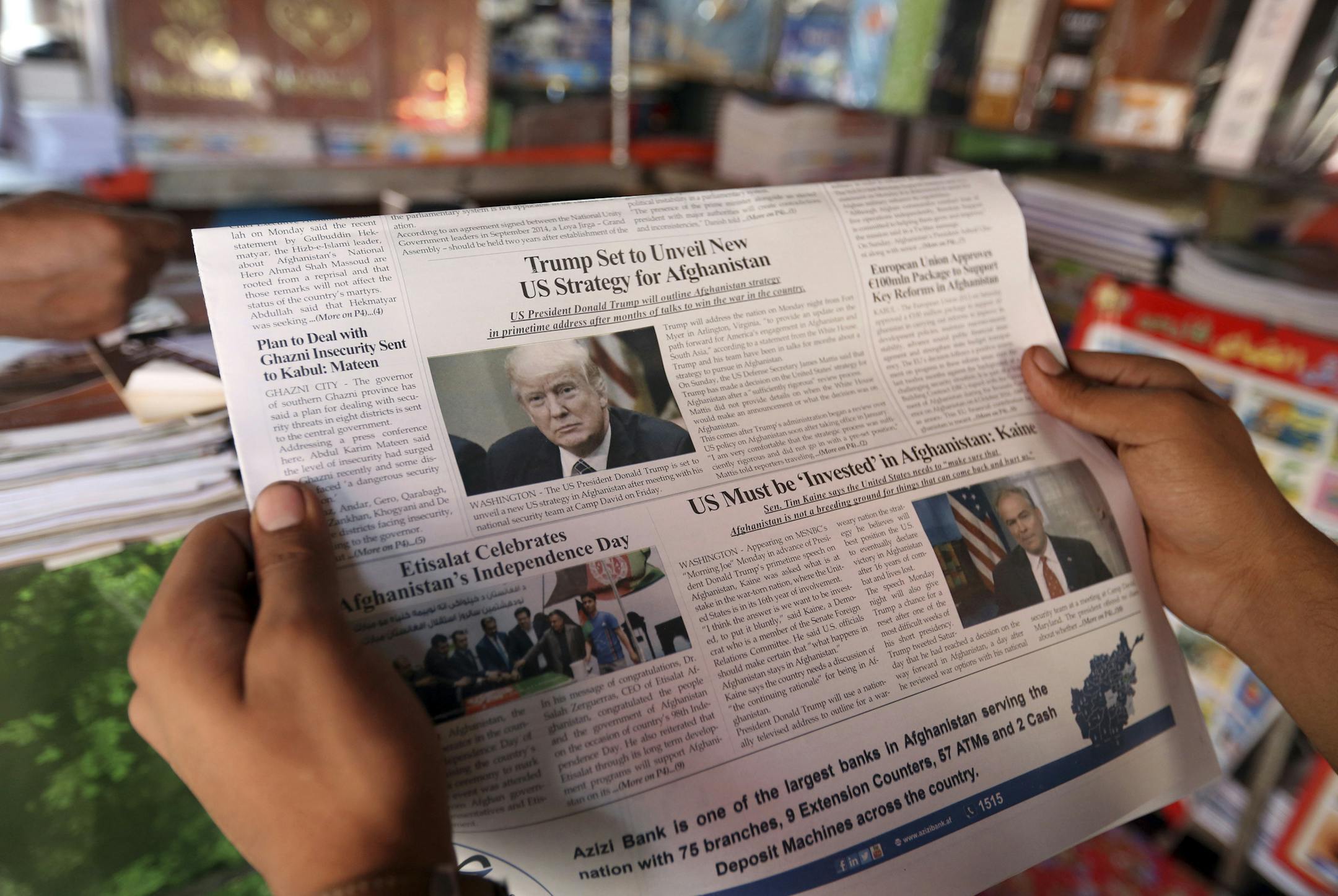
Pledging more troops, increasing pressure on Pakistan to stop providing a "safe haven for terrorists" and renewing diplomatic outreach to the Taliban, Trump late Monday announced an open-ended commitment to fighting the war in Afghanistan. "We are not nation building again," he said. "We are killing terrorists."
Trump's commitment to Afghanistan bolsters Kabul as it faces renewed violence and could eventually build capacity in the Afghan security forces — particularly the air force and special forces that are crucial to securing the country and overcoming terrorist groups. However, his pledge of additional U.S. troops does not fundamentally differ from the approach of his predecessors and is unlikely to change the course of the conflict.
"Militarization is a recipe for more bloodshed and destruction," said Abdul Basit, an associate research fellow at the S. Rajaratnam School of International Studies in Singapore, adding that a "surge of a few thousand troops will not change the strategic reality" of the long-standing conflict. "The strategic stalemate will persist for the foreseeable future."
Responding to Trump's announcement, the Taliban threatened to transform Afghanistan "into a graveyard for the American empire" if the U.S. does not withdraw its troops, the group's spokesman Zabihullah Mujahed said in a statement.
The Taliban now controls or contests 40 percent of Afghanistan, or more than 400 Afghan districts, according to U.S. estimates, and there has long been acknowledgment that Taliban fighters could not have made such advances without significant support from Pakistan.
Islamabad has been accused of arming and supplying groups, including the Haqqani network and the Taliban, in a bid to assert geopolitical goals using proxy forces. Pakistan's military in turn has blamed Afghanistan of harboring insurgents.
But after a series of bombings in Kabul, including the deadliest attack on the capital in 16 years on May 31, Afghan President Ashraf Ghani openly accused Pakistan of instigating an "undeclared war of aggression" against his nation.