
Tiny countries of the Pacific have the deck stacked against them

While many Pacific Rim countries thrive, its pristine islands dwell in poverty

May 23, 2016 at 10:27PM
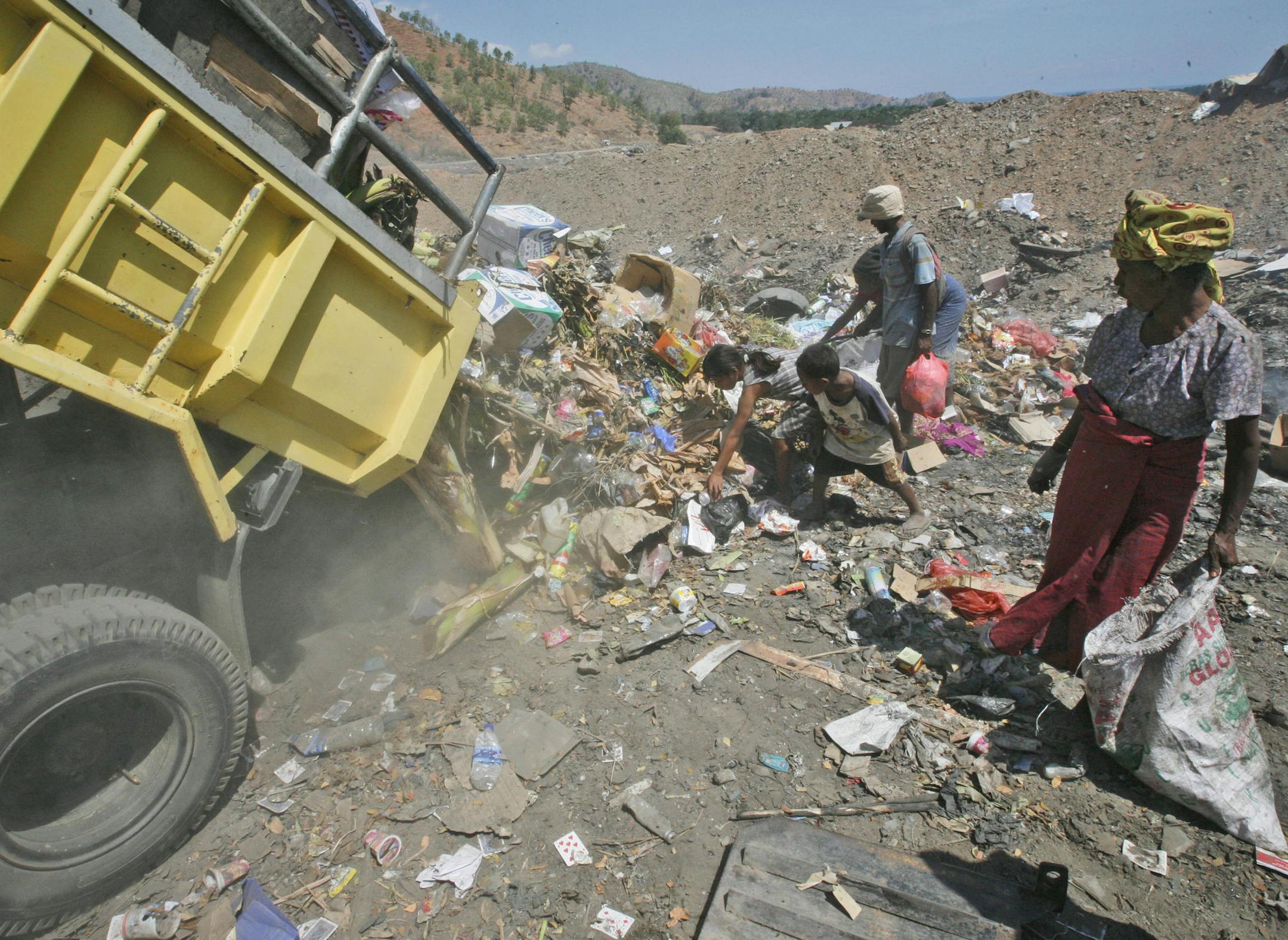
**ADVANCE FOR TUESDAY, SEPT. 8** This Aug. 26, 2009 photo shows people scavenging through a garbage dump in Dili, East Timor. A decade after its breakaway from Indonesia, East Timor is still struggling with poverty, unemployment, the building of infrastructure, rural development and private sector growth despite the billions of dollars worth of foreign assistance. (AP Photo/Dita Alangkara)
People scavenged through a garbage dump in this August 2009 photo from Dili, East Timor. Far from an idyllic existence, the Pacific islanders struggle with poverty, unemployment, a primitive infrastructure and almost no private-sector growth despite billions of dollars of foreign assistance. (The Minnesota Star Tribune)

The phrase "Pacific island" conjures images of white-sand beaches, turquoise seas and cocktails served in halved coconuts. Alas, the reality is not quite so blissful. Most of the countries of the Pacific are poor, and poorly run. Their tiny size and remoteness are obstacles enough to prosperity. Now, thanks to global warming, they must also contend with rising seas and increasingly frequent and severe storms.

The biggest regional economies belong to the predominantly Melanesian countries closest to Asia: Fiji, Papua New Guinea and East Timor (which considers itself both a Pacific and a Southeast Asian country).

Fiji's leading export has long been sugar; sugar cane covers three-quarters of its arable land. But output is falling and its future is uncertain: For years Fijian sugar has benefited from preferential access to the European Union, but that is scheduled to end next year.

Competing on the open market against bigger producers with lower production and transport costs, such as Brazil and India, will be difficult. Fortunately, Fiji has a robust and growing tourism industry and, like many Pacific countries, reliable remittances from overseas workers.

Papua New Guinea, culturally one of the world's most diverse states (its 7.5 million people speak more than 800 languages), relies on exports of minerals and, since 2014, natural gas. The economy grew by 10 percent last year as gas production increased. But with commodity prices low, a large gold and copper mine recently closing and drought battering the country's farms, growth has decreased markedly: the Asian Development Bank predicts a slowdown of 4.3 percent this year.

East Timor has tried to insure against such external risks. In 2005, a couple of years after it became fully independent, it passed a law requiring its petroleum and natural-gas revenue to be put into a sovereign-wealth fund. The government, subject to parliamentary approval, is supposed to transfer no more than an "estimated sustainable income" from the fund into its budget each year. But the government has made excess withdrawals to fund budgets every year since 2009, and top-up funds will soon become scarce.

If East Timor can reach an agreement with Australia on how to divide Greater Sunrise, a gas field in the Timor Sea between the two countries, then its gas will last another 15 years. If not, its known fields will be exhausted in four.

East Timor has a tiny private sector; recent growth has come from public spending made possible by money from the petroleum fund and from taxing oil and gas firms. It is among the most oil-dependent countries in the world: the industry accounts for around three-quarters of GDP.

The rest of the region consists of far-flung islands which rely on four main sources of income. One is tourism, though this is less developed than one might expect for an area composed of Elysian islands with pristine beaches and rainbow coral. Second is the sale of fishing rights in the vast stretches of ocean that fall within their territory. Remittances from workers abroad is a third. Finally, improved connectivity has created a modest outsourcing industry, strongest in Fiji, offering services such as call centers and data processing.

The outsourcing business relies on new fiber-optic cables. Shipping has become cheaper, too. But these only restrain geography rather than vanquish it.

Manufacturing will always be limited; transport costs are just too high to follow the conventional East Asian path of industrialization. And Pacific countries suffer from devastating cyclones, which are likely to grow stronger and more frequent in years ahead. Eight countries in the region lose an average 2 percent or more of GDP each year to storms. In time the low-lying atolls of Kiribati, Vanuatu and Tuvalu may disappear entirely beneath rising seas.

Copyright 2013 The Economist Newspaper Limited, London. All Rights Reserved. Reprinted with permission.

about the writer

about the writer

the Economist

More from Business

See More
card image
Spencer Platt

The U.S. stock market roared back on Friday, as technology stocks recovered much of their losses from earlier in the week and bitcoin halted its plunge, at least for now.

Attendees of Frostbike made their way through the convention Saturday at the Quality Bike Products campus in Minneapolis. ] (AARON LAVINSKY/STAR TRIBUNE) aaron.lavinsky@startribune.com Frostbike 2016 was held at the Quality Bike Products Campus on Saturday, Feb. 27, 2016 in Bloomington, Minn.
card image