

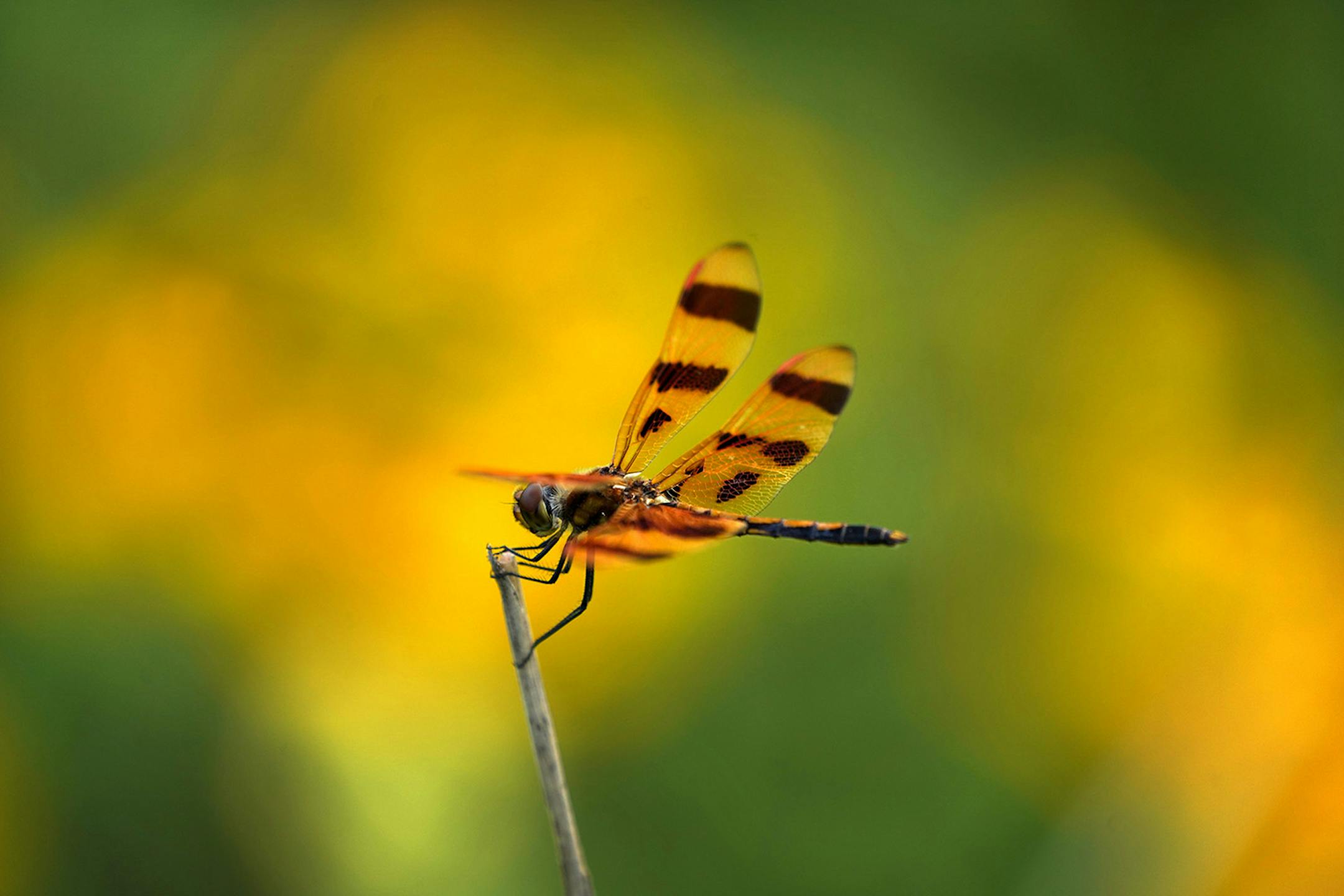
Bees hum, mosquitoes whine, crickets sing, dragonflies rattle. These are just a few of the wings of summer. Purple coneflowers attract numerous butterflies, including the painted lady, red admiral, monarch and eastern tiger swallowtail. Northern cardinals, American robins and house wrens are among the recurrent nesters, so they keep on singing.
Look for the first flights of Canada geese. The adult geese have been flightless since mid-June when they molted their wing feathers. The young ones that hatched this spring are testing their new flight feathers, so whole family groups can be seen in the air. American goldfinches feed heavily on wild and naturalized thistle seeds and line their nests with the thistle down. They are late nesters and are just getting started because they wait for the thistle seeds and down to come available. Juvenile ruby-throated hummingbirds are coming to feeders with sugar water. The young are shaky and, with shorter beaks, smaller than adults.
Orb spider webs glisten in tall grassy spots on dewy mornings. Northcountry and Northsky are two garden blueberry shrubs producing quality ripe fruit. Farmers begin to harvest their third crop of alfalfa. It's time to enjoy the first meal of locally grown sweet corn.
Corn is native to the New World and has been a valuable food crop at least since the Incas cultivated it. Modern corn is actually a tall annual grass, and all kinds, including ornamental corn, popcorn, field corn and sweet corn, are varieties of a single species: maize.
Sweet corn is one of the most delicious of American vegetables. Nothing tastes like an ear of corn cooked as soon as it is picked. Sweet corn with yellow kernels is a favorite, but in parts of the United States, white kernels are preferred. There are now ultrasweet and super-sweet hybrids, as well as bicolor hybrids (with one super-sweet parent) that are bred for enhanced sugar. The sugar in these sweeter hybrids does not convert to starch as rapidly as the standard hybrids.
Sweet corn is among the easier vegetables to grow provided it is given a sunny location and exceedingly fertile soil. However, most of us don't have the yard space or the time and energy to grow our own. We can hardly wait for the commercial producers to have the first corn ready for sale. Sweet corn is strictly a warm-weather crop. From mid-July to mid-September we bring it home to our kitchens to cook and then enjoy its natural sugars and savory flavor.
Jim Gilbert has taught and worked as a naturalist for 50 years.


