

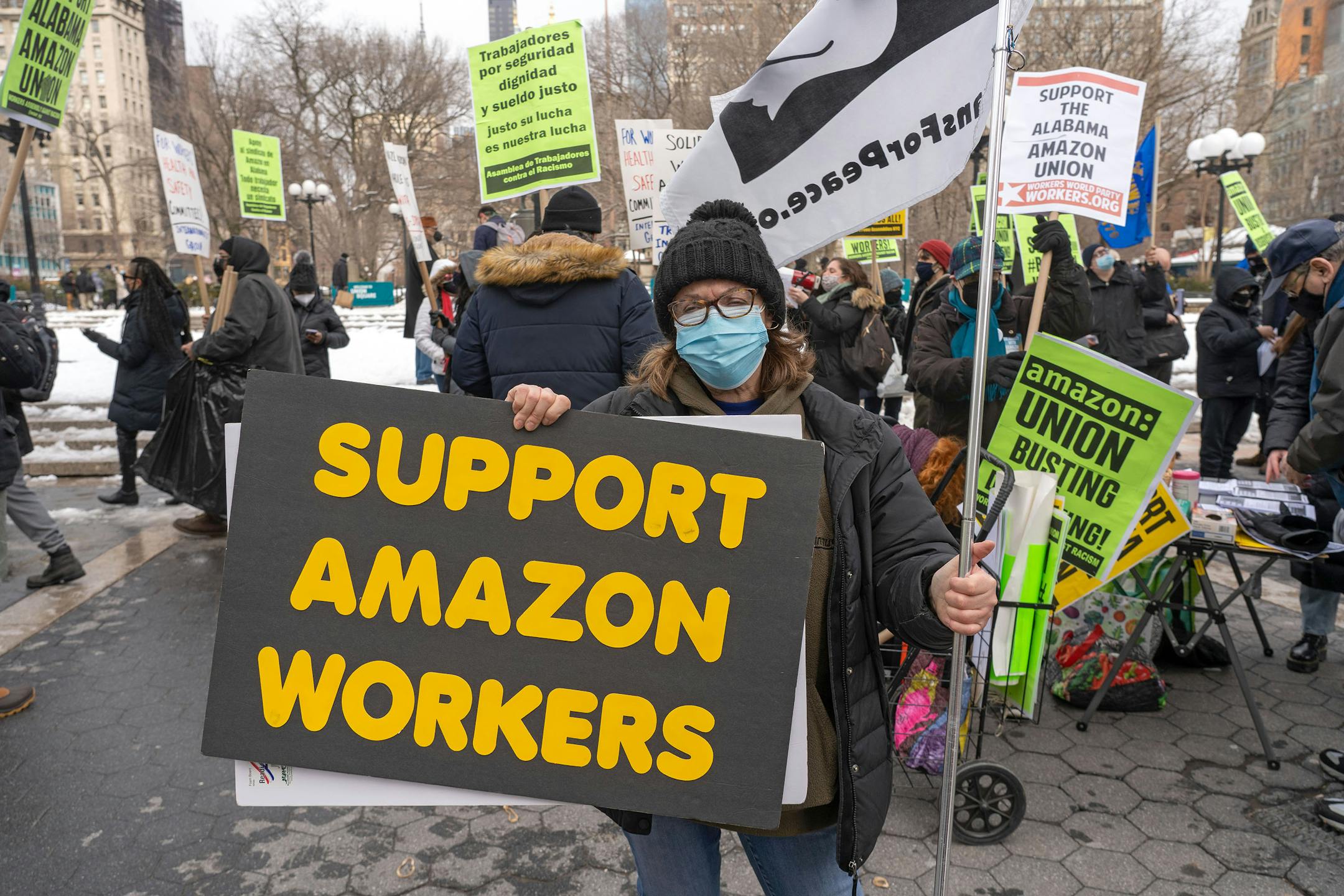
Here are some of the ways that people who have worked inside Amazon's warehouses describe the experience: "The job crushed my spirit and crippled my body." "The lowest point in my life." An "isolating colony of hell." "They're killing people mentally and physically." "I began to hate my day-to-day life." "The way Amazon pushes people is not moral." "I had whole days where I didn't talk to anyone." "The systematic devaluing of human bodies."
Few of these accounts are new. But persistent horror stories have done nothing to diminish Amazon's geometric growth. In 2017, the company's head count surpassed 500,000 employees. In 2020, Amazon added that many new workers, very likely a record level of hiring for a company in a single year. Today, nearly 1.3 million people work at Amazon, making it the country's second-largest private employer, after Walmart. The majority toil in its sprawling fulfillment operations; they are the people who pick, pack, drive and deliver your stuff.
Are these workers happy? Is this good work? Should we rejoice about a company that can hire so many people in the midst of pandemic-induced mass unemployment? And one that, in 2018, instituted a minimum hourly wage of $15, pushing Walmart, Target and other competing retailers to raise their pay, too?
Or should we recoil at the way Amazon has swept the apparent brutality of its operations under a haze of public relations opportunism — the way it paints itself as a high-minded savior of American labor while its workers are so pressed for time that they must urinate and defecate in bags and bottles?
More urgently: Should we stop shopping at Amazon?
As an inveterate Amazon shopper whose spending with the company soared to embarrassing heights during the pandemic, I have thought about the ethics behind those smiling boxes a whole lot recently. And I regret to say that my hottest take is irritatingly tepid: It's complicated.
To me it is far from obvious that boycotting Amazon is the best way to reform American retail in a way that results in greater safety and prosperity for workers. But that doesn't mean that consumers have no power. To a degree greater than many of its competitors, Amazon has thrived by accommodating its customers' desires. Consumers can now try to marshal that power on behalf of Amazon's workers. There is one thing Jeff Bezos, Amazon's founder and chief executive, seems to care about above all else: what his customers want.
I suspect that if he were pushed to take employees' safety as seriously as he does price or selection, Bezos could do more than just about anyone else to improve the lives of America's workers by radically improving conditions at Amazon to set a standard for rivals to follow.


