1:51
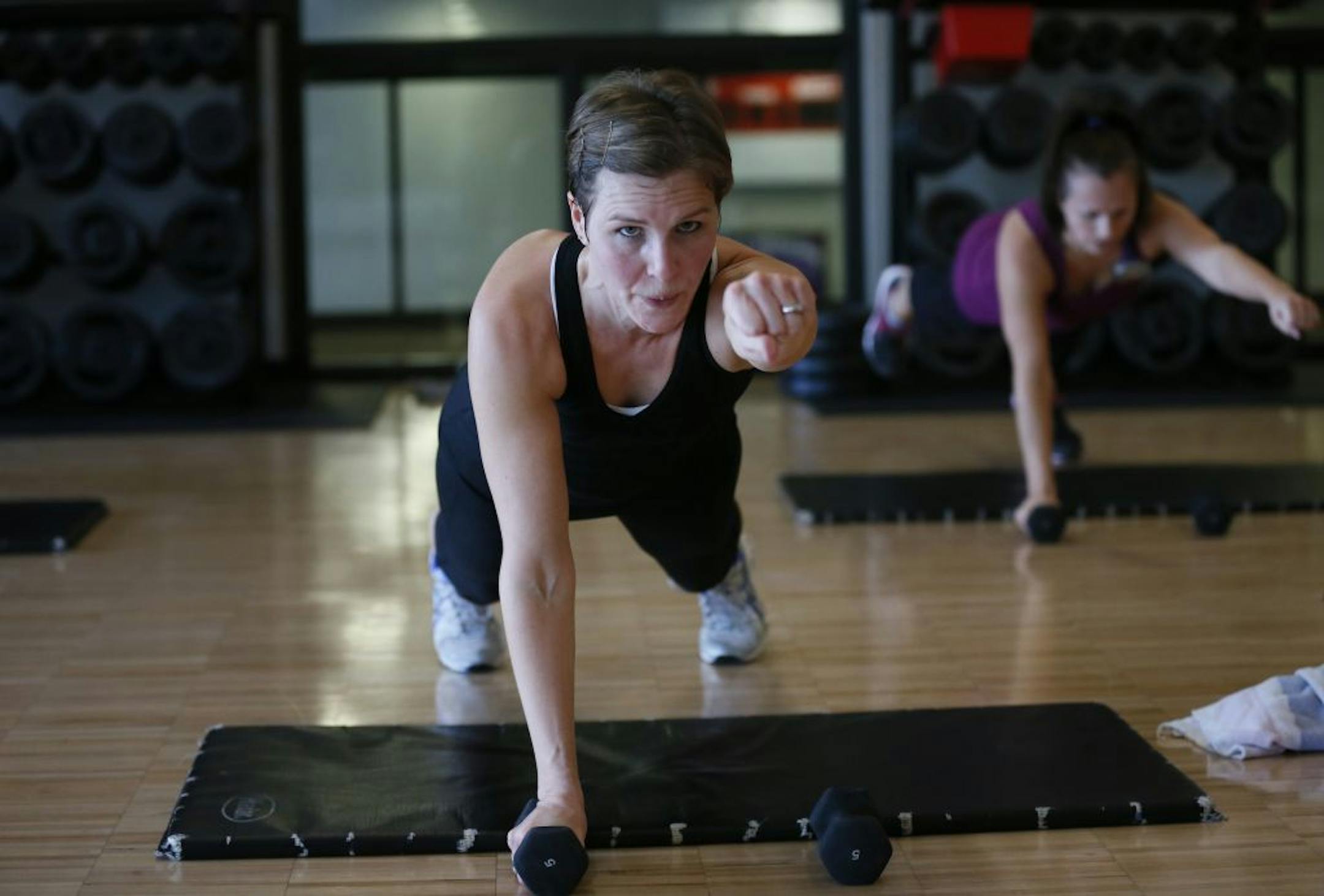
1:51It's just 10 minutes into her Tabata class and Michelle Solberg's short hair is plastered to her brow, her cheeks flushed as she gulps deep breaths and shakes her arms and legs for a 10-second rest.
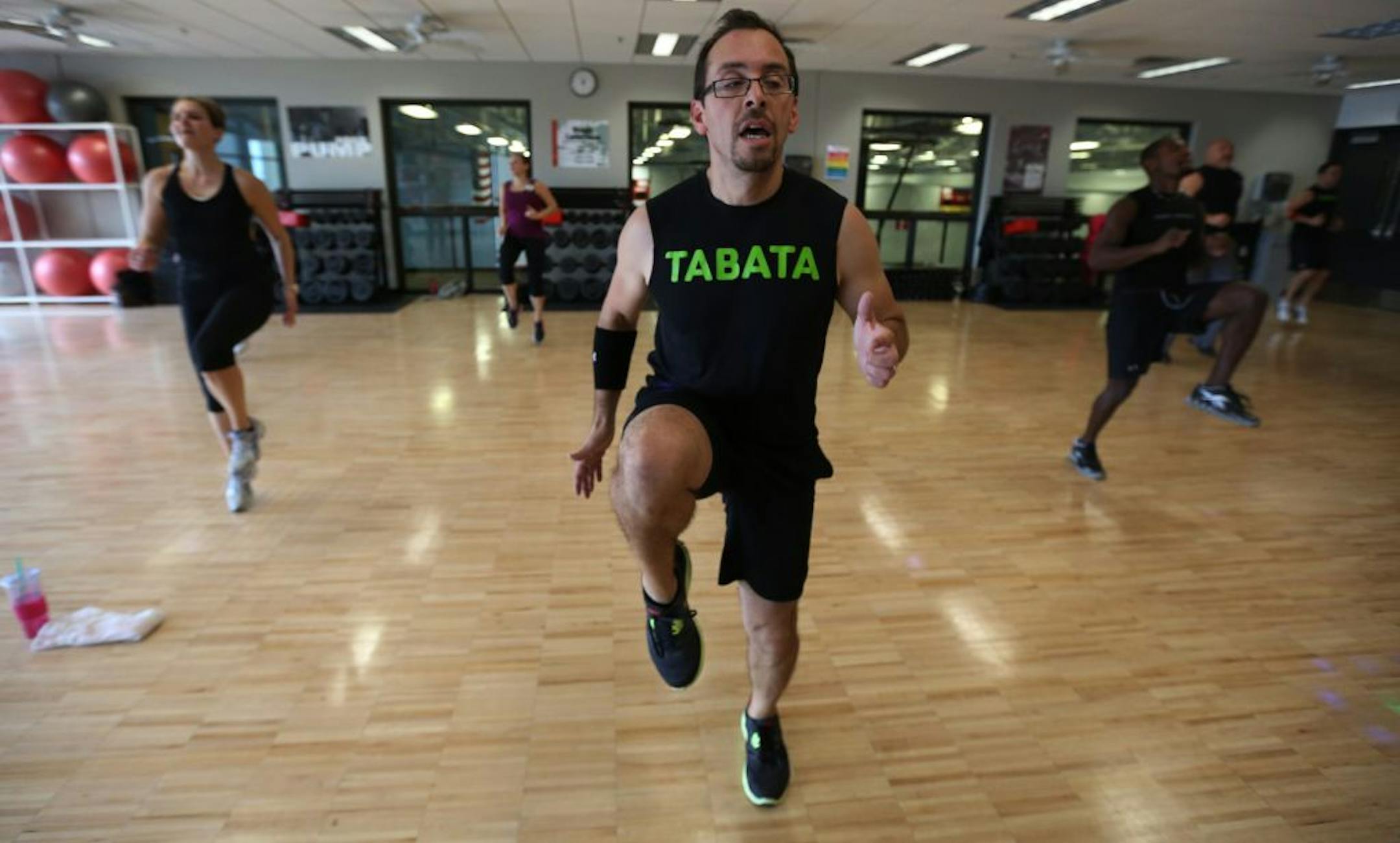
Then she plunges in for another 20-second burst of squats and jumps as fast as she can with nine other students at the Andover YMCA.
And that's the goal: Get sweaty, exhausted and gasping for air, and do it as hard and fast as possible with all-out, high-intensity interval training for four minutes, rest a minute, then blast into a different four-minute full-boogie exercise.
It's called Tabata, a 30-minute training technique developed for Japanese Olympic speed-skaters in the 1990s and studied by researcher scientist Izumi Tabata. Its popularity has exploded in the past five years.
"We've used interval training before, but we started offering Tabata classes in January because we were getting so many requests," said Sean Levesque, group fitness manager for all 22 Twin Cities YMCA locations. Each week those centers offer a total of 100 free drop-in classes to 1,500 to 2,000 members.
Tabata (pronounced tah-BAH-tah) is designed as a faster, more efficient way than traditional training programs to build muscle and endurance and blow off fat. Recent research has confirmed its effectiveness.
Adherents use four or five different exercises during a workout, and often different ones during the next one. Often included are pushups, situps, squats, chin pulls, punches, kicks, sprinting in place, riding stationary bikes and lifting weights.
The interval-training technique of Tabata -- intense exertion broken by intervals of rest -- can be applied to swimming, running, boxing, speed-walking or any other exercise. Typically, those doing a Tabata sequence score themselves by adding up the lowest number of reps in each set of pushups, situps and other exercises. Keeping score during each session enables them to chart their progress over time.