In the spring of 1960, Minneapolis Star and Tribune photographers Roy Swan and Dwight W. Miller took on an unusual assignment: Wielding large-format 4x5 cameras, they captured images of every corner of downtown Minneapolis.
Over several months they amassed hundreds of black-and-white photos — most of which have lingered in the newspaper's archives without ever having been published — and they're a priceless snapshot of a city that's barely recognizable to contemporary residents.
(Miller died in 1984, Swan in 1996.)
It's a landscape populated by human-scaled buildings of brick and stone, lively sidewalks, a wealth of homegrown businesses, an absence of skyways (the first one appeared two years later) and ornate, long-gone edifices that underscore the city's 19th-century roots.
Compare and contrast, 1960 to 2016. In many cases, it's tough to make the case that today's streetscape is an improvement over yesterday's. In Teardownapolis, for every glittering IDS Center there's a leaden City Center.
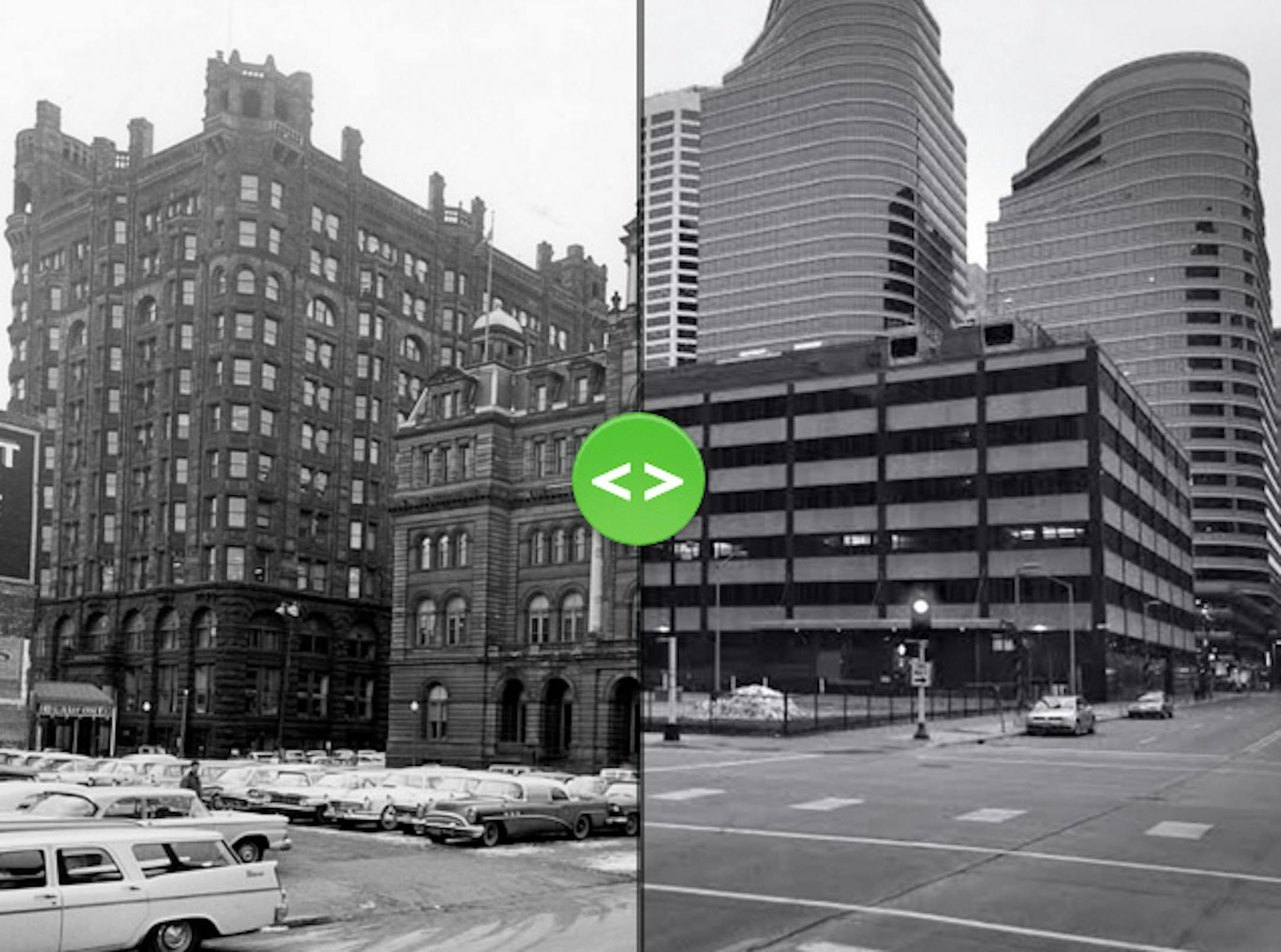
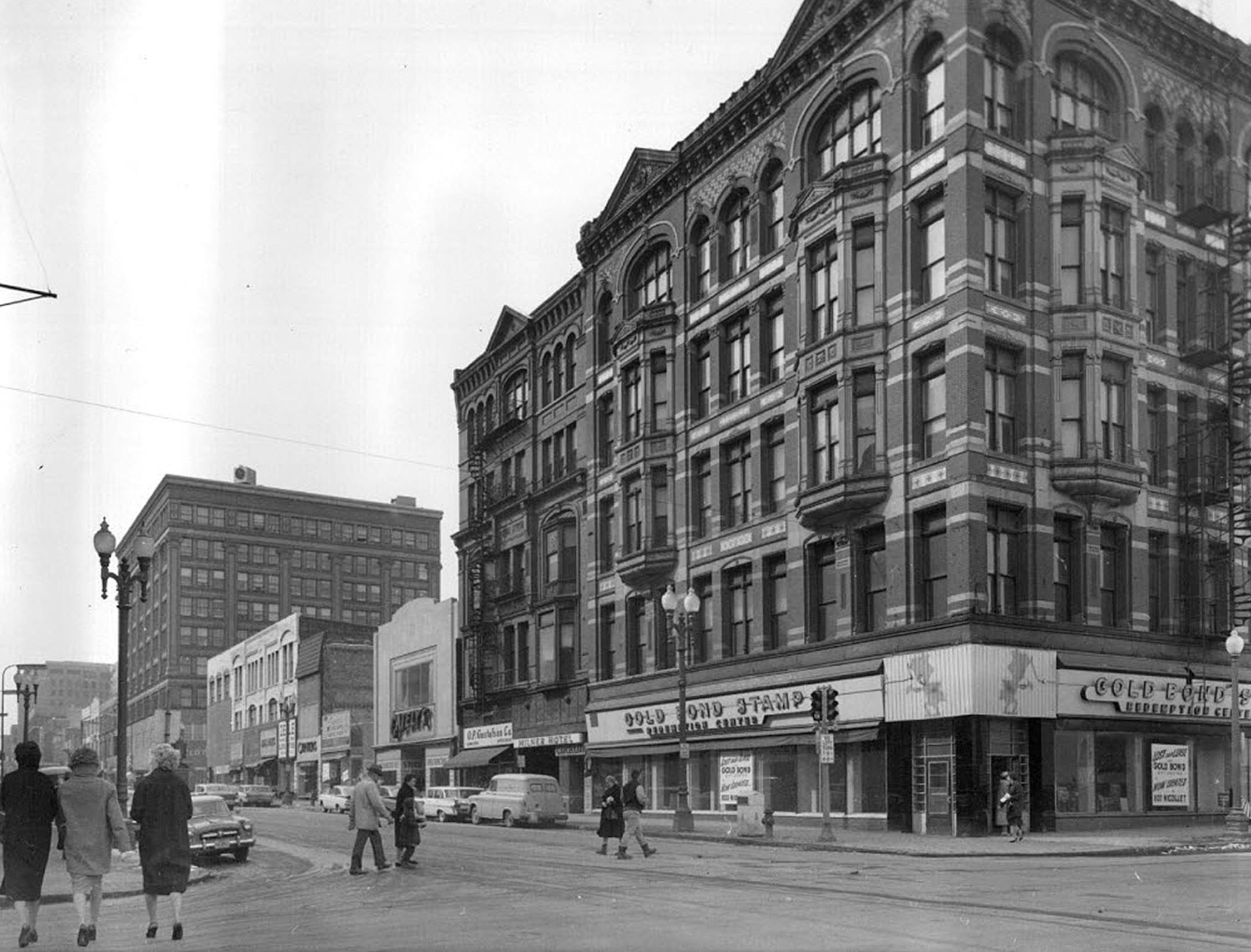
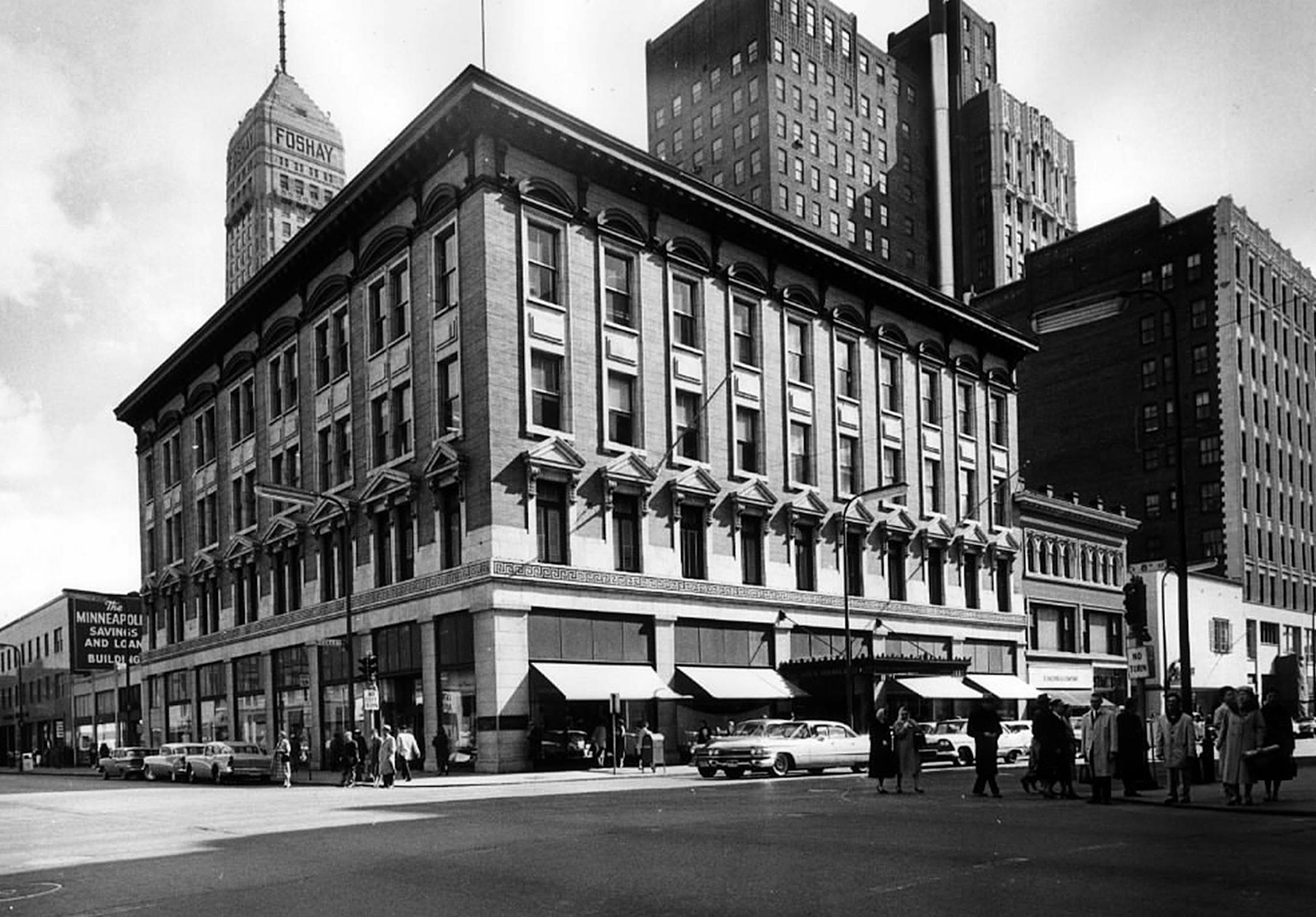
4th Street and Nicollet Avenue 1960: When it opened in 1885, the Milner Hotel (top) was known as the Mackey Legg Block; for decades it was named the Rogers Hotel. Yes, that’s a Gold Bond trading stamp redemption center on the ground floor. The building was demolished in 1960 as part of the Gateway District urban renewal project. The 10-story building on the far left still stands: 116-year-old Renaissance Square.
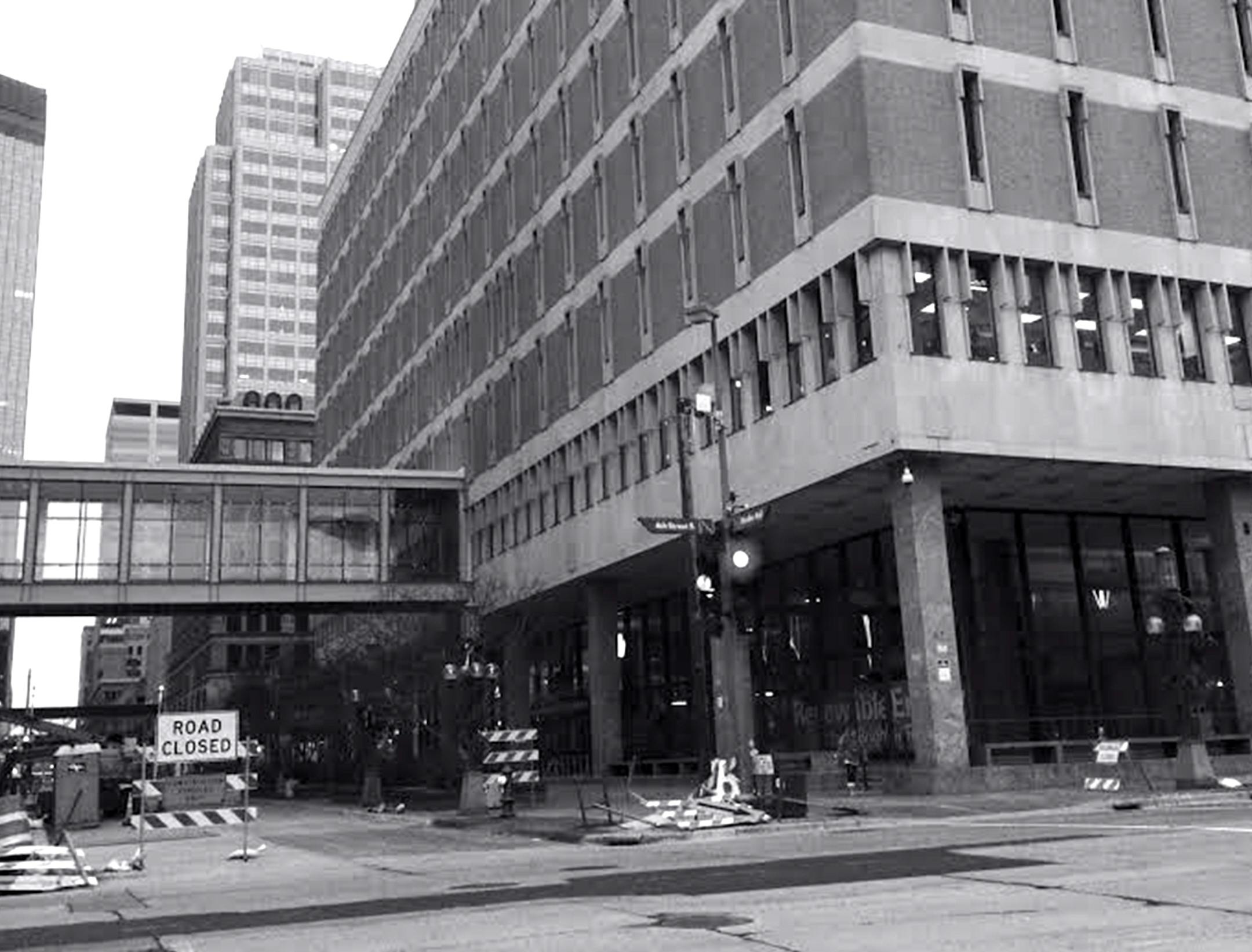
2016: The headquarters for Xcel Energy (below) is the work of architect Pietro Belluschi (his most recognizable Minnesota commission is the copper-topped First United Methodist Church, perched on the hill above downtown Duluth). When it opened in 1965, this eight-story structure was downtown’s largest single-tenant office building. (The Minnesota Star Tribune)
2016: Xcel Energy, originally Northern States Power. When it opened in 1965, the eight-story structure (the work of architect Pietro Belluschi) was downtown’s largest single-tenant office building. (The Minnesota Star Tribune)
2016: RSM Plaza. The 20-story office building (made famous in the opening credits of “The Mary Tyler Moore Show”) was designed by Peterson, Clark & Associates and opened in 1969. (The Minnesota Star Tribune)
Hennepin Avenue between 6th and 7th streets
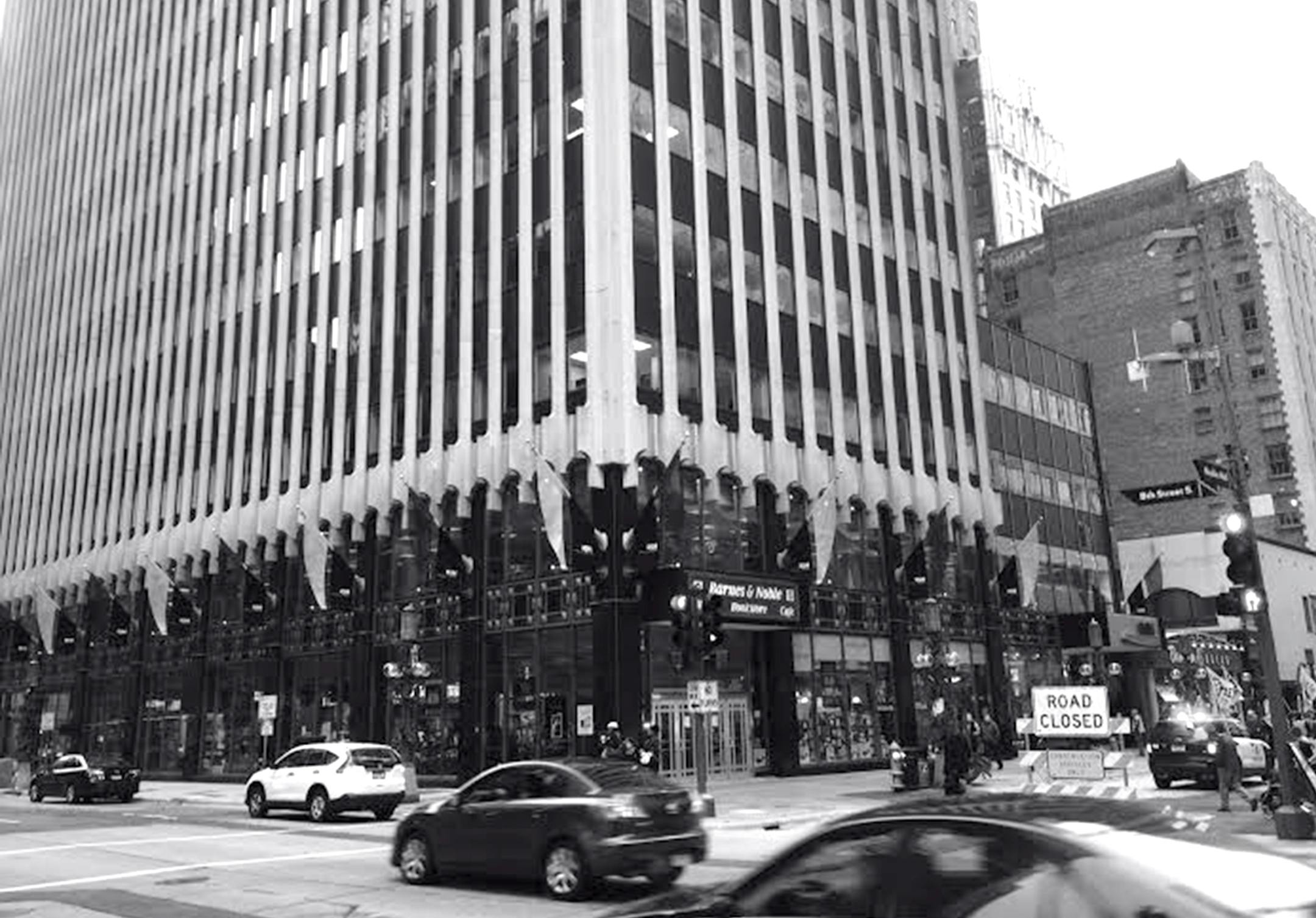
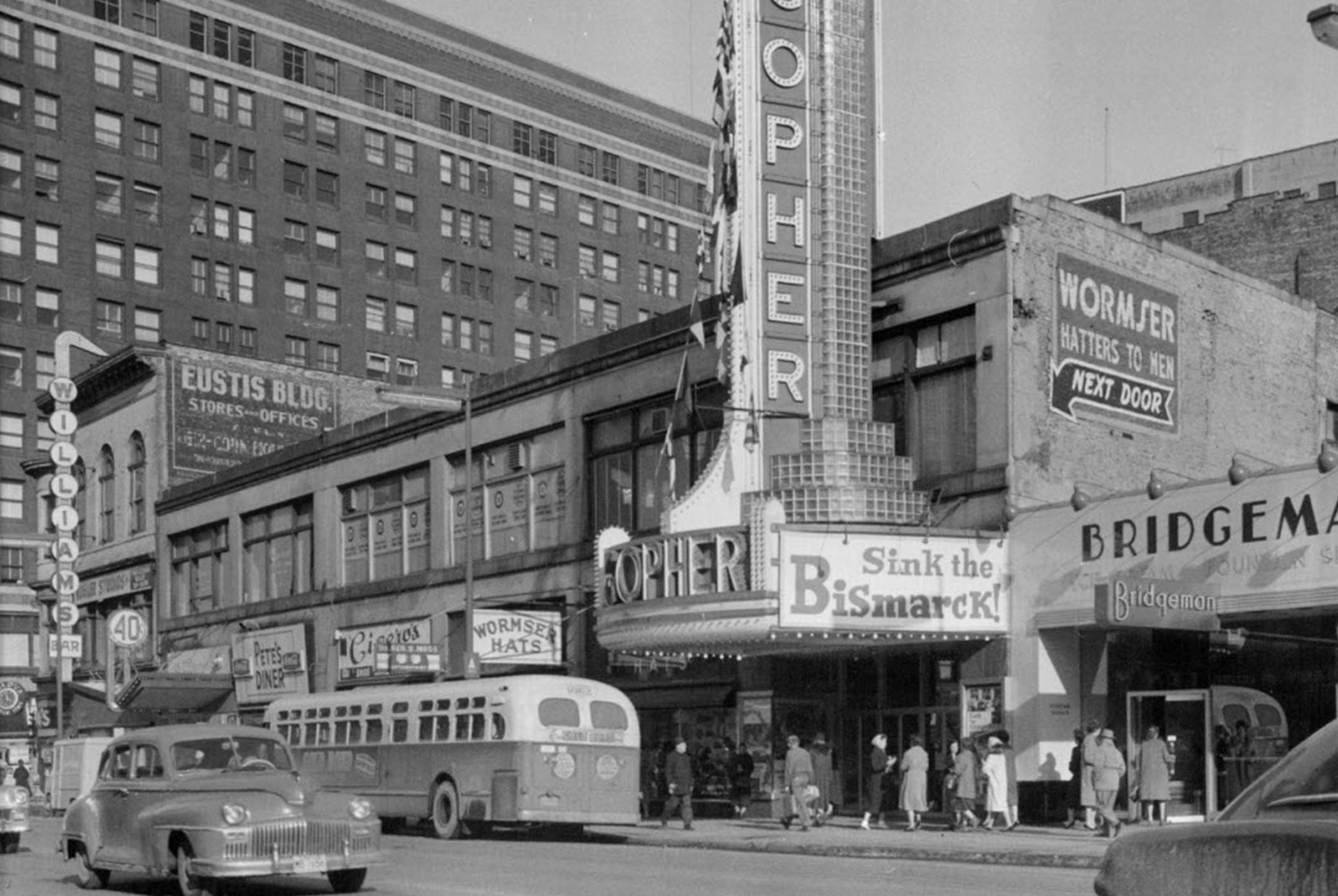
1960: The Gopher Theatre’s roots reached to 1910, when it was the Grand Theatre. In 1938 it was renovated (by architects Liebenberg and Kaplan, of Uptown, Suburban World and Varsity theaters fame) and renamed. By the time of its 1979 demolition, the Gopher was showing X-rated fare. That’s the Plymouth Building in the background. 2016: City Center, designed by Skidmore, Owings and Merrill, opened in 1983, combining a 52-story office building, a 32-story hotel, a shopping center and a parking ramp on a single, oversized block. The 105-year-old Plymouth Building is currently being repurposed from offices into a 290-room Embassy Suites hotel. (The Minnesota Star Tribune)
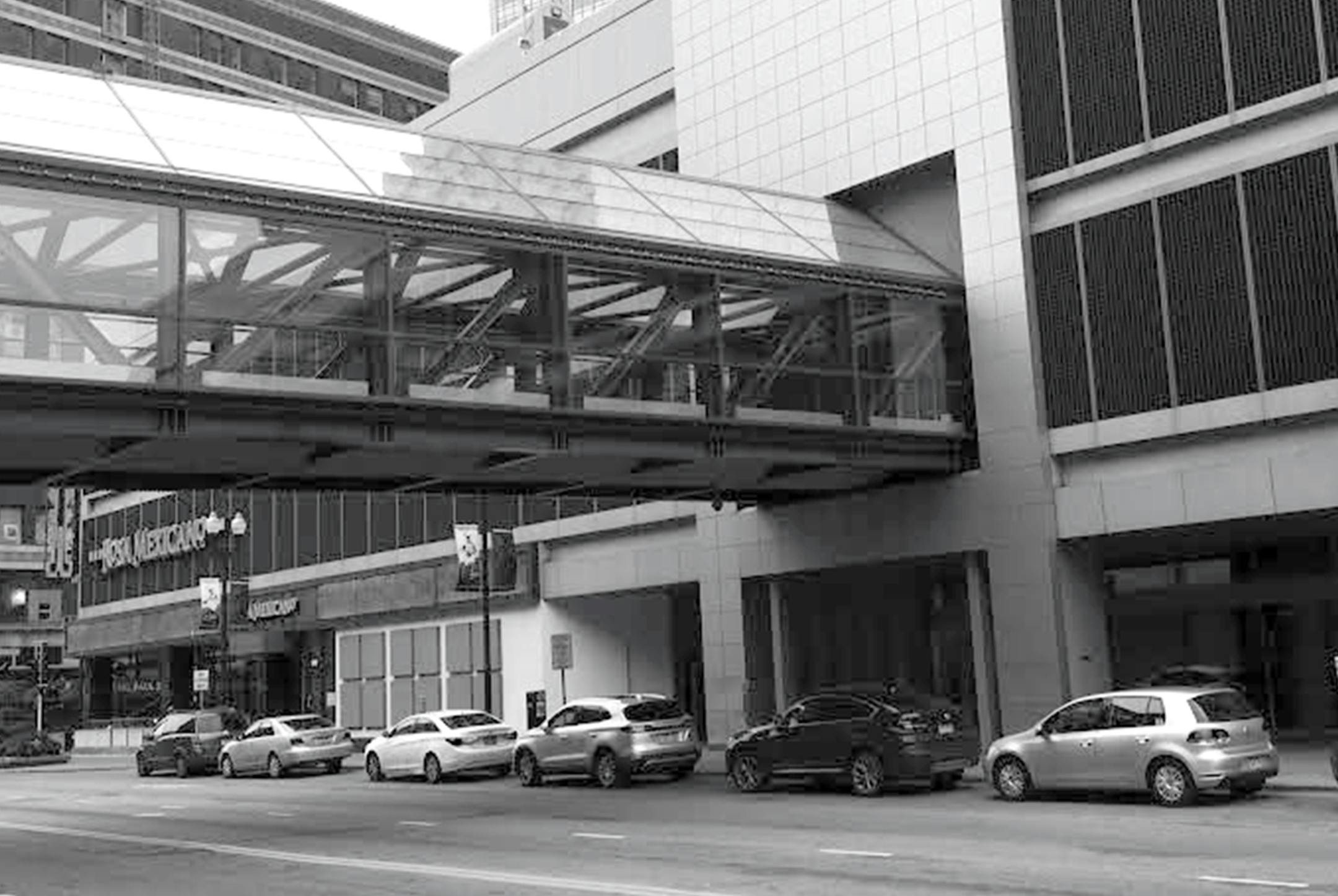
2016: City Center, designed by Skidmore, Owings and Merrill and opened in 1983. The Plymouth Building is currently being repurposed as a 290-room Embassy Suites hotel. (The Minnesota Star Tribune)
5th Street and Nicollet Avenue
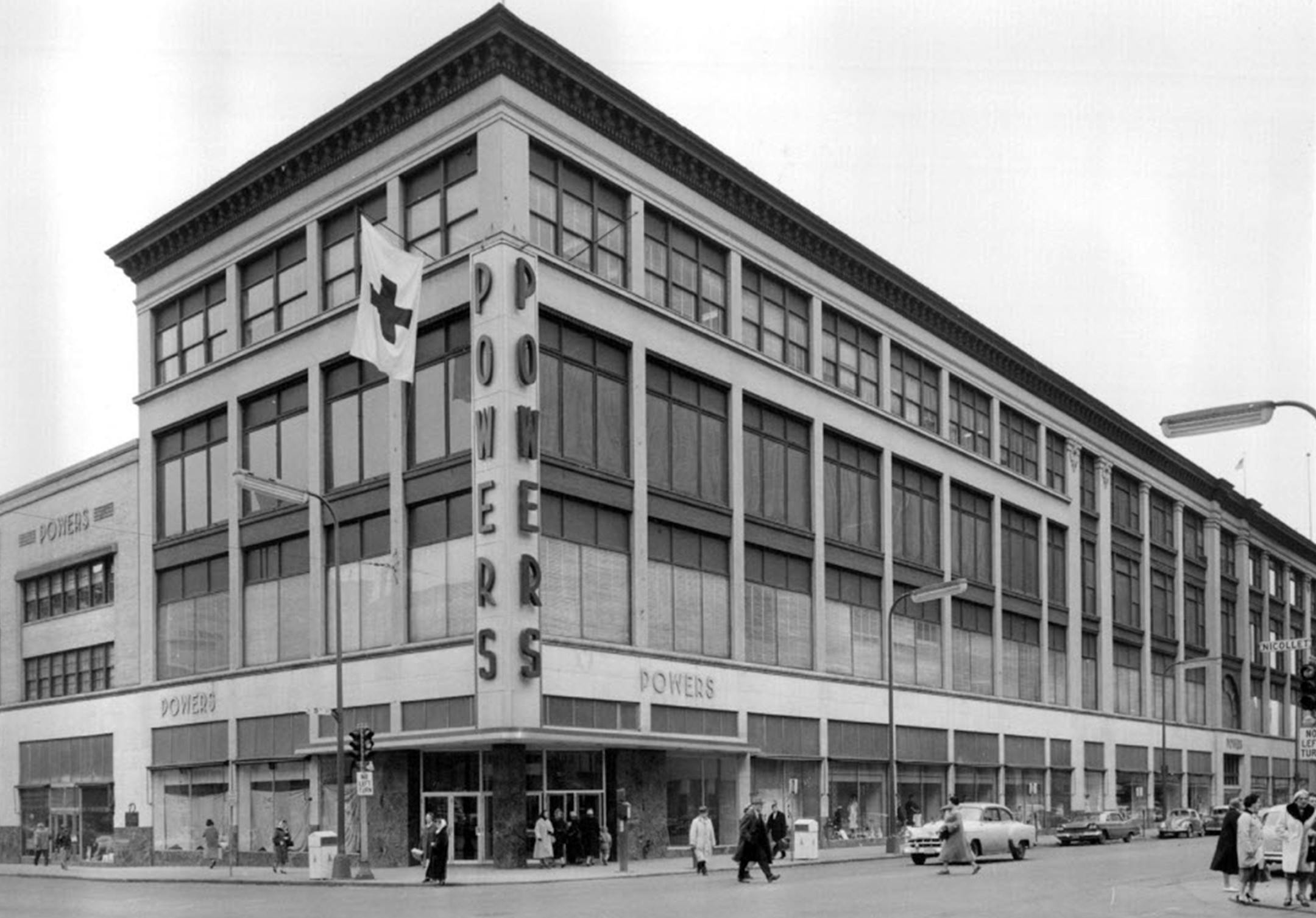
1960: Once upon a time, Nicollet Avenue was the area’s leading shopping district, and it was lined with department stores, starting with Powers on the street’s northern end. Parts of the building date to 1893 (the company’s roots reach back a dozen years earlier), with expansions through 1906. The store closed in 1985. The building, briefly home to the University of St. Thomas, was razed in 1993, after which the site spent two decades as a parking lot.
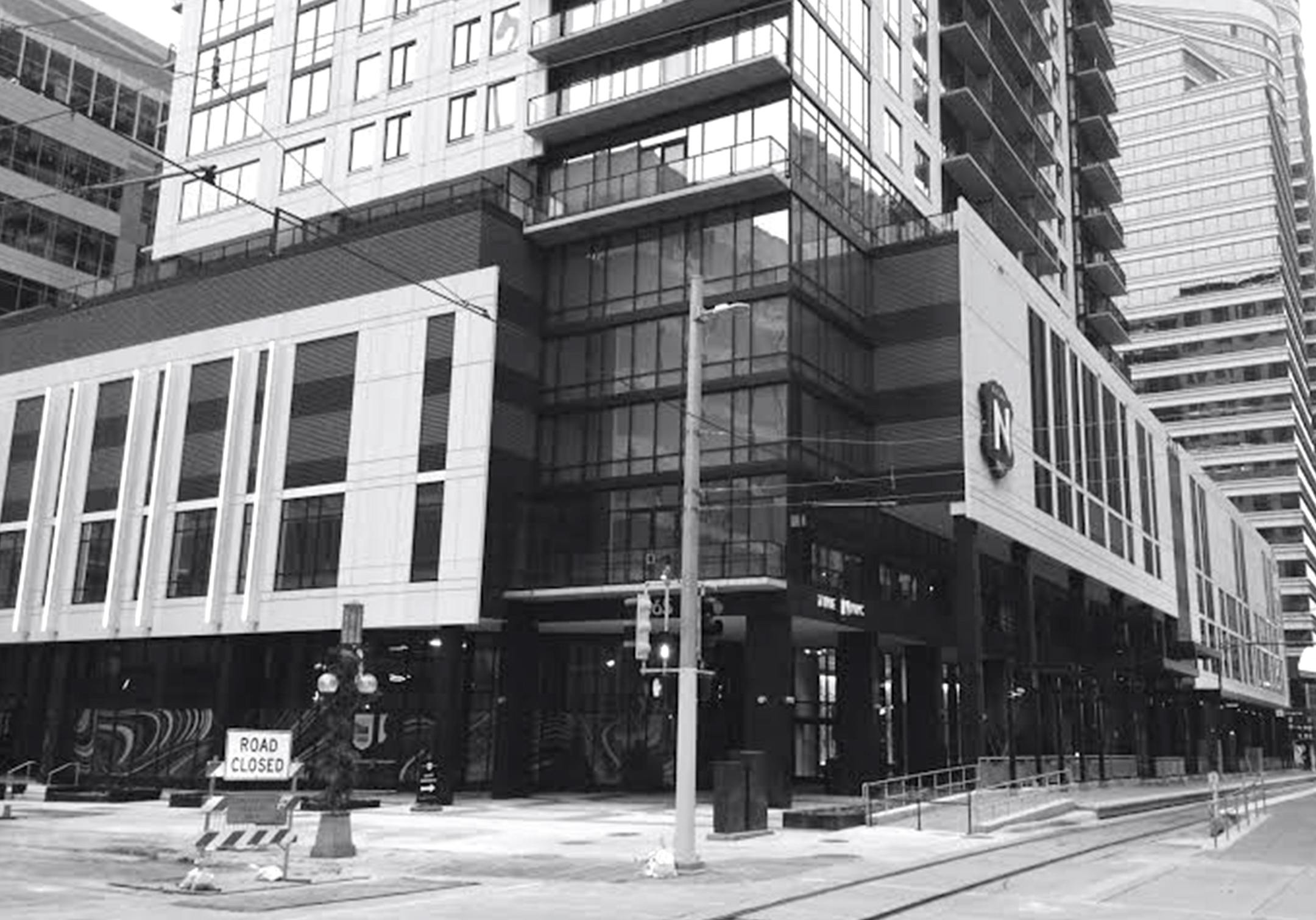
2016: Nic on 5th, a 26-story luxury apartment building, opened in 2015. History buffs, take note: There’s a Powers plaque on the building’s skyway level. (The Minnesota Star Tribune)
2016: The site has been a parking lot for 55 years. (The Minnesota Star Tribune)
8th Street and Nicollet Avenue 1960: John W. Thomas & Co. was already one of the city’s oldest and most distinguished retailers when it moved to this custom-made building in 1908. The business was in its 98th year when it closed in 1965, and this handsome store — designed by Butler Square architect Harry Wild Jones — was demolished a few years later.
2016: Twenty-story RSM Plaza (a coast-to-coast TV star from its role in the opening credits of “The Mary Tyler Moore Show”) was designed by Peterson, Clark & Associates and opened in 1969 as the home of Midwest Federal Savings & Loan. (The Minnesota Star Tribune)
2016: Nic on 5th, a 26-story luxury apartment building, opened in 2015. (The Minnesota Star Tribune)
3rd Street and Marquette Avenue
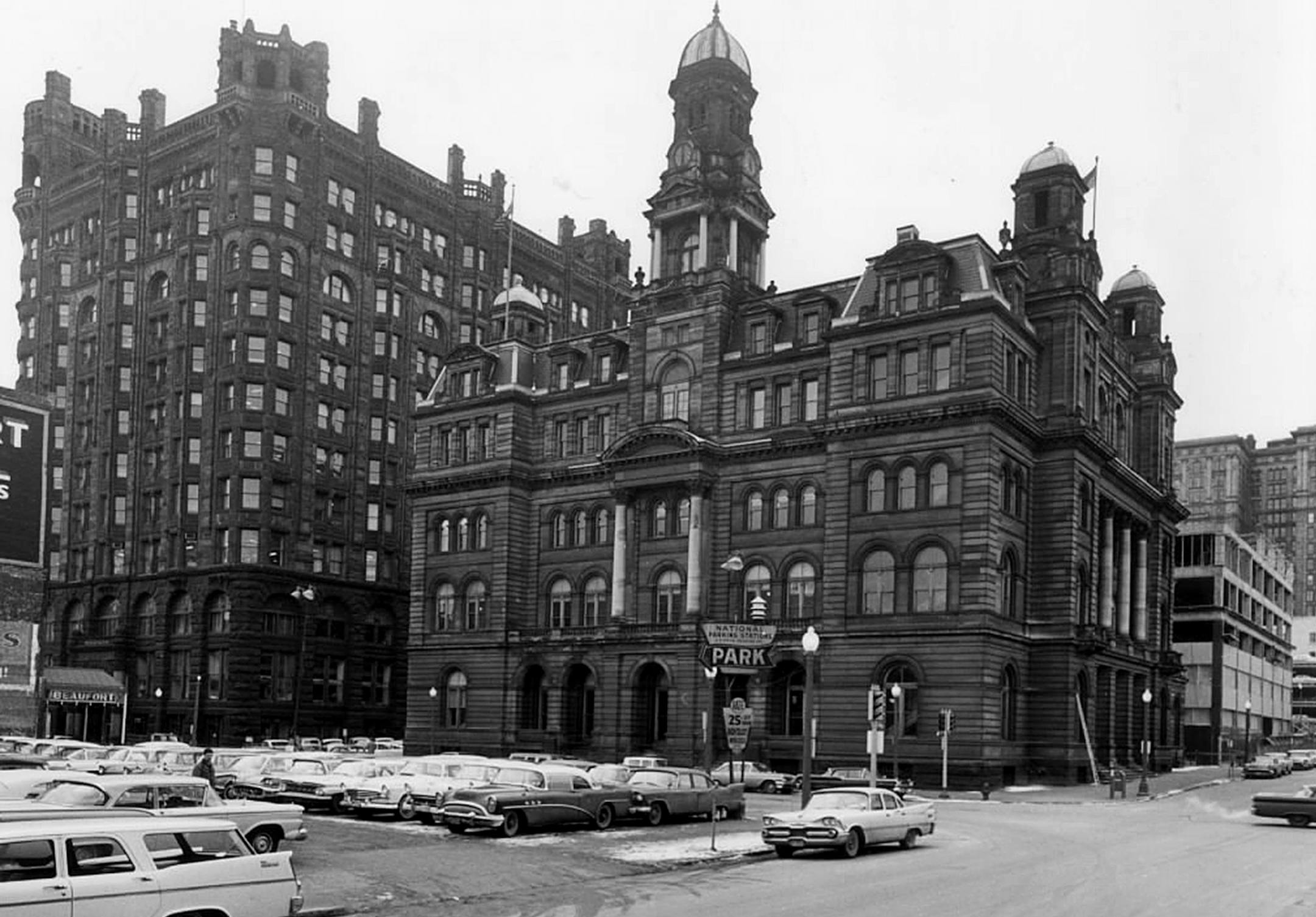
1960: The Old Federal Building was a rare slice of Victoriana that dated to 1890 and was, over the years, home to various federal government functions. The building — widely regarded as unloved, which explains its puny archival presence — was demolished in 1961 as part of the Gateway District urban renewal project. That’s the Metropolitan Building on the left, a few months shy of its destruction.
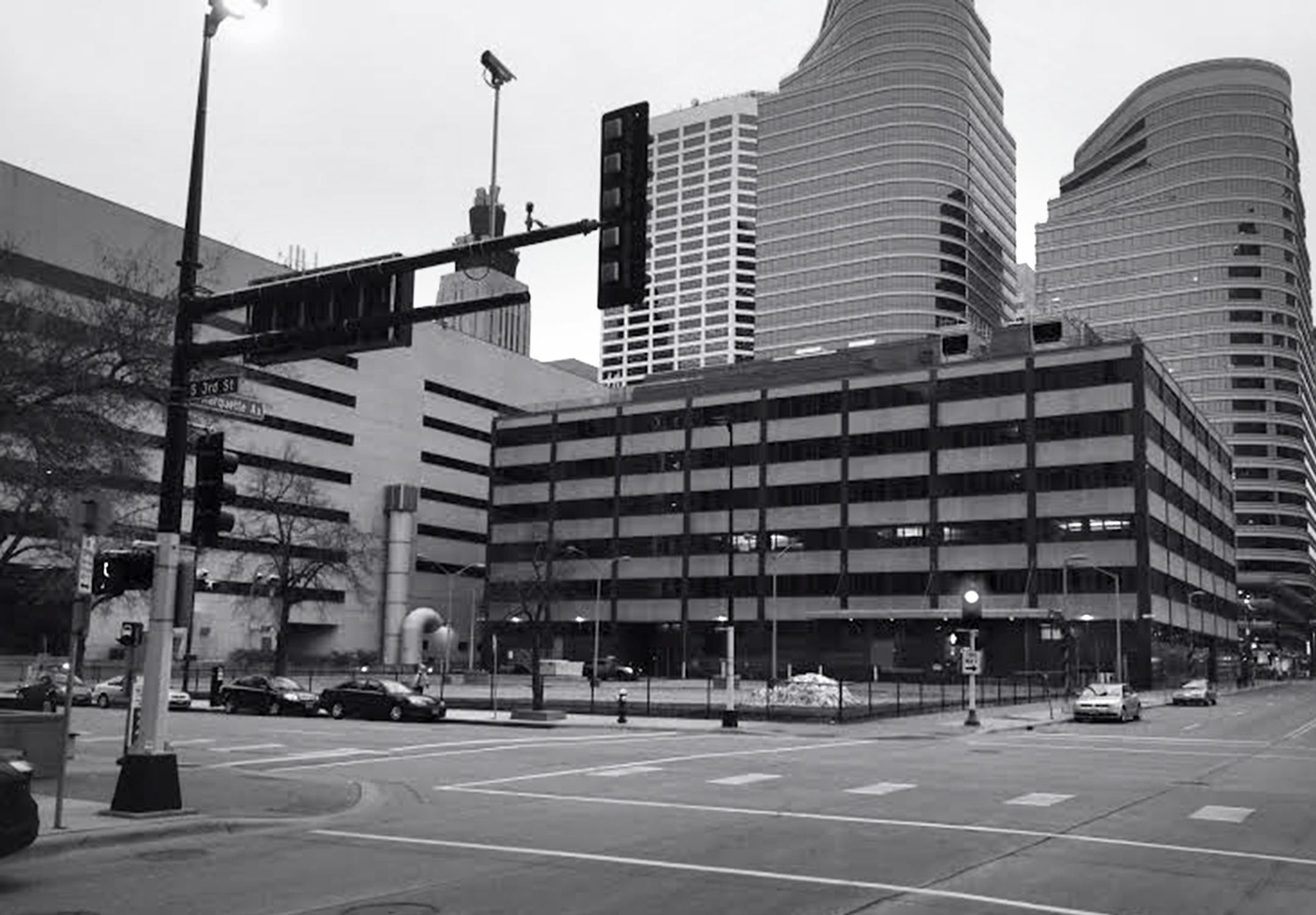
2016: The site has been a parking lot for 55 years. (The Minnesota Star Tribune)
2016: The site has been a parking lot for 55 years. (The Minnesota Star Tribune)
10th Street and Hennepin Avenue
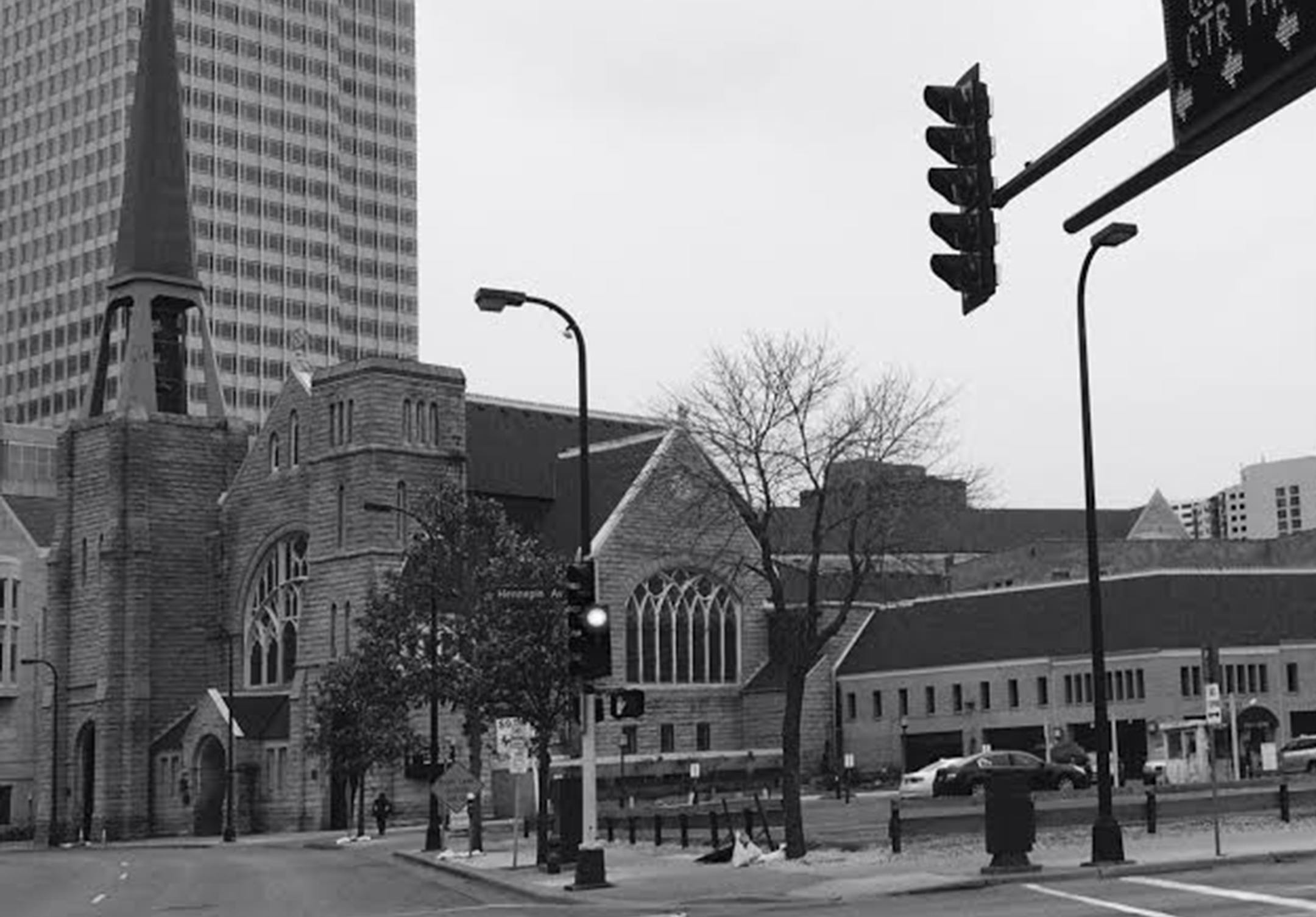
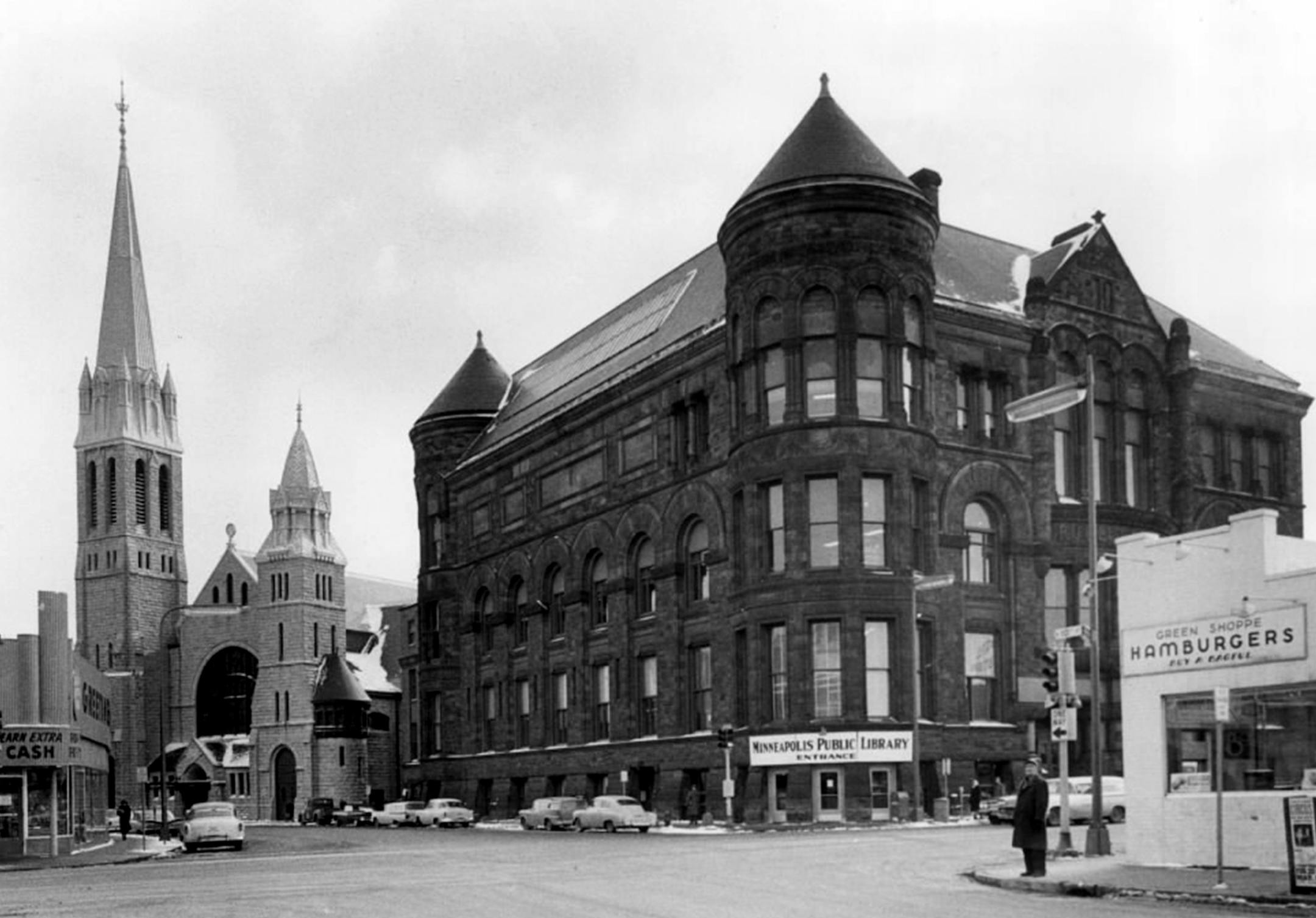
1960: When it opened in 1889, the Minneapolis Public Library was the pride of the city. “There can be no doubt that for the purpose for which it was designed there is no handsomer building in the United States,” extolled Isaac Atwater in his 1893 book, “The History of the City of Minneapolis.” Built with Lake Superior sandstone, the library was designed by Long & Kees, the same firm behind the neighboring First Baptist Church as well as Minneapolis City Hall and the Lumber Exchange Building. After its replacement opened, the library was razed in 1961, which will go down in history as the city’s preservationist annus horribilis; it’s the same year that the Metropolitan Building met the wrecking ball. 2016: The site has been a parking lot for 55 years. (The Minnesota Star Tribune)